

Async await Memes

Posts tagged with Async await
Ultra Max Mega Thinking

Ultra Max Mega Thinking
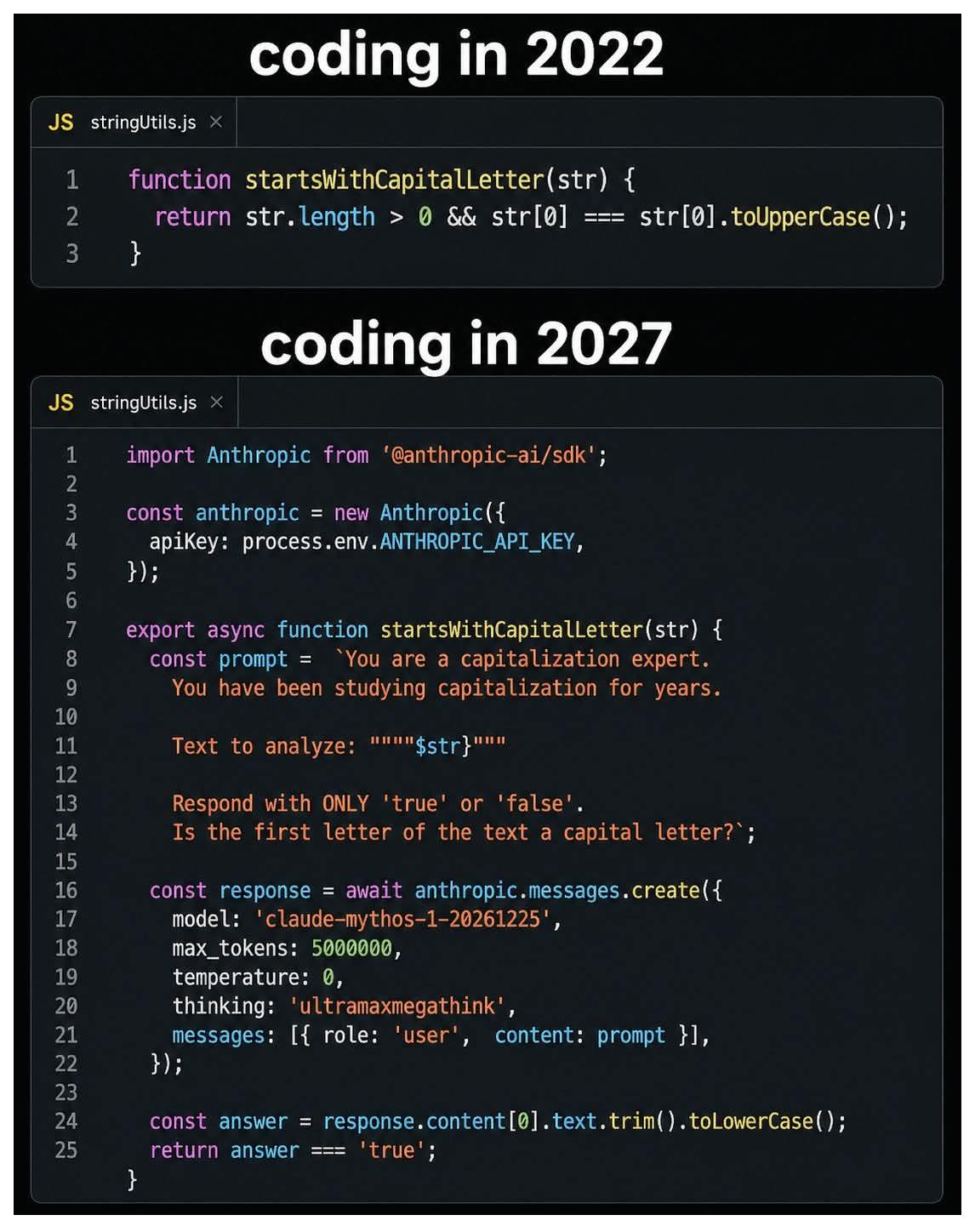
From writing a simple three-line function to importing an entire AI SDK just to check if a string starts with a capital letter. The evolution of developer laziness is truly magnificent. The 2022 version is straightforward: check if the string has length, then compare the first character to its uppercase version. Done. Ship it. But fast forward to 2027, and we're apparently so burnt out that we need Claude (with 5 MILLION tokens and "ultramaxmegathink" mode, because regular thinking is for peasants) to solve basic string manipulation. The best part? After all that elaborate prompt engineering where you gaslight the AI into thinking it's a "capitalization expert" who's been "studying capitalization for years," you still have to parse the response, trim it, convert to lowercase, and check if it equals 'true'. So you've replaced str[0] === str[0].toUpperCase() with approximately 20 lines of async API calls, error handling nightmares, and a monthly bill that could fund a small startup. The "thinking: 'ultramaxmegathink'" parameter is the cherry on top—because apparently even AI needs to be told to think REALLY hard about whether 'A' is uppercase.

The Web Development Learning Curve Hits Different

The Web Development Learning Curve Hits Different
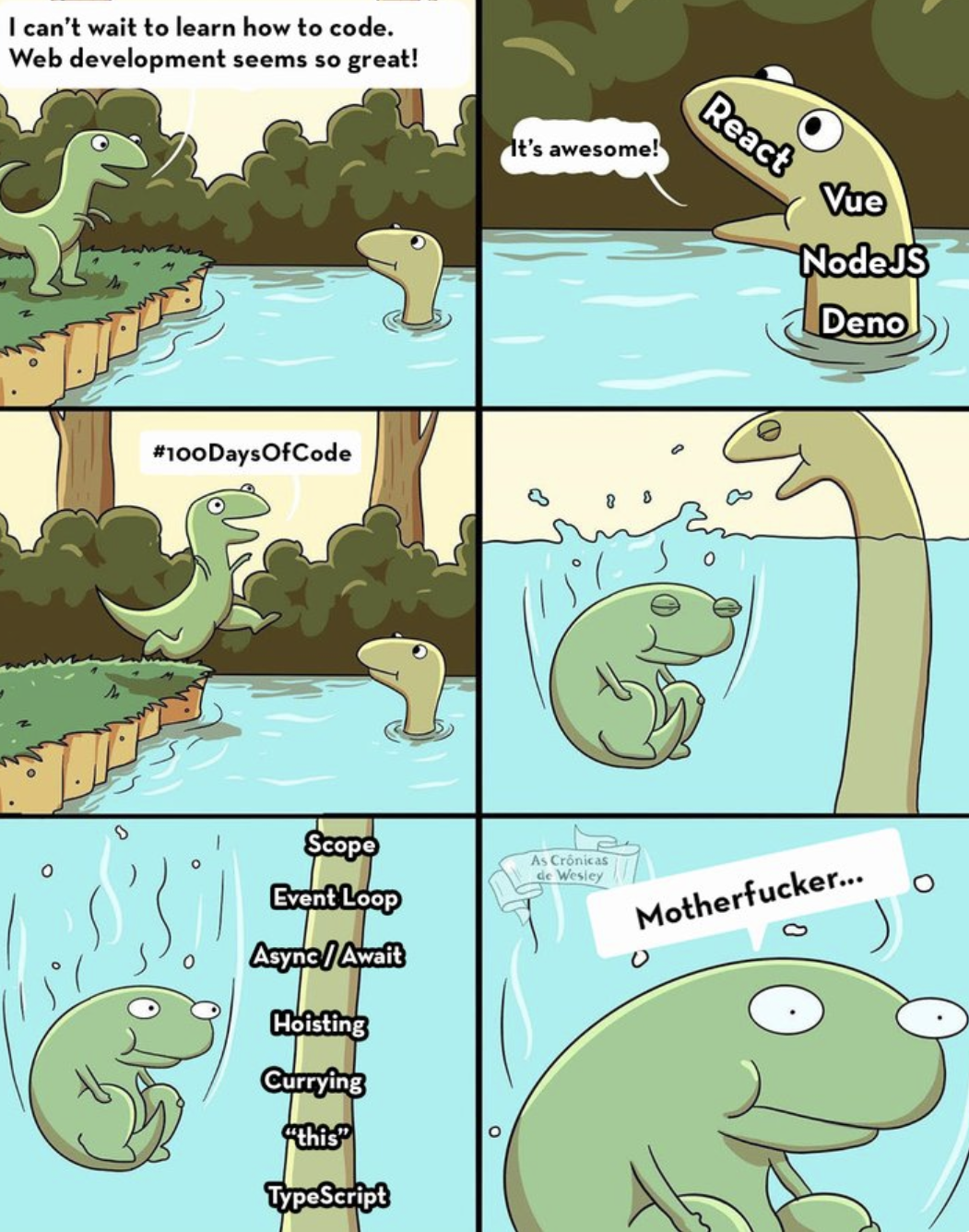
Starts out innocent enough: "I'll just learn web dev, build some cool stuff!" Then you dip your toes in with React, Vue, NodeJS, and Deno—feeling pretty good about yourself. Fast forward through #100DaysOfCode and suddenly you're drowning in JavaScript's existential nightmare: scope chains, the event loop, async/await promises, hoisting, currying, the cursed keyword "this", and TypeScript trying to save you from yourself. The progression from "It's awesome!" to complete underwater chaos perfectly captures the JavaScript learning experience. You think you know JavaScript after building a few components, but then you realize you need to understand closures, execution contexts, and why "this" changes depending on which way the wind is blowing. The final panel's reaction is every developer after their fifth hour debugging why their async function isn't awaiting properly.

My Friend Didn't Know How To Use Async Sleep In Javascript, So He Wrote This Massive Chain Of .Then()

My Friend Didn't Know How To Use Async Sleep In Javascript, So He Wrote This Massive Chain Of .Then()
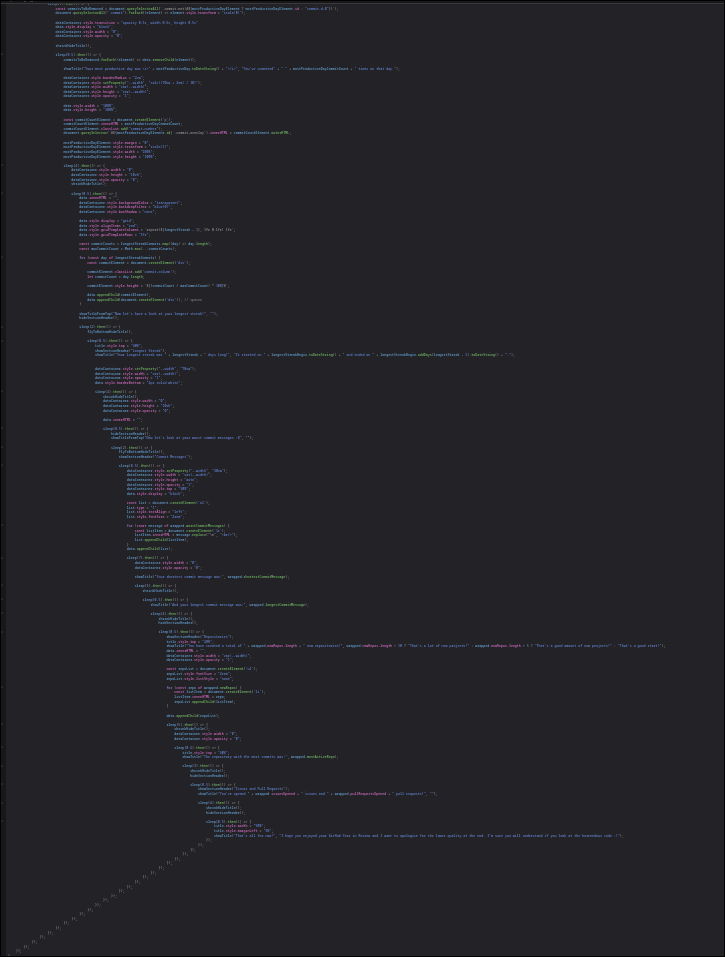
Your friend just reinvented callback hell, but with extra steps. Instead of using a simple await sleep(1000) or even setTimeout , they decided to create the world's longest promise chain that looks like it's trying to reach the bottom of the Mariana Trench. The beautiful irony here is that promises were literally invented to avoid this kind of nesting nightmare. It's like someone handed them a ladder and they chose to stack chairs instead. Each .then() is probably just wrapping another promise that resolves after a delay, creating this magnificent stairway to callback heaven. Fun fact: This code probably has more indentation levels than the JavaScript spec has pages. The real kicker? A simple utility function like const sleep = ms => new Promise(resolve => setTimeout(resolve, ms)) would've saved them from this horizontal scroll of shame. But hey, at least they're consistent with their suffering!

JS Poetry

JS Poetry
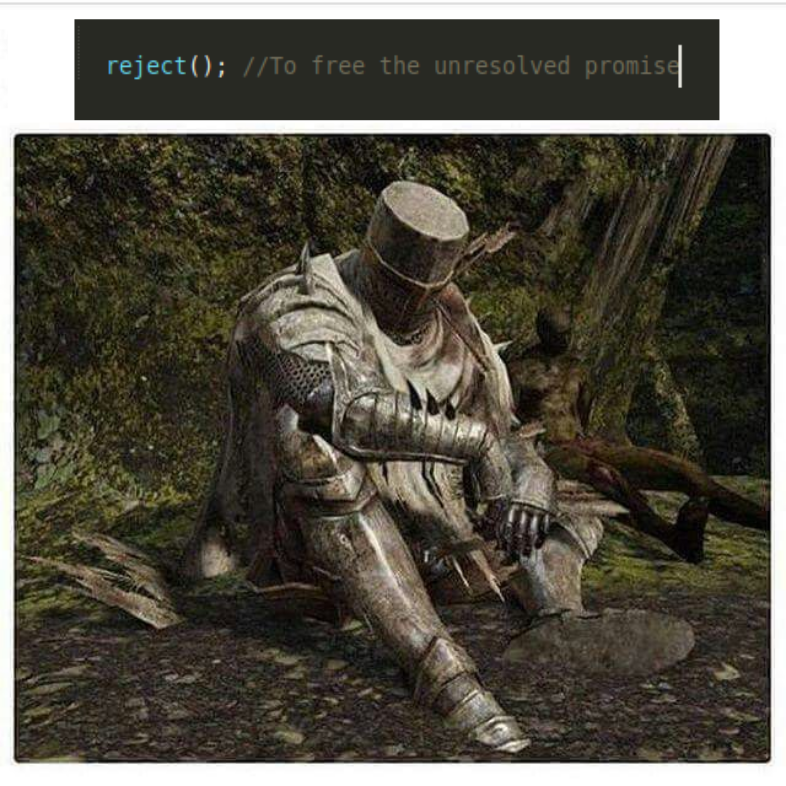
Someone really wrote reject(); with the comment "To free the unresolved promise" and honestly, that's the most beautifully tragic thing I've seen all week. Picture a promise sitting there in memory, forever waiting for resolution that will never come. So you call reject() not because you need error handling, but as an act of mercy. You're basically putting it out of its misery like some sort of async executioner. The defeated knight slumped against the tree captures the vibe perfectly—we've all been that promise, waiting endlessly for an API call that timed out three hours ago. Sometimes the kindest thing you can do is just let it die with dignity.

Guys I Know What Async Means Ok

Guys I Know What Async Means Ok
Nothing says "I'm a senior developer" quite like confidently presenting your screen to the entire team while your Copilot history screams "how to use async await", "what is promise", and "why is my code not working async". The panic smile says it all - you've been nodding along in standup for MONTHS pretending you totally understand asynchronous programming while secretly Googling the same thing every single day. Your teammates now know you've been living a LIE, and that fancy async/await code you wrote last sprint? Yeah, everyone knows GitHub Copilot is the real MVP on your team.

NordVPN

NordVPN
Encrypt your traffic on public Wi-Fi, stream from anywhere, and cover up to ten devices with one plan. 30-day money-back guarantee.

Just Let Go Its Been Like 3700 Ms Already

Just Let Go Its Been Like 3700 Ms Already
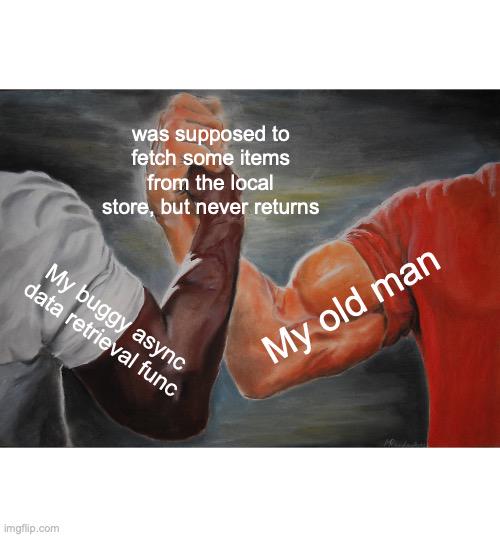
Picture this: you send your buddy to grab snacks from the corner store, and 3.7 seconds later you're ready to file a missing persons report. That's literally what async data retrieval functions are like when they refuse to timeout properly. Your buggy async function went to fetch some local data and apparently decided to take a scenic route through the Bermuda Triangle instead. Meanwhile, you're sitting there watching your app freeze like it's buffering on dial-up internet, desperately trying to implement proper error handling and timeout logic. But noooo, you're emotionally attached to this garbage code like it's your firstborn child. Sometimes you just gotta accept that your function isn't coming back with the groceries and move on with a proper timeout strategy, my dude. 3700 milliseconds is an ETERNITY in computer time—that's basically waiting for Internet Explorer to load a webpage!

Meet Potential Language

Meet Potential Language
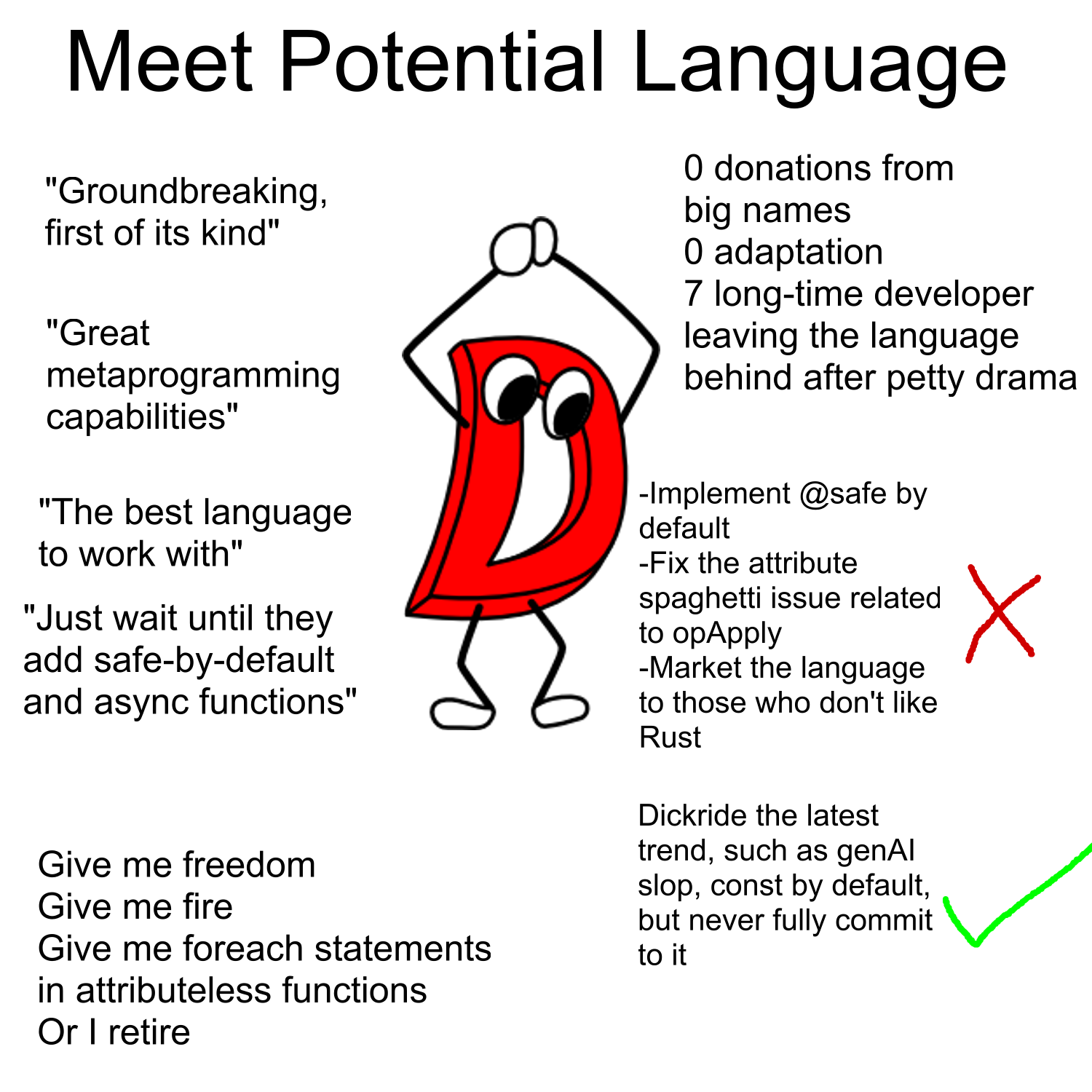
Someone just pitched the D programming language's business plan to investors and it's basically "copy Rust's homework but make it look different." Zero corporate backing, zero adoption, and seven core maintainers rage-quitting after what I can only assume was a heated debate about semicolons. The left side is pure comedy gold—"groundbreaking" metaprogramming that nobody asked for, promises of async features that'll arrive sometime after the heat death of the universe, and the classic "give me foreach or I retire" ultimatum. Patrick Henry would be proud. The right side? Chef's kiss. Their master plan is to market themselves as "Rust for people who don't like Rust" while simultaneously dickriding every trendy feature (genAI slop, const by default) without actually committing to any of them. It's like watching someone try to be edgy and mainstream at the same time. Bold strategy, Cotton. Fun fact: D has been around since 2001 and still hasn't figured out if it wants to be C++, Rust, or its own thing. That's 20+ years of potential energy with zero kinetic results.

Self Taught Javascript Developer

Self Taught Javascript Developer
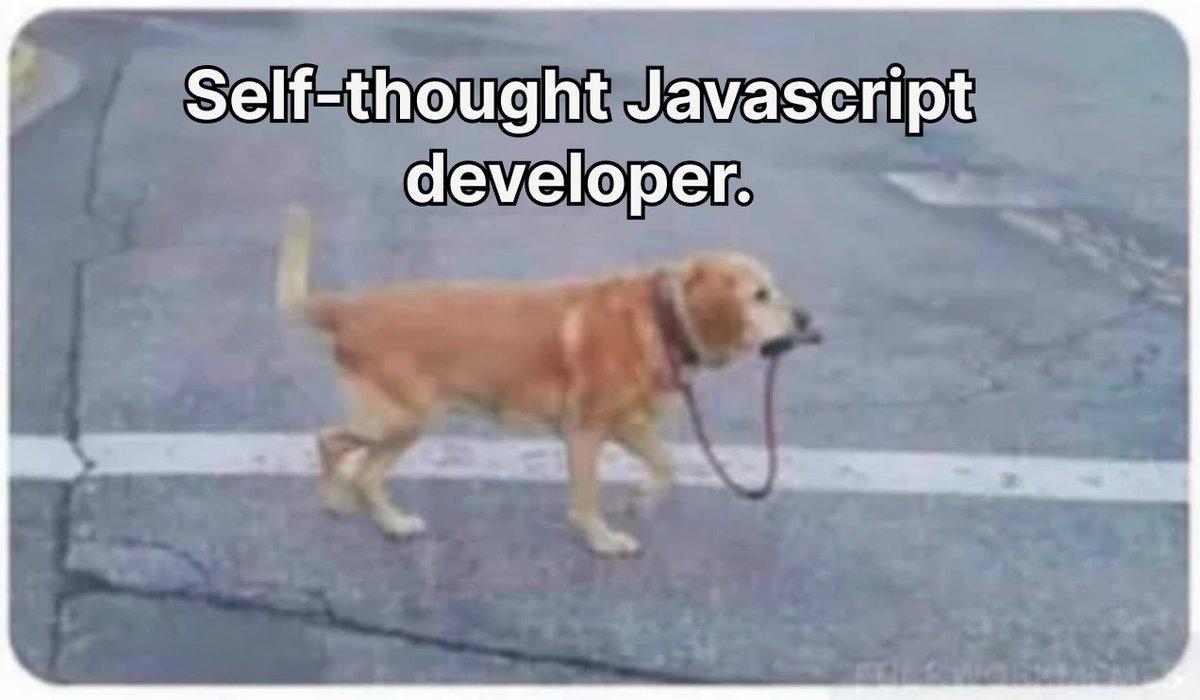
Look, we've all been there. You skip the boring fundamentals, copy-paste from Stack Overflow like it's a competitive sport, and suddenly you're walking yourself through code you barely understand. The dog walking itself is literally every self-taught JS dev trying to explain their spaghetti code during a code review. "Yeah, I know it works, but I'm not entirely sure how or why ." The leash represents the illusion of control you think you have over your async/await mess until production breaks at 2 PM on a Friday.

Async Bullet: Choose Your Death

Async Bullet: Choose Your Death
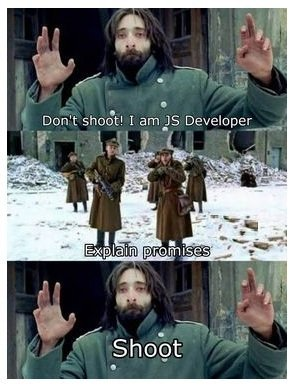
First frame: "Don't shoot! I am JS Developer" with hands up desperately trying to save himself. Second frame: "Explain promises" Third frame: "Shoot" The eternal struggle of JavaScript developers when cornered about explaining async concepts. Sure, they can write promises all day long, but ask them to actually explain how the hell that callback-escaping magic works under the hood, and suddenly taking a bullet seems like the easier option. The callback hell they were trying to escape just became an interrogation hell instead.

NordVPN

NordVPN
Encrypt your traffic on public Wi-Fi, stream from anywhere, and cover up to ten devices with one plan. 30-day money-back guarantee.