

algorithm Memes

Is Leap Year

Is Leap Year
Year 2000 leap year logic is the ultimate litmus test for whether someone actually understands the rules or just memorized "divisible by 4." The century rule (divisible by 100 = not a leap year, UNLESS divisible by 400 = actually a leap year) catches everyone off guard. So 2000 gets people arguing in three camps: the "divisible by 4, obviously yes" crowd, the "wait it's a century year so no" smartypants, and the rare enlightened souls who remember the 400-year exception. The bell curve nails it. Low IQ: simple rule, correct answer. Mid IQ: overthinks it with the century exception, gets it wrong. High IQ: knows the full ruleset, correct answer. It's like watching people debug datetime libraries in real-time.

Well At Least He Knows What Is BS

Well At Least He Knows What Is BS
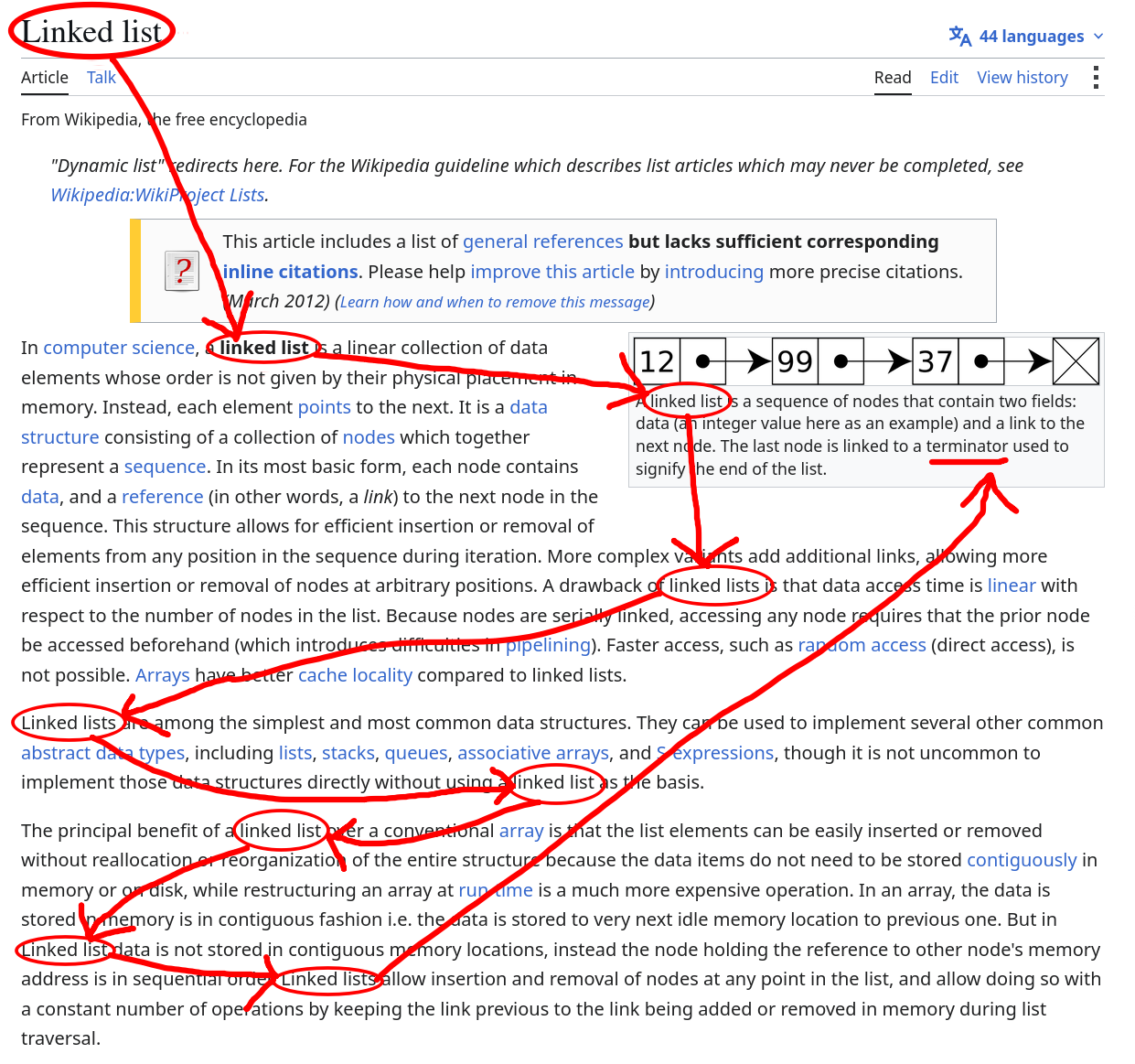
Binary search requires a sorted array to work. A linked list? Sure, you can traverse to the middle element, but you just burned O(n) time getting there. Then you do it again. And again. Congratulations, you've just reinvented linear search with extra steps and way more complexity. The junior dev technically knows what binary search is, which is more than some can say. But applying it to a linked list is like bringing a Ferrari to a swamp—impressive knowledge, terrible execution. At least they're learning the hard way that data structures matter just as much as algorithms. Give it a few more code reviews and they'll get there.

Working On A Raycasting Engine

Working On A Raycasting Engine
So you spent three weeks learning trigonometry, diving into DDA algorithms, and debugging why your walls look like a Salvador Dalí painting, only to realize John Carmack did this in 1992 on hardware that had less computing power than your smart toaster. And he did it while probably eating pizza and writing assembly like it was a casual Tuesday. The "box of triangles" bit hits different when you realize modern game engines abstract all this pain away with their fancy rendering pipelines, but back then? Carmack was literally casting rays and doing trigonometric calculations per pixel to fake 3D in Wolfenstein 3D. No GPU acceleration, no Unity, no "just import Three.js"—just raw math and the will to make demons shootable. Meanwhile, you're here in 2024 with Stack Overflow, ChatGPT, and 64GB of RAM, still struggling to get your raycaster to not crash when you look at a corner. Humbling stuff.

Bad News For AI

Bad News For AI
Google's AI Overview just confidently explained that matrix multiplication "is not a problem in P" (polynomial time), which is... hilariously wrong. Matrix multiplication is literally IN the P complexity class because it can be solved in polynomial time. The AI confused "not being in P" with "not being solvable in optimal polynomial time for all cases" or something equally nonsensical. This is like saying "driving to work is not a problem you can solve by driving" – technically uses the right words, but the logic is completely backwards. The AI hallucinated its way through computational complexity theory and served it up with the confidence of a junior dev who just discovered Big O notation yesterday. And this, folks, is why you don't trust AI to teach you computer science fundamentals. It'll gaslight you into thinking basic polynomial-time operations are unsolvable mysteries while sounding incredibly authoritative about it.

This Absolute Gem In The Mens Toilet Today At Uni

This Absolute Gem In The Mens Toilet Today At Uni
Someone taped a visual guide to urinal etiquette in a CS building bathroom and labeled it "Pigeon Hole Principle." Four urinals, three guys wearing brown shirts, one brave soul in blue who clearly drew the short straw. The Pigeonhole Principle states that if you have n items and m containers where n > m , at least one container must hold more than one item. Applied here: four urinals, but urinal etiquette demands you leave gaps, so really you've only got two usable spots. Guy in blue? He's the overflow. The mathematical proof that bathroom awkwardness is inevitable. Whoever printed this out and stuck it on the wall understands both discrete mathematics and the unspoken social contract of public restrooms. Respect.

It's Working

It's Working
Someone asked for help printing numbers 1-25 in a clockwise expanding spiral pattern. The "solution" is just five hardcoded print statements with the numbers manually typed out in rows. No loops, no algorithms, no spiral logic—just raw, unfiltered copy-paste energy. The sender confidently declares "It's working" like they just solved P=NP. Technically correct? Sure. The numbers are there. They're in some kind of pattern. Mission accomplished, right? This is the programming equivalent of being asked to build a car and showing up with a skateboard taped to a lawnmower. The person who asked for help said "thanks" which means they either didn't actually look at the code, or they've completely given up on life. Both are valid responses in this industry.

Time Complexity 101

Time Complexity 101
O(n log n) is strutting around like it owns the place—buff doge, confident, the algorithm everyone wants on their team. Meanwhile O(n²) is just... there. Weak, pathetic, ashamed of its nested loops. The truth? O(n log n) is peak performance for comparison-based sorting. Merge sort, quicksort (on average), heapsort—they're all flexing that sweet logarithmic divide-and-conquer magic. But O(n²)? That's your bubble sort at 3 AM because you forgot to optimize and the dataset just grew to 10,000 items. Good luck with that. Every junior dev writes O(n²) code at some point. Nested loops feel so natural until your API times out and you're frantically Googling "why is my code slow." Then you learn about Big O, refactor with a HashMap, and suddenly you're the buff doge too.

True But Weird 😭

True But Weird 😭
When you spot the obvious pattern (powers of 2) and write the elegant solution, but your professor apparently spent their weekend deriving a polynomial formula that looks like it escaped from a cryptography textbook. Both answers are technically correct. One takes 2 seconds to write. The other requires factoring a quartic polynomial and probably a sacrifice to the math gods. Your professor chose violence. The real kicker? They're both valid closed forms. It's like showing up to a potluck with a sandwich while someone else brought a seven-layer molecular gastronomy deconstructed sandwich experience.

Evolving Backwards

Evolving Backwards
The face of pure disappointment. Google's search algorithm used to return actual solutions from GeeksforGeeks, but now it's determined to show you AI-generated Medium articles hiding behind paywalls. It's like trading a working Swiss Army knife for a plastic spoon with "premium features." Next they'll suggest I debug production by asking my horoscope.

Which Algorithm Is This

Which Algorithm Is This
BREAKING NEWS: AI absolutely MASSACRES basic arithmetic while showing its work! The audacity of this machine to think that if someone is 70, and their sister was half their age when they were 6, she'd be 73 now?! HONEY, NO! The sister is 67! If she was 3 when you were 6, she's always going to be 3 years younger than you! The age gap doesn't magically change with time! This is why programmers still have job security—AI can't even handle elementary school math problems without making them unnecessarily complicated. And they want this thing driving our cars?! I CAN'T EVEN! 💀

The L1 Cache Chair: Optimized Clothing Access

The L1 Cache Chair: Optimized Clothing Access
THE AUDACITY of parents calling it a "messy pile" when it's CLEARLY an optimized system! Sweetie, this isn't laziness—it's COMPUTER SCIENCE IN ACTION ! My bedroom chair isn't cluttered, it's a sophisticated L1 cache architecture where my most-worn t-shirts achieve BLAZING O(1) access times! The bigger the pile, the fewer cache misses! Do you want me digging through drawers like some kind of BARBARIAN with O(log n) closet lookups?! I am LITERALLY OPTIMIZING MY LIFE while you're over there worried about "tidiness" like it's 1995! The optimization committee has spoken—this pile STAYS!

Check Please: Million Dollar Python Equality

Check Please: Million Dollar Python Equality
Found the one Python programmer who got rich. Not from writing code, but from realizing that p == np evaluates to True when p = np . The P vs NP problem is a million-dollar Millennium Prize, and this genius just "solved" it by assigning a variable. Seven years of computer science education and all I got was this stupid joke about computational complexity theory.