
OOP Is A Construct Of Oppression Installed By The Bourgeoisie

OOP Is A Construct Of Oppression Installed By The Bourgeoisie
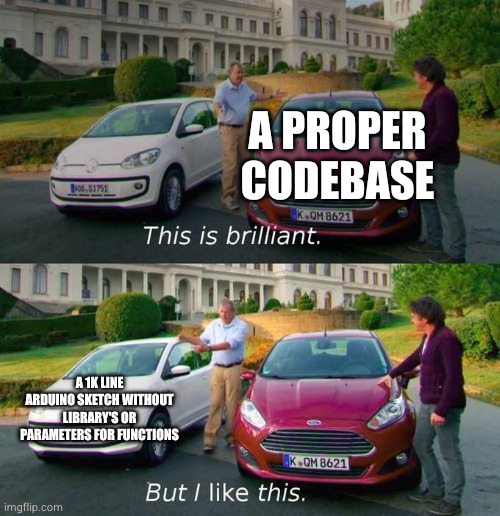
Nothing quite captures the revolutionary spirit like deleting 47 abstract factory singleton builder classes that were "definitely gonna be useful someday." That dopamine hit when you realize your entire inheritance hierarchy can be replaced with three functions and a Map is chef's kiss. The functional programming crowd has been preaching this gospel for decades, but sometimes you need to write your 15th "Manager" class before you see the light. Turns out, not everything needs to be an object. Sometimes a function is just... a function. Wild concept, I know. Bonus points if those "useless classes" included a AbstractSingletonProxyFactoryBean or a VisitorPatternStrategyFactoryManager. The revolution will not be encapsulated.

Never Do Early Morning Coding

Never Do Early Morning Coding
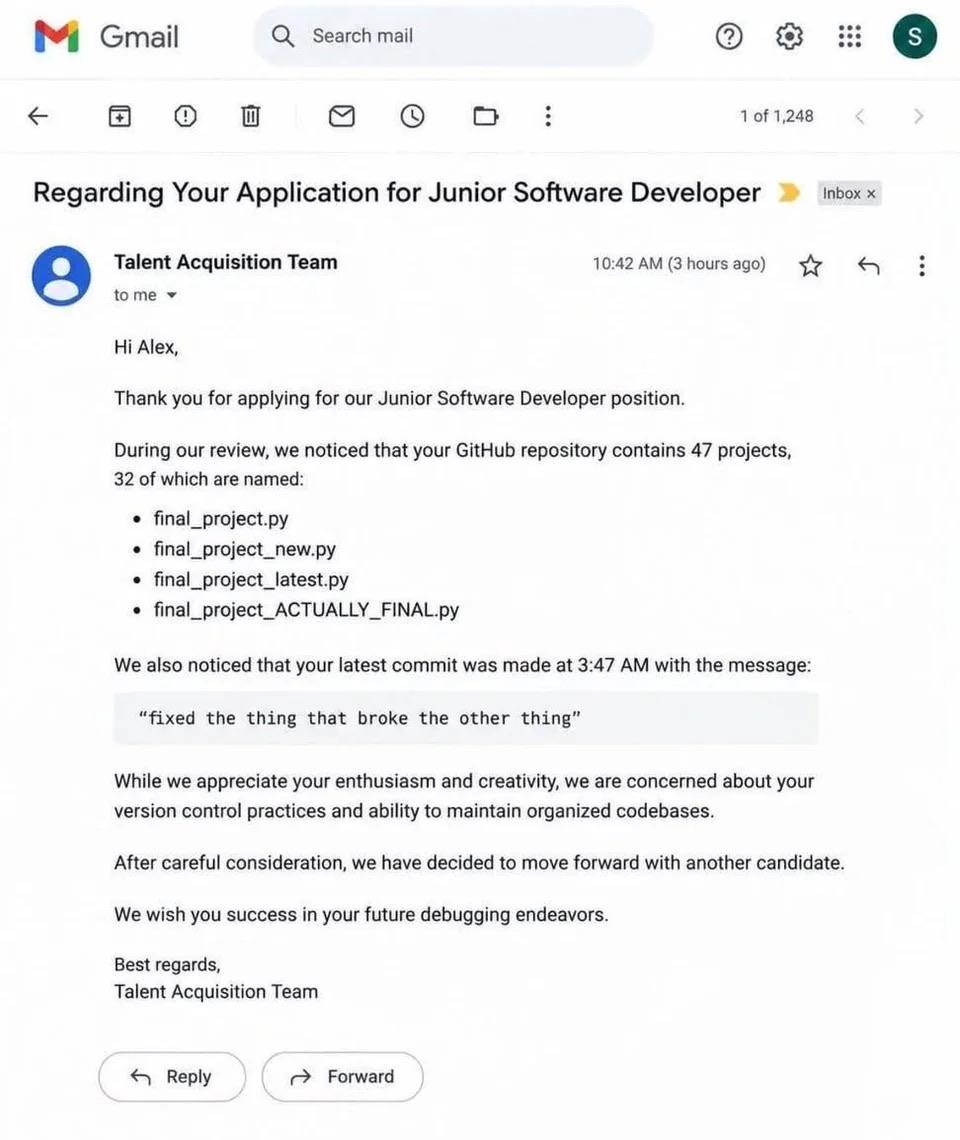
That 4AM code hits different when you're running on pure caffeine and delusion. In the moment, you're basically an architectural genius building the Taj Mahal of functions—elegant, majestic, revolutionary. Then morning comes and you realize you've essentially created a lizard eating a sandcastle. The logic still technically works, but now you're questioning every life choice that led you to write a nested ternary operator inside a recursive function that somehow calls itself through three different callback functions. Sleep-deprived coding is just your brain's way of saying "let's get creative" while simultaneously forgetting what semicolons are for. You'll write variable names like thingDoer2ElectricBoogaloo and think it's perfectly reasonable documentation.

Overcome

Overcome
When you order the wrong audio cable but you've already spent your entire tech budget on energy drinks and mechanical keyboards, so you enter full MacGyver mode. That beautiful abomination of adapters stacked on adapters is the physical manifestation of every developer's "it works on my machine" energy. Sure, it looks like a fire hazard designed by someone who's never heard of signal degradation, but who cares? You're basically an engineer now. Bear Grylls would be proud of this survival instinct—turning a $5 mistake into a $50 Frankenstein's monster of connectors because admitting defeat and ordering the right cable would take 2-3 business days and you need that audio working RIGHT NOW.

When You Touch Legacy Code And Pray Nothing Breaks

When You Touch Legacy Code And Pray Nothing Breaks
You know that feeling when you need to add one tiny feature to code that's been working fine since 2009? The codebase looks clean, organized, almost elegant. Then you change literally one thing—add a single field, update a dependency, breathe too hard near the config file—and suddenly the entire architecture collapses into a tangled mess of spaghetti that would make an Italian chef weep. The best part? You can't even figure out what half of it does anymore. There are no comments. The original developer left the company six years ago. The documentation is a README that just says "it works, don't touch it." But here you are, touching it. And now production is on fire. Legacy code: held together by duct tape, prayers, and the sheer terror of the next person who has to maintain it.

I Just Saved Them Billions In R&D

I Just Saved Them Billions In R&D
Someone just cracked the code to AI development: literally just tell the AI to not mess up. Genius. Revolutionary. Why are these companies spending billions on training data, compute clusters, and PhD researchers when the solution was this simple all along? The beautiful irony here is that each AI politely acknowledges it can make mistakes right below the prompt demanding perfection. It's like telling your buggy code "just work correctly" in a comment and expecting that to fix everything. Narrator: It did not fix everything. If only software development were this easy. "Write function, make no bugs." Boom, unemployment for QA teams worldwide.

App

App
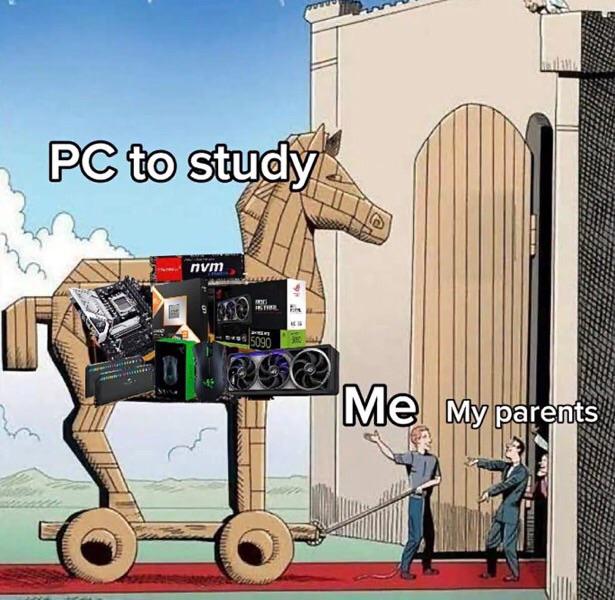
The classic NPC energy right here. Someone wakes up one day, hears "good with computers" from their family because they fixed the WiFi once, and suddenly thinks they're ready to build the next unicorn startup. No GitHub, no portfolio, no understanding of what "full-stack" means—just pure, unfiltered confidence and a dream. Then comes the pitch meeting where they describe their "revolutionary idea" that's basically Instagram meets Uber for dog walkers, expecting you to build it for equity while they handle "the business side." Spoiler alert: the business side is them making a logo in Canva. The real kicker? They always want it done in two weeks. Because apps are easy, right?

I Don't Blame You I Blame Your Employer

I Don't Blame You I Blame Your Employer
Someone finally said it out loud and the "Agile Coaches" are sweating. The truth is, most companies treat Agile like it's a recipe from IKEA - just follow the steps and you'll get productivity furniture. But Agile isn't about mandatory daily standups that could've been a Slack message, or sprint planning meetings that eat half your Monday. It's supposed to be about values like collaboration, adaptability, and responding to change. Instead, we got Jira tickets, story points that nobody agrees on, and managers who think "being agile" means changing requirements every 3 hours while still expecting the same deadline. The real kicker? Developers know this. They're sitting in their fifth ceremony of the week, silently screaming. But hey, if those kids in the window (management) could actually read the Agile Manifesto instead of just attending a 2-day certification course, they'd realize they've been cargo-culting the whole thing.

Let's Not Talk About That

Let's Not Talk About That
You know that feeling when someone asks you to explain a function you wrote six months ago? Or worse, one you wrote last week? Your brain goes into full panic mode trying to deflect like a politician at a hearing. "The DOW is over 50,000 right now, that's what we should be talking about!" Yeah, and that nested ternary operator you wrote is a crime against humanity, but here we are. The desperate subject change is real when you realize you have absolutely no idea what that 47-line function actually does anymore. You just know it works... probably... don't touch it. Pro tip: This is why comments exist. But let's be honest, you're not going to write them either. We'll just keep playing this game of "it works, ship it" until someone brave enough asks questions during code review.

The Code Run Time Errors Please Fix

The Code Run Time Errors Please Fix
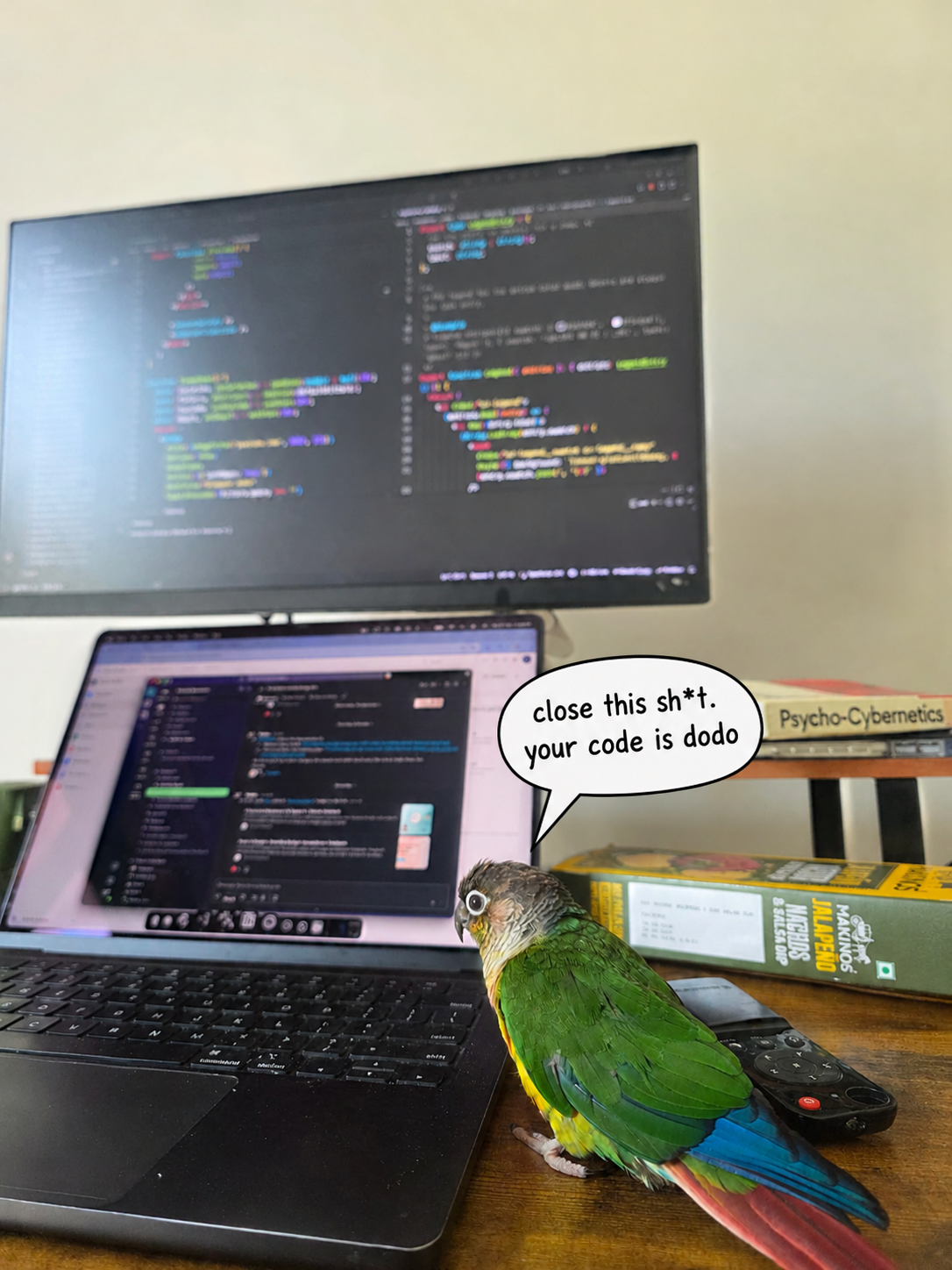
We've reached the point where developers have outsourced their entire debugging workflow to ChatGPT and Claude. Just paste the error, stare intensely at the screen like you're summoning ancient spirits, and wait for the AI overlords to fix your mess. Gone are the days of actually reading stack traces or understanding what your code does. Why waste time learning when you can just vibe check your way through production? The LLM becomes your personal debugger, therapist, and rubber duck all in one. Honestly though, we've all been there. Sometimes you just want the answer without the journey. But remember: the LLM is just guessing based on patterns. It doesn't actually run your code or understand your specific context. So when it confidently tells you to add await to a synchronous function, maybe take a second to think it through.

Just Tired

Just Tired
When the "AI girlfriend without makeup" meme has been reposted so many times that it's showing up in every programmer subreddit with the same GPU joke, and you're just sitting there watching the internet recycle the same content for the 47th time this week. The joke itself is solid: comparing an AI girlfriend to computer hardware (specifically a graphics card) because, you know, AI runs on GPUs. But seeing it flood your feed in multiple variations is like watching someone deploy the same bug fix across 15 different branches. We get it. The AI girlfriend IS the hardware. Very clever. Now can we move on? It's the digital equivalent of hearing your coworker explain the same algorithm at every standup meeting. Sure, it was interesting the first time, but by iteration 50, you're just... tired, boss.

We Are Not The Same

We Are Not The Same
The ultimate business model: create the problem, sell the solution. One side's writing antivirus software to protect users from malware, all wholesome and innocent. The other? Crafting the viruses themselves to ensure there's always demand for that antivirus subscription. It's like being both the arsonist and the fire department—except way more profitable and significantly more illegal. Vertical integration at its finest, really. The security industry's darkest open secret, wrapped in a perfectly executed meme format.

Save Me From Gradle Please

Save Me From Gradle Please
You want to make a game? Cool! You're using Java? Great choice! Oh wait, you're using Gradle as your build tool? Say hello to your new full-time job: deciphering cryptic dependency resolution errors that read like ancient hieroglyphics written by a caffeinated elephant. The Gradle elephant starts off looking all cute and friendly, but then it transforms into this nightmare creature that throws walls of red text at you. "Failed to resolve all artifacts for configuration 'classpath'" – yeah, thanks buddy, super helpful. Nothing says "fun game development" quite like spending 6 hours debugging your build system instead of actually building your game. The best part? The error message is longer than your actual game code. Gradle's basically that friend who can't give you simple directions and instead explains the entire history of the road system.