Works on my machine Memes

Posts tagged with Works on my machine

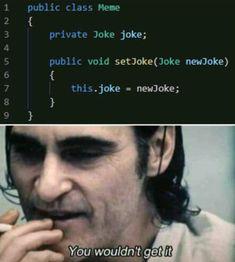
They Don't Get It

They Don't Get It
When you're trying to explain why the production server is on fire because someone pushed directly to main at 4:47 PM on a Friday, and your non-technical friend is like "just turn it off and on again?" The sheer existential dread of being comforted by someone who thinks CSS is a government agency. These adorable kittens hugging it out represent the well-meaning but utterly clueless consolation you get when you're spiraling about merge conflicts, race conditions, or why the code works on your machine but nowhere else in the known universe. They mean well, bless their hearts, but they'll never understand the soul-crushing weight of a "works on my machine" situation or the horror of discovering your entire database backup script has been failing silently for six months.

Docker Slander

Docker Slander
Docker gets real smug when someone says "works on my machine" because that's literally its entire pitch deck. The containerization messiah swoops in to save the day from environment inconsistencies, only to get absolutely humiliated when it realizes it also just "works on my machine." Turns out Docker didn't solve the problem—it just became the problem with extra steps and a YAML file. Now you've got Docker working perfectly on your laptop while your teammate's setup implodes because their WSL2 decided to have an existential crisis, or someone's running an M1 Mac and suddenly every image needs a different architecture. The irony is chef's kiss level: the tool designed to eliminate "works on my machine" syndrome becomes patient zero.

The Real Struggle Of Programming

The Real Struggle Of Programming
You know what's wild? After 10+ years in this industry, I can architect a distributed microservices system in my sleep, but ask me to get Node versions, Docker containers, environment variables, and database connections working on a fresh machine? Suddenly I'm googling "why is my localhost refusing connection" for the 847th time. The actual coding is just the tip of the iceberg. Below the surface lurks the absolute monstrosity of dependency hell, conflicting Python versions, that one environment variable you forgot to set, Docker daemon not running, ports already in use, SSL certificates expired, and my personal favorite: "works on my machine" syndrome. Spent 30 minutes writing elegant code? Cool. Now spend 3 hours figuring out why your colleague's setup script doesn't work because they're on an M1 Mac and you're on Windows with WSL2 and nothing is compatible with anything anymore.

Hundred Percent Uptime

Hundred Percent Uptime
The eternal battle between localhost and production environments depicted as an epic fantasy showdown. Your code runs flawlessly on your machine (the almighty localhost god), but dares to challenge the chaotic beast that is the US-East-1 AWS region, where dreams go to die and uptime promises are shattered like that tiny warrior's hope. The difference between "works on my machine" and "surviving in production" isn't just a deployment—it's crossing dimensions into a hellscape where different rules apply.

If It Works Don't Touch It

If It Works Don't Touch It
Ah yes, the classic "bird that somehow flies" approach to software development. Started with a proper, well-drawn bird in the top left, then progressively descended into abstract scribbles that barely resemble anything—yet somehow still functions. Every senior dev has that one codebase they're afraid to touch. You know, that unholy amalgamation of spaghetti code, duct tape, and prayers that's been running in production for 7 years without incident. Sure, nobody understands how it works anymore, the original developer left to "find themselves" in Bali, and the documentation consists of a single README that just says "Good luck." But hey, it works! The fourth panel is basically what happens when management says "just do a quick refactor." Suddenly your beautiful bird is an unrecognizable dot flying away with your sanity.

How Docker Was Born

How Docker Was Born
The eternal developer nightmare: "It works on my machine." Then some wise guy says, "Let's just ship your machine then." And boom—containerization was invented. Docker basically puts your entire development environment in a box and ships it around like a digital FedEx, minus the crushed packages. No more dependency hell or configuration purgatory. Just seal it up and send it off.

Local Host, Remote Problems

Local Host, Remote Problems
Developer smugly declares "it runs fine on my browser" while sharing a localhost URL that only works on their machine. The tester asks for the link, gets http://localhost/test2 , and the QA team proceeds to strangle the developer for their networking sins. Classic case of "works on my machine" syndrome - the developer equivalent of "the check's in the mail."

Environment Parity: The Greatest Lie In Tech

Environment Parity: The Greatest Lie In Tech
The eternal developer mystery: code that runs flawlessly on your laptop and staging server suddenly implodes in production like it's allergic to real users. That confused dog face is exactly how we all look during the emergency Slack call at 2AM while the CEO breathes down our necks. "But it worked on MY machine!" - famous last words before updating your resume. The real production environment is like that one friend who's allergic to everything on the menu.

It Works On My Machine

It Works On My Machine
The universal developer escape hatch strikes again! Nothing quite captures the cold sweat of a PM meeting like when they ask why the app is crawling like a turtle in molasses, and you're sitting there knowing full well it's probably because you're running it locally with 32GB RAM while production has the computing power of a toaster. The classic "works on my machine" defense is basically the developer equivalent of a kid saying "wasn't me" with chocolate all over their face. At this point, we should just start shipping our laptops to customers instead of code.

Everything Is Important

Everything Is Important
Ah, the classic "it worked on my machine" scenario but with extra steps. Junior dev introduces a bug to production, sees it once during testing, can't reproduce it, and assumes it's magically fixed. Meanwhile, senior dev's expression says it all – they've seen this horror movie before and know exactly how it ends. That bug is probably sitting in production right now, waiting for the worst possible moment to resurface... like during a demo to the CEO or when everyone's trying to leave early on Friday.

Who Wants To Be A Programmer

Who Wants To Be A Programmer
Ah, the four horsemen of developer excuses! That moment when your client hits you with the dreaded "it doesn't work" with zero context, and you're suddenly on a game show with no lifelines. The correct answer? All of the above, in rapid succession, followed by asking them to send a screenshot that will inevitably be a photo of their monitor taken with a potato. After 15 years of coding, I've used every single one of these excuses. My personal favorite is "works on my machine" – the programmer's equivalent of "not my problem" but with just enough technical ambiguity to sound legitimate.

Submit Your Answers In Writing

Submit Your Answers In Writing
The eternal question that strikes fear into the heart of every coder! When a client drops the dreaded "it doesn't work" bomb with zero context, we all reach for our favorite defensive programming excuses. Option D is basically the programmer's version of pleading the fifth. "Works on my machine" is the universal get-out-of-jail-free card that's been keeping developers employed since the dawn of computing. That shrugging ASCII face is the digital equivalent of slowly backing away while maintaining eye contact. The real answer? "Please provide steps to reproduce, error messages, and what you expected to happen instead." But that wouldn't fit on the quiz show, would it?