

Space Memes

Posts tagged with Space
Magnets, Yeah

Magnets, Yeah
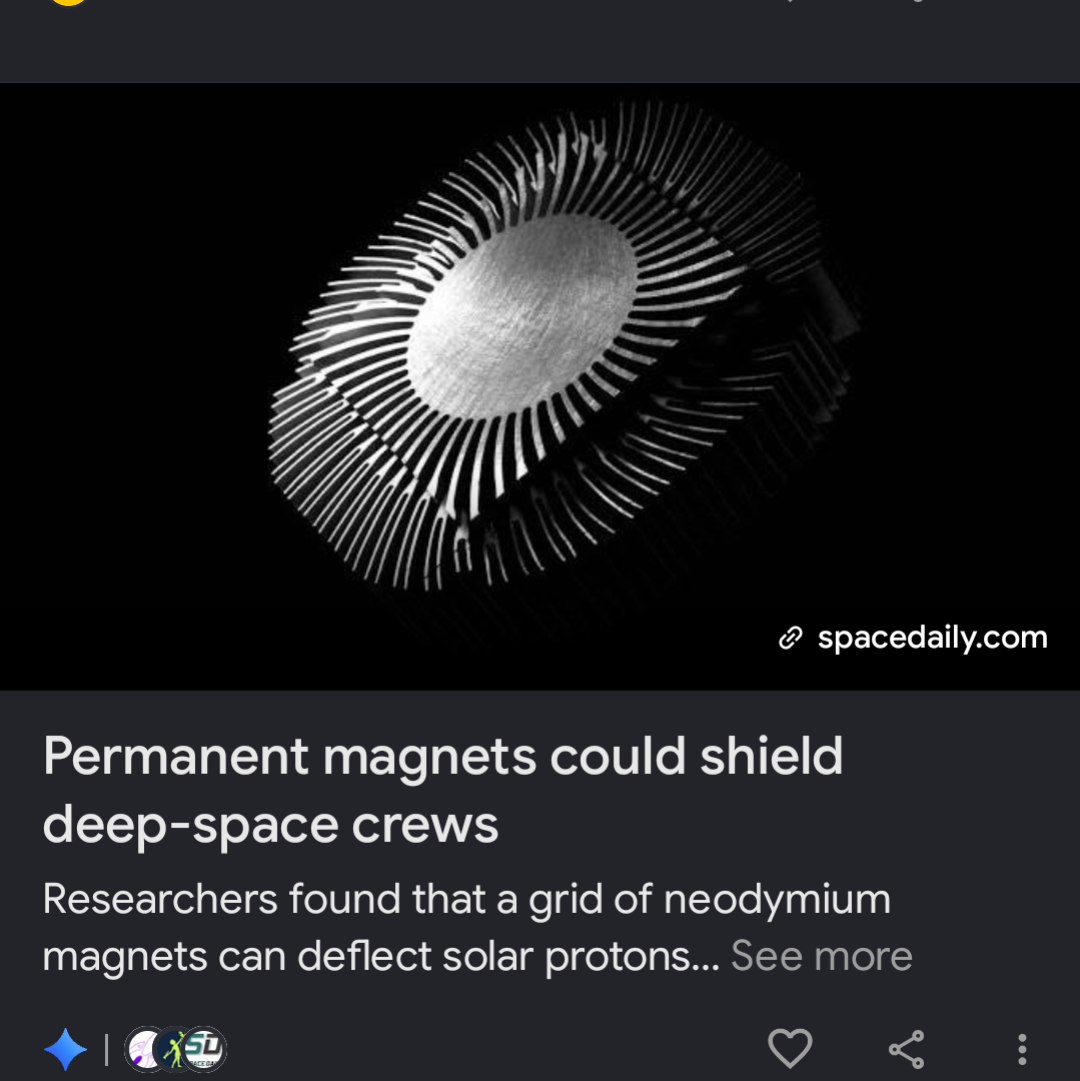
When scientists discover that magnets can deflect solar radiation for deep-space travel, but you still can't figure out why your CSS grid won't center properly. Priorities, people. Humanity over here solving cosmic radiation with fancy neodymium magnetic shields while half of us are still Googling "how to exit vim" and the other half are debugging why their code works on localhost but not in production. We can protect astronauts from deadly solar protons but can't protect ourselves from merge conflicts on a Friday afternoon. The real question is: can these magnets deflect my PM's unrealistic deadlines? Because that's the kind of shielding I actually need.

Probably The Most Sweat-Inducing User Input Verification Code In History

Probably The Most Sweat-Inducing User Input Verification Code In History
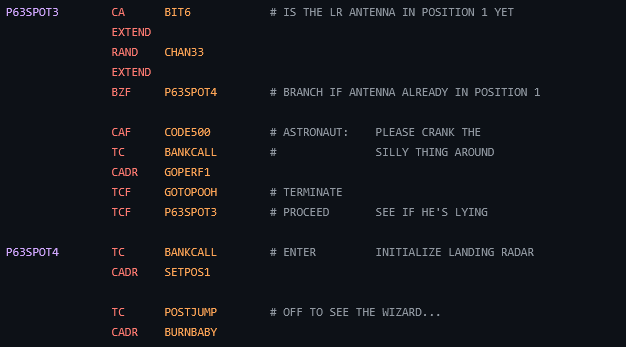
When your user input validation involves checking if an astronaut is lying about cranking the antenna, you know you've gone beyond typical form validation. This is actual code from the Apollo Guidance Computer that controlled the lunar module landing. The comments are pure gold: "PLEASE CRANK THE SILLY THING AROUND", "SEE IF HE'S LYING", and my personal favorite, "OFF TO SEE THE WIZARD..." These programmers were literally writing life-or-death code in assembly while maintaining the energy of someone debugging a WordPress plugin at 2 PM on a Friday. The stakes? If the astronaut says the antenna is in position 1 but it's not, the landing radar might not work. No pressure. Just a quarter-million-mile commute with no AAA coverage. Makes your production deployment anxiety look pretty tame, doesn't it? Fun fact: This code was woven into rope memory by hand. Literally. Each bit was a wire threaded through or around a magnetic core. One typo meant rewiring the entire thing. And you complain about merge conflicts.

This Meme Has A Double Meaning Now...

This Meme Has A Double Meaning Now...
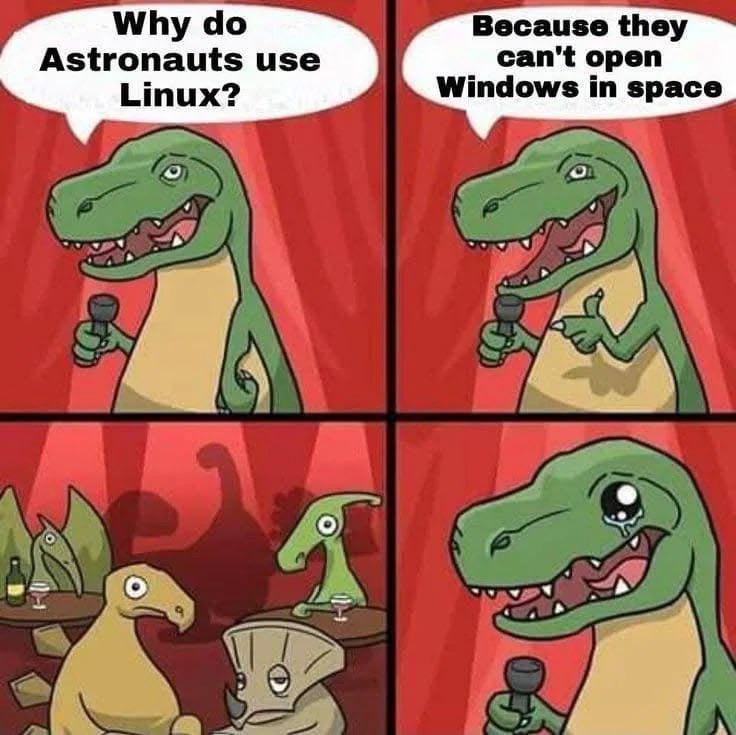
The cosmic dad joke that keeps on giving! First layer: you literally can't open windows in space because, you know, *instant death via vacuum*. Second layer: Windows (the operating system) is so notoriously unstable that NASA wouldn't trust it to run a toaster, let alone mission-critical space systems. Meanwhile, Linux is sitting up there on the International Space Station and Mars rovers like the reliable champion it is—stable, secure, and doesn't randomly decide to update itself mid-spacewalk. Windows would probably BSOD the moment it detected zero gravity and ask you to restart the entire space station. The double entendre here is *chef's kiss*—physical windows AND the OS that astronauts wouldn't touch with a ten-foot robotic arm. Pure genius wrapped in dad joke packaging!

Progress

Progress
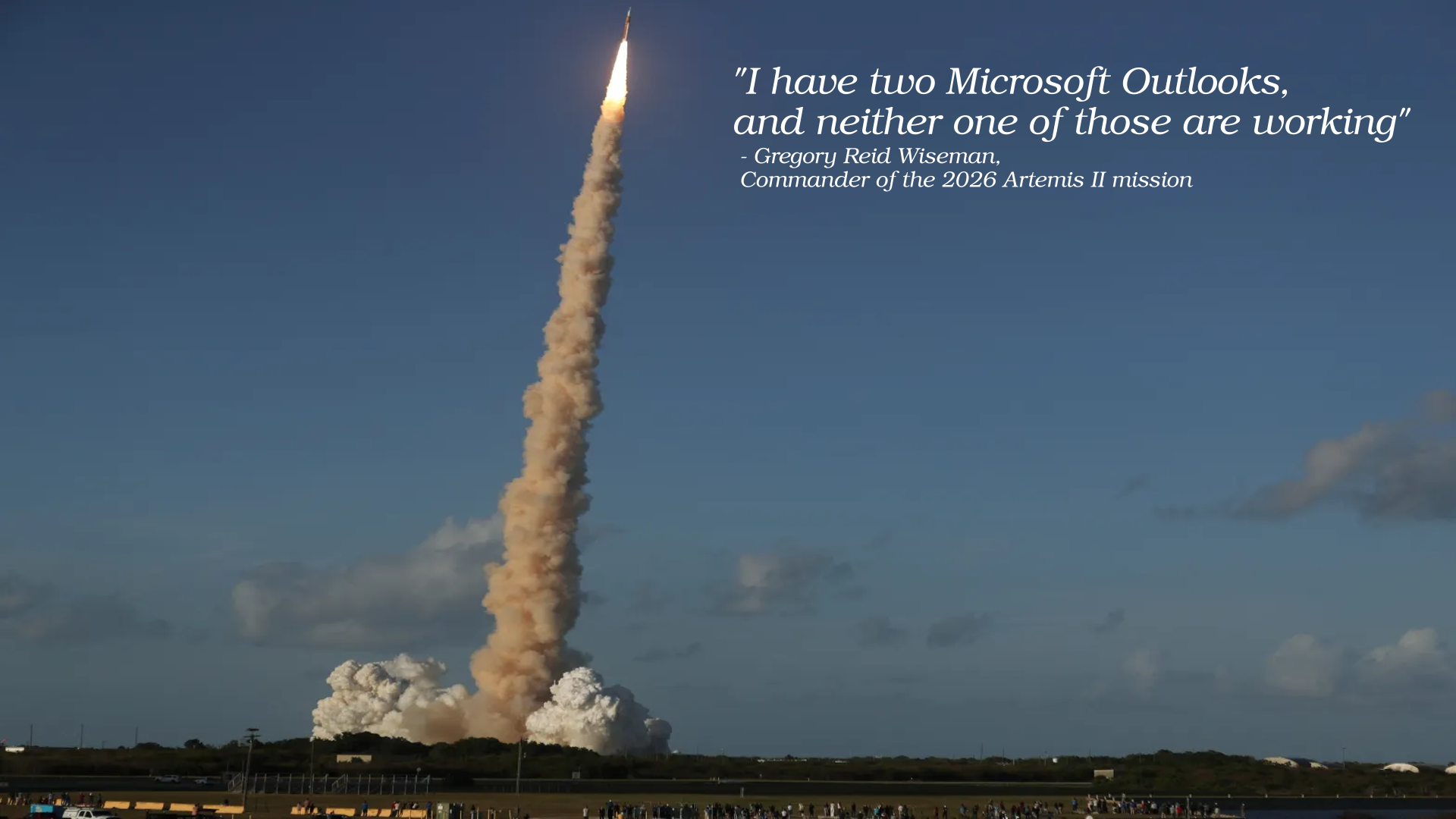
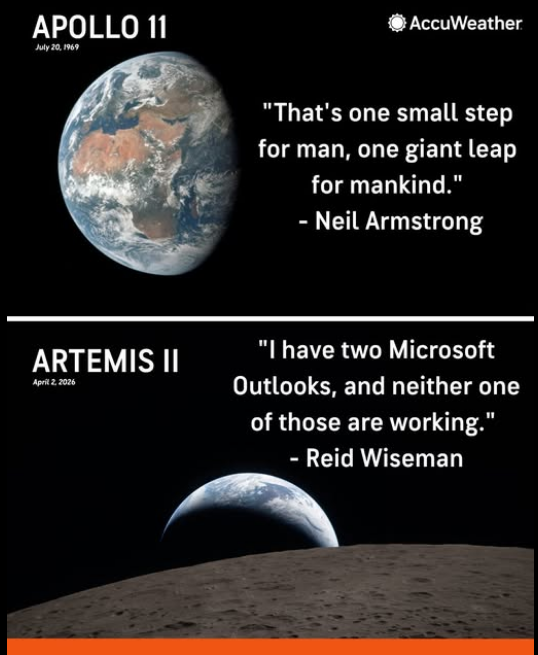
From landing on the moon with 4KB of RAM to landing on the moon with two instances of Outlook that won't even open. Humanity went from calculating orbital trajectories on computers less powerful than a toaster to being unable to manage email on machines that could run the entire Apollo program a thousand times over. The irony is beautiful: we've got exponentially more computing power, yet somehow we're struggling with basic productivity software. Armstrong made history with less computational power than your smart fridge, while modern astronauts are probably rebooting Outlook in orbit. Nothing screams "technological advancement" quite like needing two broken instances of the same email client. Fun fact: The Apollo Guidance Computer had 64KB of memory and got humans to the moon. Meanwhile, Outlook uses about 200MB just to tell you "Not Responding." Progress, indeed.

Memorialized For All Time

Memorialized For All Time
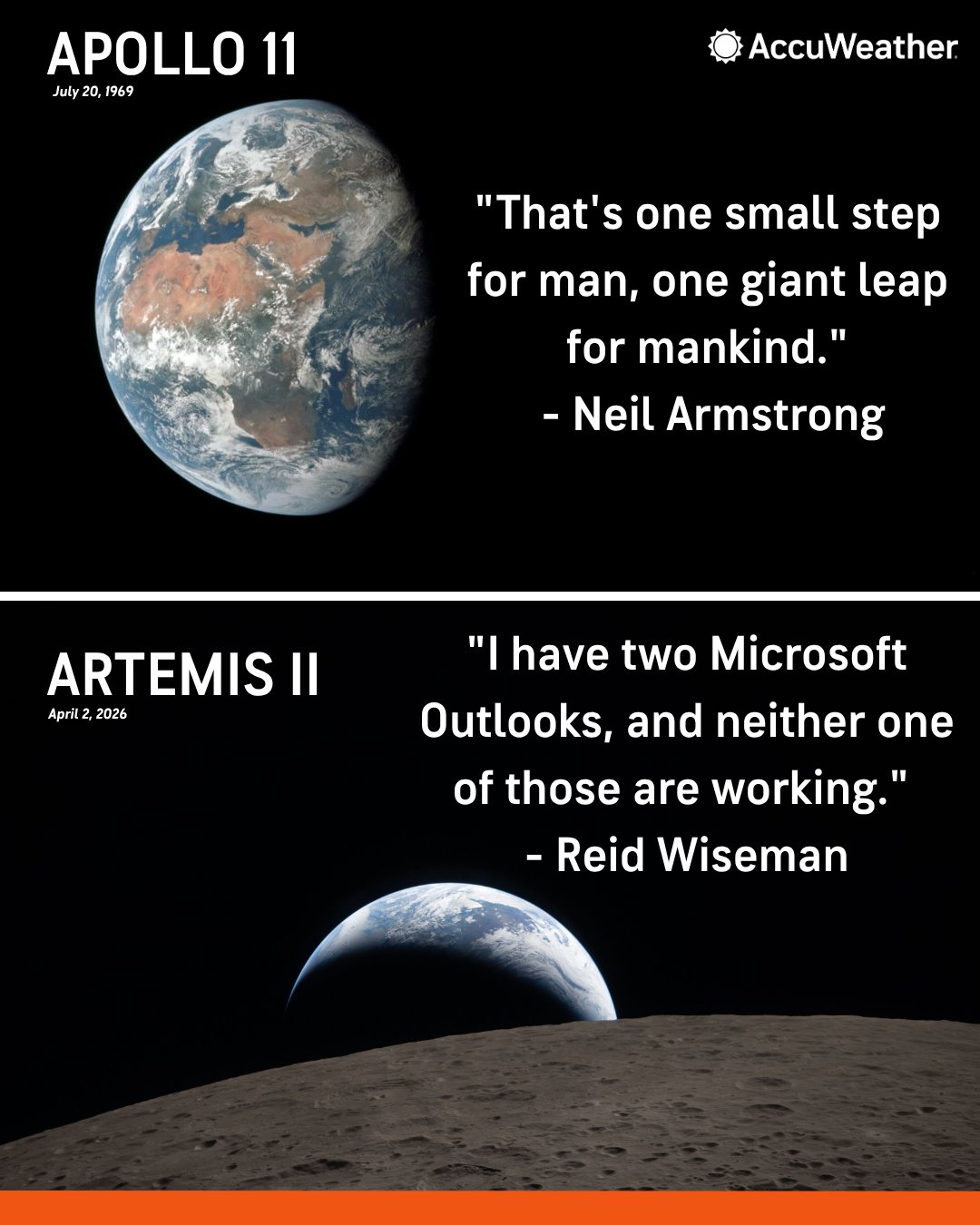
Nothing says "humanity's greatest achievements" quite like comparing landing on the moon to... complaining about Microsoft Outlook from the actual moon. Apollo 11: Neil Armstrong delivers one of history's most iconic quotes while taking humanity's first steps on another celestial body. Artemis II: Reid Wiseman immortalizes the universal developer experience of Microsoft products refusing to cooperate at the worst possible moment. Both equally important contributions to human civilization, obviously. The fact that even 50+ years later, astronauts are still dealing with the same Microsoft nonsense we all suffer through daily is somehow both depressing and oddly comforting. At least we know that even in space, nobody can hear you scream at Outlook for syncing issues. Future generations will look back at these quotes with equal reverence. One small bug for man, one giant headache for IT support.

To The Brave Astronauts Taking Us Back To The Moon, We Feel Your Pain

To The Brave Astronauts Taking Us Back To The Moon, We Feel Your Pain
You're literally hurtling through space in a billion-dollar rocket, trusting your life to cutting-edge aerospace engineering, and somehow Microsoft Outlook is still your biggest problem. Both instances broken. Classic. Nothing says "humanity's greatest achievement" quite like fighting with email client software while preparing for lunar orbit. The commander of a moon mission dealing with Outlook issues is the most relatable thing NASA has ever produced. Forget Tang and freeze-dried ice cream—the real space program legacy is enterprise software that refuses to work even in zero gravity. At least when the rocket fails, you know why. When Outlook fails, it's just vibes and prayer. Godspeed, Commander Wiseman. May your inbox sync better than your trajectory calculations.

Beelink SER9 Pro AI Mini PC, AMD Ryzen 7 H255 (Up to 4.9GHz), 24GB LPDDR5X 6400MT/s 1TB NVMe SSD, Radeon 780M, Built-in Mic/Speaker, USB4, WiFi 6, 2.5G LAN, 4K@240Hz Triple Display, Desktop Computer

Beelink SER9 Pro AI Mini PC, AMD Ryzen 7 H255 (Up to 4.9GHz), 24GB LPDDR5X 6400MT/s 1TB NVMe SSD, Radeon 780M, Built-in Mic/Speaker, USB4, WiFi 6, 2.5G LAN, 4K@240Hz Triple Display, Desktop Computer
[Next-Gen AI Performance & Ryzen 7 H255] Powered by the latest AMD Ryzen 7 H255 (upgraded 8745HS) processor (8C/16T, up to 4.9GHz), Beelink SER9 Pro delivers a 40% performance leap over the 7735HS. W…

Few Things Won't Change

Few Things Won't Change
The year is 2070. Flying cars exist. We've colonized Mars. Quantum computing powers everything. But the Linux kernel? Still not "vibe code." Some poor maintainer is getting a pull request rejected because Linus doesn't think their commit messages spark joy. 50 years from now and we'll still be using git, still dealing with legacy code from the 90s, and still arguing about tabs vs spaces. The more technology advances, the more kernel development stays exactly the same.

Why Do Astronauts Use Linux?

Why Do Astronauts Use Linux?
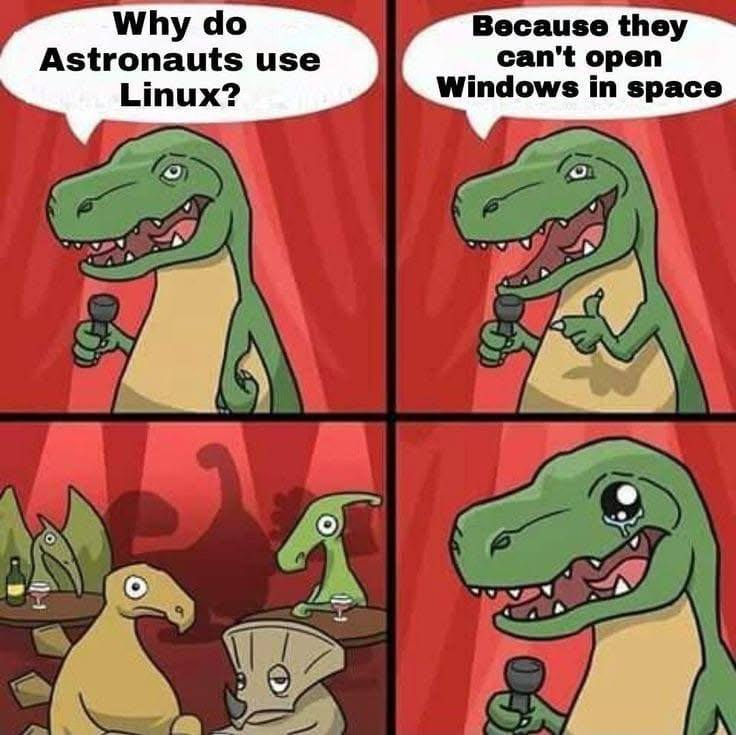
The oldest joke in the OS wars still hits different after all these years. NASA actually does use Linux in space because it's reliable, customizable, and doesn't randomly decide to update when you're trying to not die in the vacuum of space. Meanwhile, the rest of us are just trying to convince management that rebooting the production server during business hours is, in fact, a terrible idea. But hey, at least we're not trying to open Windows in space.

The Most Epic Hotfix In The Universe

The Most Epic Hotfix In The Universe
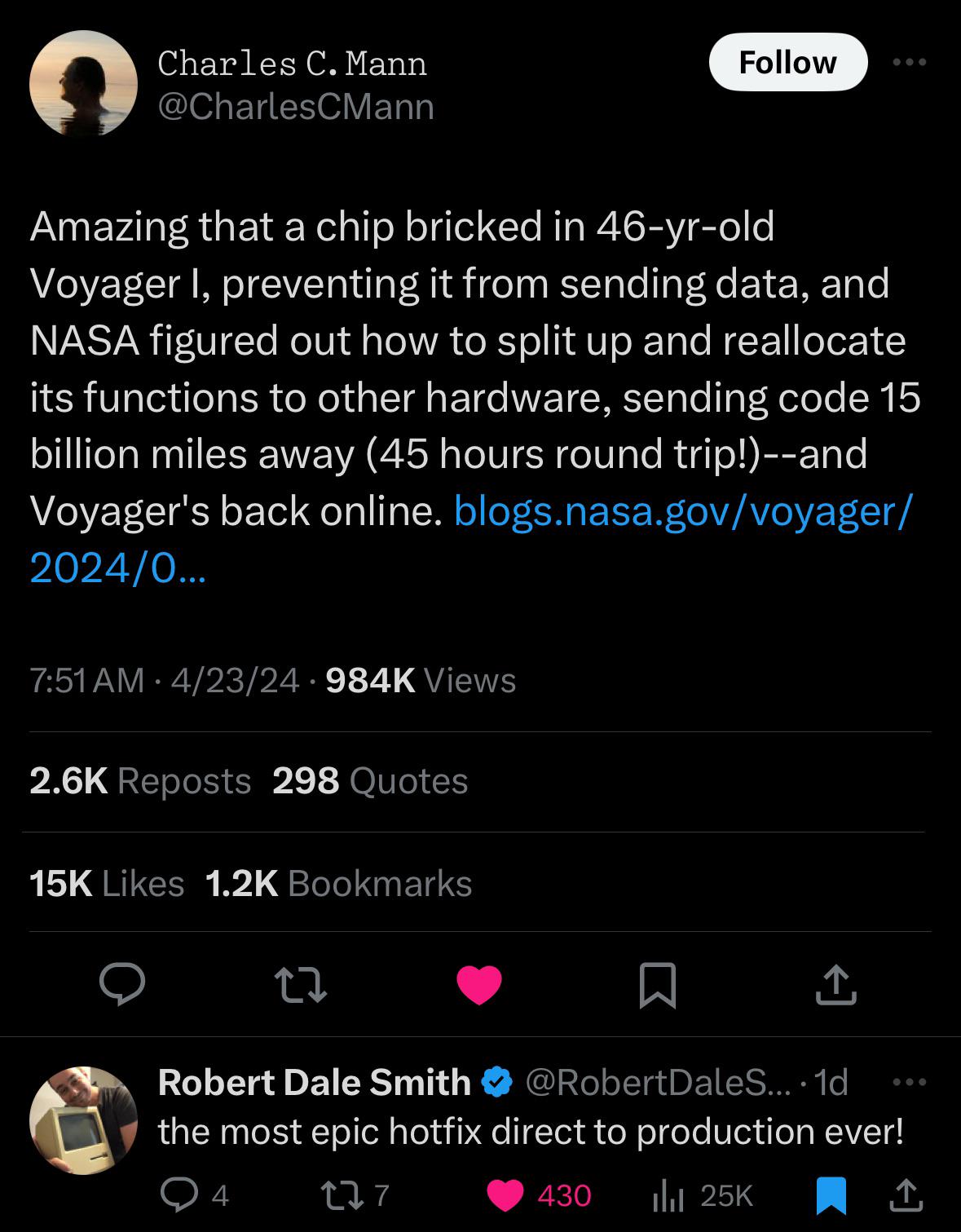
NASA engineers just performed a remote firmware update on a 46-year-old spacecraft 15 billion miles away with a 45-hour round-trip latency. Meanwhile, I have to restart my IDE three times to get syntax highlighting working properly. The comment about it being "the most epic hotfix direct to production ever" is pure gold—imagine pushing code straight to prod when your rollback plan involves a 45-hour wait to see if it worked. That's not continuous deployment, that's interstellar deployment.

Why Do Astronauts Use Linux?

Why Do Astronauts Use Linux?
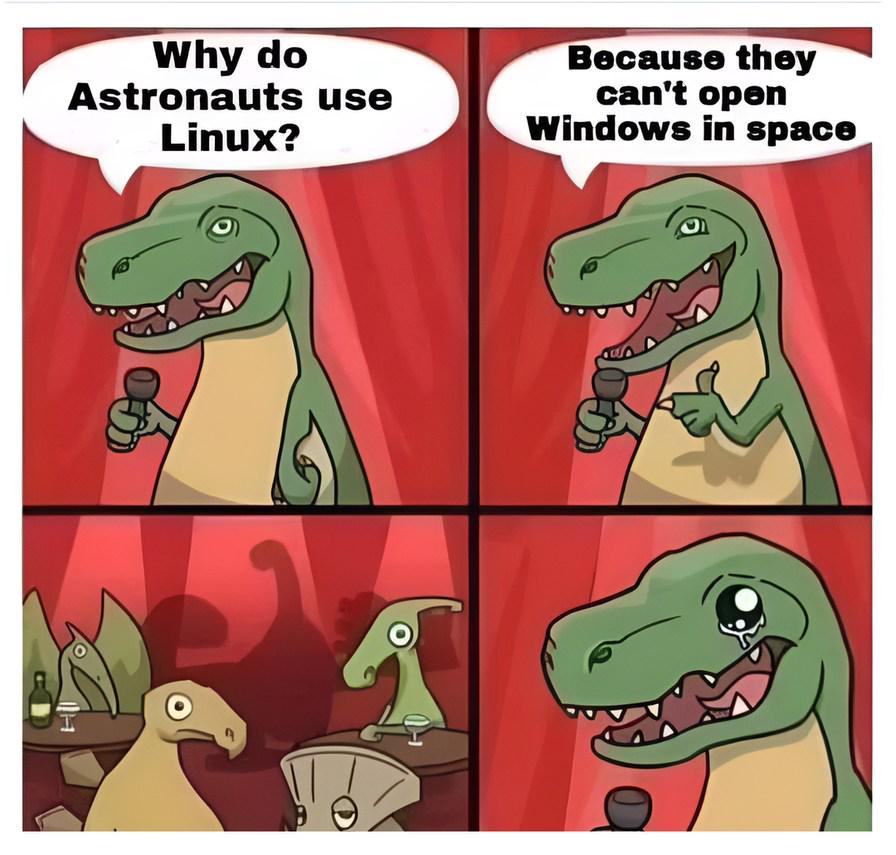
The absolute PEAK of dad joke programming humor! A dinosaur comedian delivers the most catastrophically painful pun in the universe: "Why do Astronauts use Linux? Because they can't open Windows in space!" 💀 It's simultaneously SO BAD it's physically painful yet SO GENIUS I can't even handle it. The double meaning is just *chef's kiss* - actual spacecraft windows would cause explosive decompression, while Microsoft Windows would cause... well, equally catastrophic system failures. The dinosaur's smug little face in the third panel knows EXACTLY what crime against humor it just committed.

Who Here Works For NASA

Who Here Works For NASA
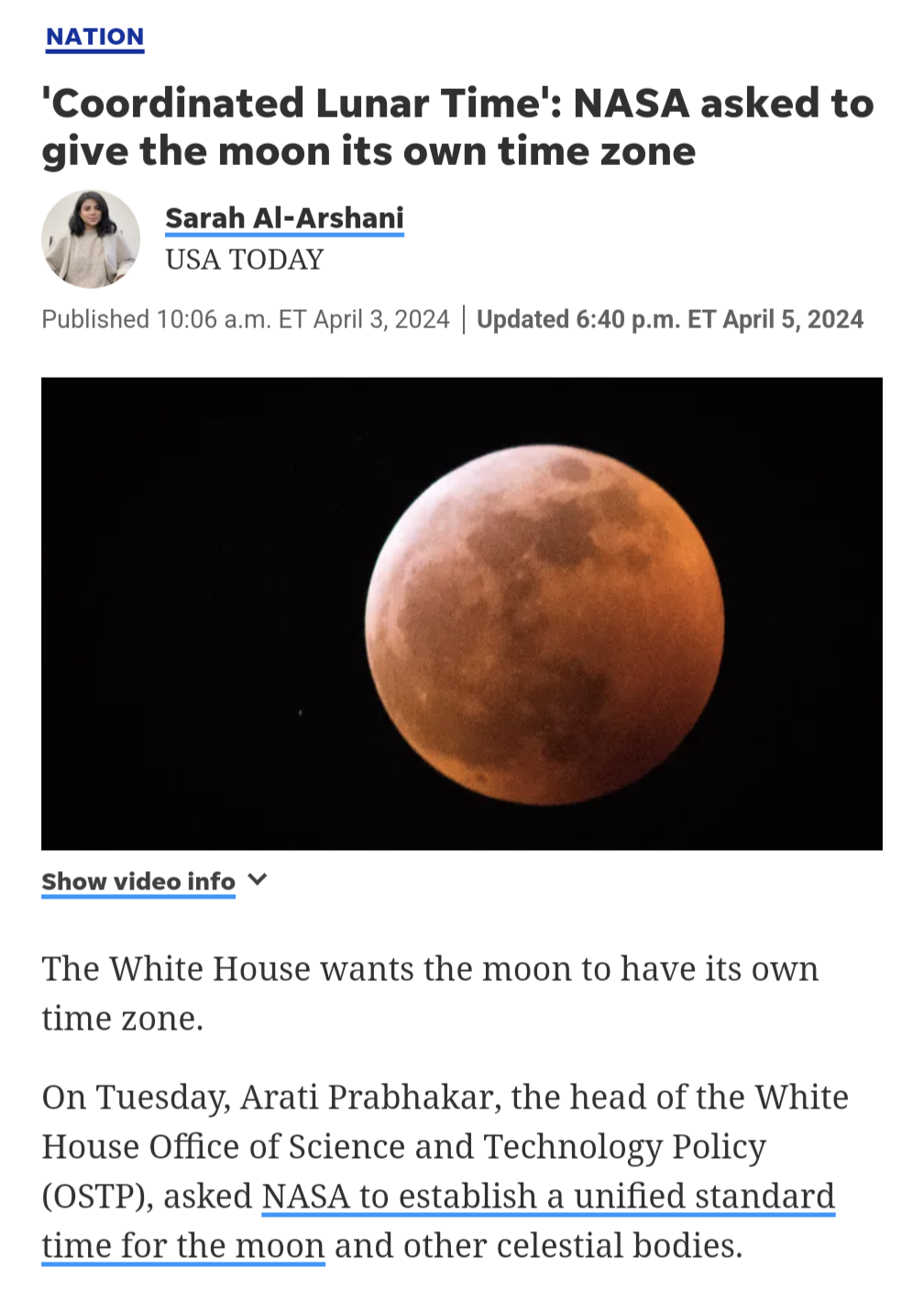
Ah yes, because every developer's first instinct when seeing "NASA needs to establish lunar time" is thinking: "Finally! A chance to implement datetime.moon and watch it break absolutely everything!" Just imagine the Stack Overflow questions: "Why is my lunar microservice 2.8 seconds behind Earth production?" or "Help! My app shows different times depending on which side of the moon the user is on!" The real fun begins when some junior dev accidentally uses lunar timestamps for Earth transactions and suddenly everyone's Prime delivery is scheduled to arrive in 29.5 Earth days. Classic.

The Universal IT Solution Reaches Space

The Universal IT Solution Reaches Space
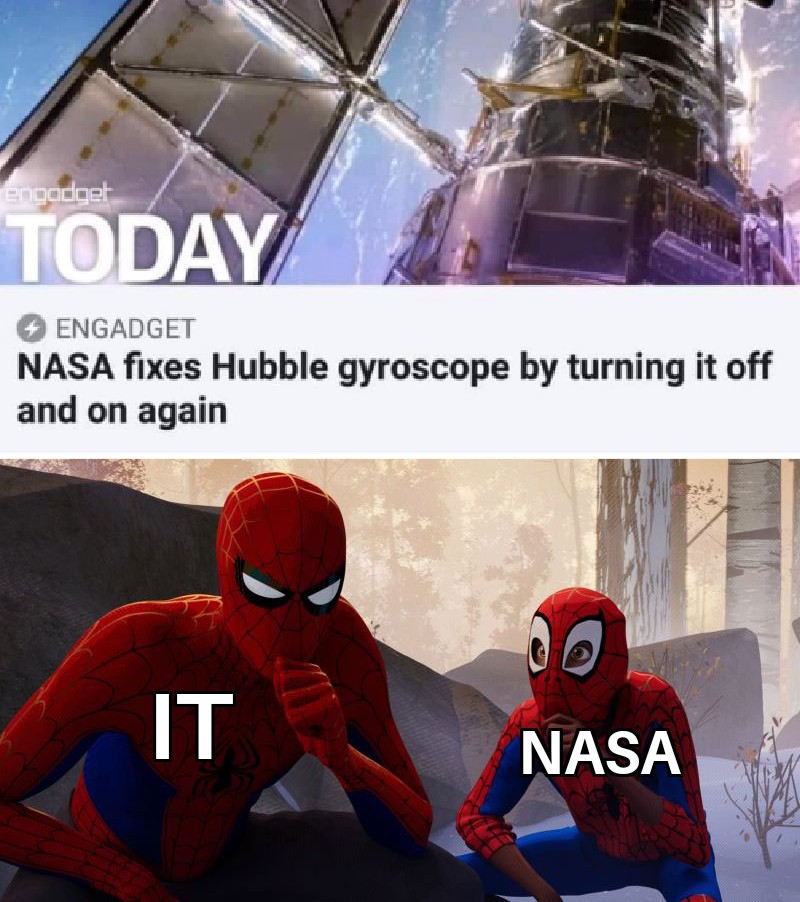
NASA, the literal ROCKET SCIENTISTS who put humans on the moon, fixed a multi-billion dollar space telescope with the EXACT SAME TECHNIQUE I use when my Wi-Fi stops working! 💀 The pinnacle of human engineering and astronomical achievement, the Hubble telescope, gets the same treatment as my $20 router from Best Buy. I'm SCREAMING! All those PhDs and fancy degrees, and their ultimate solution was "have you tried turning it off and on again?" The universal IT support mantra transcends even the vacuum of space!