

slack Memes

Going Offline To Fix One Bug

Going Offline To Fix One Bug
You know that moment when you're desperately trying to enter deep focus mode to squash a particularly nasty bug, but Slack notifications keep pinging, your PM keeps asking for updates, and someone just scheduled yet another "quick sync"? Time to go full stealth mode. The "Bravo Six, going dark" reference is chef's kiss here—setting your status to offline/invisible is basically the developer equivalent of a special ops mission. You're not actually offline, you're just creating the illusion that you've ceased to exist so you can finally achieve that mythical state of uninterrupted concentration. Because sometimes the only way to fix that one "stupid bug" (which will inevitably turn into discovering three more bugs and refactoring half the codebase) is to disappear from the digital world entirely. Your IDE is open, your coffee is fresh, and your status indicator? Conveniently gray.

Yeah This Happened

Yeah This Happened
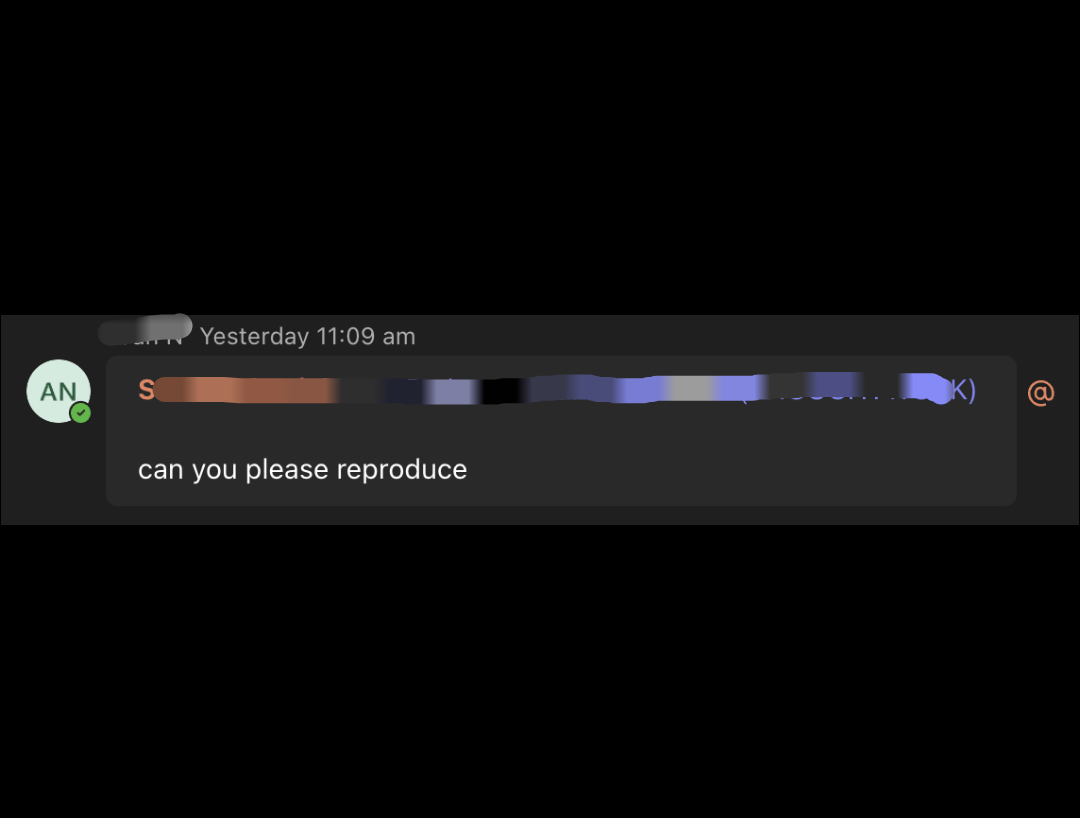
Someone just asked you to "please reproduce" the bug. No context. No error message. No steps. No environment details. No logs. Just... reproduce. Like you're supposed to magically know which of the 47 bugs they're referring to, or maybe they think you have a crystal ball that shows you their exact browser configuration, network conditions, and the specific sequence of clicks they made while eating a sandwich. Sure, let me just fire up my psychic debugging toolkit real quick.

There Is A Page For Everything Yet Nobody Looks Before Slacking Me

There Is A Page For Everything Yet Nobody Looks Before Slacking Me
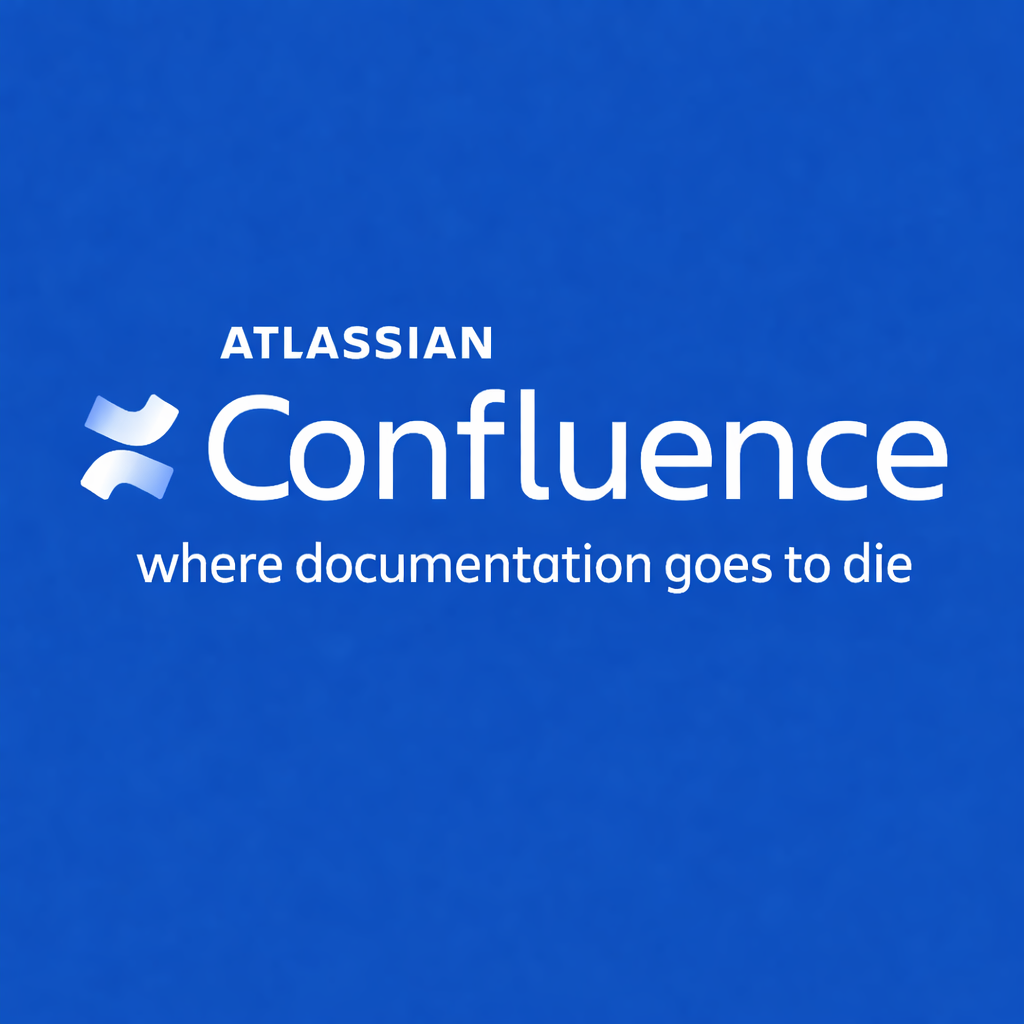
Oh, the TRAGEDY of being the person who actually documented everything! You spent hours crafting beautiful Confluence pages with step-by-step guides, architecture diagrams, and troubleshooting FAQs. You even added screenshots! But does anyone read them? ABSOLUTELY NOT. Instead, they ping you on Slack every five minutes asking questions that are literally answered in the FIRST PARAGRAPH of the docs. The savage tagline "where documentation goes to die" is painfully accurate. Confluence has become the digital equivalent of that drawer where you throw instruction manuals you'll never read. Your coworkers would rather interrupt you mid-flow than spend 30 seconds using the search bar. And when you send them the link? "Oh I didn't know we had that documented!" YES YOU DID, KAREN, I LITERALLY ANNOUNCED IT IN THREE CHANNELS. Documentation is immortal, but apparently so is everyone's refusal to read it.

Never Ask For Help Debugging

Never Ask For Help Debugging
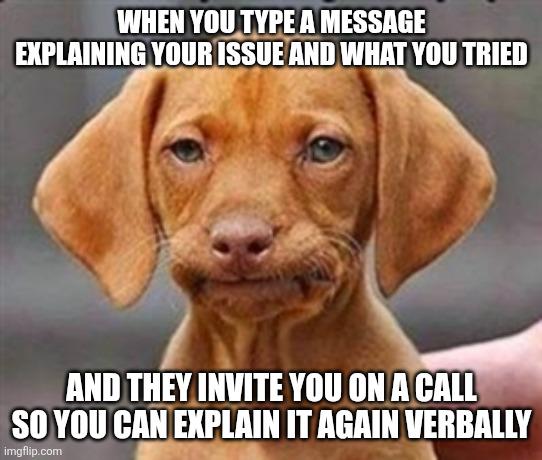
You spend 45 minutes crafting the perfect Slack message with code snippets, stack traces, what you've tried, and your environment details. You hit send. Then someone replies "hop on a call real quick" and suddenly you're doing a live performance of your debugging journey while they watch your screen. Now you get to re-explain everything you just typed, but this time with the added pressure of someone silently judging your variable names and that one commented-out console.log you forgot to remove. The real kicker? They'll probably solve it in 30 seconds by asking "did you try restarting it?" which you OBVIOUSLY already did but now you're questioning if you actually did.

It Do Be Like That Sometimes

It Do Be Like That Sometimes
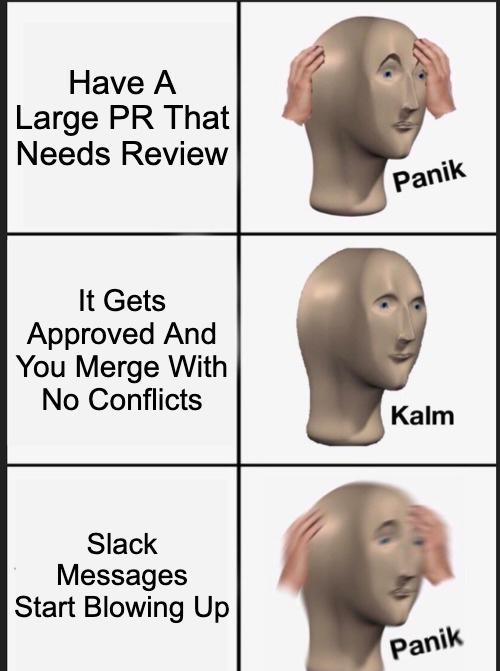
You know that brief moment of peace when your massive PR gets approved without conflicts? That's the calm before the storm. Because the real code review happens in Slack DMs where your coworkers suddenly remember they have "thoughts" about your architectural decisions. The merge button is just the midpoint of your emotional rollercoaster. First panel: pure anxiety wondering if anyone will actually approve your 47-file monstrosity. Second panel: euphoric relief when it merges cleanly. Third panel: existential dread when the notifications start rolling in and everyone's suddenly a software architect with opinions about your variable naming. Pro tip: Turn off Slack notifications before merging. What you don't know can't hurt you... until the daily standup.

Eight Giga Ram Is Minimum

Eight Giga Ram Is Minimum
So apparently launching a text editor in 2014 triggered a decade-long domino effect that's now DEVOURING all our RAM like some kind of Chrome-powered black hole. Thanks, Electron! Who knew that wrapping every single app in an entire Chromium browser would have consequences? Remember when 8GB was considered "enthusiast tier"? Now it's barely enough to run Slack, VS Code, and maybe—MAYBE—a browser with three tabs open before your computer starts making sounds like a jet engine preparing for takeoff. The prophecy has been fulfilled: every app is now secretly a web browser in a trench coat, and your RAM is paying the price. The real tragedy? We can't even be mad because these Electron apps are genuinely useful. We're just... stuck watching our memory usage climb while muttering "it was better in the terminal days" like grumpy old devs.

No Jira No Slack

No Jira No Slack
Turns out 4,500 years of engineering brilliance didn't require a single Jira ticket or Slack channel. The ancient Egyptians just... did the work? No daily standups about "blockers" or 47-message threads debating the optimal stone-dragging methodology. No PM asking "can we squeeze one more obelisk into this sprint?" Just thousands of people moving massive rocks with nothing but determination, physics, and probably a terrifying project manager with actual whips instead of digital notifications. Makes you wonder if we've actually evolved or just created digital bureaucracy to avoid the real work.

Finally Peace: The Digital Stealth Mode

Finally Peace: The Digital Stealth Mode
The modern developer's tactical retreat. When Slack notifications keep pinging while you're trying to hunt down that elusive race condition, sometimes you gotta go full spec ops and "accidentally" disconnect. Nothing says "I need four uninterrupted hours with this code" like the sweet silence of appearing offline. The digital equivalent of hiding in the server room with the lights off. Mission critical: fix bug. First objective: escape the meeting invites.

The Cursor-Based Debugging Method

The Cursor-Based Debugging Method
The greatest lie in modern development: "I think cursor fixed it, can I merge?" Followed by 875 replies of pure chaos as the entire team discovers that moving your cursor around does not, in fact, fix broken code. But hey, at least you've got 4 profile pics to choose from when you're inevitably assigned to fix the production fire that's about to start.

Had A Couple Quick Nits

Had A Couple Quick Nits
The eternal saga of code reviews in one Slack message. Dude casually drops "i think cursor fixed it, can i merge?" and gets absolutely 875 replies of people tearing his code apart. That's not a code review—that's a digital intervention! Guarantee those replies are filled with "Actually..." and "Well, technically..." comments dissecting his cursor fix like it's a murder scene. Pro tip: never ask if you can merge unless you're prepared for your colleagues to discover every sin you've committed since learning to code.

Hi, I'm From QA

Hi, I'm From QA
That moment when QA messages you directly instead of filing a ticket. Suddenly your stress level hits 99% because you know they found something catastrophic in production that you pushed on Friday at 4:59 PM. Your weekend plans are now just a distant memory as you prepare to debug whatever hellscape you've unleashed upon the world.

Your Average Meeting

Your Average Meeting
AI has finally solved the greatest mystery in corporate history: what actually happens in meetings. Turns out it's just "disjointed, rambling conversation" with "no clear purpose or agenda." Revolutionary discovery! Next up: AI discovers water is wet. The best part? We spent an hour discussing "unclear technical concepts" only to have a robot tell us we accomplished absolutely nothing. At least now we have timestamps to prove exactly how long we wasted our lives. Remember when we used to pretend meetings were productive? Now Slack AI is calling us out with receipts. Progress!