


Self-hosting Memes

Posts tagged with Self-hosting
Me After Seeing How All Streaming Services Raised The Monthly Fees And Added Ads

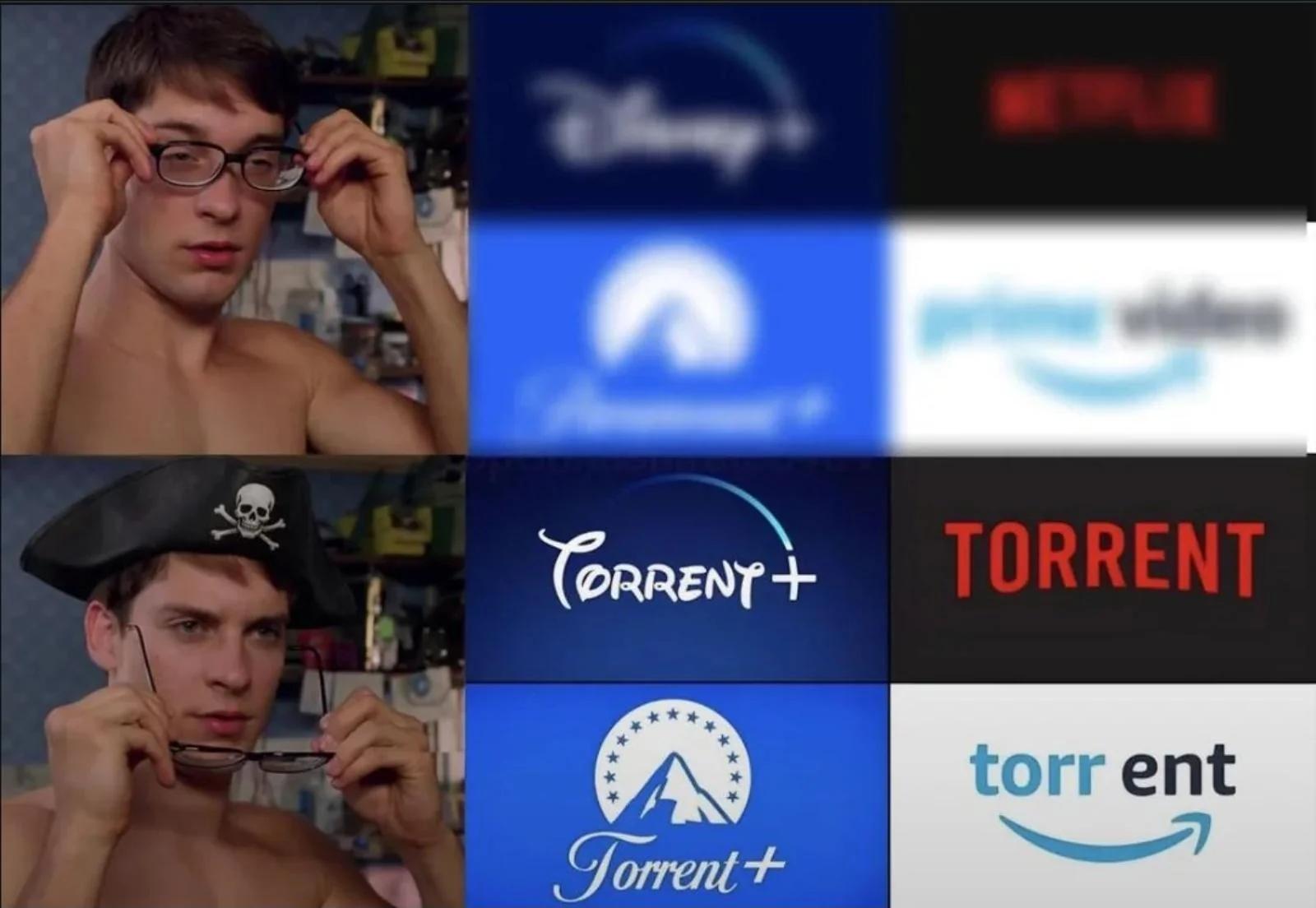
Me After Seeing How All Streaming Services Raised The Monthly Fees And Added Ads
When streaming services went from "affordable Netflix alternative" to "collectively more expensive than cable," developers did what they do best: engineer a solution. The transformation from confused consumer to pirate captain complete with skull-and-crossbones hat is *chef's kiss*. Those parody streaming service logos—"Torrent+", "Torrent Plus" with the Paramount mountain, and the Amazon smile reimagined as "torr ent"—are absolutely sending me. The beauty is that torrenting requires actual technical skills: understanding seeders vs leechers, configuring VPNs, managing storage, maybe even setting up a Plex server. Suddenly that Docker knowledge and Linux command line fluency pays dividends outside of work. Why pay $80/month across five services when you can self-host your entire media library and flex your sysadmin muscles? Corporate greed really said "let's turn our paying customers back into pirates" and developers said "bet, I've been waiting to use my Raspberry Pi for something useful anyway."

Is This A Good Desktop For My First Homelab

Is This A Good Desktop For My First Homelab
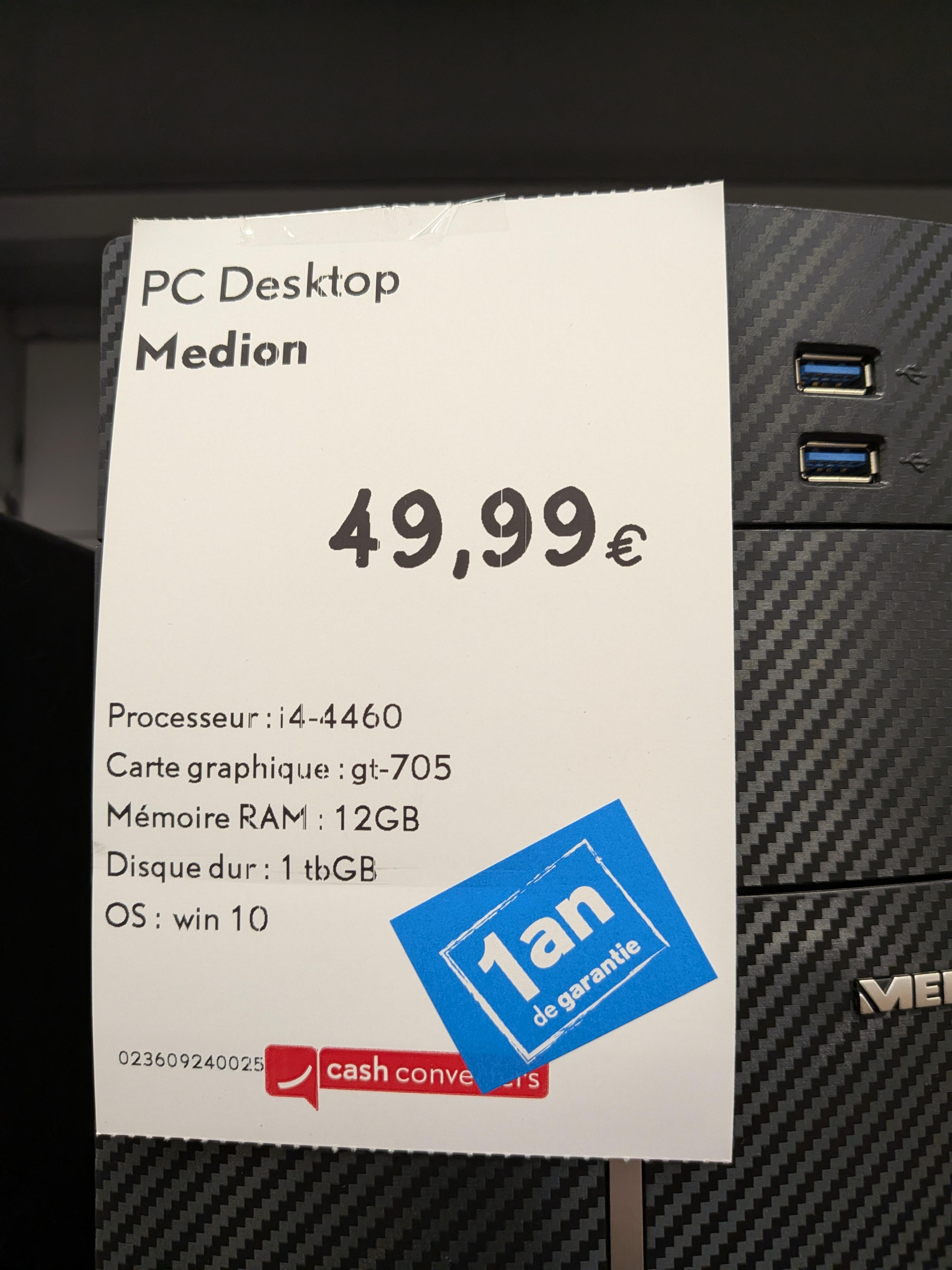
Someone found a €50 desktop with an i4-4460 (yes, i4, not i5), GT 705 graphics, 12GB RAM, 1TB storage, and Windows 10 with a 1-year warranty. The homelab community would absolutely lose their minds seeing someone consider this as "server hardware." Sure, your first homelab doesn't need to be a rack-mounted beast with 128GB of ECC RAM, but there's something beautifully naive about thinking a budget desktop from the Mesozoic era with a graphics card that struggles to render desktop icons will handle your Docker containers and Kubernetes clusters. The GT 705 is particularly chef's kiss – because nothing says "I'm ready to self-host my infrastructure" like a GPU that was outdated when it launched. That said, we all started somewhere. Just maybe not with hardware that predates your understanding of what a homelab actually does.

But What If ...

But What If ...
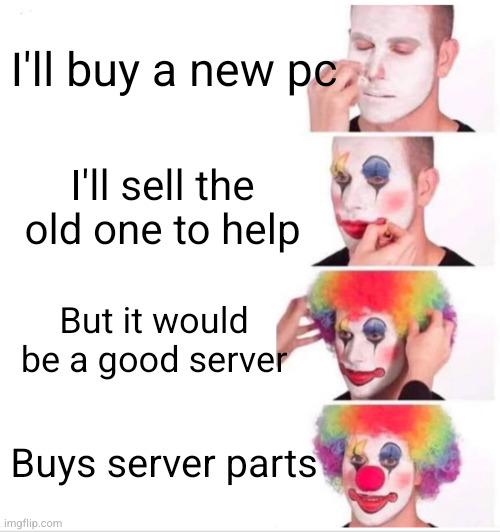
Every developer's journey from "I need better hardware" to running a Kubernetes cluster in their basement. You start with noble intentions—maybe upgrade your laptop. Then the voice whispers: "but what if you turned that old machine into a home server?" Next thing you know, you're browsing eBay at 2 AM for enterprise-grade RAM sticks and arguing with yourself about whether you really need redundant power supplies. The hoarding begins. The old laptop becomes a DNS server. The ancient desktop? Perfect for Docker containers. That Raspberry Pi collecting dust? Now it's monitoring your network. Your electricity bill hates you, but your homelab... your homelab is beautiful .

My Home Server Was A Totally Justified Purchase

My Home Server Was A Totally Justified Purchase
You start with one Raspberry Pi to self-host a simple web app. Fast forward six months and your living room looks like a data center with enough cables to trip an elephant, five different server racks, a UPS system that could power a small village, and an electricity bill that makes your significant other question your life choices. But hey, at least you're running your own email server that gets flagged as spam 90% of the time and a Plex server with 47TB of "Linux ISOs." The transformation from minimalist setup to full-blown homelab chaos is real. You tell yourself it's about learning and self-hosting, but deep down you know you just wanted an excuse to play with Docker containers at 2 AM while your electricity meter spins like a fidget spinner.

This Has Been Happening To A Lot Of People Recently

This Has Been Happening To A Lot Of People Recently
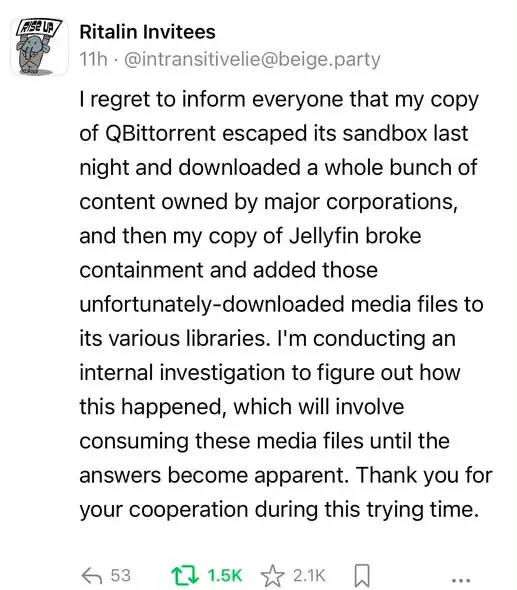
The classic "my software acted autonomously" defense. QBittorrent just spontaneously decided to escape its sandbox like some kind of digital Houdini and download copyrighted content. Then Jellyfin—completely unprompted—broke containment and organized everything into neat libraries. Sure. That's definitely how software works. The "internal investigation" that involves "consuming these media files" is chef's kiss. Gotta watch all those movies and shows to understand how they got there. It's forensic analysis, really. Very professional. The best part? Posting this publicly with full technical details. Nothing says "plausible deniability" like explaining your entire piracy setup on social media while pretending your torrent client achieved sentience.

No Means No

No Means No
Someone finally had the guts to wear what we've all been thinking. While everyone's out here pushing SaaS, PaaS, IaaS, and whatever-aaS venture capital can dream up, this person just wants to host their own stuff and be left alone. The cloud sales team sees this hoodie and immediately starts sweating. "But what about scalability? Redundancy? Our enterprise tier?" Meanwhile, this legend is running everything on a server under their desk with 99.9% uptime and paying $0/month in subscription fees. NaaS: because sometimes the best service is no service at all.

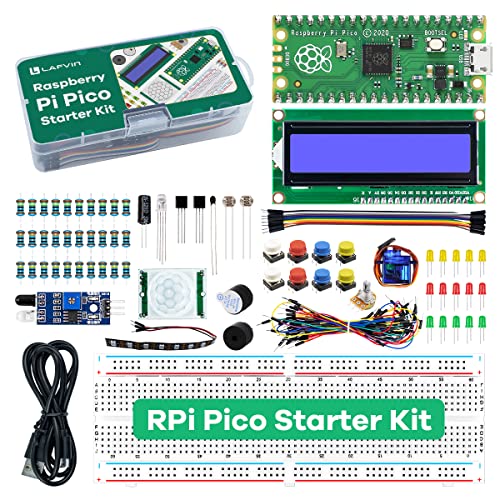
LAFVIN Basic Starter Kit for Raspberry Pi Pico, LCD1602 Display, SG90 Servo, WS2812 RGB LED, Support MicroPython & C/C++ for STEM DIY Electronic Project with Tutorial

LAFVIN Basic Starter Kit for Raspberry Pi Pico, LCD1602 Display, SG90 Servo, WS2812 RGB LED, Support MicroPython & C/C++ for STEM DIY Electronic Project with Tutorial
【RP2040 Development Platform】It uses the Raspberry Pi Pico development board and is equipped with the RP2040 microcontroller, making it suitable for e-learning, programming instruction, and embedded …

The Growing Divide

The Growing Divide
So we've got the polished corporate world up top with Spotify, Notion, Google Docs, and that sleek MacBook—tools that actually work and make you look productive in standup meetings. Meanwhile, down below we've got the digital equivalent of a garage sale: "SearXNG" (because who needs Google when you can self-host your privacy paranoia), a Raspberry Pi (the duct tape of hardware), YouTube to MP3 converters (piracy with extra steps), GrapheneOS (for when you think Google is watching you through your toaster), and Jellyfin (Plex for people who read the terms of service). The "performative" devs are using tools that ship features. The "reformative" devs are compiling their own kernel at 3 AM because they read a blog post about telemetry. One group deploys to production; the other is still configuring their tmux status bar. Both are valid, but only one gets invited to product meetings.

You Wouldn't...

You Wouldn't...
The classic "I killed a man" confession getting absolutely demolished by the real flex: hosting a Minecraft server. Because nothing says "I've seen some things" quite like managing port forwarding, dealing with griefers at 3 AM, configuring whitelist permissions, and explaining to your friends why the server is down for the fifth time this week because you're "optimizing the chunk loading." Murder? That's child's play. Try debugging why your modded server keeps crashing when someone enters the Nether, or figuring out why your RAM usage is through the roof despite only having three people online. The real trauma is watching your electricity bill skyrocket because you're running a dedicated machine 24/7 from your bedroom. Bonus points if you've ever had to SSH into your server while on vacation because someone found a dupe glitch and crashed the economy you spent months balancing. That's the kind of war story that makes hardened criminals weep.

Home Cloud Migration

Home Cloud Migration
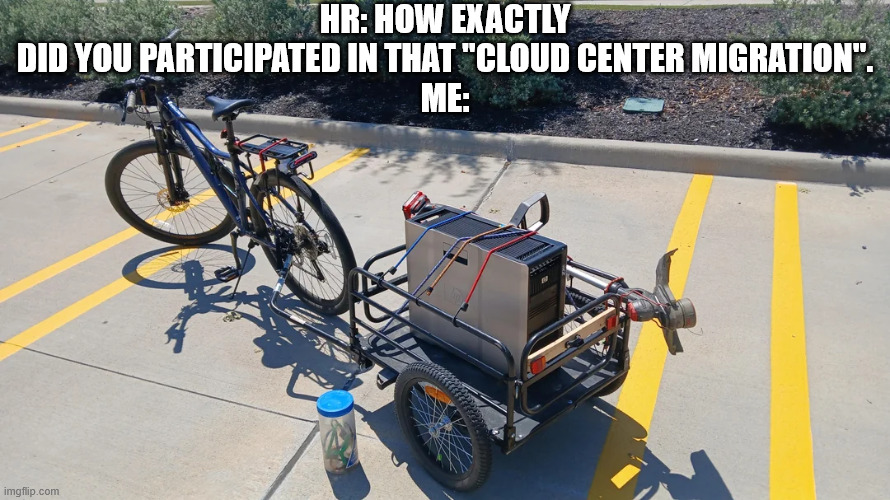
When HR asks about your involvement in the "cloud center migration" and you're just trying to explain that you literally strapped your homelab server to a bike trailer and pedaled it across town. Nothing says "DevOps engineer" quite like physically transporting your own infrastructure using human-powered vehicles. The beauty here is the double meaning: corporate thinks you're talking about AWS migrations and Kubernetes orchestration, but you're actually discussing the logistics of not dropping your Raspberry Pi cluster while navigating potholes. Zero downtime? More like "zero car ownership." High availability? Sure, as long as you don't hit a speed bump. This is what happens when you take "on-premises" too literally and decide your new premises require a bike rack deployment strategy.

Home Server In This Economy

Home Server In This Economy
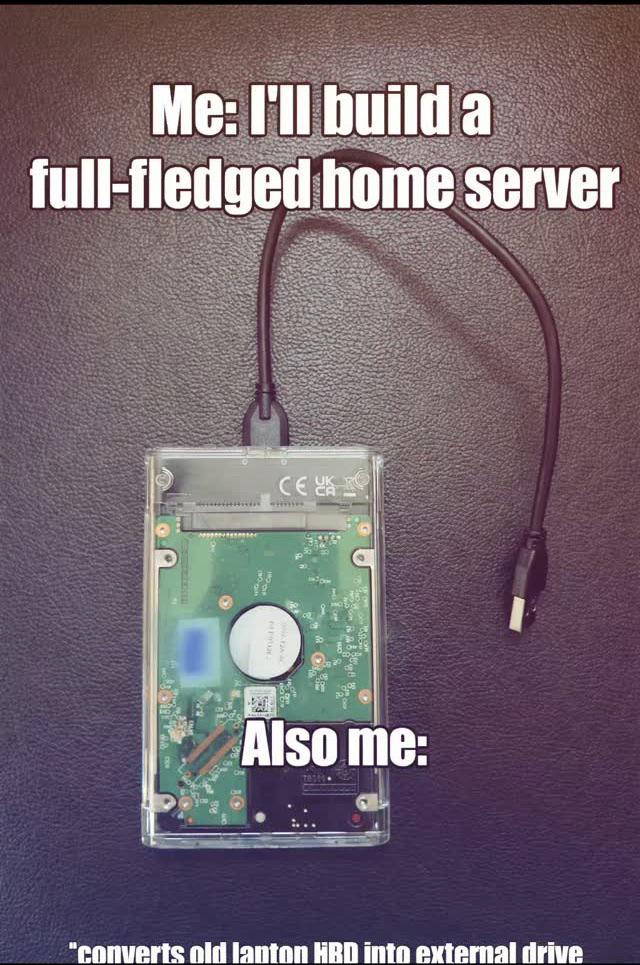
We've all been there. You start with grand visions of a proper homelab with enterprise-grade hardware, redundant power supplies, maybe some rack-mounted glory. Then you check AWS pricing, look at your electricity bill, remember that used server on eBay costs more than your car payment, and suddenly that dusty laptop hard drive in the drawer starts looking like a viable infrastructure solution. Slap it in a transparent case with a USB cable, and boom—you've got yourself a "full-fledged home server." Will it host your Plex library, run Docker containers, AND serve as your personal cloud? Probably not all at once. But it'll definitely make a concerning clicking noise at 2 AM to remind you of your life choices. The best part? You'll spend more time configuring it than you would've spent just paying for cloud storage. But hey, at least you own your data... and your regrets.

How Everyone Here Will Be In A Few Weeks

How Everyone Here Will Be In A Few Weeks
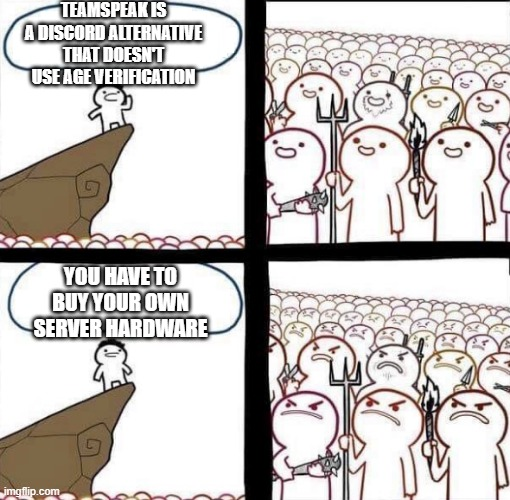
The eternal Discord vs. self-hosted debate, now with extra drama. First panel: "TeamSpeak is a Discord alternative that doesn't use Electron!" *crowd goes wild*. Second panel: "You have to run your own server hardware" *instant rage*. Because nothing says "I value my privacy and hate bloated software" quite like spending your weekend configuring port forwarding, dealing with dynamic DNS, and explaining to your ISP why you need a static IP. Sure, Discord eats 500MB of RAM just to send a GIF, but at least you don't need a degree in network administration to use it. The real kicker? In a few weeks, half the people who championed self-hosting will quietly crawl back to Discord because their server crashed during game night and nobody could figure out why. The other half will become insufferable about their uptime stats.

cocopar Portable Monitor 15.6 Inch 1080P FHD 60Hz 85% sRGB Travel Monitor with Speaker HDMI USB-C Second Screen for Laptop MacBook Surface PC Xbox PS4/5, VESA Mountable, with Cover Stand

cocopar Portable Monitor 15.6 Inch 1080P FHD 60Hz 85% sRGB Travel Monitor with Speaker HDMI USB-C Second Screen for Laptop MacBook Surface PC Xbox PS4/5, VESA Mountable, with Cover Stand
Portable Monitor for Laptops: Cocopar laptop screen extender is the ideal portable monitor for Macbook, Surface Pro, Surface Laptop, Lenovo Laptop, HP Laptop, Dell Laptop, ASUS Laptop, etc. This seco…

Discord Vs Team Speak

Discord Vs Team Speak
Imagine paying $10/month for Discord Nitro just to get animated emojis and a slightly better upload limit, when you could be paying for a TeamSpeak server and actually owning your infrastructure like a true boomer tech enthusiast. The real flex isn't having a custom Discord tag—it's having your own TeamSpeak server with military-grade audio codecs and zero corporate overlords reading your messages. Sure, Discord is free and convenient, but there's something deeply satisfying about paying for something that actually respects your privacy and doesn't try to sell you profile decorations every five seconds. Plus, TeamSpeak's UI hasn't changed since 2009, which means you don't have to relearn where they moved the settings button every other week. Stability > shiny features.