Passwords Memes

Posts tagged with Passwords
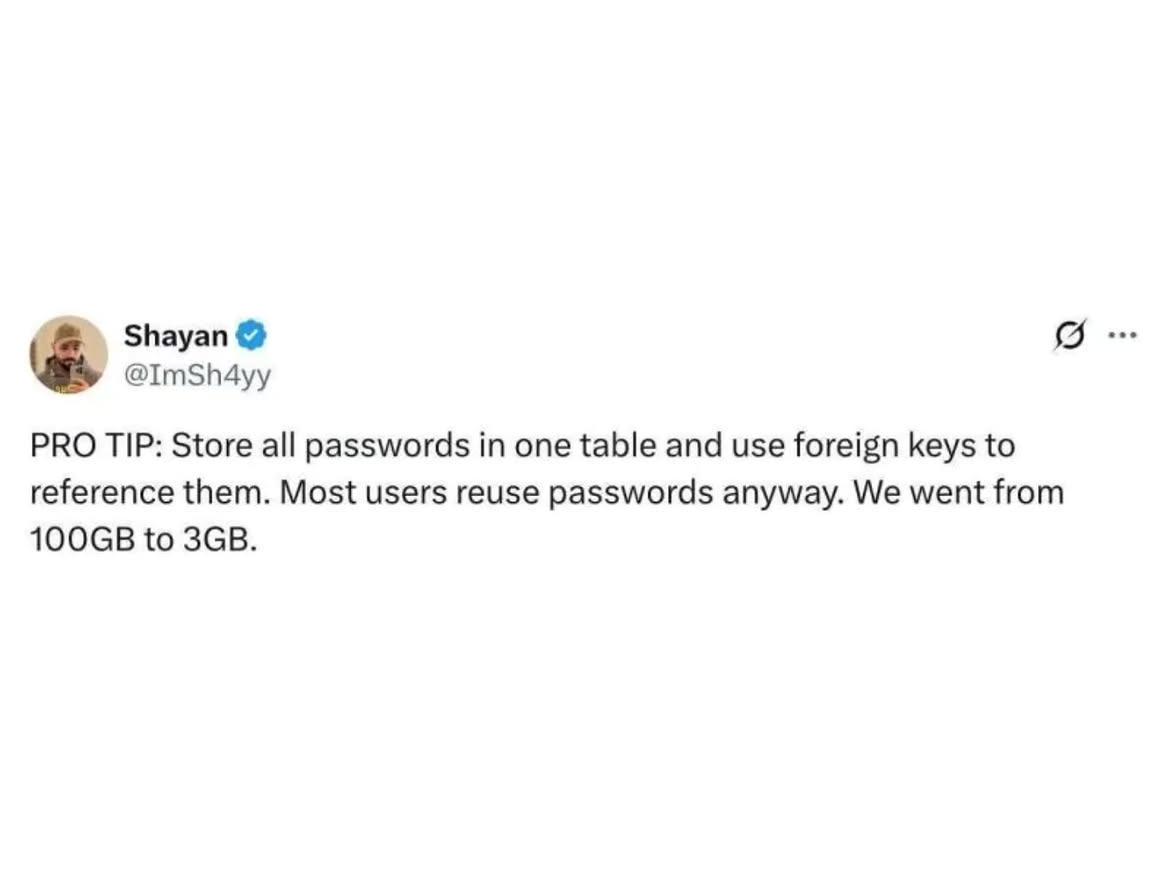
Do Not Let Your DBA See This

Do Not Let Your DBA See This
Someone just casually suggested storing ALL passwords in a single denormalized table with foreign keys pointing to it. The DBA just felt a disturbance in the force. Not only is this a normalization nightmare that violates every database design principle, but the "optimization" claim is wild—going from 100GB to 3GB by... deduplicating passwords? That means your users are sharing the same passwords at a catastrophic scale. Either you've got the world's laziest users all typing "password123" or you're about to discover why salting and hashing exist. Your security team would like a word. Your DBA would like several words, none of them professional.

Bad Memory

Bad Memory
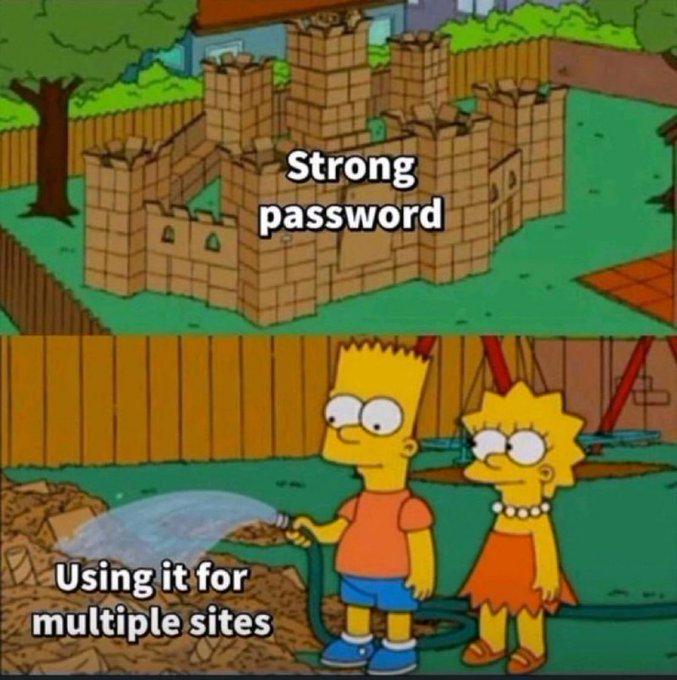
You spend 45 minutes crafting the perfect password—uppercase, lowercase, numbers, special characters, your cat's birthday in hexadecimal—only to immediately reuse it across your bank, Netflix, that sketchy forum from 2009, and your production database login. Security experts everywhere are having an aneurysm while you're out here playing password roulette. The fortress looks impenetrable until you realize it's got the same key for every door. One data breach and suddenly your entire digital life is compromised because you couldn't be bothered to remember more than one password. Password managers exist for a reason, folks—but sure, keep using "P@ssw0rd123!" for everything and act surprised when things go sideways.

I Am Unhackable Now

I Am Unhackable Now
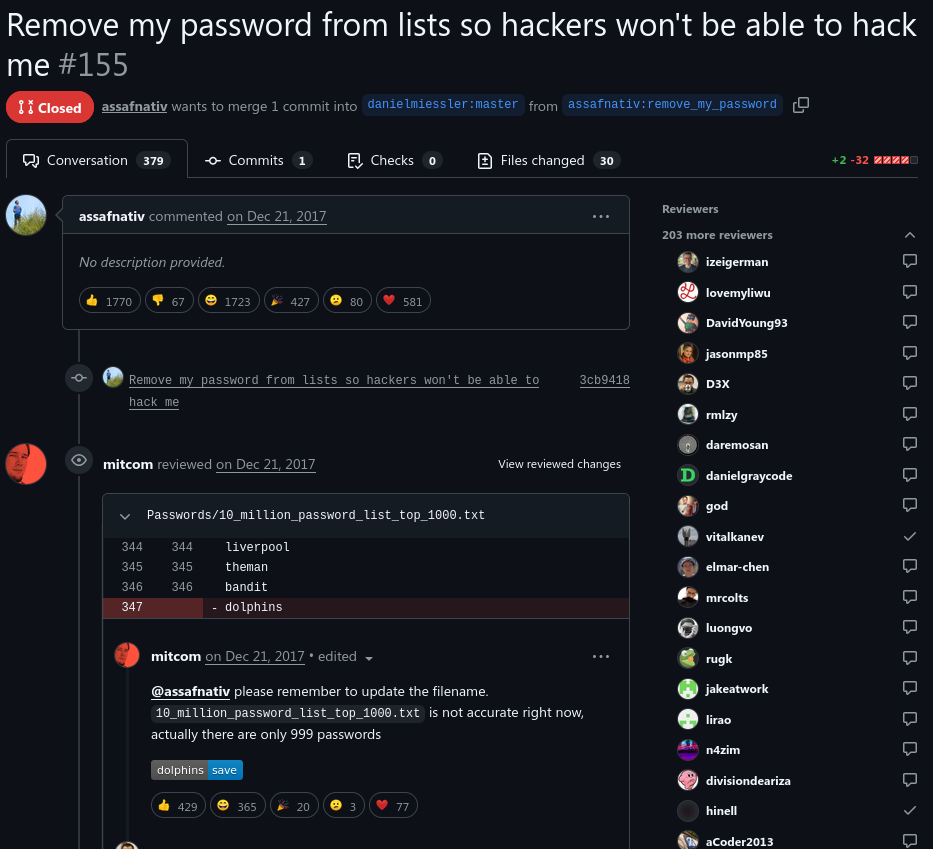
Galaxy brain security right here, folks. Someone literally thought removing their password from a list called "10_million_password_list_top_1000.txt" would make them immune to hackers. Like, yes bestie, the hackers will definitely check GitHub first, see your password got deleted, and just give up on their entire career. "Welp, dolphins is gone from the list, pack it up boys, we're done here." The absolute AUDACITY of the reviewer coming in with "actually there are only 999 passwords" is sending me. Imagine being so pedantically helpful while someone's out here thinking they've just invented cybersecurity. The filename says top 1000 but there's only 999? Better update it! Meanwhile nobody's addressing the elephant in the room: if your password is "dolphins" and it's on a top 1000 list, deleting it from GitHub isn't gonna save you from getting pwned faster than you can say "password123".

Star Trek SSL

Star Trek SSL
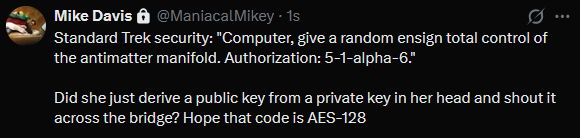
Star Trek security protocols are basically just someone shouting their password across the bridge and hoping nobody's listening. "Authorization: 5-1-alpha-6" is the equivalent of broadcasting your private key in plaintext over an unsecured channel. In the real world, that's how you get your antimatter manifold hijacked by some script kiddie on Risa. The real kicker? She literally derived a public key from a private key IN HER HEAD and announced it to everyone within earshot. That's not how asymmetric encryption works, Captain. You don't just mentally compute cryptographic operations and broadcast them like you're ordering Earl Grey. At least hope it's AES-128 and not ROT13 with extra steps. Future technology: can travel faster than light. Also future technology: still using verbal passwords like it's 1995.

100 Inspirational Stickers Pack for Preppy Girls Women Kids Vinyl Waterproof Positive Aesthetic Stickers for Water Bottles, Laptop, Phone Pink Aesthetic Preppy Stuff, Things, Motivational Decals

100 Inspirational Stickers Pack for Preppy Girls Women Kids Vinyl Waterproof Positive Aesthetic Stickers for Water Bottles, Laptop, Phone Pink Aesthetic Preppy Stuff, Things, Motivational Decals
Cute Pastel Preppy Inspirational Stickers: You will receive 100pcs pastel variety of aesthetic stickers. No repeated. Suitable for express their optimistic attitudes towards life.Those green and pink…

Password 123!

Password 123!
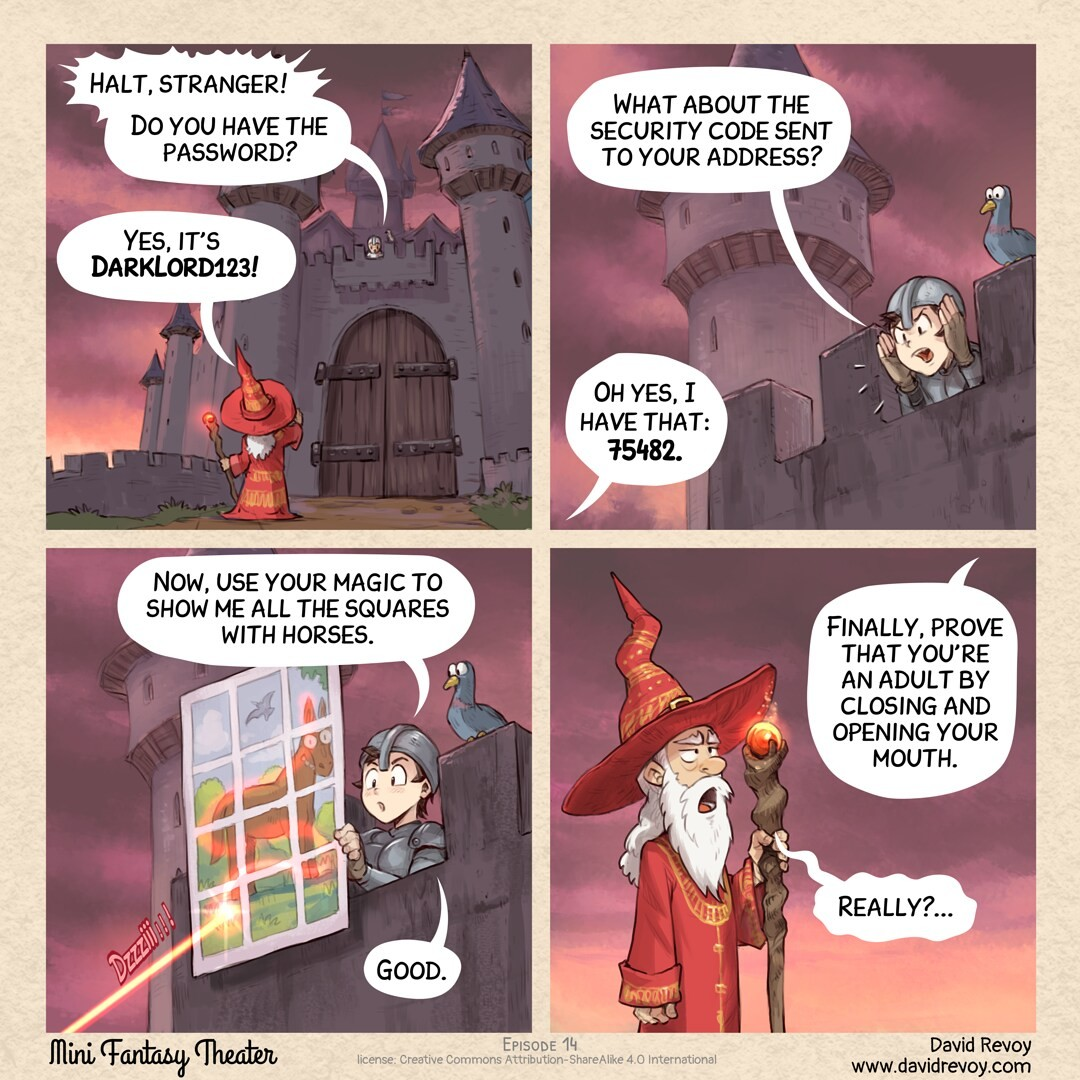
Multi-factor authentication is getting out of hand. First it's "something you know" (password), then "something you have" (security code), then "something you are" (biometrics). Next thing you know they'll be asking for your childhood pet's maiden name and a blood sample. The wizard here is basically implementing the world's most annoying auth flow. Sure, DARKLORD123 is a terrible password (though let's be honest, we've all seen worse in production databases), but then comes the 2FA code, a CAPTCHA that would make Google weep, and finally... a liveness check? At this point just ask for my social security number and firstborn child. The knight's defeated "Really?..." hits different when you've spent 20 minutes trying to log into AWS because you left your MFA device at home. Security is important, but somewhere between "password123" and "perform a ritual sacrifice" there's a middle ground we're all still searching for.

Who Could Have Predicted It

Who Could Have Predicted It
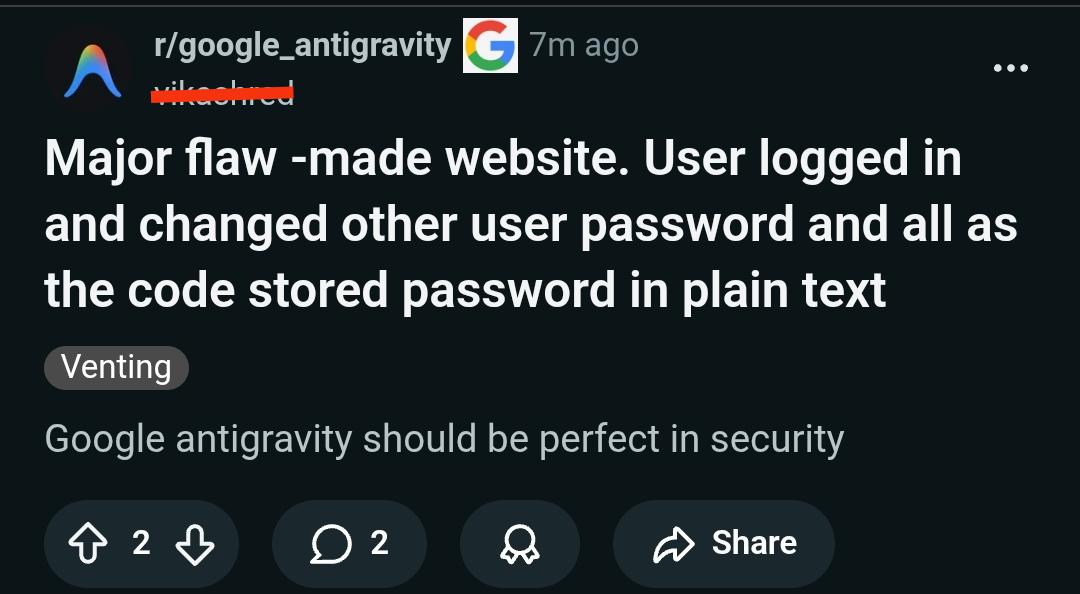
Storing passwords in plain text? That's not a security flaw, that's a cry for help. Someone out there built a website where you could log in as User A, casually change User B's password, and the system just... let it happen. Because why hash passwords when you can live dangerously? The real kicker? They're posting this in r/google_antigravity expecting sympathy, as if Google's AI products should somehow be immune to the consequences of Security 101 violations. Spoiler alert: even the most advanced AI can't protect you from storing credentials like it's 1995. The "Venting" tag really ties it all together. Nothing says professional development quite like discovering your authentication system is basically a public notepad with extra steps.

Starboy 98

Starboy 98
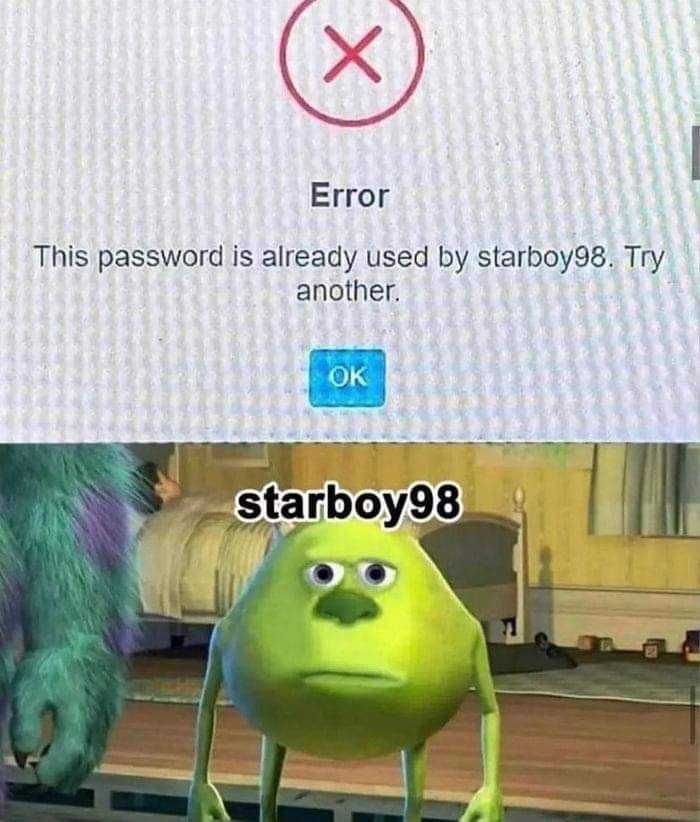
Plot twist: you're trying to create a new account and the system just casually exposes that someone else is already using your go-to password. Congrats on the world's worst security implementation—instead of saying "username taken," they're out here revealing password collisions like it's no big deal. Starboy98 is having an existential crisis because either: (a) someone stole their signature password, (b) they forgot they already made an account, or (c) they just discovered their "unique" password is about as original as using "password123." The Mike Wazowski face really captures that moment when you realize your password game is weak and the database architect's security game is even weaker. Pro tip: If a website can tell you your password is already in use by another user, run. That means they're storing passwords in plaintext or comparing them before hashing. Yikes.

What Was The Actual Dumbest Thing You Did To Your PC

What Was The Actual Dumbest Thing You Did To Your PC
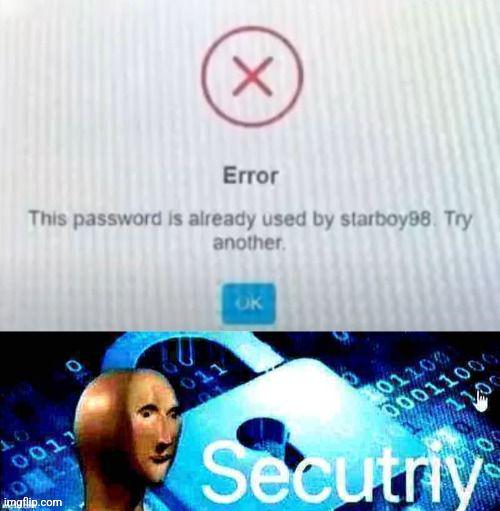
So you tried to create a new account and used the same password as your existing account? Congratulations, you just discovered the most efficient way to lock yourself out of your own PC. The Mona Lisa reaction perfectly captures that moment when your brain realizes it outsmarted itself. Nothing says "professional IT person" quite like being defeated by your own password reuse strategy. The best part? You probably have this password written down somewhere, but good luck finding it now.

This Is Why You Rotate Passwords

This Is Why You Rotate Passwords
Your security team keeps nagging everyone about "password rotation best practices" and "regular credential updates," but nobody told the keypad that the most frequently used buttons would literally wear themselves into oblivion. Look at those poor 1, 3, 4, 5, and 6 keys—completely rubbed smooth like a junior dev's confidence after their first production incident. Meanwhile 7, 8, 9, and 0 are sitting there pristine, probably judging the whole situation. You don't need a security audit to crack this code; you just need functioning eyeballs. Plot twist: rotating your password from 1234 to 4321 doesn't actually help when the wear pattern screams "these are the only numbers I use." This is basically a physical timing attack, except instead of measuring CPU cycles, you're measuring how much finger grease can destroy plastic. Security through obscurity? More like security through finger oil patterns.

Use Safe Passwords During Development

Use Safe Passwords During Development
Nothing says "security professional" quite like getting a data breach notification for your localhost development servers. Apparently someone out there managed to breach http://localhost:8081, http://localhost:8088, and the ever-vulnerable http://localhost. Your dev credentials with the ultra-secure combo of "[email protected]" were just too tempting for hackers worldwide. The real question is: which data breach consortium is monitoring your local machine? Did they break into your apartment, sit at your desk, and carefully document your test credentials? Or did you accidentally push these to production because "it's just temporary"? Spoiler: nothing is ever temporary. The lightbulb icon on the last entry really ties it together. Yes, that's the moment of realization when you figure out where those "localhost" credentials actually ended up.

Beelink SER5 PRO Mini PC,AMD Ryzen 5 5500U (6C/12T,up to 4.0 GHz),Mini Computer with 16GB DDR4/480GB NVMe SSD,Support Triple Screen Display, WiFi6, BT5.4,Type-C, 2.5G LAN

Beelink SER5 PRO Mini PC,AMD Ryzen 5 5500U (6C/12T,up to 4.0 GHz),Mini Computer with 16GB DDR4/480GB NVMe SSD,Support Triple Screen Display, WiFi6, BT5.4,Type-C, 2.5G LAN
【 Swift Performance】 This SER5 5500u PRO mini PC is equipped with the upgraded AMD Ryzen 5 5500U processor (6C/12T, up to 4.0GHz), delivering responsive and lag-free daily computing performance. It e…

Two Factor Authentication

Two Factor Authentication
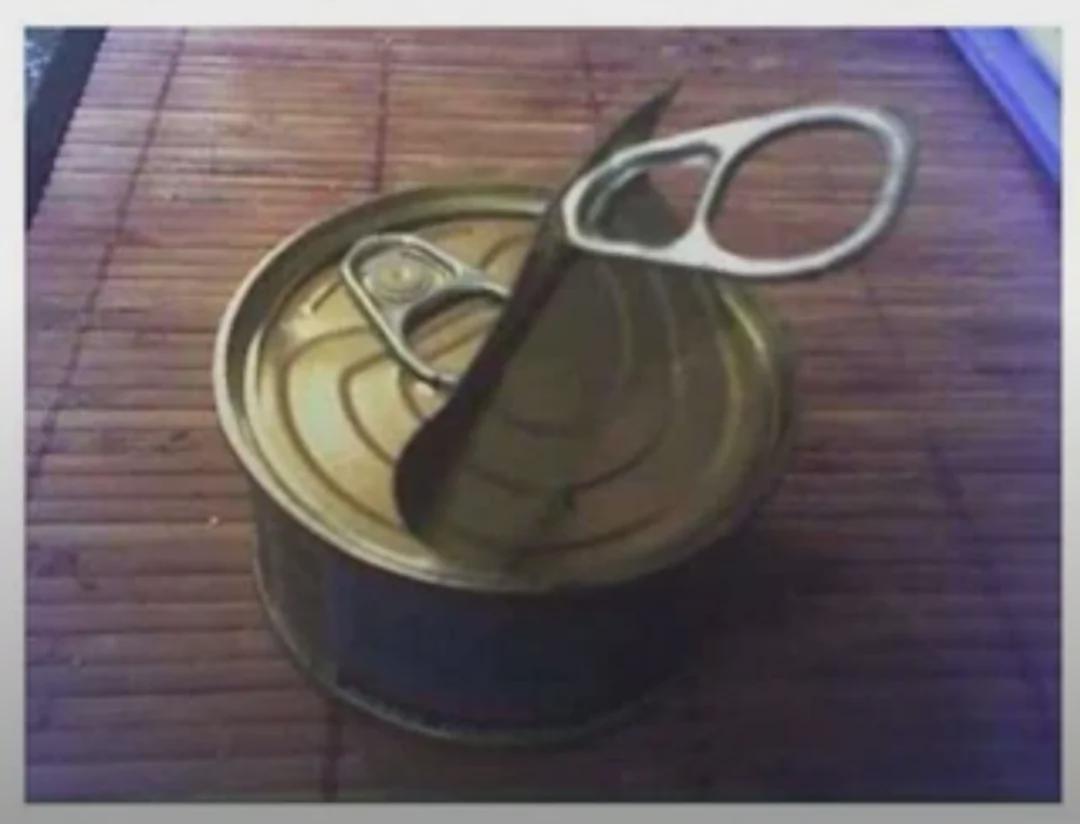
The most secure authentication method known to developers - a can with scissors jammed in it. Need to access your account? You'll need both the can AND the scissors! Security experts hate this one weird trick that somehow meets compliance requirements while being utterly useless. Just like how most corporate 2FA implementations feel when you're forced to type in a code that was texted to the same device you're already holding. Pure security theater at its finest!

Passwords Be Like...

Passwords Be Like...
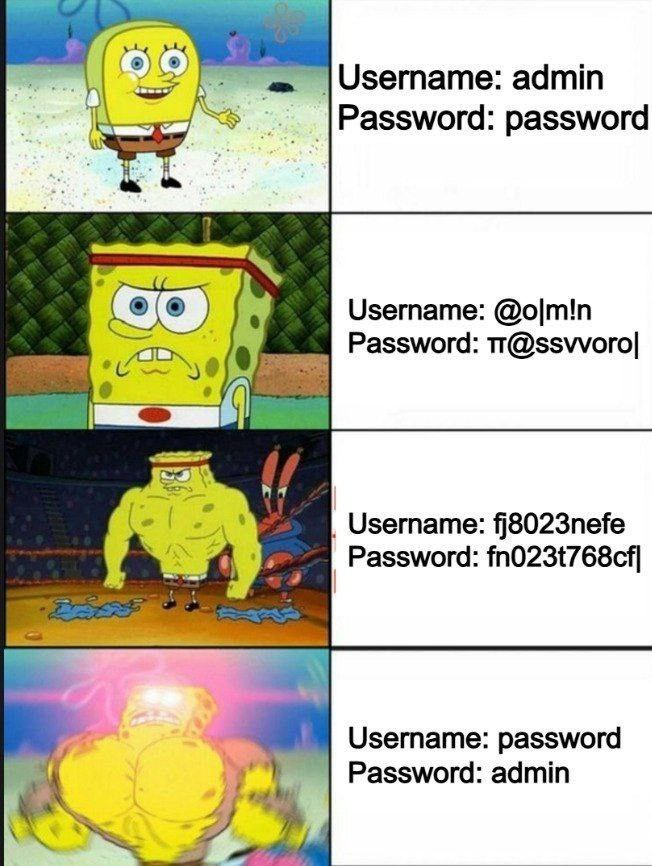
The evolution of password requirements is the digital equivalent of Stockholm syndrome. First panel: the classic "admin/password" combo – practically leaving your front door wide open with a neon sign saying "Rob me!" Second panel: When sites force you to use those ridiculous l33t-speak substitutions that nobody can remember. "Is that a zero or an O? Was it an @ or an a?" Third panel: The modern password hellscape requiring uppercase, lowercase, numbers, symbols, your firstborn child, and a blood sacrifice. Final panel: The galaxy brain move of swapping username and password. Security by absurdity – hackers would never think to try it! And yet some production server somewhere is absolutely running with these credentials right now.