Indie dev Memes

Posts tagged with Indie dev
Marketing Strategy

Marketing Strategy
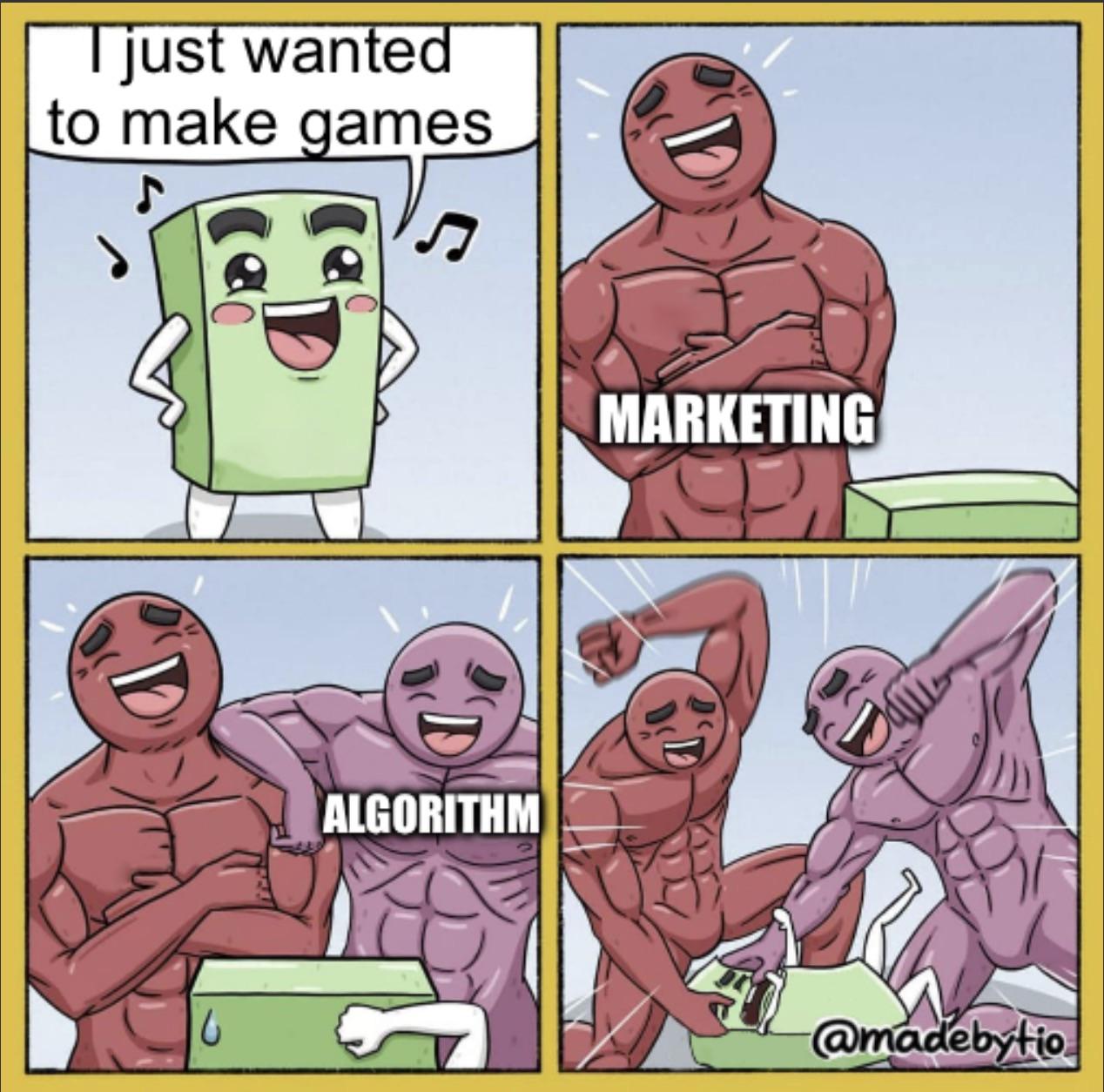
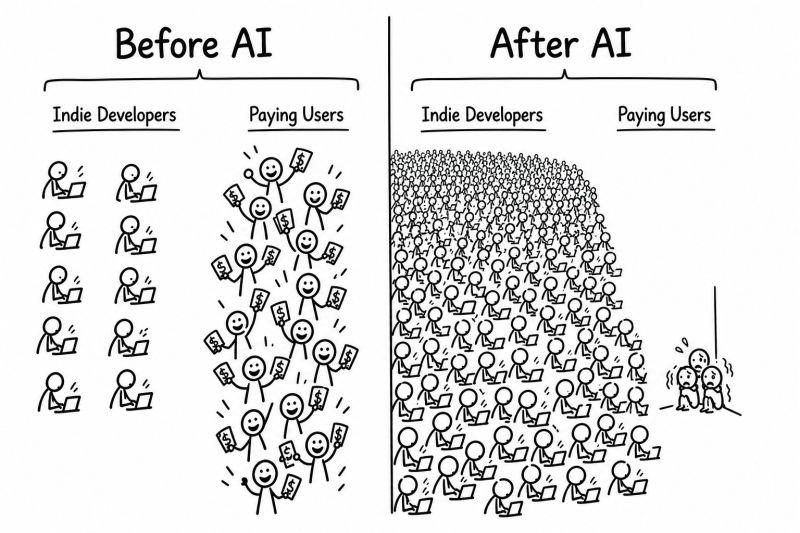
The indie dev scene in a nutshell. Real solo devs grinding away in obscurity get a few drops of recognition while studios with entire marketing departments cosplay as "just a solo dev working from my bedroom" and get showered with attention. Nothing says authentic like a team of 20 people with a PR budget pretending they're a scrappy underdog. The upvotes flow to whoever tells the better story, not necessarily who's actually coding alone at 2 AM surviving on instant ramen and spite.

Current Status

Current Status
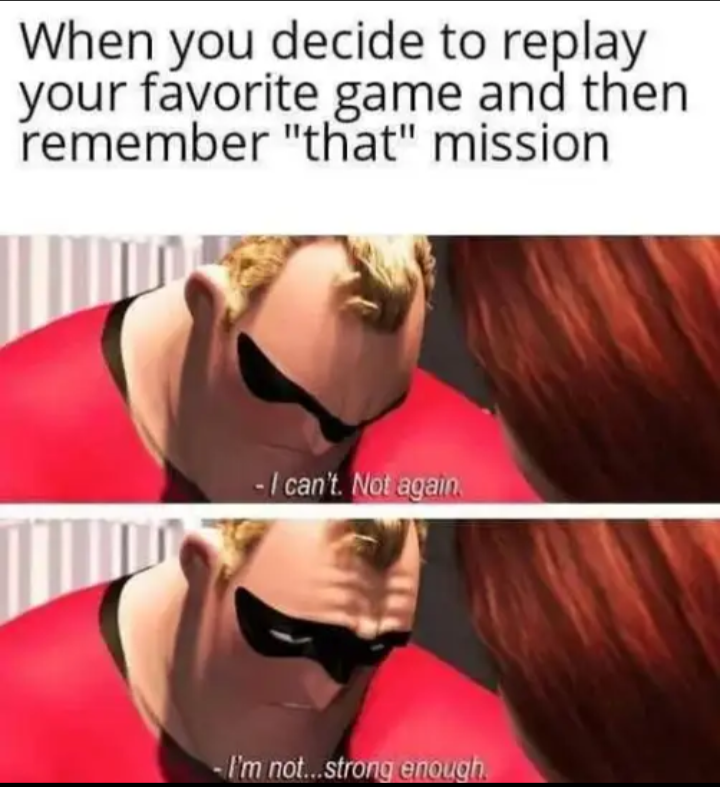
You start with grand ambitions of building the next indie hit, ready to fight through all the technical challenges. Then you discover that implementing proper hand animations, inverse kinematics, and skeletal meshes is basically a PhD thesis. Suddenly you're sitting there, defeated, wondering if stick figures are really that bad. Every gamedev's journey begins with "I'll make something amazing" and ends with "why do hands have so many bones?" It's the circle of life, except with more rage-quitting and tutorial hell.

How It Feels To Try And Market Your Game As An Indie Dev

How It Feels To Try And Market Your Game As An Indie Dev
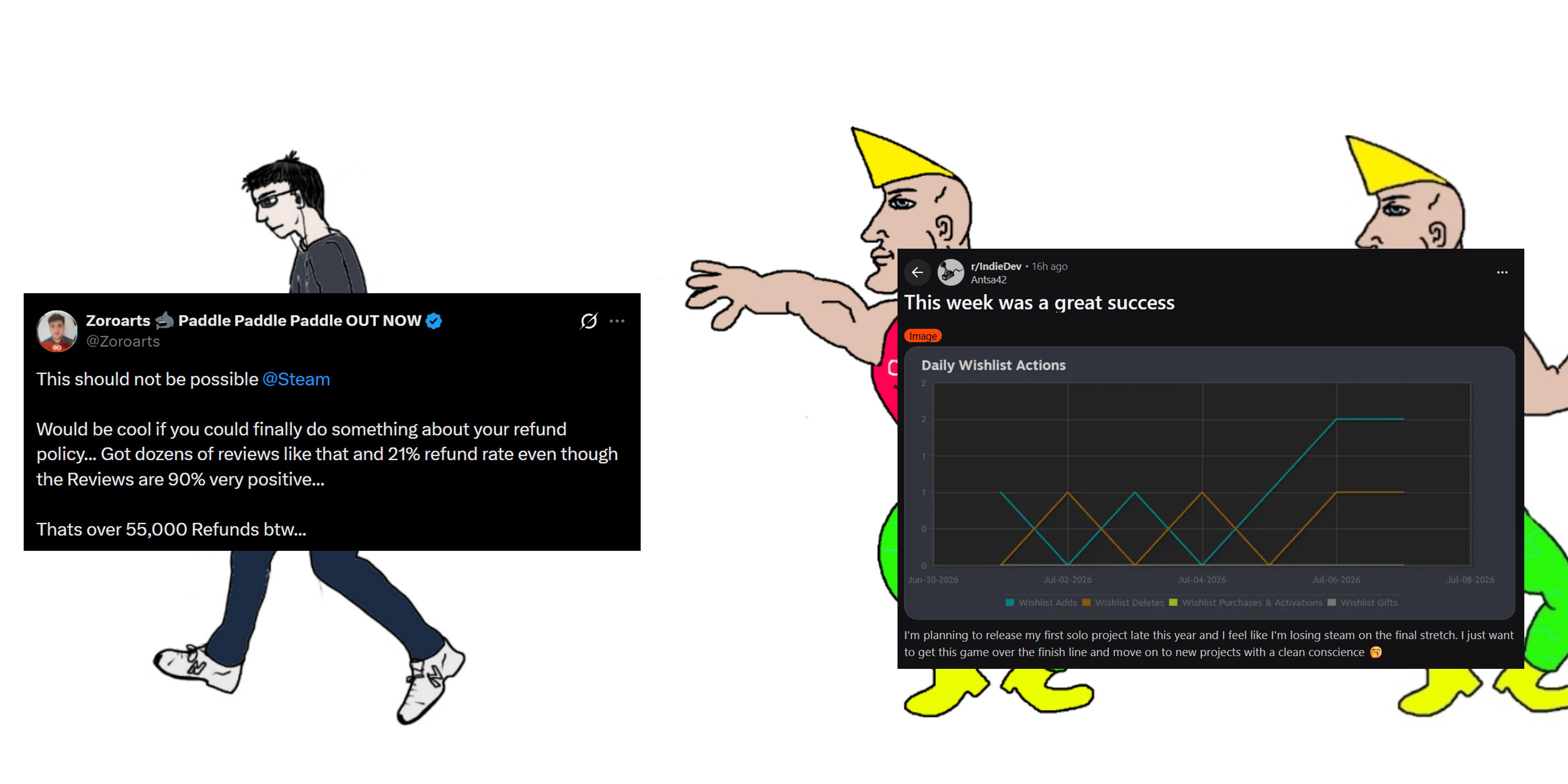
You spent 3 years coding your masterpiece in Unity, debugging physics engines at 3 AM, and crying over memory leaks. Now comes the easy part: marketing! Just casually begging strangers on Steam to maybe, possibly, if they're feeling generous, add your game to their wishlist. Not even buy it—just acknowledge its existence. The desperation is real. You've gone from "I'm building the next indie hit" to literally begging for breadcrumbs of validation from the Steam algorithm gods. A single wishlist? That's a dopamine hit that'll sustain you for weeks. Five wishlists? Time to pop the champagne and update your LinkedIn to "Successful Game Developer." Meanwhile, some asset flip gets 10k wishlists because it has "anime" and "waifu" in the title. The indie dev struggle is truly a humbling experience.

Pokemon Vs Digimon, Csgo Vs Valorant, Lethal Company Vs Peak, Can't We All Just Get Along 😩

Pokemon Vs Digimon, Csgo Vs Valorant, Lethal Company Vs Peak, Can't We All Just Get Along 😩
Game devs really out here stressing about which engine is superior, which framework is more optimized, which pixel art style is more authentic... meanwhile players are just happy there's more than one game to play. The dev is having an existential crisis comparing their work to someone else's, convinced everyone's judging their "inferior cake." Plot twist: nobody cares about your imposter syndrome—they're just psyched there are TWO cakes. It's like spending 6 months optimizing your game engine to run at 144fps instead of 120fps while your players are just vibing with both games in their Steam library. The gamedev community loves to create drama where none exists. Unity vs Godot, Unreal vs custom engine, 2D vs 3D—bro, we're all just making interactive rectangles move around screens. Chill.

Am Making A PS1 Style Horror Game And Forgot This In My Roommate's Fridge

Am Making A PS1 Style Horror Game And Forgot This In My Roommate's Fridge
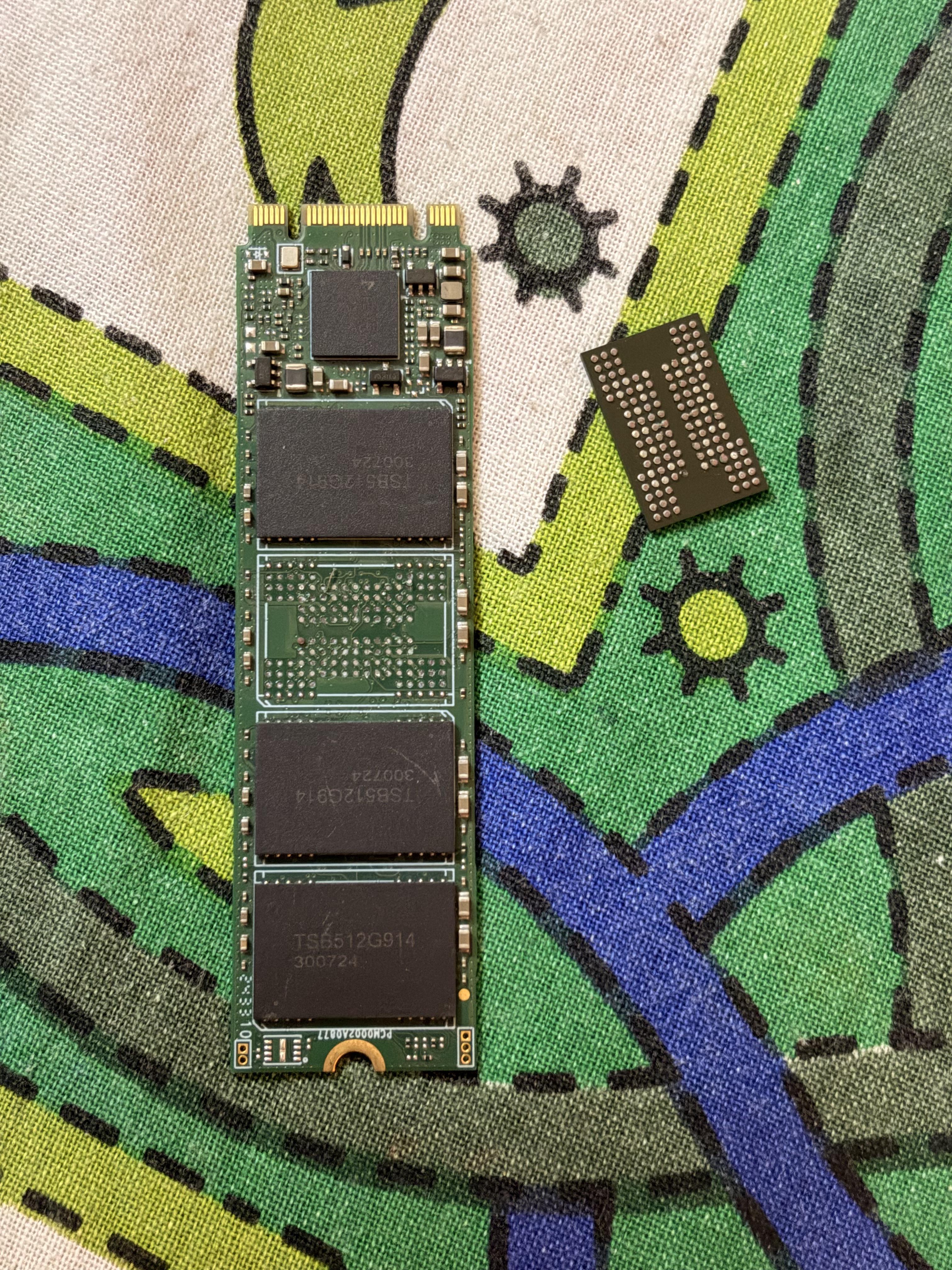
Game dev life hits different when you're so deep in creating grotesque low-poly assets that you forget you left a horrifying meat texture reference in your roommate's fridge. Nothing says "I'm working on something creative" quite like a gnarly piece of raw meat sitting on a plate, looking like it came straight out of Silent Hill's asset library. The roommate opens the fridge expecting leftovers and instead gets jumpscared by what looks like a prop from Resident Evil. The beautiful chaos of indie game development: when your 3D modeling references start bleeding into real life. That low-res, chunky polygon aesthetic doesn't photograph itself—sometimes you need actual reference material, and sometimes that material terrorizes your housemates. Pro tip: Label your game assets when storing them in shared spaces, or at least warn people that you're bringing the horror game home with you.

As An Indie Dev, Can Confirm

As An Indie Dev, Can Confirm
Solo indie game dev life in a nutshell: you're simultaneously the producer managing budgets, the director making creative decisions, the actor doing voice lines into your $20 mic at 2 AM, the editor cutting together your trailer, the writer crafting dialogue, the artist drawing sprites, and probably the janitor cleaning up your spaghetti code. It's like being a one-person AAA studio, except your studio is a bedroom and your budget is ramen noodles. The best part? You still somehow forget to credit yourself in half these roles because you're too busy wearing the other seventeen hats you didn't list.

The Main Obstacle In Finishing A Game: Scope Creep

The Main Obstacle In Finishing A Game: Scope Creep
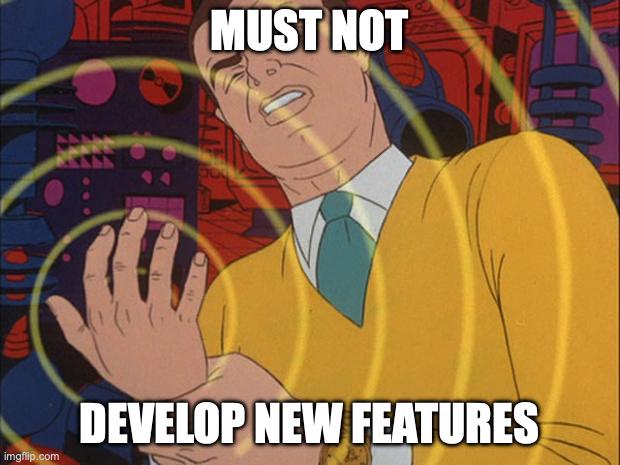
You start with "I'll make a simple platformer" and somehow end up with a sniper rifle pointed at a Minecraft creeper. That's scope creep in its purest form—literally. Every game dev knows this pain. You begin with a basic concept, then suddenly you're adding multiplayer, procedural generation, ray tracing, a crafting system, dynamic weather, NPC relationships, and before you know it, you've got a sniper scope attached to your simple game idea. The project that was supposed to take 3 months is now entering year 4. The visual pun here is *chef's kiss*—scope creep has evolved into an actual scope creeping into your game. Now instead of finishing your indie pixel art adventure, you're implementing ballistics physics and wind resistance calculations. Feature creep: not even once.

Indie Devs Are The True Heroes Of OSS

Indie Devs Are The True Heroes Of OSS
Nothing like watching billion-dollar companies build their entire infrastructure on free open-source software maintained by some indie dev in their spare time, then never contributing a dime back. Meanwhile, that same indie dev is out here sponsoring other projects on GitHub with their $20/month Patreon income. Big Tech will literally depend on a library that's holding together half the internet, maintained by one person who hasn't slept properly since 2019, and their "contribution" is filing bug reports demanding features. But indie devs? They're out here actually reading the CONTRIBUTING.md file, submitting PRs, and throwing a few bucks at the maintainer's Ko-fi. The real kicker is when corporations slap an "Open Source Advocate" badge on their LinkedIn while their legal team spends weeks reviewing a one-line PR contribution because heaven forbid they accidentally give back to the community.

Indiedev Social Media In The Recent 24 Hours

Indiedev Social Media In The Recent 24 Hours
The indie game dev community just witnessed an absolute AVALANCHE of DLSS5 memes flooding their timelines like a broken particle system with no culling. Somebody announced or teased DLSS5 and now every single indie dev is simultaneously having an existential crisis because they're still trying to figure out how to optimize their games to run at 30fps on a potato. The poor soul in the meme is literally DROWNING in DLSS5 content—it's coming from every direction, multiplying faster than memory leaks in a Unity project. "Why can't I hold all these DLSS5 memes?" is the universal cry of every indie developer who just wants to scroll through Twitter without being reminded that NVIDIA's AI upscaling tech has evolved FIVE generations while they're still debugging their collision detection. The sheer volume of meme spam has transformed social media into a DLSS5 echo chamber, and there's no escape. It's like attending a game dev conference where everyone only knows one joke and they're ALL telling it at once.

True Af

True Af
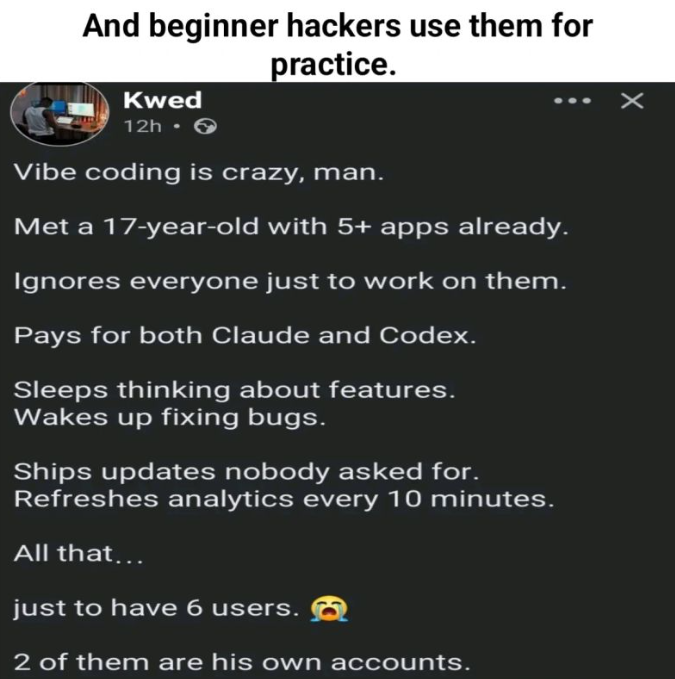
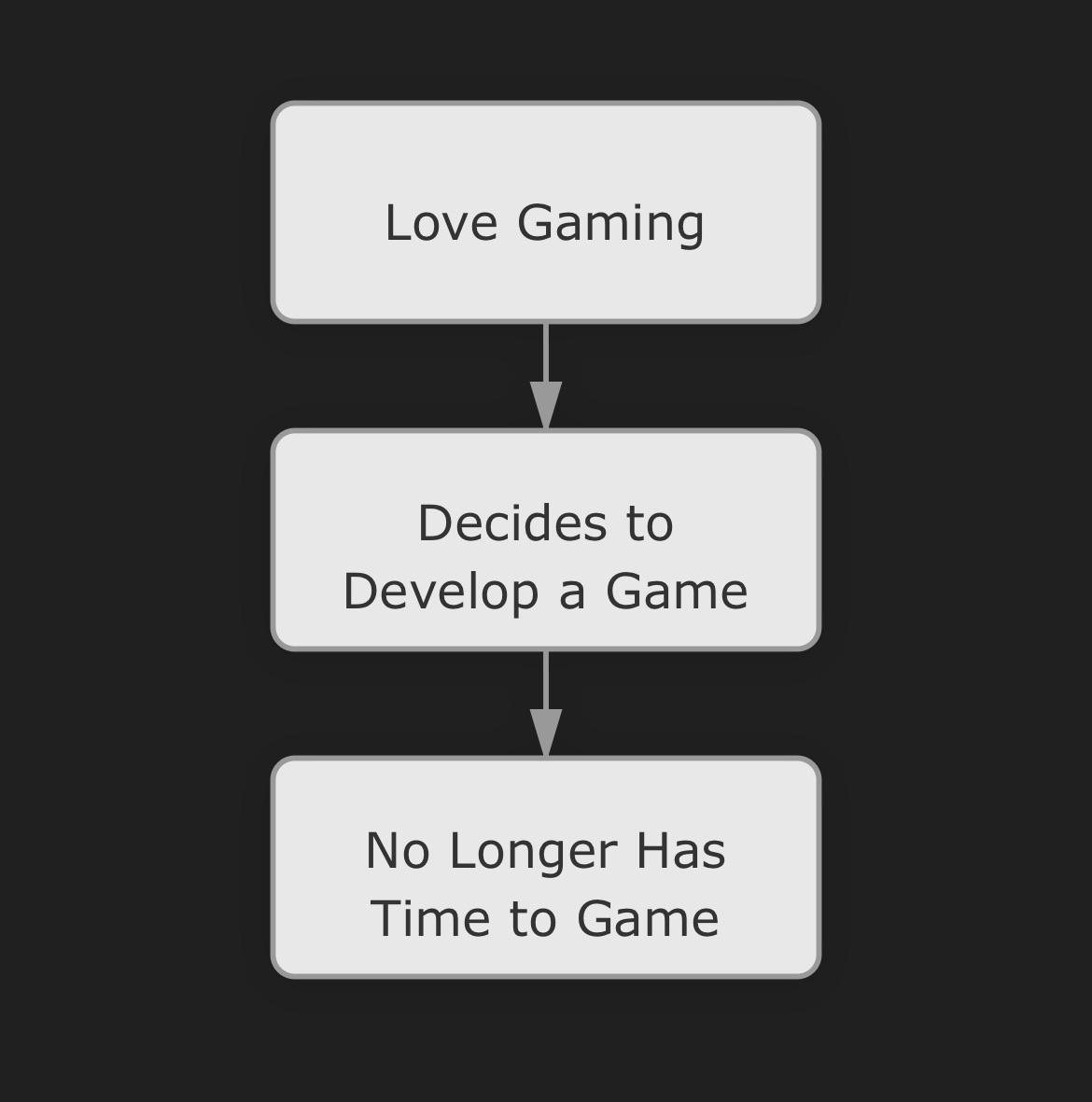
The modern developer's paradox: spending three months building a productivity app that nobody asked for, marketing it to your mom and two Discord friends, then watching the download counter stay permanently frozen at zero. Meanwhile, your GitHub repo collects dust and your "revolutionary idea" joins the graveyard of side projects that seemed brilliant at 2 AM. But hey, at least you learned that new framework nobody's hiring for.

Surprise Surprise

Surprise Surprise
You spend months crafting your "unique" app idea, convinced you're about to revolutionize the industry. Launch day arrives, you hit publish, and suddenly discover the app store has approximately 47,000 clones of your masterpiece already sitting there. Turns out your groundbreaking to-do list app wasn't quite as groundbreaking as you thought. The real kicker? Half of them have better UI than yours and the other half are somehow ranked higher despite looking like they were designed in MS Paint. Welcome to app development, where originality goes to die and everyone's building the same weather app.

If I Had 100$/Year

If I Had 100$/Year
Apple Developer Program membership costs $99/year just for the privilege of uploading your app to the App Store. You know, the app you already spent months building. It's like paying rent to display your own furniture. Meanwhile, Android devs can pay once and call it a day, but iOS? Nah, that's a subscription service. Every. Single. Year. Nothing says "innovation" quite like a recurring fee to access a compiler and a submit button.