

Game engine Memes

Posts tagged with Game engine
Annoying Asf

Annoying Asf
Ah yes, the classic game dev power move: locking graphics settings behind a "you must restart the game" wall. Nothing says "optimized code" quite like forcing players to close everything, relaunch, and pray their potato PC can handle ultra settings. Bonus points if the game takes 10 minutes to load and you picked the wrong resolution, so now you're stuck staring at a distorted mess until you restart... again. The face says it all—pure, unfiltered rage mixed with the acceptance that some game engines were clearly coded by people who think user experience is just a myth.

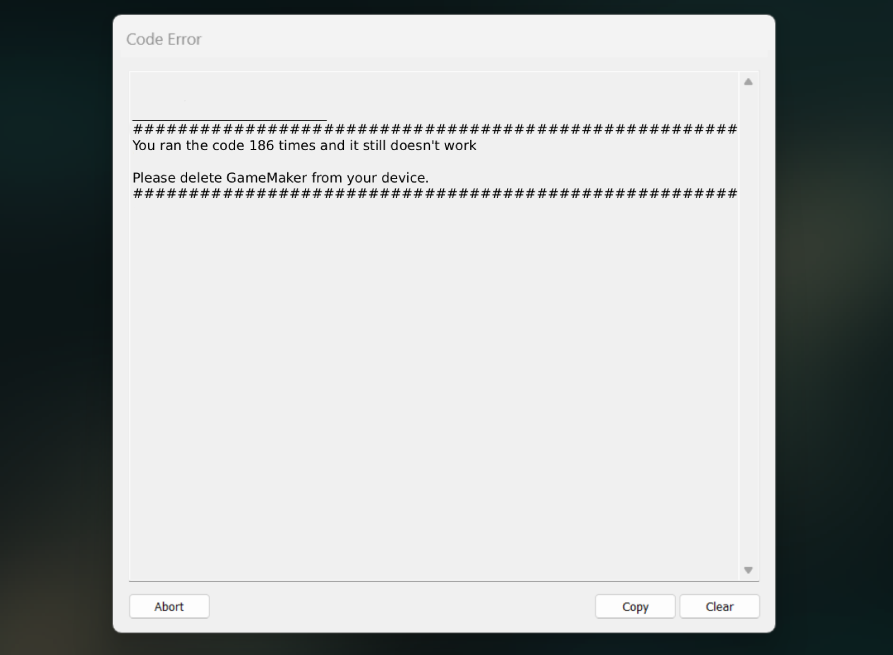
Its Two In The Morning Please Just Work Once

Its Two In The Morning Please Just Work Once
Oh, the absolute TRAGEDY of watching your "just a little side project" transform into a RAM-devouring monster that brings Godot to its knees! You thought you were being clever with your procedural generation algorithm, maybe threw in a few nested loops here and there, no big deal. But NOPE—your innocent dungeon generator decided to spawn approximately seventeen million rooms and now your computer is having a complete meltdown. And what do you do? Do you learn from your mistakes? Do you add proper memory management? Of course not! You hit that run button AGAIN like a masochist with a keyboard, desperately hoping the computer gods will smile upon you this time. Spoiler alert: they won't. But hey, at least you're consistent in your suffering! 🎭

Me After Spending 7 Years Making A Game Engine From Scratch

Me After Spending 7 Years Making A Game Engine From Scratch
Classic gamedev energy right here. You set out to make a simple platformer, but somewhere around year 2 you're implementing your own physics engine because "how hard could it be?" By year 5, you've written a custom renderer that supports volumetric lighting nobody asked for. Year 7? You're reinventing linear algebra because the existing libraries don't align with your "vision." The Carl Sagan quote is perfect: "If you wish to make an apple pie from scratch, you must first invent the universe." Except instead of apple pie, it's a triangle renderer. And instead of the universe, it's your own memory allocator, windowing system, and probably a custom programming language because C++ wasn't giving you enough pain. Meanwhile, someone using Unity just shipped their 47th game. But do they have the satisfaction of knowing exactly how their quaternion interpolation works? Didn't think so.

Quick Side Project

Quick Side Project
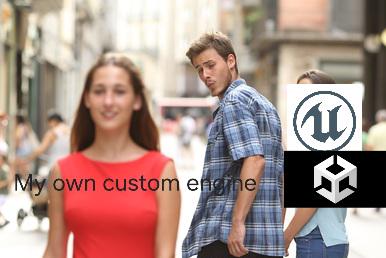
Ah yes, the classic "I'll just build my own game engine" moment. Because why use Unity or Unreal when you can spend the next five decades reinventing the wheel, implementing your own physics engine, writing custom shaders, building a rendering pipeline from scratch, and debugging why triangles won't render correctly? What starts as "just a quick weekend project" turns into a NASA-level engineering odyssey. You'll be 80 years old, still optimizing your quaternion rotations while your grandkids ask why you never actually made a game. But hey, at least you'll have a deep understanding of linear algebra, memory management, and existential dread. The Interstellar reference hits different when you realize that time dilation is real—it just happens in your IDE instead of near a black hole.

"Godot Is A Cult." Heck Yeah.

"Godot Is A Cult." Heck Yeah.
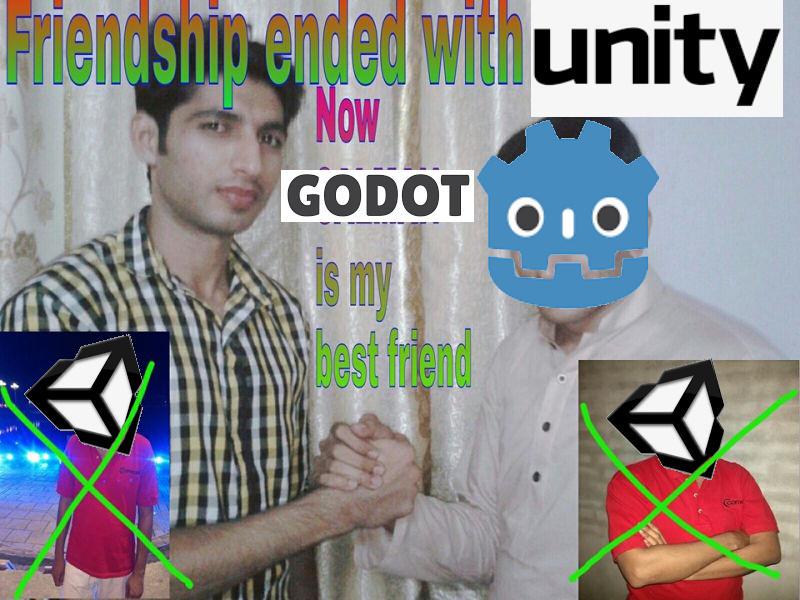
Unity really said "let's charge developers per install" and accidentally created the best marketing campaign for Godot ever. Nothing unites game devs faster than a common enemy with terrible monetization strategies. The "friendship ended" meme format perfectly captures the mass exodus from Unity to Godot. Developers went from "Unity is industry standard" to "Godot is my new best friend" faster than you can say "runtime fee." And honestly? When your game engine is open-source, free, and doesn't randomly decide to charge you for downloads, yeah, maybe being in a cult isn't so bad. The crossed-out Unity logos with the Godot mascot looking all innocent and friendly is chef's kiss. Unity shot themselves in the foot so hard they needed a whole new engine to render the damage.

To Lower The 3D Engine's Rendering Load, This Tree Was Placed In Shinagawa, Tokyo

To Lower The 3D Engine's Rendering Load, This Tree Was Placed In Shinagawa, Tokyo
Someone clearly set the LOD (Level of Detail) slider way too low on this tree asset. You know how game engines optimize performance by rendering distant or less important objects with lower polygon counts? Well, this tree looks like it got the "billboard sprite" treatment—a classic optimization technique where complex 3D models are replaced with flat 2D images that always face the camera. The perfectly triangular, suspiciously uniform shape screams "low-poly asset from a 2003 game engine." It's like someone took a cone primitive, slapped a green texture on it, and called it a day. Meanwhile, the other trees in the background are rendering just fine with their natural, organic shapes. Guess the GPU budget ran out by the time they got to this one. Reality just shipped with some serious graphical bugs. Time to file a ticket with the universe's dev team.

UGREEN Maxidok Thunderbolt 5 Docking Station, Triple 4K@60Hz, 4xTBT5 Port

UGREEN Maxidok Thunderbolt 5 Docking Station, Triple 4K@60Hz, 4xTBT5 Port
120Gbps Thunderbolt 5 Speed: Certified by Intel, 4 x Thunderbolt 5 ports deliver blazing-fast 120Gbps transfers—theoretically moving a 21GB movie in just 2 seconds. It provides the ultimate bandwidth…

I'm Considering Godot After This Game

I'm Considering Godot After This Game
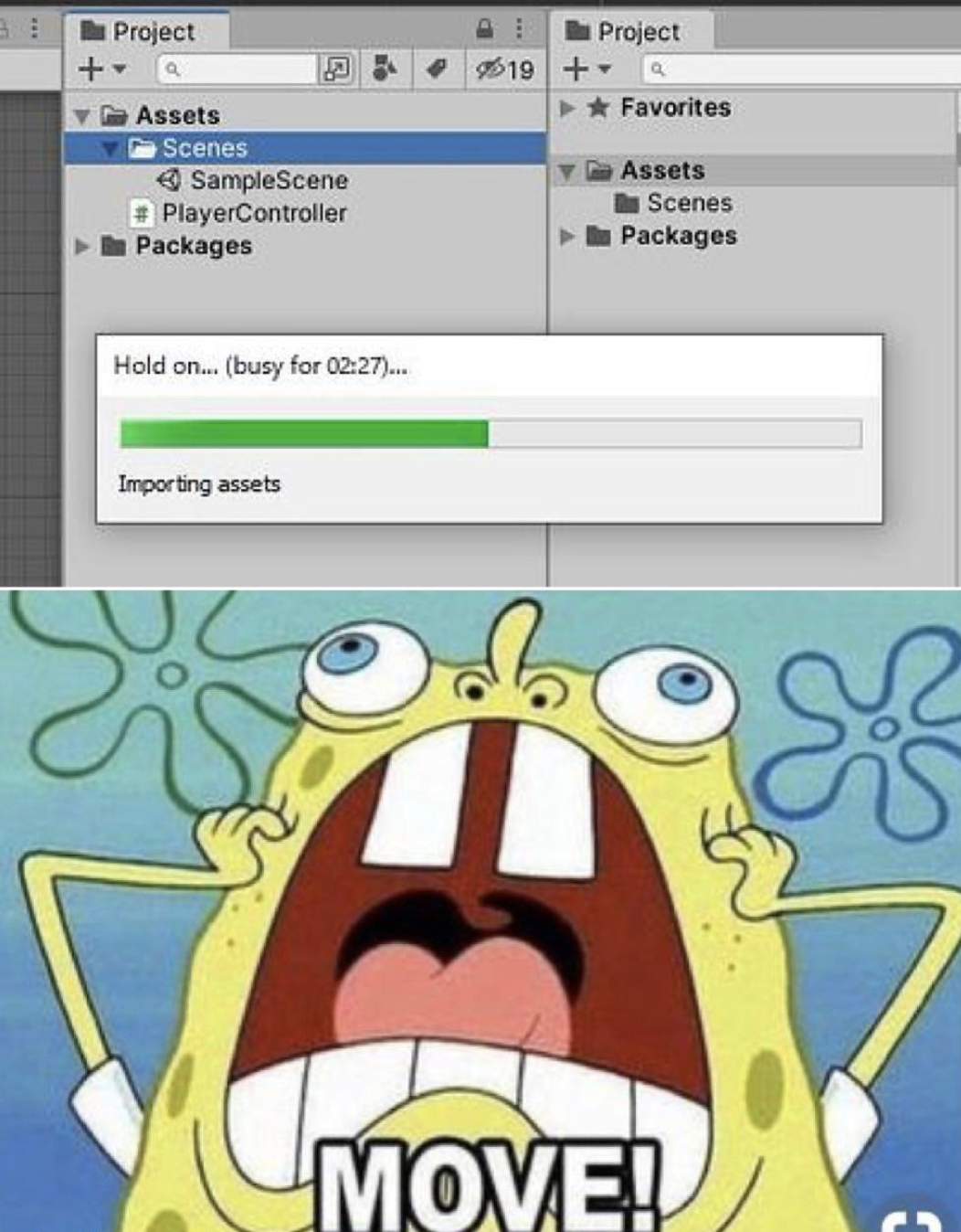
Unity's asset import system: where time goes to die. You've got a SampleScene, a PlayerController, and approximately 2 hours and 27 minutes of your life being consumed by a progress bar that's moving slower than a bubble sort on a potato. The "Importing assets" dialog is basically Unity's way of saying "go grab coffee, walk your dog, maybe learn a new language while you're at it." The rage is real. Unity's notorious import times have driven many developers to consider alternatives like Godot, which is known for its lightning-fast startup and asset handling. When your game engine spends more time importing than you spend actually developing, the grass starts looking pretty green on the other side of the fence. Fun fact: Unity reimports assets every time it detects changes or when you first open a project, and with larger projects, this can legitimately take hours. It's like waiting for Windows Update, except you actually need to work.

I'm Considering Godot After This Game

I'm Considering Godot After This Game
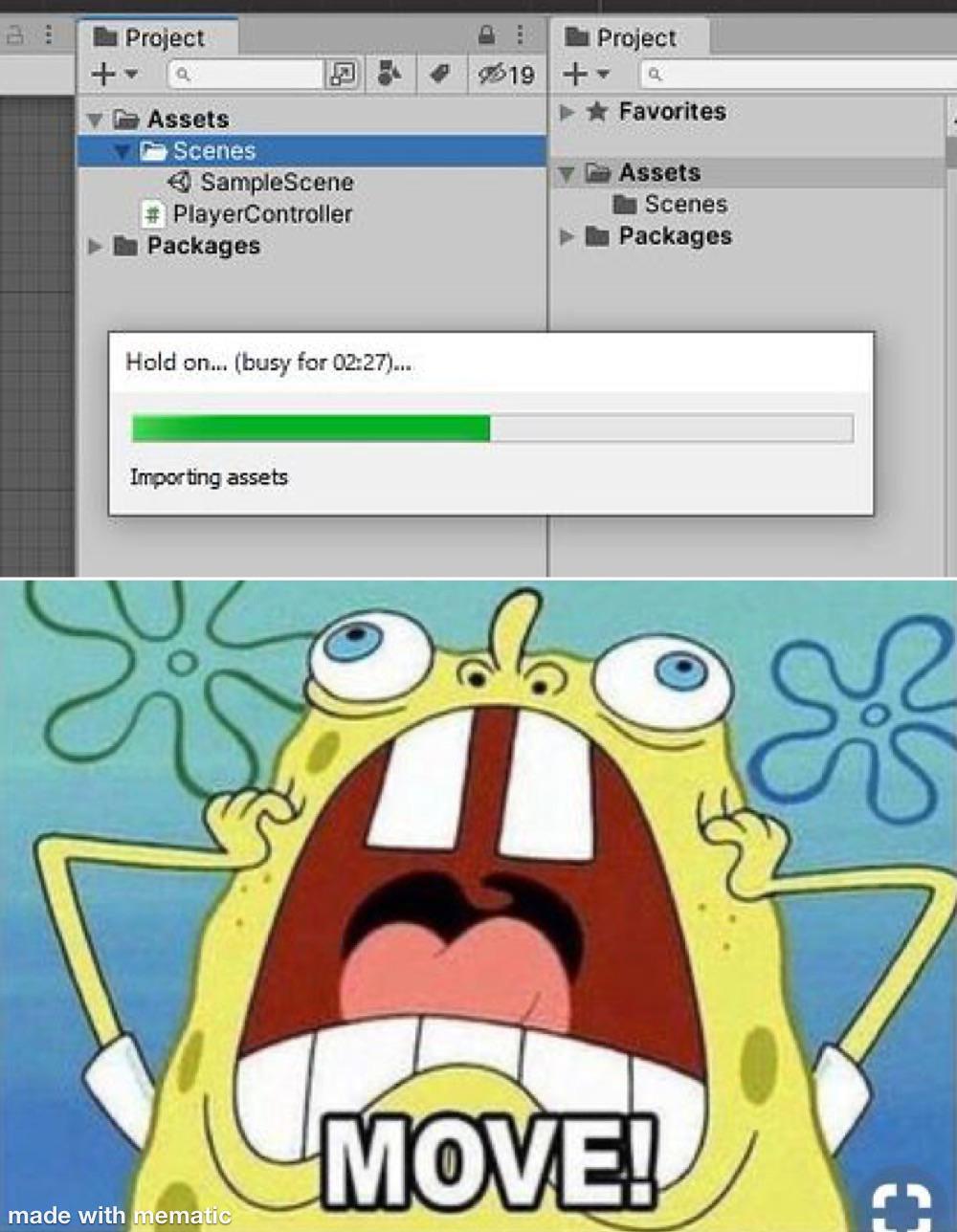
Nothing says "productive game development session" like Unity deciding to import assets for the next 27 minutes while you sit there questioning every life choice that led you to this moment. You know what really stings? That progress bar is lying to you—it's not actually calculating time accurately. It's just there to give you false hope while Unity does... whatever Unity does in the background. Probably reorganizing your entire project structure for fun. Every Unity dev has experienced this special kind of torture. Import one tiny sprite? 15 seconds. Import a 3D model with textures? Grab lunch. The worst part is you can't really do anything else because canceling might corrupt your project, and working on code while it's importing is like playing Russian roulette with your sanity. Meanwhile, Godot devs are out there smugly tweeting about their instant asset imports. Yeah, we see you.

Writing My Own Game Engine Is Fun

Writing My Own Game Engine Is Fun
Every game dev's tragic love story: You start building your dream game, but then that sweet, sweet temptation of writing your own engine from scratch whispers in your ear. Next thing you know, you're six months deep into implementing quaternion math and custom memory allocators while Unity and Unreal are RIGHT THERE, fully functional, battle-tested, and ready to go. But noooo, you just HAD to reinvent the wheel because "it'll be more optimized" and "I'll learn so much." Spoiler alert: your game still doesn't exist, but hey, at least you have a half-working physics engine that crashes when two objects collide at exactly 47 degrees!

Programming Tutorials Then And Now

Programming Tutorials Then And Now
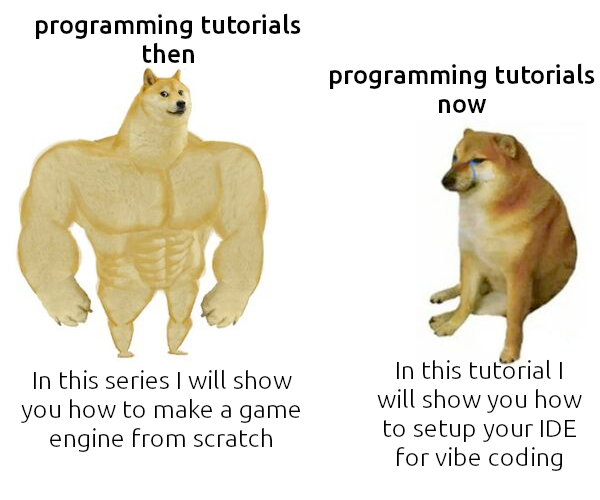
The golden age of programming tutorials had people casually dropping "let's build a game engine from scratch" like it was a weekend project. Now? We're celebrating the monumental achievement of... configuring VS Code with the right color theme and extensions. The devolution is real. Back then, tutorials assumed you had a PhD in computer science and three lifetimes of free time. "Part 1 of 47: Implementing our custom memory allocator" was considered beginner-friendly. Today's tutorials are like "Step 1: Install Node. Step 2: Cry because of dependency conflicts. Step 3: There is no Step 3, you're still on Step 2." The shift reflects how the barrier to entry has lowered (good!) but also how we've become more focused on tooling than fundamentals (questionable!). Though to be fair, getting your IDE setup properly in 2024 with all the linters, formatters, and extensions IS basically rocket science.

NordVPN

NordVPN
Encrypt your traffic on public Wi-Fi, stream from anywhere, and cover up to ten devices with one plan. 30-day money-back guarantee.

Game Dev Logic Is Just Arcane Chaos

Game Dev Logic Is Just Arcane Chaos
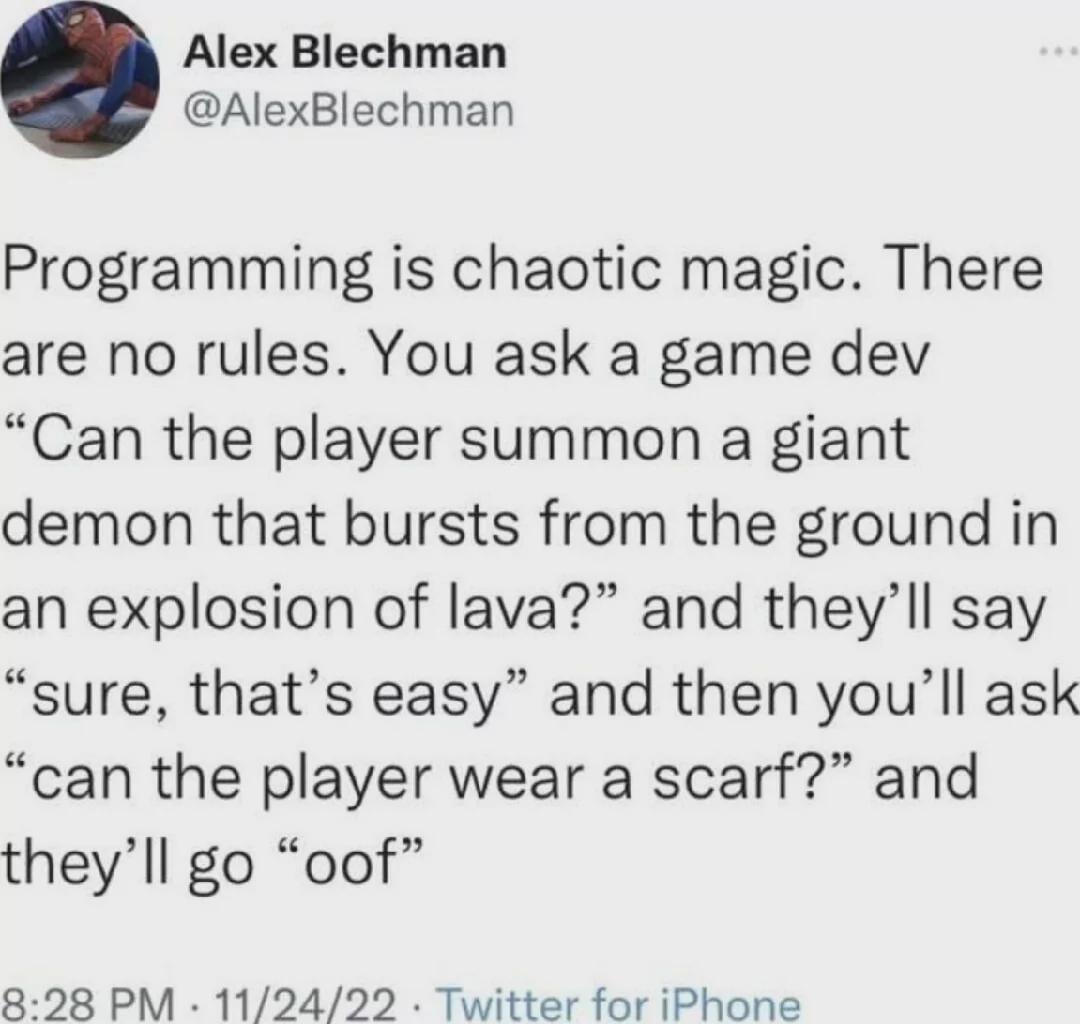
Game development: where summoning a demon from a lava explosion is "trivial" but adding a scarf to the player model requires a 6-hour meeting with the art team, three engine restarts, and possibly a blood sacrifice to the physics gods. The complexity hierarchy in game dev is completely inverted—rendering a photorealistic apocalypse? Child's play. Making a hat stay on a character's head? That's dark sorcery nobody dares attempt. It's because the demon is just particle effects and a pre-baked animation, but that scarf? That needs cloth physics, collision detection, bone rigging, and the willingness to watch it clip through the character's neck for the rest of eternity. Game devs will casually implement procedural terrain generation but then panic at the thought of customizable accessories. Priorities? We don't know her.

Working On A Raycasting Engine

Working On A Raycasting Engine
So you spent three weeks learning trigonometry, diving into DDA algorithms, and debugging why your walls look like a Salvador Dalí painting, only to realize John Carmack did this in 1992 on hardware that had less computing power than your smart toaster. And he did it while probably eating pizza and writing assembly like it was a casual Tuesday. The "box of triangles" bit hits different when you realize modern game engines abstract all this pain away with their fancy rendering pipelines, but back then? Carmack was literally casting rays and doing trigonometric calculations per pixel to fake 3D in Wolfenstein 3D. No GPU acceleration, no Unity, no "just import Three.js"—just raw math and the will to make demons shootable. Meanwhile, you're here in 2024 with Stack Overflow, ChatGPT, and 64GB of RAM, still struggling to get your raycaster to not crash when you look at a corner. Humbling stuff.