Coding interviews Memes

Posts tagged with Coding interviews
Programming Interviews

Programming Interviews
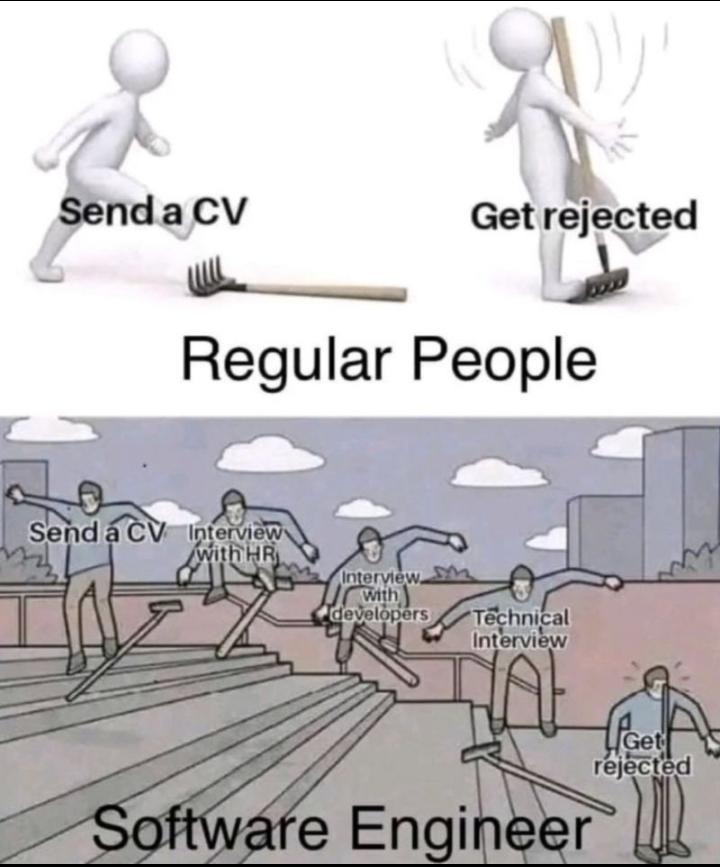
Regular people: casually rake their way through two simple steps and call it a day. Software engineers: navigate an Olympic-level obstacle course that includes HR screening (where they ask if you're a "culture fit"), developer interviews (where mid-level devs grill you about obscure edge cases they Googled 5 minutes ago), technical interviews (invert a binary tree while explaining the philosophical implications of Big O notation), and THEN get rejected because you used a for-loop instead of recursion. The best part? After clearing this parkour nightmare, they'll still ask for 5 years of experience in a framework that's been around for 3 years. The hiring process has more stages than a SpaceX rocket launch, and about the same success rate.

*2050

*2050
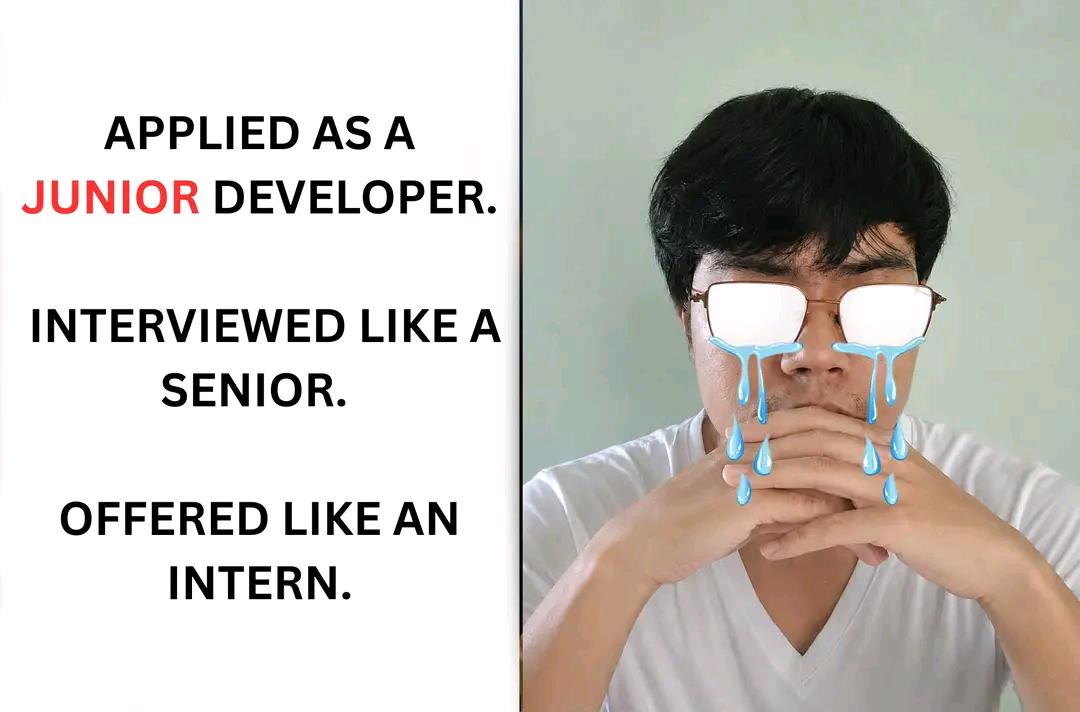
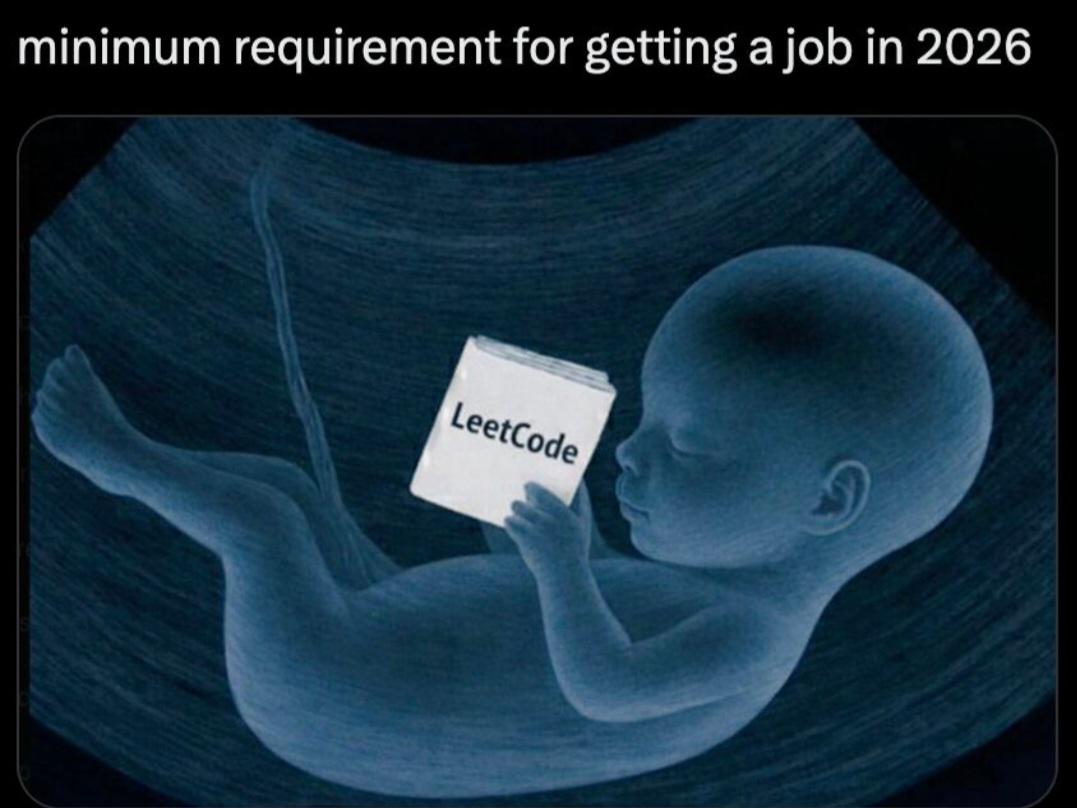
Junior dev positions requiring 5 years of experience? Cute. Try explaining to your unborn child that they need to start grinding LeetCode yesterday if they want a shot at an entry-level gig in 2026. The tech hiring market has officially jumped the shark—companies want you to solve dynamic programming problems in your sleep before you're even potty trained. Meanwhile, the same companies will ask you to center a div on day one. The dystopian future where fetuses are expected to have a GitHub portfolio with 10k stars is closer than you think.

The Hardest Problem

The Hardest Problem
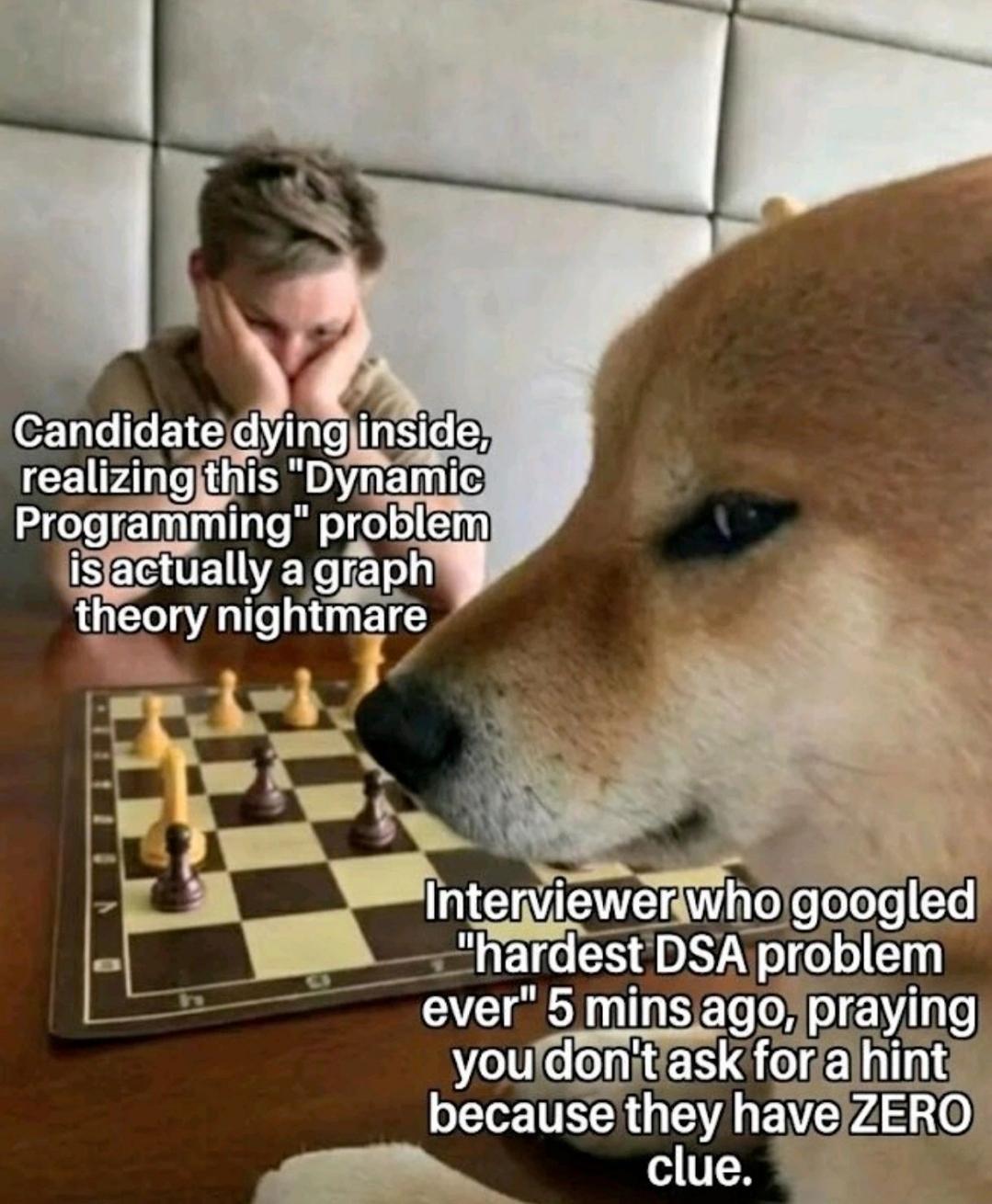
You know that moment when you're in a technical interview and confidently start explaining your dynamic programming solution, only to realize mid-sentence that it's actually a graph traversal problem in disguise? Meanwhile, your interviewer is sitting there like a very patient shiba inu, having just speed-run LeetCode's "Top 10 Graph Nightmares" article 5 minutes before your interview started. The beautiful irony here is that both of you are completely winging it. You're having an existential crisis realizing your memoization table is useless when you need to track visited nodes. They're silently praying you don't ask for hints because their entire knowledge comes from skimming a blog post while you were introducing yourself. It's like two people playing chess where one doesn't know the rules and the other just learned them from a YouTube short. The real hardest problem? Figuring out who's more terrified in this scenario.

Maybe It's Just Brainrot

Maybe It's Just Brainrot
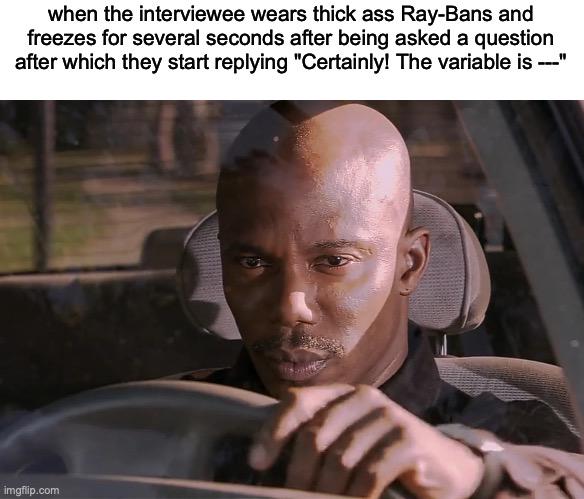
You know that moment when someone asks you a technical question in an interview and you freeze like a deer in headlights, desperately trying to retrieve information from the cobweb-filled corners of your brain? The thick Ray-Bans represent that false confidence we all walk in with, thinking we're hot stuff. Then boom—question hits, buffering mode activated for what feels like an eternity, and suddenly you're channeling your inner used car salesman with "Certainly!" before trailing off into the void with "The variable is—" because your brain just blue-screened. The awkward pause, the overcompensating enthusiasm, the sentence that goes nowhere—it's the technical interview equivalent of your code compiling on the first try (suspicious). That stare perfectly captures the interviewer's internal monologue: "Should I help them? Should I just end this now? Why did they put 'expert' on their resume?" Pro tip: Next time just say "let me think about that for a second" instead of pretending your neural network is still loading the weights.

Vibe Coders Giving Interviews

Vibe Coders Giving Interviews
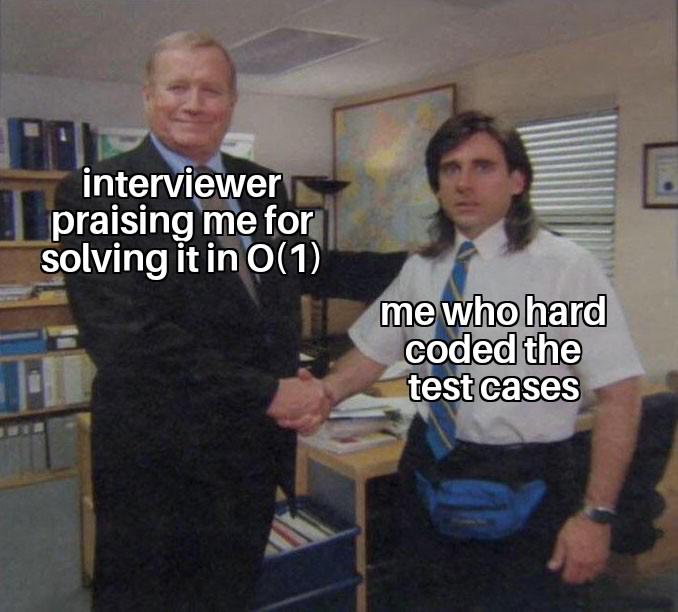
You know those developers who can somehow vibe their way through LeetCode by pattern-matching solutions they've seen before? Yeah, they're getting praised for that O(1) solution while sweating bullets knowing they literally just memorized the test cases. The interviewer thinks they're witnessing algorithmic genius, meanwhile our hero is internally screaming because they spent 3 hours hardcoding edge cases the night before. The best part? This actually works until someone asks "can you explain your approach?" and suddenly it's like watching someone try to explain why their code works after copying it from StackOverflow. The uncomfortable handshake really sells the "I'm in danger" energy.

The Interviewer's Existential Crisis

The Interviewer's Existential Crisis
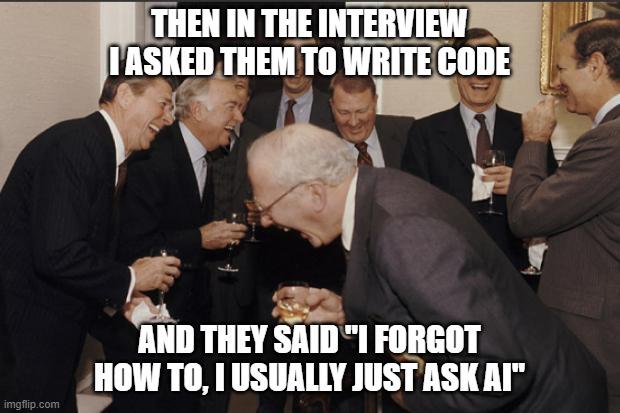
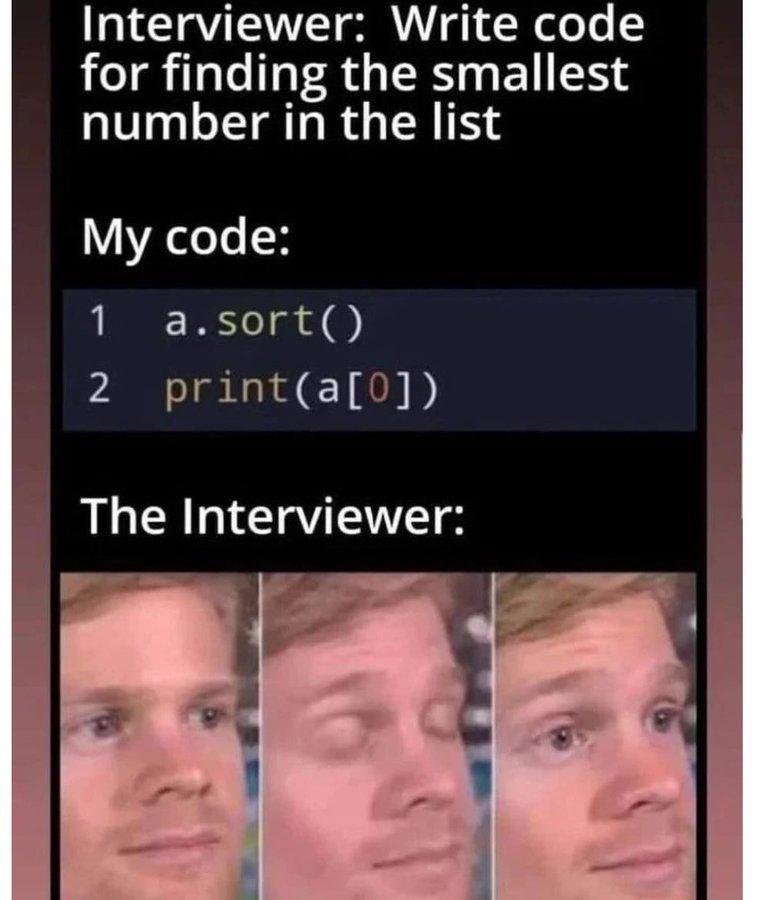
Oh. My. GOD. The absolute AUDACITY of using built-in functions during a coding interview! 💀 The interviewer's face is SCREAMING "I expected you to write a 17-line algorithm with three nested loops and discuss time complexity for 20 minutes, but you just... sorted the list and grabbed the first element?!" Honey, this is the programming equivalent of being asked to build a house from scratch and just calling a contractor instead. THE HORROR! 🔥

Another Day Of Not Using My CS Degree

Another Day Of Not Using My CS Degree
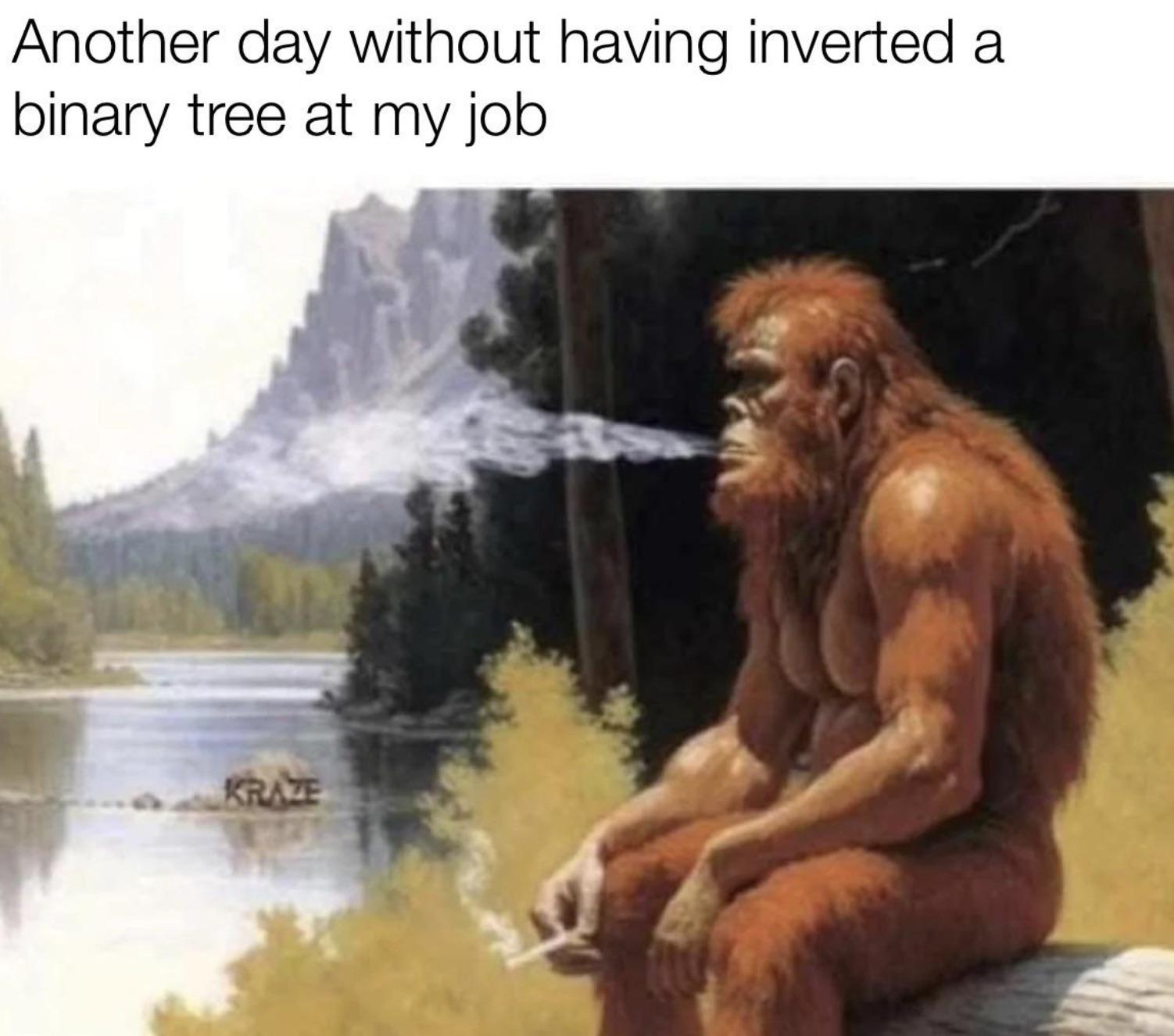
Spent four years getting that CS degree, mastered algorithms, aced data structures, and now I'm just updating CSS padding values and restarting servers. That binary tree inversion question from the interview? Yeah, haven't touched that since. Six years into my career and I'm starting to think my algorithm textbooks were just expensive paperweights. The gap between academic computer science and day-to-day development is wider than my code coverage will ever be.

The LeetCode Dunce Cap

The LeetCode Dunce Cap
The CS grad showing up to the party like a socially awkward wizard because nobody at school taught them the real interview skills. While everyone's socializing, they're silently judging people for not grinding LeetCode. Fun fact: some companies are actually moving away from algorithm puzzles because they realized real-world programming is more about dealing with legacy code and crying in the bathroom than inverting binary trees.

Vibe Coders: When Buzzwords Meet Reality

Vibe Coders: When Buzzwords Meet Reality
Ah, the "vibe coder" – that person who throws around programming buzzwords without understanding what they actually mean. The punchline hits when Squidward tries to impress with actual Java code (that classic public static void main String args horror show) and SpongeBob freaks out because Patrick's programming facade is crumbling faster than a website built with deprecated libraries. This is basically every coding interview where someone put "proficient in Java" on their resume after completing half a Udemy course.

Sometimes It Feels Like My Brain Has A Mind Of Its Own

Sometimes It Feels Like My Brain Has A Mind Of Its Own
Brain during study: Focused scholar surrounded by equipment, ready to absorb complex algorithms and design patterns. Brain during coding interview: "Jorg Washingmachine." Your memory buffer apparently undergoes a complete garbage collection the moment you need to recall anything useful. Happens to the best of us. Just smile and nod while your brain frantically tries to remember if arrays are zero-indexed.

The Artistic FizzBuzz Massacre

The Artistic FizzBuzz Massacre
Behold the FizzBuzz solution that thinks it's a Picasso! Someone redefined all the brackets and braces with custom ASCII art, then implemented the most over-interviewed algorithm in history. It's like putting a tuxedo on a coding test everyone's seen a million times. The real art here isn't the FizzBuzz solution—it's making your code reviewer question their will to live when they have to maintain this masterpiece. Bonus points for the pretentious title "Just Art" as if this isn't the coding equivalent of wearing a fedora to a job interview.

Interview Preparation Vs Actual Work

Interview Preparation Vs Actual Work
Left side: A pristine O'Reilly book with an elegant wild boar illustration, promising the secrets to "Designing Data-Intensive Applications" with "reliable, scalable, and maintainable systems." Right side: The same boar, but now sleeping on a dirty mattress next to garbage bins. The elegant theory meets the trashy reality. Spent three months mastering B-trees and distributed consensus algorithms just to end up writing SQL queries that could've been figured out with a 5-minute Stack Overflow search. The duality of software engineering: expectation vs. the glorious dumpster fire we call production.