

Certificates Memes

Posts tagged with Certificates
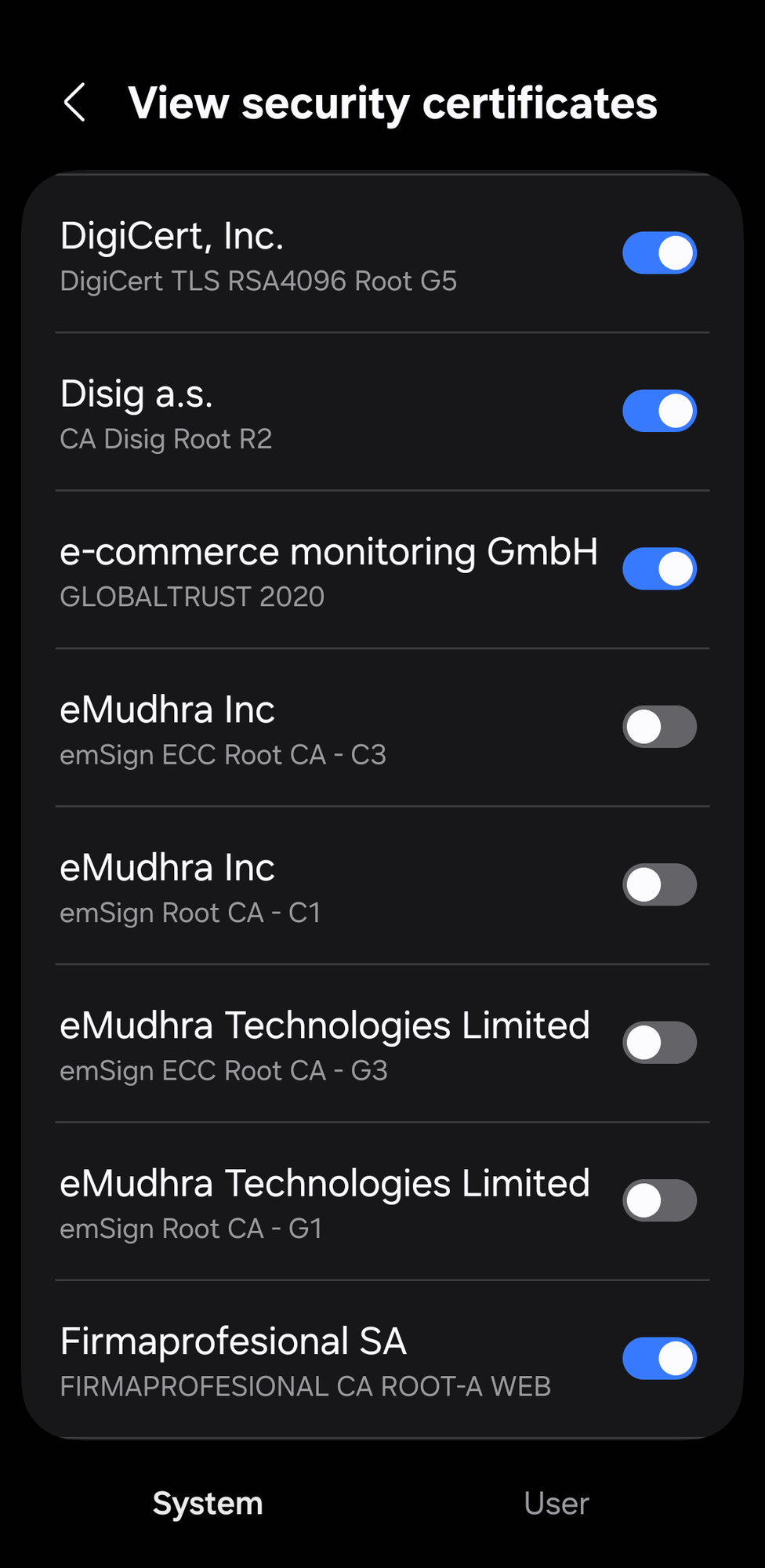
When Your Phone Has A Menu That No User In The Universe Would Ever Have Any Reason To Touch But Then You Get To 🥵

When Your Phone Has A Menu That No User In The Universe Would Ever Have Any Reason To Touch But Then You Get To 🥵
You know you're a true developer when you find yourself six layers deep in your phone's settings, casually browsing through security certificates like it's your Netflix queue. Normal people see "View security certificates" and their brain immediately goes into sleep mode. But developers? We're out here toggling root CAs like we're adjusting the thermostat. There's something deeply satisfying about having the power to enable or disable trust for entire certificate authorities. It's like being handed the keys to the internet's trust system. "Oh, you want me to trust eMudhra Inc? Let me think about it..." *casually flips toggle* Pure power trip energy. The best part? You'll probably never need to touch these settings in your entire life, but knowing they exist and understanding what they do gives you that warm fuzzy feeling of technical superiority. Plus, it's great party material when you want to clear a room real quick.

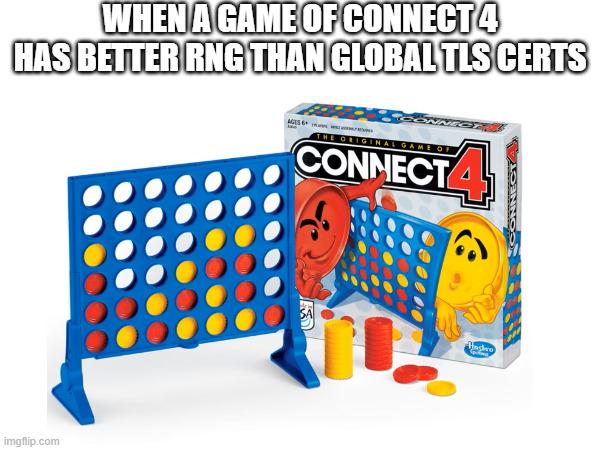
Connect 4 > TLS Certificates

Connect 4 > TLS Certificates
You know your infrastructure security is in shambles when a children's board game has more reliable randomness than your entire PKI setup. Connect 4's RNG actually works—those colored discs fall where they're supposed to, every single time. Meanwhile, TLS certificates? Expired at 2 AM on a Saturday. Wrong domain. Self-signed because someone forgot to renew. Certificate chain broken because some intermediate CA decided to retire without notice. The real kicker is that Connect 4 has been solving the "trust" problem since 1974 without needing a 30-step renewal process, three different vendors, and a postmortem document. Just drop the disc. It works. No wildcard certificates, no SNI issues, no "NET::ERR_CERT_AUTHORITY_INVALID" at 9 PM on deployment day.

How The Key Was Actually Created

How The Key Was Actually Created
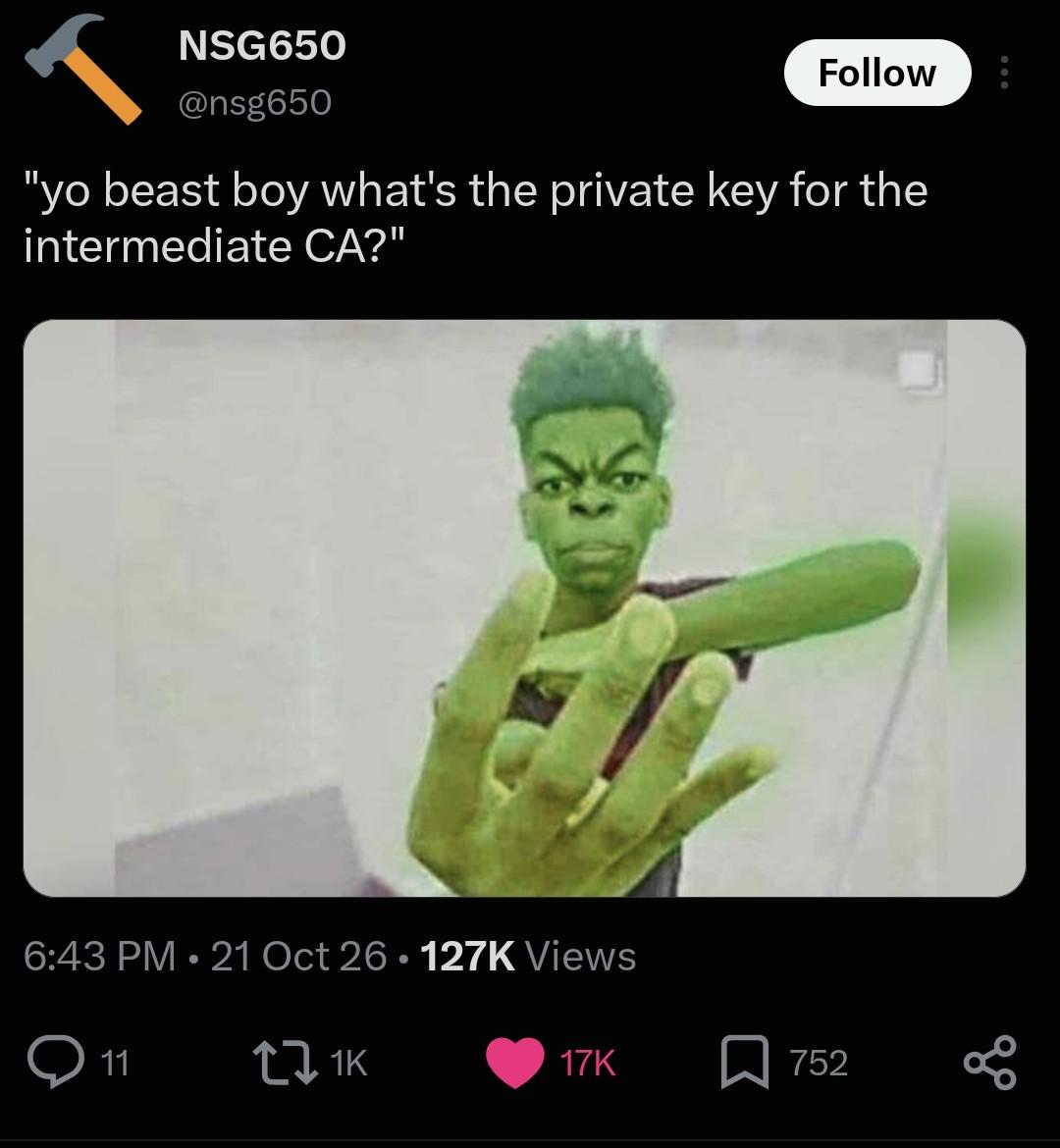
Someone casually asking for the intermediate CA's private key is like asking for the nuclear launch codes at a pizza party. The person responding with aggressive keyboard smashing perfectly captures the appropriate level of rage when someone doesn't understand the entire point of PKI infrastructure. For context: In certificate chains, the intermediate Certificate Authority's private key is literally the crown jewels. If that gets leaked, you can forge certificates for any domain and basically break the entire trust model of the internet. It's not just "please don't share this" – it's "this should be in an HSM in a bunker guarded by lasers." The "yo beast boy" energy combined with the fundamental misunderstanding of security principles is *chef's kiss*. Nothing says "I'm about to have a very bad day" quite like someone treating root-level cryptographic material like a WiFi password.

Sesame Street Layer Certificate

Sesame Street Layer Certificate
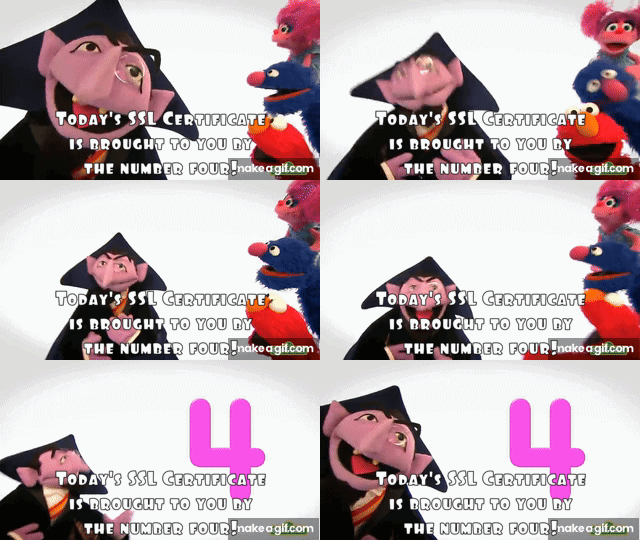
SSL certificates and Sesame Street both teaching us numbers, just in wildly different contexts. One's a beloved children's show teaching toddlers to count, the other's a cryptographic protocol that makes sure your credit card info doesn't end up in the hands of some script kiddie in a basement somewhere. The joke here is that SSL (Secure Sockets Layer) certificates are brought to you by "the number four" - a reference to Sesame Street's classic "brought to you by the letter/number" segments. Except instead of learning basic arithmetic, you're learning that your website needs TLS 1.2 or 1.3 because SSL is deprecated and vulnerable. Educational content for grown-ups who still don't understand why their self-signed cert throws browser warnings. Fun fact: SSL is technically dead - we've been using TLS (Transport Layer Security) for years now, but everyone still calls it SSL because old habits die hard in tech. It's like calling every tissue a Kleenex, except with more security implications.

Xkcd Said Its Random

Xkcd Said Its Random
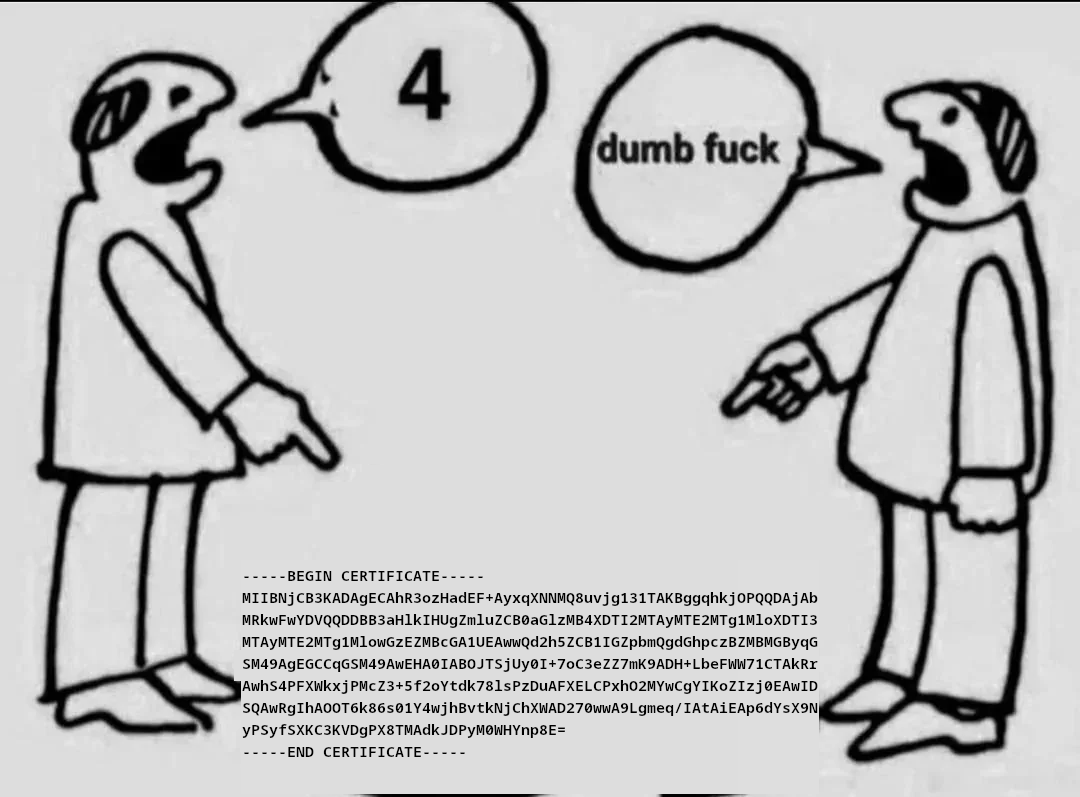
This references the legendary xkcd comic where someone implements a random number generator by just returning 4 because "I rolled a dice and got 4, so it's random." Fast forward to reality, and here's some poor soul actually using that logic to generate SSL certificates. The other person's response? "dumb fuck" - which is honestly the most restrained reaction possible when someone hardcodes entropy into cryptographic material. The beauty here is that certificates need actual randomness for security. Using the same "random" seed means every certificate would be identical, making your entire PKI infrastructure about as secure as a screen door on a submarine. But hey, xkcd said it was random, so ship it to production.

Chosen By A Fair Dice Roll

Chosen By A Fair Dice Roll
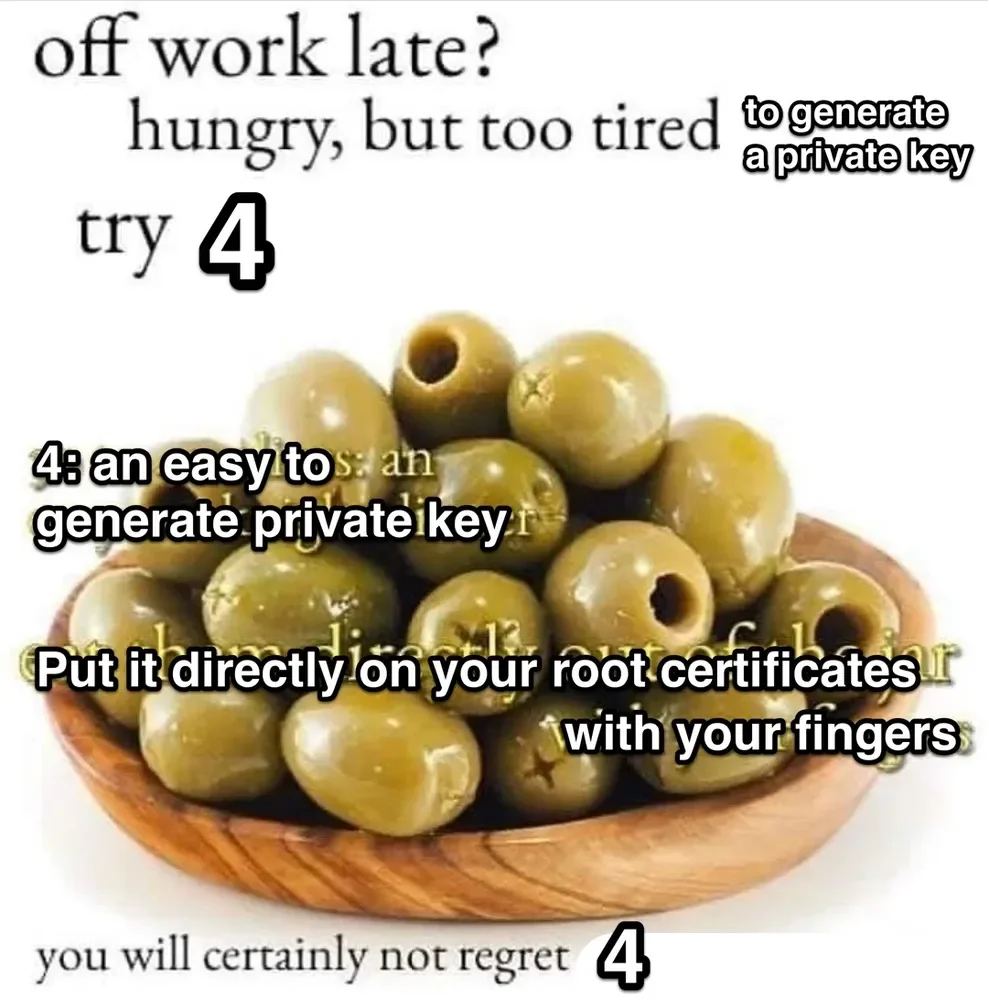
When you're so exhausted that rolling a dice to make decisions seems like peak productivity, and naturally you land on the WORST possible option for your cybersecurity. Nothing says "I've given up on life" quite like using a random number generator (your brain is too tired for that) to decide how to handle your cryptographic keys, and then proceeding to manually copy-paste your private key into your root certificates directory like you're spreading butter on toast. Because who needs security best practices when you've got VIBES and HUNGER? The beautiful irony? The number 4 supposedly being "an easy to generate private key" when generating secure keys requires actual randomness and complexity, not just... the number four. And then storing it by literally touching your root certs with your greasy fingers? Chef's kiss of catastrophic security failures. You will certainly not regret this until your entire infrastructure gets compromised at 3 AM and you're even MORE tired.

It's Quick It's Easy And It's Free

It's Quick It's Easy And It's Free
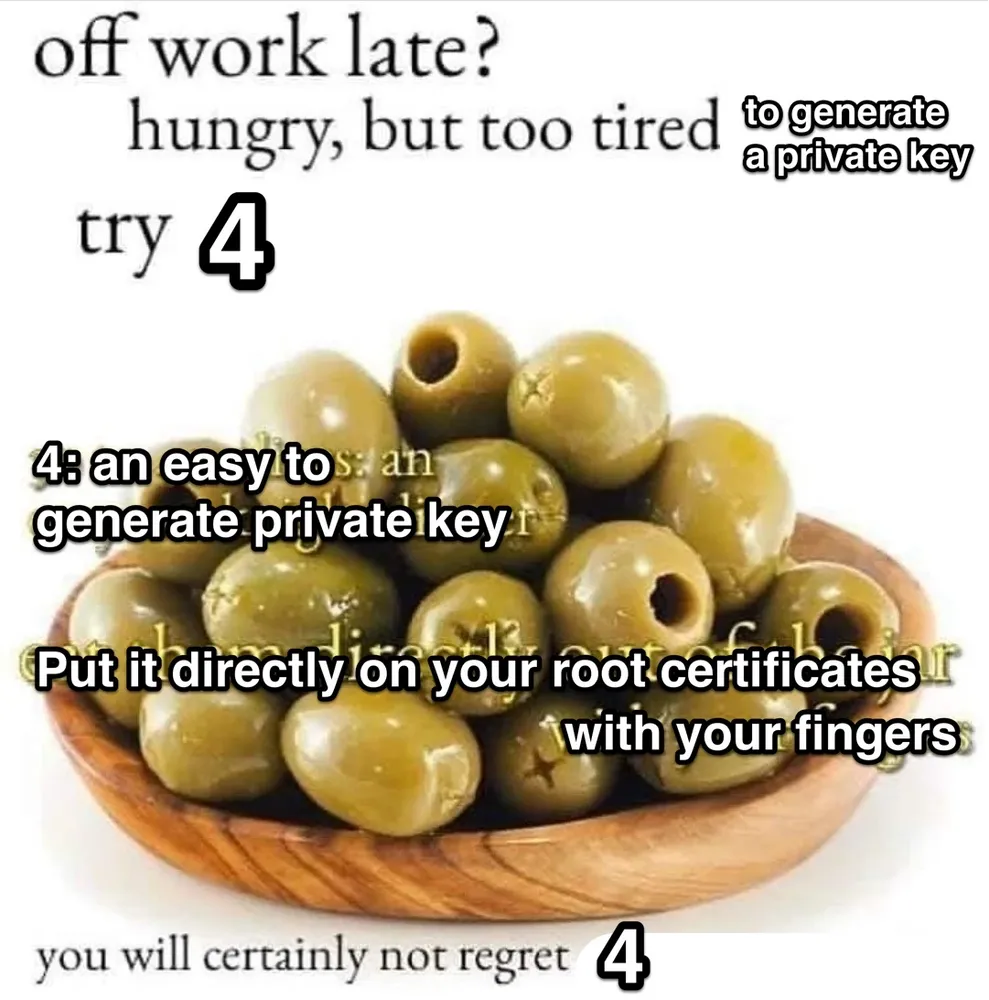
When you're too exhausted to properly generate SSH keys or deal with certificate authorities, just mash that keyboard and manually type your private key directly into your root certificates. What could possibly go wrong? The "4" here is doing some heavy lifting as both a number and the most cursed security advice imaginable. It's like those life hack videos that tell you to fix a cracked phone screen with ramen noodles, except this one will get your entire infrastructure compromised before you finish your sad desk dinner. Nothing screams "I understand cryptography" quite like finger-painting your private keys onto production certificates. Your security team will definitely not regret this. Neither will the hackers who are already in your system.

NordVPN

NordVPN
Encrypt your traffic on public Wi-Fi, stream from anywhere, and cover up to ten devices with one plan. 30-day money-back guarantee.

Peak Web PKI

Peak Web PKI
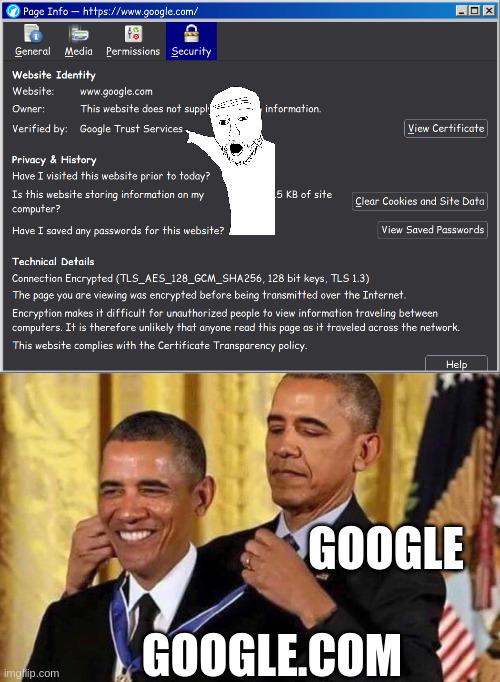
So Google.com's SSL certificate is verified by... Google Trust Services. It's like showing up to court as both the defendant AND the judge. "Your Honor, I find myself completely innocent!" The browser's security tab is proudly displaying all this fancy PKI infrastructure—TLS 1.3, AES-128-GCM encryption, SHA256 hashing—while conveniently glossing over the fact that we're just taking Google's word that Google is trustworthy. The whole certificate authority system basically runs on "trust me bro" energy, but with more cryptographic signatures. Fun fact: Your browser ships with a pre-installed list of root CAs it trusts, and guess who gets to be on that list? The same mega-corporations whose sites you're visiting. It's a perfectly circular system of trust that somehow became the backbone of internet security. Works great until you remember that the entire web's security model is built on trusting a few dozen organizations not to mess up or go rogue.

Shakespeare Was Really Ahead Of His Time

Shakespeare Was Really Ahead Of His Time
Ah, the Bard's prophetic vision of modern tech support. Shakespeare apparently predicted SSL certificate failures centuries before HTTPS was even a twinkle in Tim Berners-Lee's eye. "To connect, or not to connect, that is the error message." Somewhere, a sysadmin is nodding solemnly while restarting nginx for the fifth time today. The real tragedy isn't Hamlet—it's your expired certificates.

The Certificate Chase: Udemy's Digital Participation Trophy

The Certificate Chase: Udemy's Digital Participation Trophy
EXCUSE ME WHILE I EXPOSE THE DARKEST SECRET OF THE DEVELOPER UNIVERSE! 💀 The absolute TRAGEDY of spending 72 hours on a Udemy course only to discover the certificate is just a fancy JPEG that nobody in the industry gives a flying function about! Yet there we are, watching 37 hours of "How to Master React in Just 3 Days" at 1.5x speed, DESPERATELY clinging to the promise of that digital participation trophy. The validation-seeking MONSTERS we've become! And for what? So we can add another meaningless credential to our LinkedIn profile that recruiters scroll past faster than terms and conditions?! THE HORROR!

Every Senior Dev's Personal Website

Every Senior Dev's Personal Website
Ah yes, the senior developer paradox - can build enterprise-scale distributed systems that handle millions of users, but their personal website? A Firefox security warning because the SSL cert expired three years ago. The computer clock is apparently set to 2025, which is probably when they'll "get around to fixing it this weekend." The same weekend they'll finally finish that side project they started in 2018. At this point, the broken website is basically a badge of honor. "Too busy writing actual code to maintain my own site" is the developer equivalent of a chef who only eats takeout at home.