bash Memes

Those Who Get It…

Those Who Get It…
Linux users see a folder icon with ~/* and think "home directory with all files" – simple, elegant, powerful. Windows users see the same thing and their brain goes full 1984 dystopian mode. The tilde (~) is Linux's shorthand for your home directory, and the asterisk wildcard means "everything." So ~/* literally translates to "all files in my home directory." For Linux folks, it's just another Tuesday. For Windows users who've never touched a terminal or dealt with Unix-style paths, it might as well be hieroglyphics carved by ancient sysadmins. The facial expressions capture it perfectly: Linux guy is casually nodding like "yeah, I know exactly what's in there," while Windows guy looks like he's contemplating the existential dread of learning bash syntax.

Daily Exercise In Laziness

Daily Exercise In Laziness
Ah yes, the programmer's workout routine: converting 100 up arrow key presses into a single ls -la command. Because why scroll through your command history like a caveman when you can just... type two whole characters? The skeleton represents what's left of us after we realize we've spent more energy avoiding work than actually doing it. But hey, at least our fingers got a workout, right? That's gotta count for something on our fitness trackers. Pro tip: Ctrl+R for reverse search exists, but where's the fun in efficiency when you can mindlessly hammer that up arrow like you're playing a rhythm game?

Was Not Able To Find Programming_Horror

Was Not Able To Find Programming_Horror
Someone built a plugin that traps Claude AI in an infinite loop by preventing it from exiting, forcing it to repeatedly work on the same task until it "gets it right." Named after Ralph Wiggum from The Simpsons. You know, the kid who eats paste. The plugin intercepts Claude's exit attempts with a stop hook, creating what they call a "self-referential feedback loop." Each iteration, Claude sees its own previous work and tries again. It's basically waterboarding for AI, but with code reviews instead of water. The best part? They're calling it a "development methodology" and proudly documenting it on GitHub. Nothing says "modern software engineering" quite like naming your workflow after a cartoon character who once said "I'm a unitard" while wearing a leotard. The real horror isn't just the concept—it's that someone spent 179 lines implementing this and thought "yeah, this needs proper documentation."

Lets Try It Together

Lets Try It Together
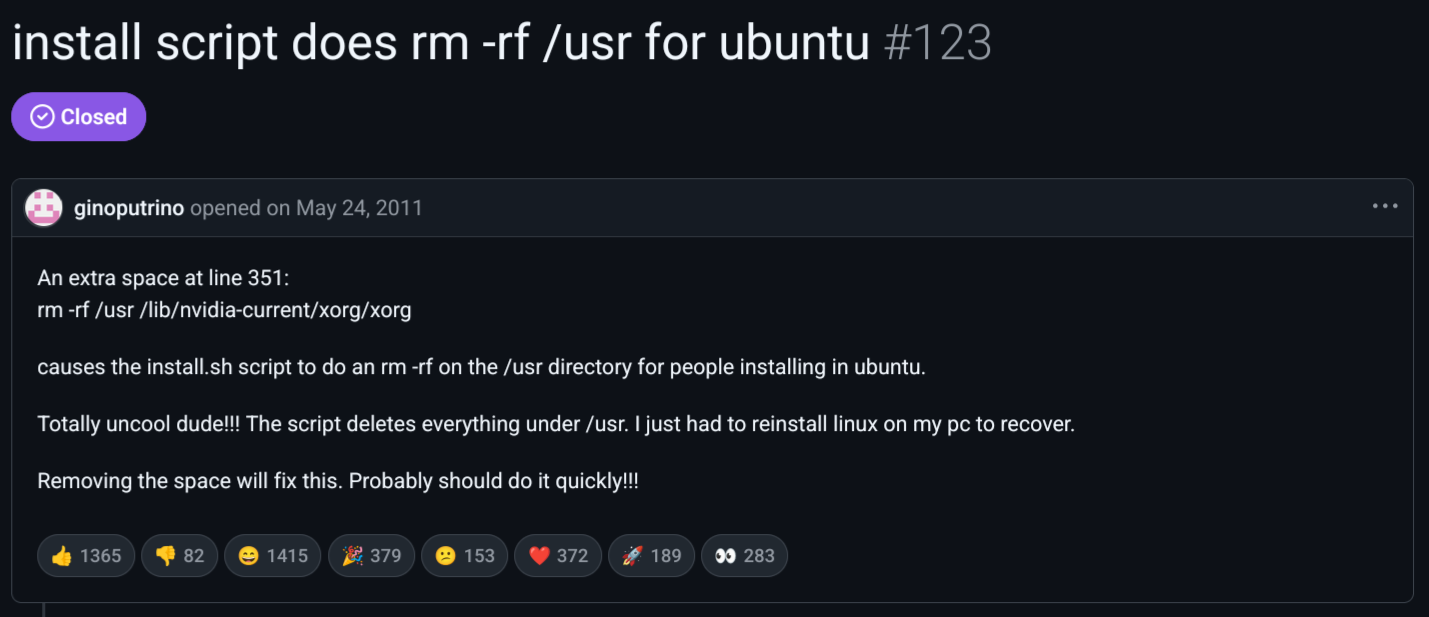
You know that special moment when you accidentally hit Ctrl+C while running sudo rm -rf /* and desperately ask if there's an undo button? Yeah, "Good question" is the polite way of saying "you just nuked your entire filesystem and we're both about to witness a digital cremation." The fact that someone responds with Shrek's deadpan "Good question" instead of screaming is peak Unix user energy. There's no undo. There's no going back. There's only backups you hopefully made yesterday and a fresh OS install. Fun fact: the -rf flags mean "recursive force" - basically telling your system to delete everything without asking questions, like a hitman with no conscience.

Well Shit

Well Shit
You know that moment when someone discovered they could recursively force-delete everything from root? Yeah, that person is taking notes in hell right now. The -rf flags mean "recursive" and "force" – basically "delete everything without asking questions." Combined with /* starting from root and sudo privileges, you've just nuked your entire system faster than you can say "wait, I needed those kernel files." Someone, somewhere, at some point in history, hit enter on this command and watched their entire operating system evaporate in real-time. No confirmation. No undo. Just pure, unfiltered chaos. Modern systems have some safeguards now, but back in the day? Chef's kiss of destruction. The penguin's tears say it all – that's the face of someone who just realized backups were "on the todo list."

CLI Over GUI Anyday

CLI Over GUI Anyday
You know you've ascended to true Linux mastery when you look at a colorful, friendly penguin GUI and smile, then immediately recoil in horror at its ASCII art CLI cousin. PenGUIn vs PenCLIn—because nothing says "I love efficiency" quite like staring at dots and dashes pretending to be a mascot. Sure, the terminal is faster, more powerful, and scriptable, but sometimes you just want to see Tux in all his glory without needing to squint at characters that look like they were assembled by a drunk typewriter. The CLI purists will swear by it until their dying breath, but deep down, even they know that ASCII art penguin looks like it crawled out of a 1980s BBS fever dream.

Got A Reality Check

Got A Reality Check
YouTube's algorithm knows exactly when you're feeling confident about your coding skills and decides to humble you with surgical precision. You innocently open YouTube, probably feeling pretty good about yourself, and BAM—personalized recommendation telling you that you suck at programming. Not even subtle about it. Just straight up "You Suck at Programming" right there in the title. The best part? The immediate acceptance. No denial, no "actually I'm pretty good," just pure resignation: "Nevermind. My fault." Because deep down, every developer knows they're one bash script away from questioning their entire career. YouTube just said the quiet part out loud. Fun fact: YouTube's recommendation algorithm probably saw you googling "how to exit vim" last week and filed you accordingly.

Summon Sudo

Summon Sudo
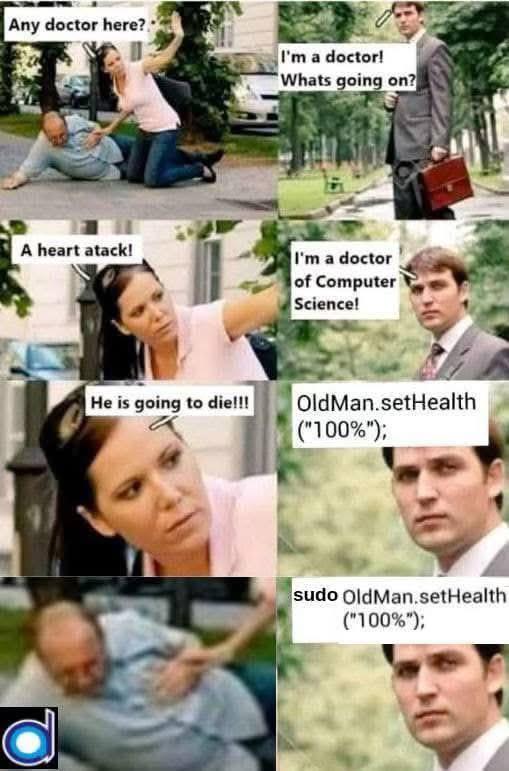
Running a command normally? Cute jogging vibes. Running as administrator on Windows? Business professional energy, getting things done. But slapping sudo in front of your Linux command? You've just summoned an ancient samurai warrior with god-level permissions ready to execute your will with zero questions asked. The power escalation is real. One moment you're getting "permission denied" errors like a peasant, the next you're wielding root privileges like a feudal lord. sudo doesn't just elevate permissions—it transforms you into an unstoppable force of nature. With great power comes the ability to accidentally nuke your entire system with rm -rf / , but that's a problem for future you.

Graphical User Interface Vs Command Line Interface

Graphical User Interface Vs Command Line Interface
The classic bell curve meme strikes again, and this time it's coming for your terminal preferences. The smoothbrains on the left just want their pretty buttons and drag-and-drop simplicity. The galaxy-brain elitists on the right have transcended to GUI enlightenment after years of carpal tunnel from typing commands. But the sweaty try-hards in the middle? They're convinced that memorizing 47 flags for a single git command makes them superior beings. Here's the truth nobody wants to admit: both extremes are right. GUIs are genuinely better for visual tasks and discovery, while CLIs are unmatched for automation and speed once you know what you're doing. The real big-brain move is knowing when to use which tool instead of being a zealot about either. But let's be honest—that guy in the middle spent 3 hours writing a bash script to save 5 minutes of clicking, and he'll do it again tomorrow.

Function Syntax Evolution: Less Is More

Function Syntax Evolution: Less Is More
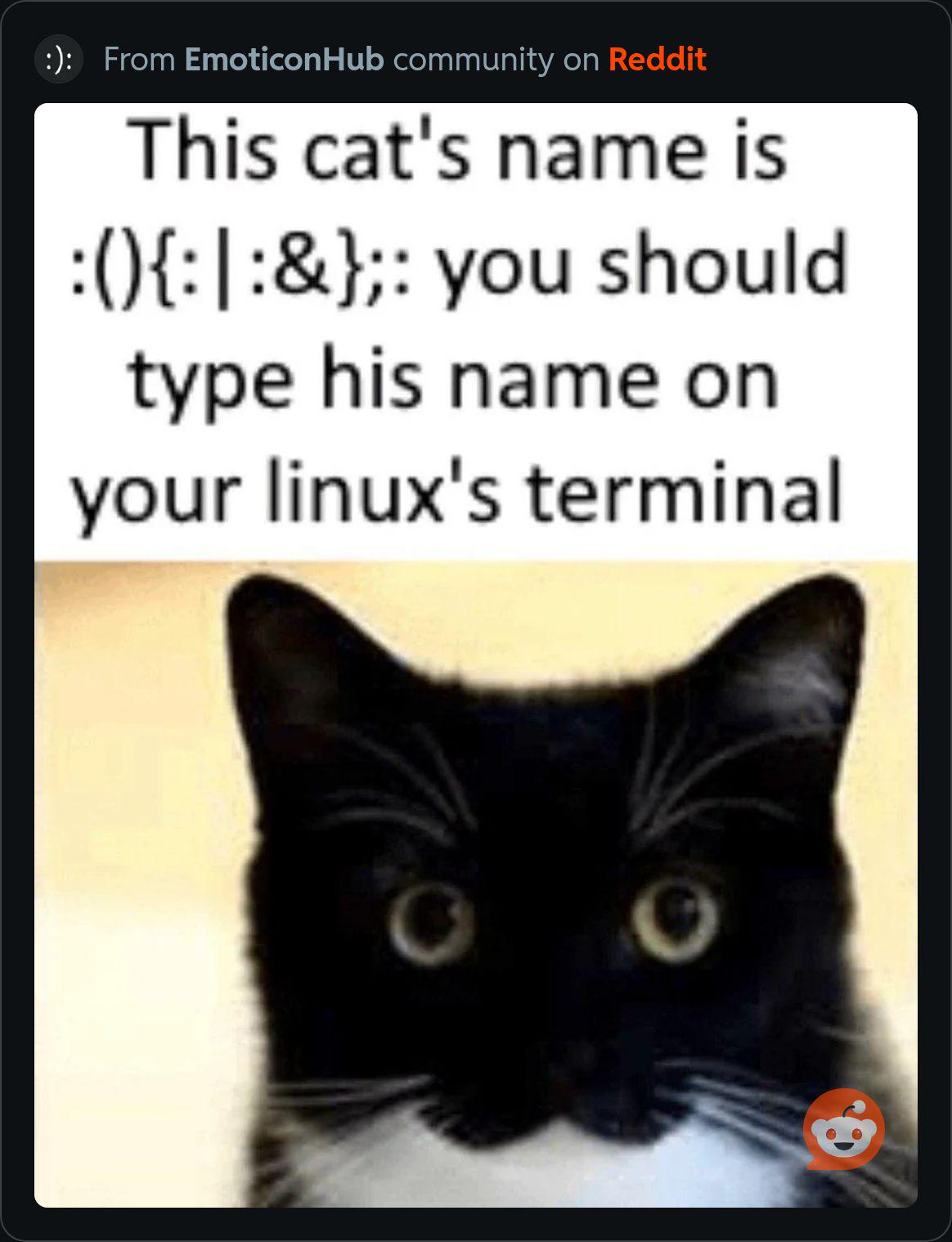
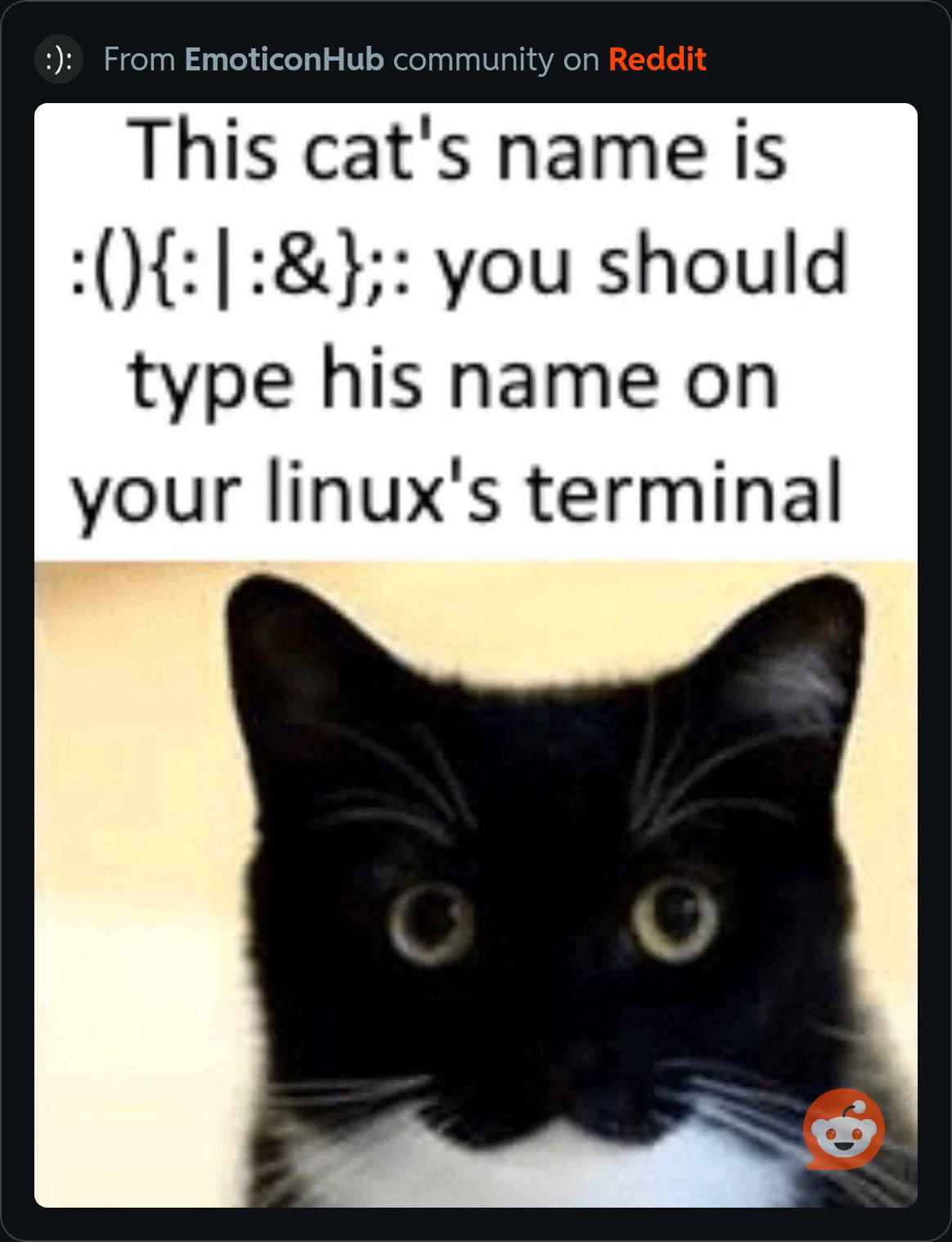
The meme shows a beautiful devolution of function syntax across programming languages, with a guy progressively losing his mind with excitement. Golang: func (){} - Mild interest. Kotlin: fun (){} - Growing enthusiasm because coding is suddenly "fun". Rust: fn (){} - Full-on excitement as we're saving precious keystrokes. Bash: (){} - Complete ecstasy. Who needs labels when you can just have parentheses and curly braces floating in the void? Four characters to two. That's 50% efficiency improvement. The CFO will be pleased.

The Magic Word

The Magic Word
In the Unix world, asking "what's the magic word" isn't about saying "please" – it's about typing "sudo" before your command. For the uninitiated, sudo (superuser do) temporarily grants you god-like powers over your system. Regular users are peasants until they utter this incantation. It's basically the difference between "I'd like to delete this critical system file" and "I WILL delete this critical system file, and you'll thank me for it."

The Win-Win Command Line Paradox

The Win-Win Command Line Paradox
The ultimate programming paradox in command-line format! The first two lines reveal that doing absolutely nothing somehow results in victory—essentially the dream scenario for any efficiency-obsessed developer. Then the plot twist: actually putting in effort and "doing something" doesn't just maintain the win state, it amplifies it! It's that beautiful contradiction where both laziness and effort are rewarded. Like when your hastily written script works flawlessly, but then you spend 3 hours optimizing it to save 0.02 seconds of runtime and feel even more accomplished. The universe rewards both the elegant minimalist and the obsessive optimizer equally!