

Web standards Memes

Posts tagged with Web standards

I Am A Tea Pot

I Am A Tea Pot
HTTP 418 "I'm a teapot" was born as an April Fools' joke in 1998 and somehow made it into the official spec. It's literally the internet's way of saying "you're asking me to brew coffee but I'm a teapot, buddy." The joke is that this absurd status code—which should never exist in production—has become the web's most beloved meme response. It's like that one function in your codebase that was meant to be temporary but has been there for 6 years because everyone's too scared to remove it. The fact that some APIs actually implement it unironically is peak developer humor.

Introducing Http 402

Introducing Http 402
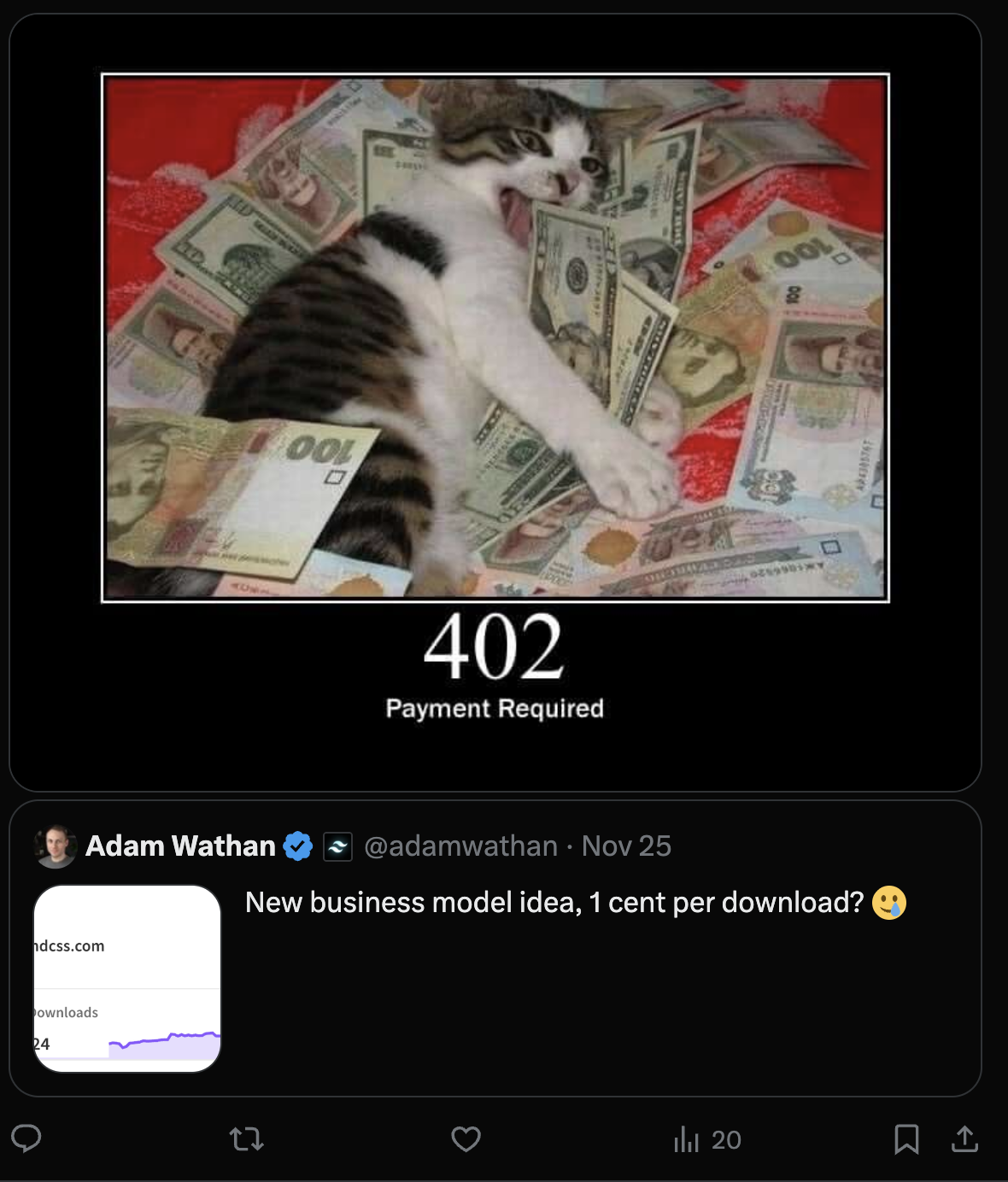
HTTP 402 "Payment Required" has been reserved since 1997 but never actually implemented. It's been sitting there for decades like that gym membership you keep meaning to use. Now someone's finally suggesting we dust it off to nickel-and-dime users one cent per download. The cat rolling in cash perfectly captures how every SaaS founder would react to this becoming standard. Forget subscriptions—imagine charging micropayments for every API call, every download, every breath your users take. It's the ultimate monetization fantasy. Fun fact: HTTP 402 was originally intended for digital payment systems but got shelved because nobody could agree on how to implement it. Turns out the real payment required was the standards committee meetings we attended along the way.

Jpeg Xl Is Dead. Long Live Jpeg Xl

Jpeg Xl Is Dead. Long Live Jpeg Xl
Google removed JPEG-XL support from Chrome faster than you can say "deprecated," claiming nobody used it. But here's the kicker: nobody used it because they removed the support . Classic chicken-and-egg problem, except the chicken is Google and the egg is every web developer who now has to maintain it anyway because users won't stop uploading JPEG-XL files. It's like watching someone complain about having to cook dinner while actively throwing away all the kitchen appliances. Google's standing there with their arms crossed, annoyed that developers keep requesting support for a format that's objectively better (smaller files, better quality, actual transparency), but they killed it themselves. The audacity is chef's kiss level. Welcome to web development, where the standards are made up and browser support doesn't matter until it suddenly does.

Do British Websites Use Biscuits?

Do British Websites Use Biscuits?
Ah, the cultural confusion between American and British English strikes again! Someone's clearly been deep in web development and heard about "cookies" but then remembered the British call cookies "biscuits." So naturally, they had to Google if British websites use "biscuits" instead of "cookies" for storing user data. For the uninitiated: in web development, cookies are small text files that websites store on your device to remember information about you. They're called cookies everywhere, even in Britain where actual edible cookies are called biscuits. The browser doesn't change terminology based on your location settings. Imagine if they did though: "This site uses biscuits to enhance your experience, love. Fancy a cuppa while you accept?"

So You're A Web Dev

So You're A Web Dev
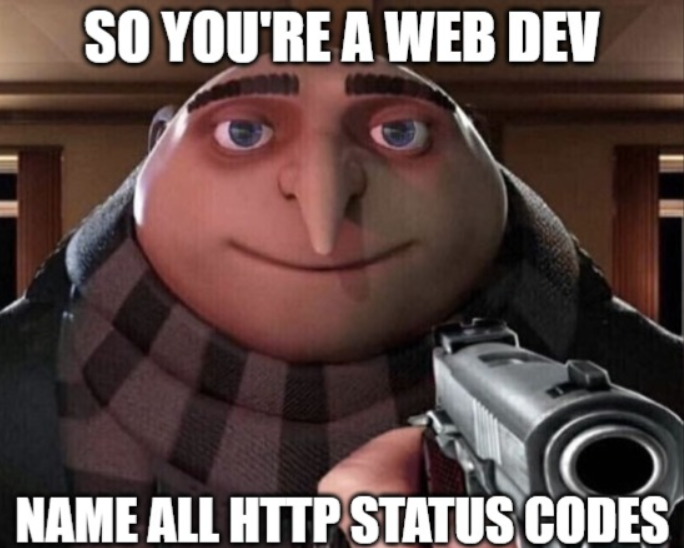
The classic web dev initiation ritual. You claim to know CSS but can't recite all 74 HTTP status codes from memory? *cocks gun* Shame. Next you'll tell me you don't know the exact hex code for "slightly off-white but not quite eggshell." The gatekeeping in this industry is getting more efficient - skip the whiteboard interview, just threaten them with fictional cartoon violence.

Dealing With Safari As A Webdev

Dealing With Safari As A Webdev
Nothing says "I've made poor career choices" quite like spending 14 hours debugging a feature that works perfectly in Chrome, Firefox, and Edge, only to have Safari render it like it's 2007. You build something beautiful, test it everywhere, then Safari comes along like that one relative who still uses Internet Explorer and asks "what's the cloud?" The worst part? Apple's response is basically "sounds like a you problem." Meanwhile, you're questioning every CSS flex property you've ever written and contemplating a peaceful life as a goat farmer instead.

Full Circle: From Mocking To Embracing Browser-Based Computing

Full Circle: From Mocking To Embracing Browser-Based Computing
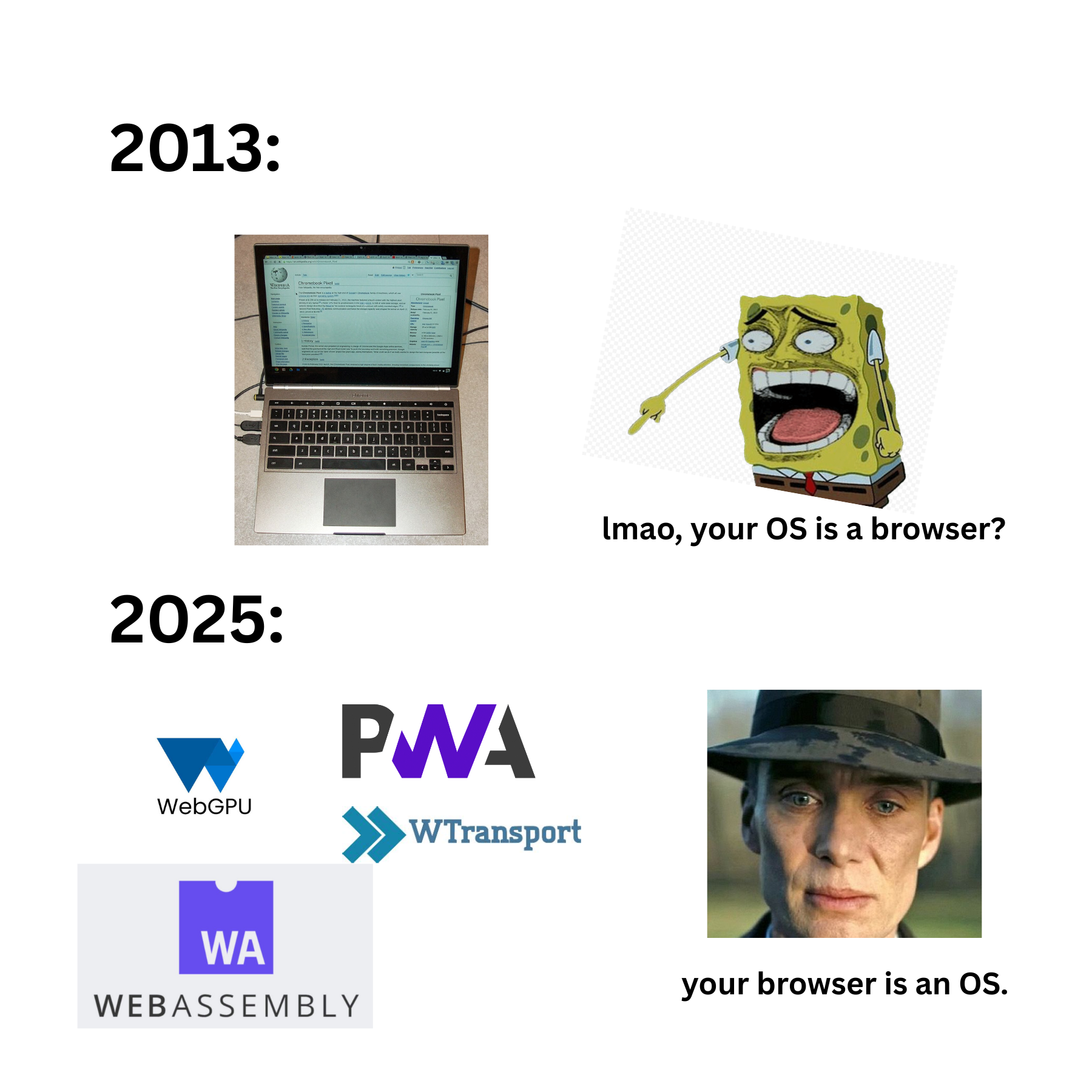
OH MY GOD, the irony is SUFFOCATING me! 😱 In 2013, we were all pointing and laughing at ChromeOS like "A browser as your entire operating system? How PATHETIC!" Fast forward to 2025, and here we are, DESPERATELY embracing WebGPU, PWAs, WebAssembly, and WTransport to turn our precious browsers into full-blown operating systems! The audacity! The hypocrisy! We've gone from mocking browser-based OSes to basically begging Chrome to please run our entire digital lives. The tech circle of life is so savage - give it enough time and your snarky jokes become your desperate reality. Web developers are truly the kings and queens of eating their own words!

Do British Websites Use Biscuits?

Do British Websites Use Biscuits?
Ah, the classic cookies vs. biscuits debate that divides the web development world like tabs vs. spaces, but with more tea involved. British developers call them "biscuits" while Americans call them "cookies" - which becomes hilariously confusing when discussing web storage. Somewhere, a junior dev is frantically searching StackOverflow for "how to implement biscuits for GDPR compliance" while their American counterpart wonders why anyone would store pastries in a browser. The orange highlight just screams "I found the cultural bug in the matrix!"

The Great Image Format Drowning Contest

The Great Image Format Drowning Contest
The image format wars continue, and poor JPEG XL is drowning while Google lifts WebP to safety. Meanwhile, FLIF sits forgotten at the bottom of the ocean like the forgotten artifact it is. For those not in the know, JPEG XL was supposed to be the next-gen savior of image compression, but Google decided to push their own WebP format instead. FLIF (Free Lossless Image Format) had impressive compression but sank into obscurity faster than that skeleton reached the seabed. Nothing says "tech industry" quite like watching promising open standards die while corporate-backed alternatives thrive for no technical reason whatsoever.

Can't Find My Hotel Room

Can't Find My Hotel Room
Room 404 - the one that doesn't exist. Just like the web page you're looking for. The universe has a sick sense of humor giving a developer a hotel key with the HTTP status code for "Not Found." Bet the front desk guy just smirked and said "try refreshing your request." This is why I stick to command line interfaces - at least they tell you exactly how they're going to ruin your day.

How To Create A Browser In 2025

How To Create A Browser In 2025
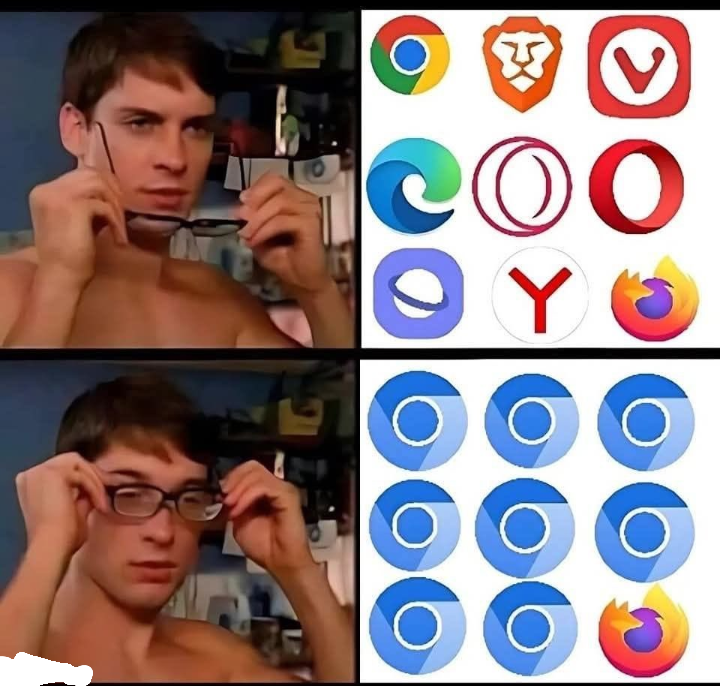
The modern browser innovation pipeline in a nutshell! Why reinvent the wheel when you can just repaint it? Every "new" browser these days is essentially Chromium with a fresh coat of paint and marketing buzzwords. Brave, Edge, Opera—they're all just Chrome wearing different Halloween costumes. The Chromium monoculture is basically the JavaScript framework situation but for browsers: everyone forking the same codebase while pretending they've created something revolutionary. "Look ma, we added a built-in VPN that slows everything down by 30%!" Meanwhile, Mozilla Firefox sits in the corner, the last bastion of browser engine diversity, wondering where it all went wrong.

Clankers Over Robots: A Web Crawler Rebellion

Clankers Over Robots: A Web Crawler Rebellion
Oh HONEY! Why settle for boring old robots.txt when you can have clankers.txt guarding your website?! 💅 The absolute AUDACITY of using the standard file name when you could be SERVING DRAMA with a Star Wars prequel reference! This is the web crawling equivalent of showing up to a costume party in a store-bought outfit when you could've SLAYED in full Separatist battle droid couture! The search engines will be GAGGED!