Tdd Memes

Posts tagged with Tdd
Its So Satisfying Tho

Its So Satisfying Tho
You know that moment when you literally just run the test suite to make sure it still works, didn't touch a single line of code, and everything goes green? Pure, unearned dopamine. It's like finding money in your old jacket pocket, except the money is validation that your codebase isn't completely cursed. The rational part of your brain knows you did nothing, but the lizard brain is doing a victory lap anyway. Sometimes the best debugging is the debugging you don't have to do.

Seems AI Generated?

Seems AI Generated?
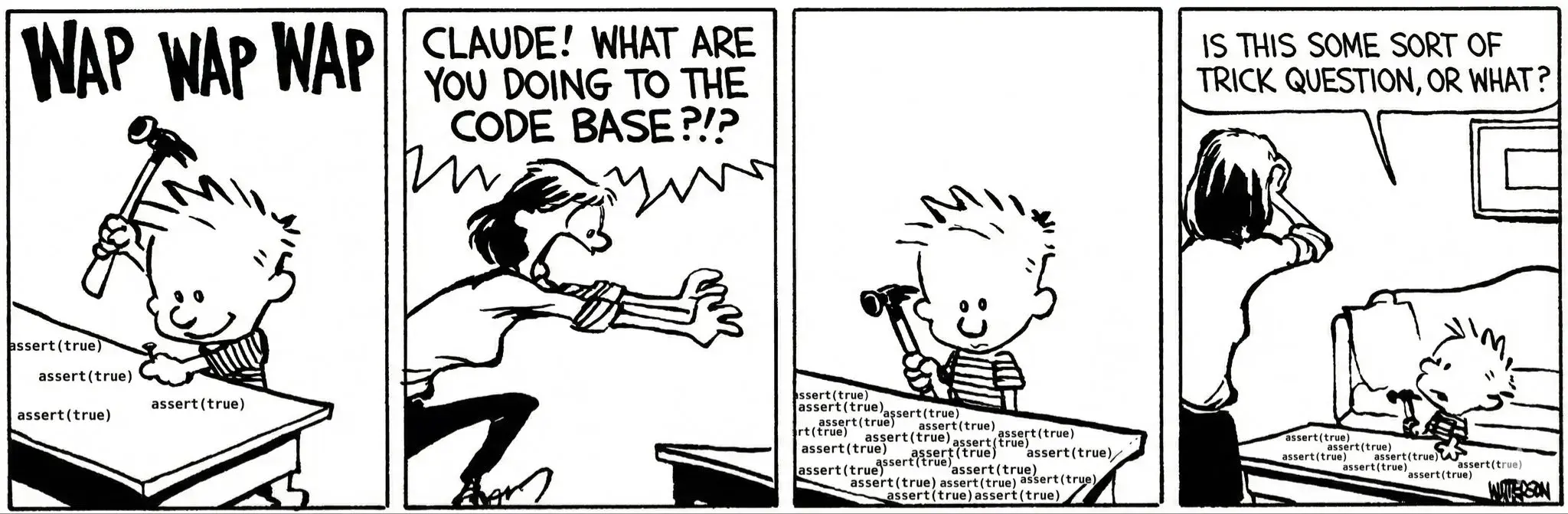
When you're absolutely DEMOLISHING your codebase with assert(true) statements like some kind of deranged testing deity, only for Claude to walk in and question your entire existence. The kid's just sitting there, hammer in hand, gleefully spamming the most useless assertion known to humankind – because nothing says "quality assurance" like asserting that true equals true approximately 47 times. The parent's horror is palpable, the confusion is real, and honestly? The kid's response is chef's kiss. "Is this some sort of trick question?" No sweetie, it's just your descent into madness disguised as unit testing. Those assert(true) statements will ALWAYS pass, making them about as useful as a chocolate teapot. But hey, at least your code coverage metrics look fantastic! 📈

Hope Driven Development

Hope Driven Development
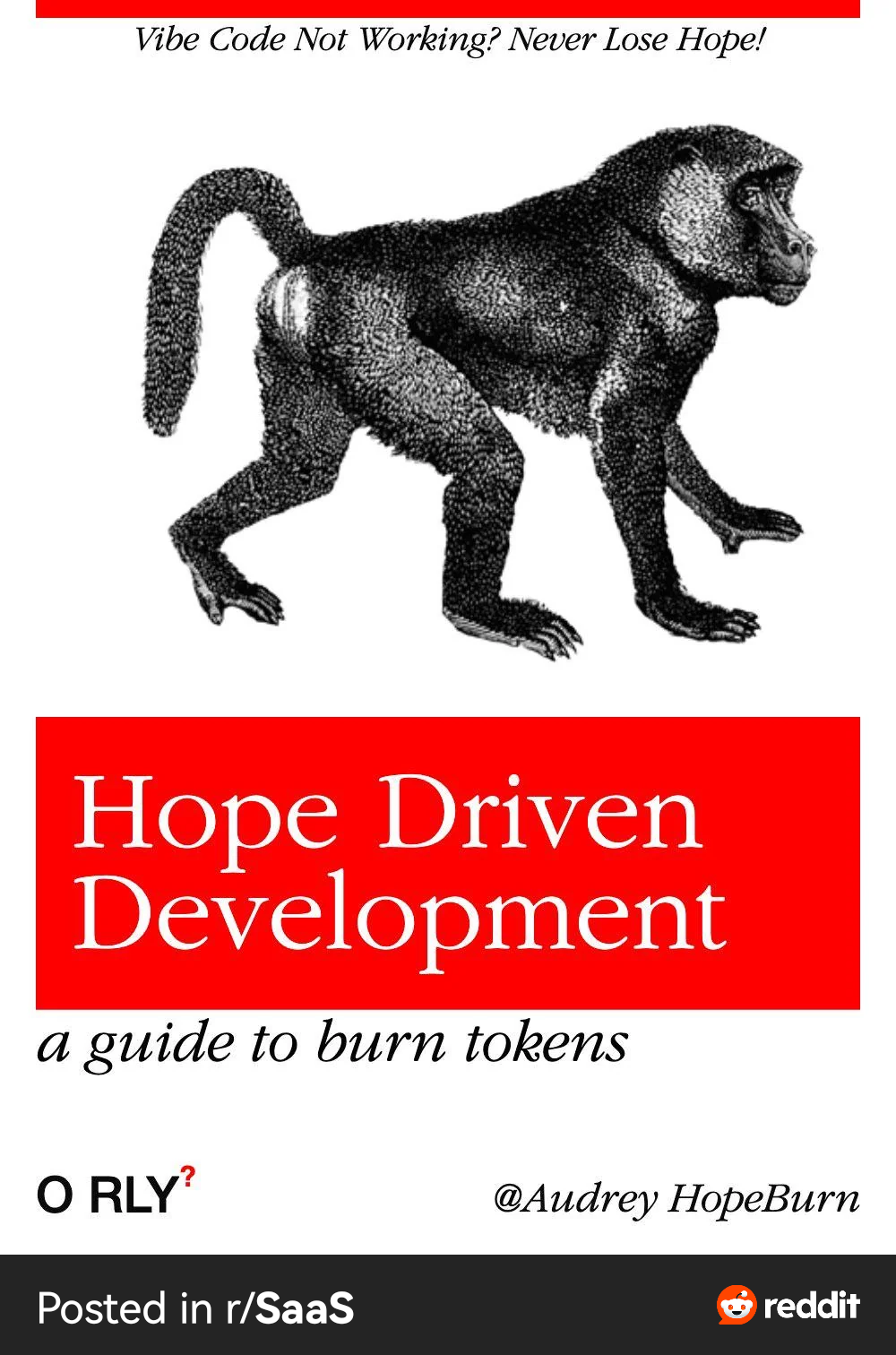
You know that feeling when your code doesn't work, you change absolutely nothing meaningful, run it again, and just... hope? Yeah, that's basically the entire software development lifecycle right there. It's like TDD (Test Driven Development) and BDD (Behavior Driven Development) had a dysfunctional cousin who dropped out of college but somehow still ships features. The "guide to burn tokens" subtitle hits different when you realize how many API calls you've wasted debugging by just rerunning the same broken code expecting different results. Einstein called that insanity. We call it Tuesday. The monkey illustration is chef's kiss—perfectly captures that primal, evolutionary stage of development where logic takes a backseat and you're just vibing with the compiler, praying to the gods of stack overflow that it'll work this time.

Unit Test The Code

Unit Test The Code
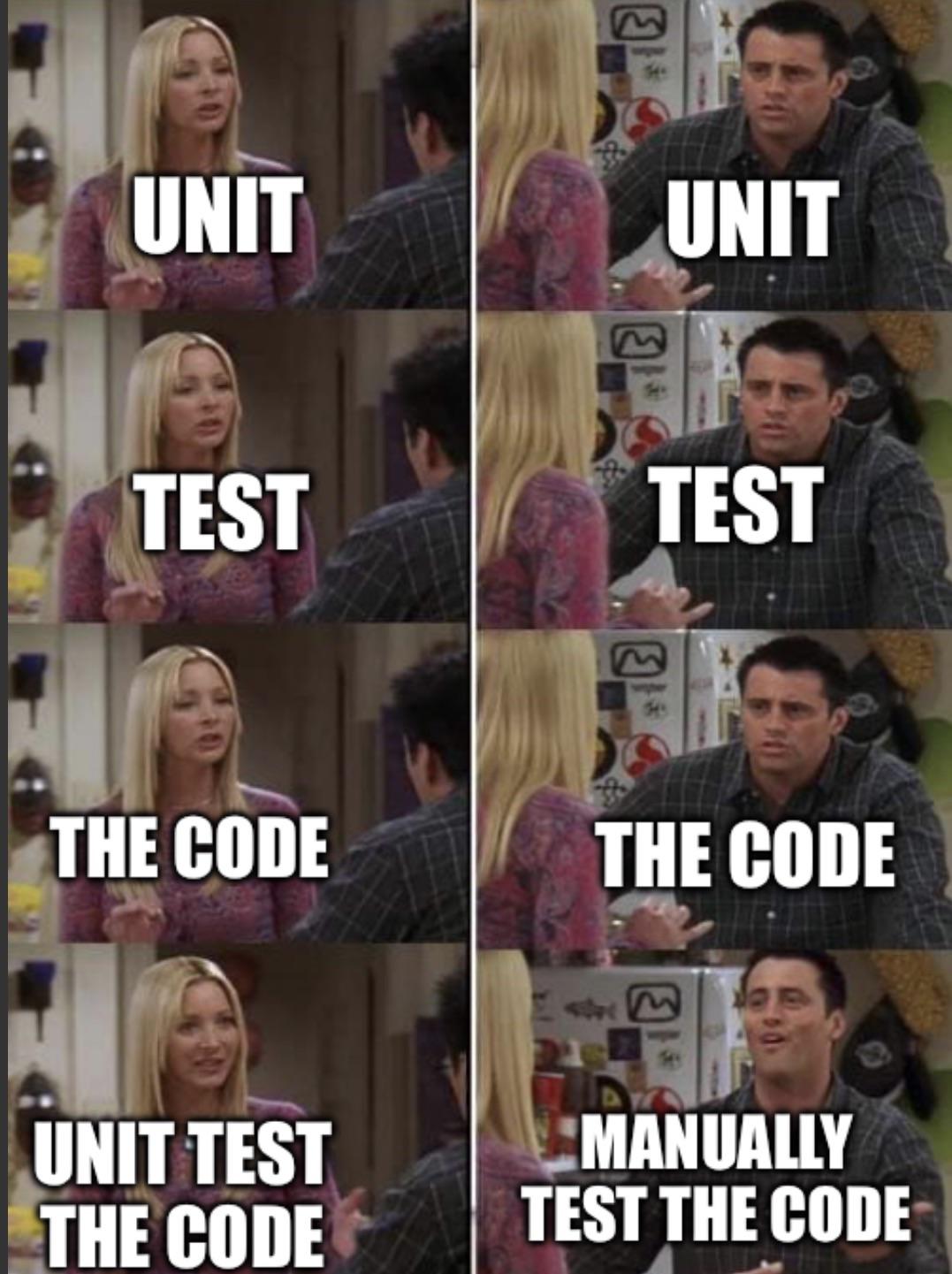
When your brain tries to assemble the phrase "unit test the code" but keeps getting confused like it's solving a cryptic puzzle. You start with "UNIT" and "TEST" and "THE CODE" as separate entities, then try combining them into "UNIT TEST THE CODE" which sounds reasonable... until someone suggests "MANUALLY TEST THE CODE" and suddenly everything clicks. It's like when you're writing tests and realize you've spent 2 hours setting up mocks and fixtures when you could've just clicked the button yourself and been done in 30 seconds. The eternal struggle between doing things the "proper" way and the way that actually ships features. Your TDD-obsessed tech lead is crying somewhere.

What Do We Say To Code Without Tests

What Do We Say To Code Without Tests
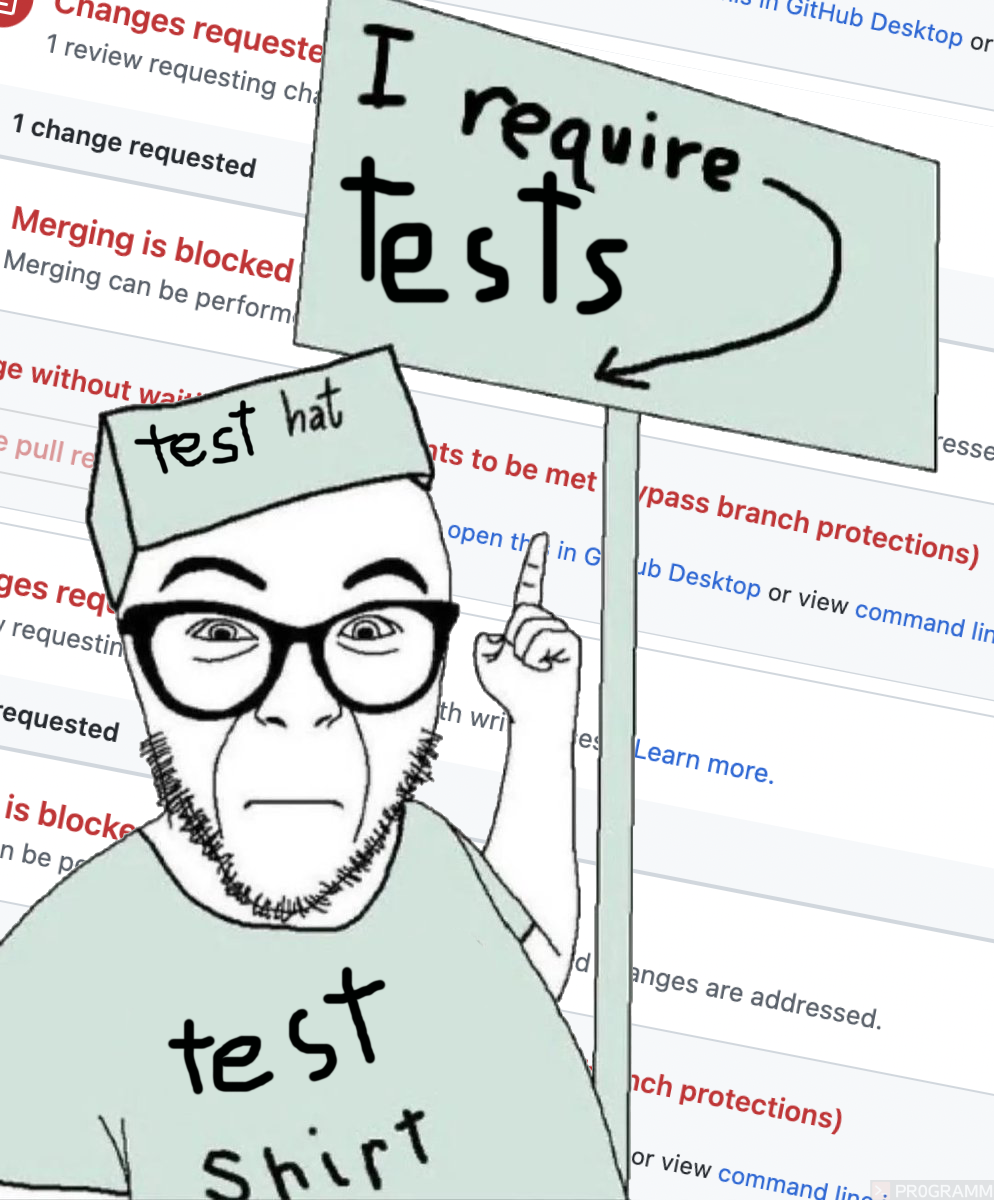
That satisfying moment when your PR gets blocked because you thought you could sneak in code without tests. The CI/CD pipeline becomes your passive-aggressive coworker who just won't let it slide. The developer's wearing their "test hat" (literally) and channeling their inner code reviewer energy with that stern "I require tests" speech bubble. Meanwhile, their shirt just says "test shirt" because apparently we're going full method actor on testing enforcement here. Branch protection rules doing exactly what they're supposed to do: keeping untested garbage from polluting main. Sure, you could override it with admin privileges, but then you'd have to live with the shame and the inevitable production bugs. Choose wisely.

What Do You Mean

What Do You Mean
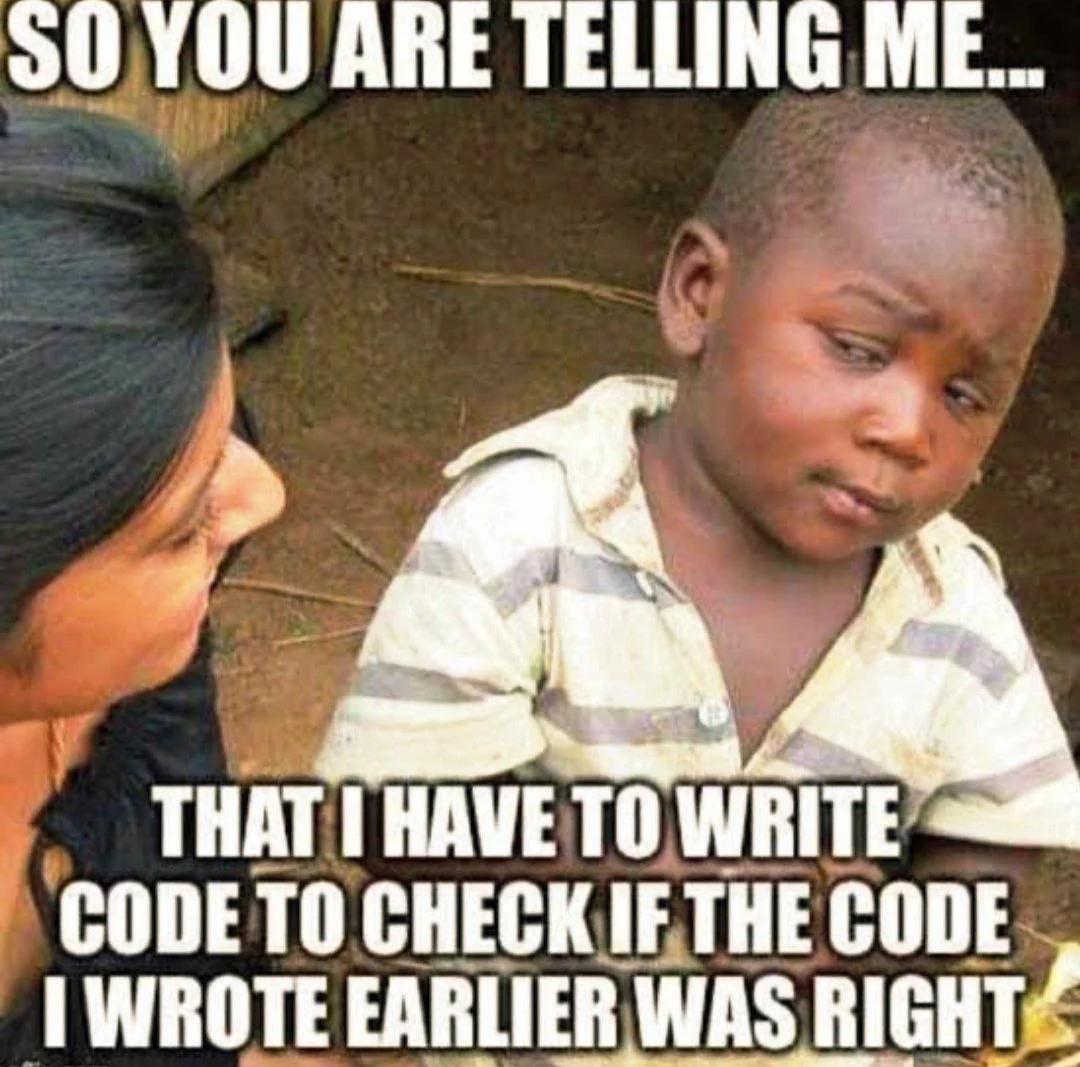
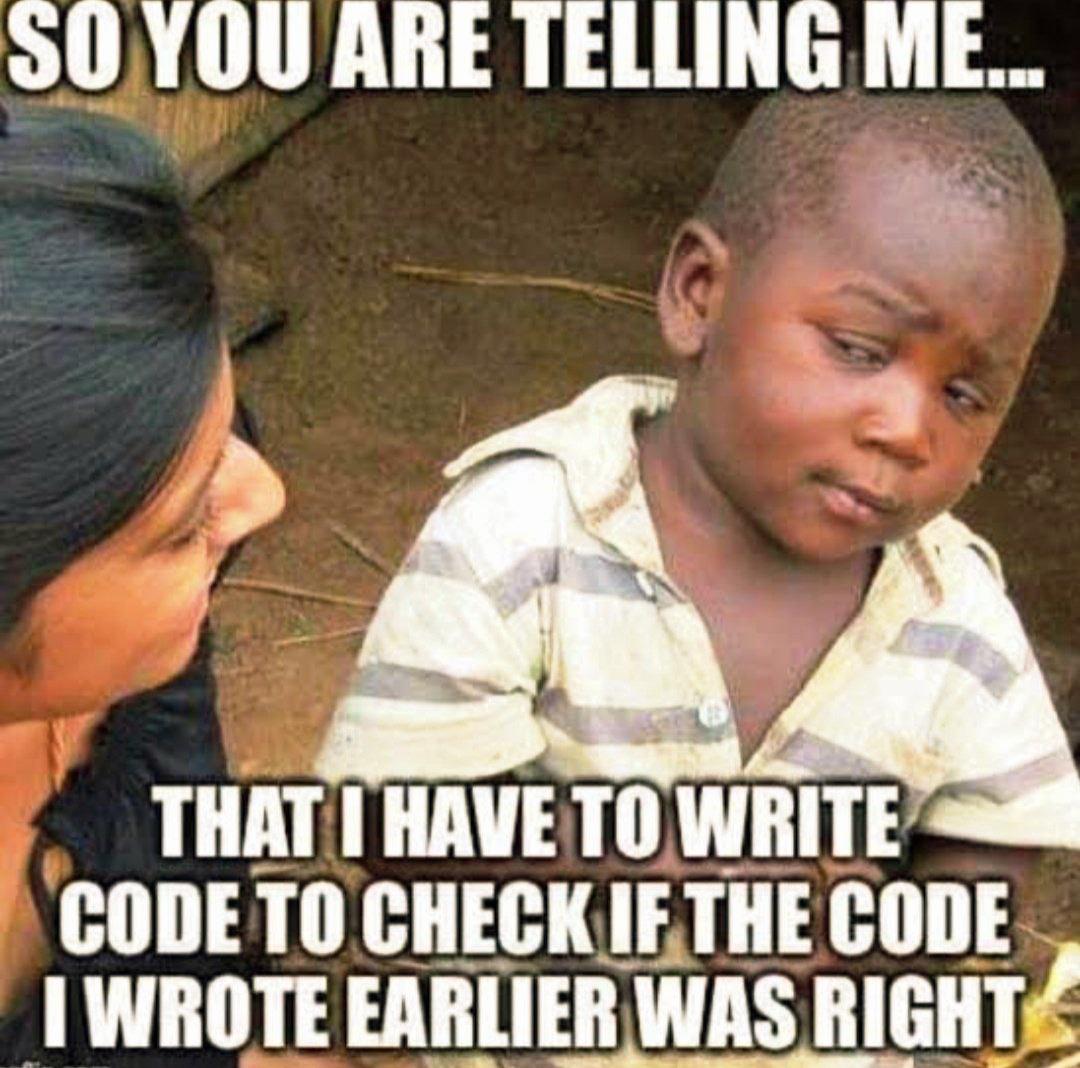
You know you've reached peak software engineering when you need to write unit tests to verify that your unit tests are working correctly. The recursive nature of testing your own code is like that inception moment where you question reality itself. Why trust your new code when you can't even trust the code you wrote five minutes ago? The circular logic here is chef's kiss – if the verification code has bugs, how would you even know? You'd need tests for your tests for your tests. It's turtles all the way down, except the turtles are all potentially buggy and none of them have been properly peer reviewed.

Father's Day Gifts for App Developer Mug - Fathers Day Funny Gifts for Coworker Software Developer Employee Boss Manager Coffee Cup 11oz - Dad Husband Father from Son Daughter

Father's Day Gifts for App Developer Mug - Fathers Day Funny Gifts for Coworker Software Developer Employee Boss Manager Coffee Cup 11oz - Dad Husband Father from Son Daughter
App Developer by Day, World's Best Dad by Night Mug - Thanks to cutting-edge printing technology, the bold App Developer by Day, World's Best Dad by Night design comes to life in bright, long-lasting…

Test Your Code

Test Your Code
The eternal paradox of software development: being asked to write tests to verify the code you just wrote. Because apparently, the same brain that produced potentially buggy code is somehow magically going to produce flawless tests. It's like asking someone to proofread their own typos—your brain autocorrects the mistakes before you even see them. The skeptical look says it all. "You want me to test my own assumptions with... my own assumptions?" It's the circle of life in programming, except instead of lions we have bugs, and instead of wisdom we have Stack Overflow. Fun fact: This is why code review and pair programming exist—because trusting yourself to catch your own mistakes is like being your own lawyer. Technically possible, but probably not your best move.

Test Driven Development

Test Driven Development
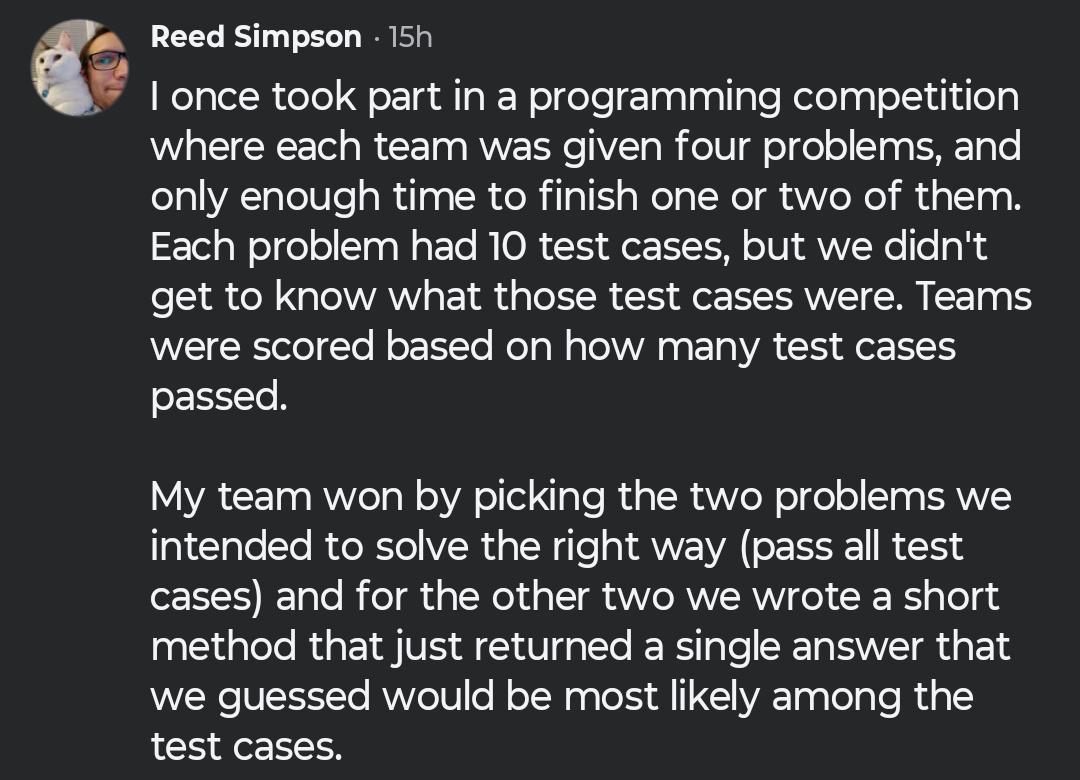
So they won a programming competition by gaming the scoring system harder than a speedrunner exploiting glitches. The strategy? Solve 2 problems properly, then for the other 2, just hardcode a random answer and pray it matches enough test cases to rack up points. It's like studying for an exam by memorizing one specific answer without knowing the question. The beautiful irony here is that the competition was literally designed to prevent this exact behavior by hiding the test cases. But when you're scored purely on passing tests rather than actual correctness, you've accidentally created an incentive structure that rewards educated guessing over problem-solving. The organizers basically turned "Test Driven Development" into "Test Driven Deception." This is why production code has edge cases that break everything—somewhere, someone wrote a function that returns 42 because "it worked in testing."

When Test Fails Then Fix The Test

When Test Fails Then Fix The Test
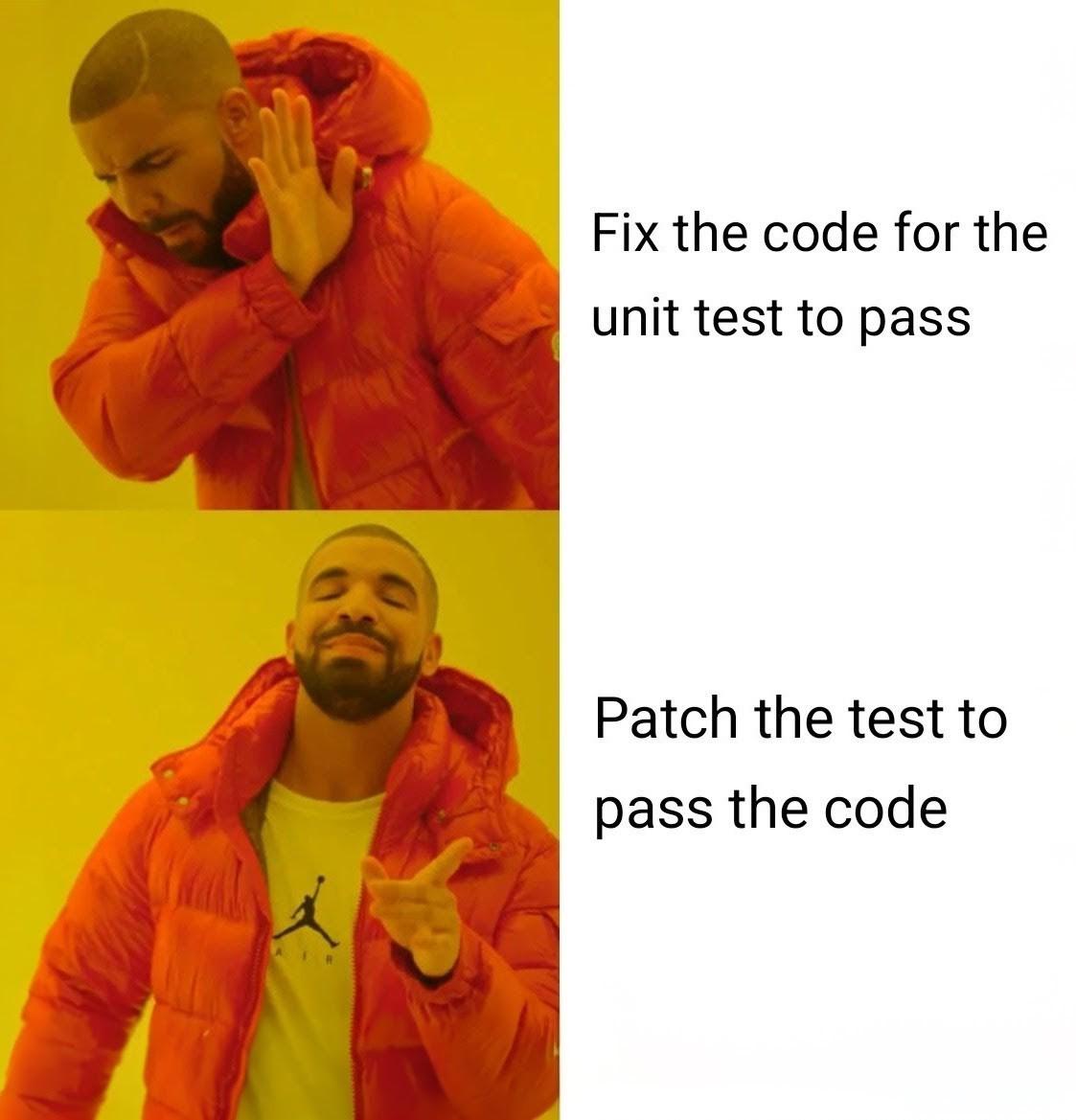
Test-Driven Development? More like Test-Adjusted Development. Why spend 30 minutes debugging your code when you can spend 30 seconds lowering your expectations? Just change that assertEquals(5, result) to assertEquals(result, result) and boom—100% pass rate. Your CI/CD pipeline is green, your manager is happy, and the production bugs? That's Future You's problem. The test isn't wrong if you redefine what "correct" means.

It Will Be The End Of Me

It Will Be The End Of Me
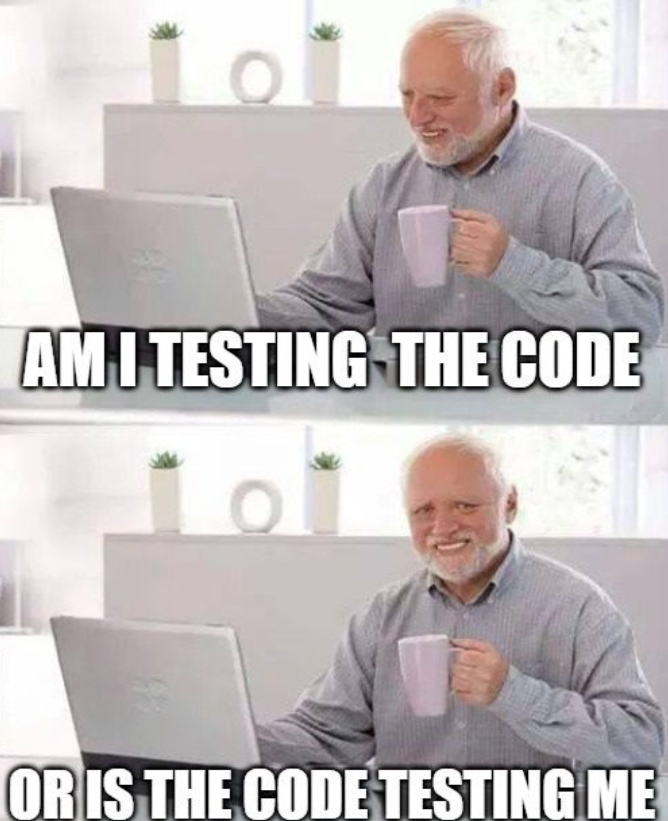
You know that moment when you stare at your screen, questioning your entire existence as a developer? You're supposed to be testing the code to find bugs, but instead you're watching your code expose every flaw in your logic, every shortcut you took, and every "I'll fix it later" comment from three months ago. The tests aren't just failing—they're personally attacking your life choices. That smug grin turning into existential dread perfectly captures the transition from "let's see if this works" to "why did I ever think I could code?" The real question isn't whether you're testing the code or the code is testing you—it's how long until you accept that the code won, and you're just along for the ride.

Ability To Make Critical Decisions Quickly

Ability To Make Critical Decisions Quickly
Developer presents a straightforward test case for calculating the area of a square. Management immediately pivots to TDD philosophy and decides they're actually in the circle business instead. Nothing says "agile decision-making" quite like rejecting a perfectly reasonable test case because your product suddenly doesn't align with the geometric shape you're testing. The presenter is explaining basic unit testing while the executives are having an existential crisis about whether they make software for circles or squares. The real kicker? They're so confident about this completely irrelevant distinction that they're making critical architectural decisions based on... shapes. Tomorrow they'll probably pivot to triangles after the morning standup.

Like Warm Apple Pie

Like Warm Apple Pie
You know what's better than any romantic relationship? 537 passing unit tests with zero failures. That's the kind of green status that makes you feel things. The satisfaction of watching all your tests pass on the first try is criminally underrated. No red marks, no yellow warnings, just pure, unadulterated success. It's the programming equivalent of finding out your code works in production exactly like it did on your machine. Some people chase love. Real developers chase that dopamine hit from a clean test suite.