Rootkit Memes

Posts tagged with Rootkit

Uninstalled Valorant After 5 Years

Uninstalled Valorant After 5 Years
Breaking free from Valorant's Vanguard anti-cheat is like escaping a kernel-level prison. You know that feeling when you finally remove software that's been running at Ring 0 with more privileges than your own OS? That's liberation right there. Vanguard literally boots up before Windows does, sitting there in kernel space like an overprotective parent monitoring every syscall you make. Five years of having what's essentially a rootkit with good intentions watching your every move, and now you're finally free to reclaim those CPU cycles and boot times. Your Task Manager is probably breathing a sigh of relief right now. Fun fact: Vanguard operates at such a low level that it can block hardware drivers it deems suspicious, which is why some people couldn't use their RGB controllers or certain peripherals while it was installed. Freedom tastes like uninterrupted kernel space.

Kernel Level "Anticheat" Is The Devil!

Kernel Level "Anticheat" Is The Devil!
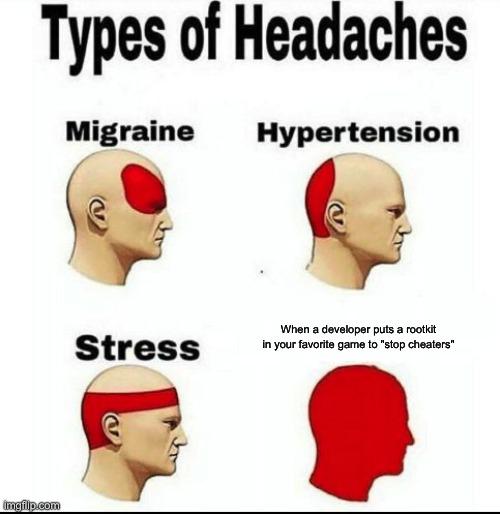
So apparently migraines, hypertension, and stress are all amateur hour compared to the absolute brain-melting rage of having a rootkit installed on your machine just so you can play a video game. Nothing says "trust us" quite like giving some game company's anticheat software Ring 0 access to your entire system. Sure, go ahead and scan my kernel memory, what could possibly go wrong? It's not like we've seen kernel-level anticheats crash entire operating systems or create massive security vulnerabilities before. Oh wait. The red completely engulfing your head is accurate though. It's the special kind of headache that comes from reading the EULA and realizing you're about to give a game developer more access to your computer than your own system administrator has. But hey, at least the cheaters will be stopped, right? Right?

When Even CS2 Modders Can Prevent Wall-Hacking By Just Following The Basic Rule: "Never Trust The Client"

When Even CS2 Modders Can Prevent Wall-Hacking By Just Following The Basic Rule: "Never Trust The Client"
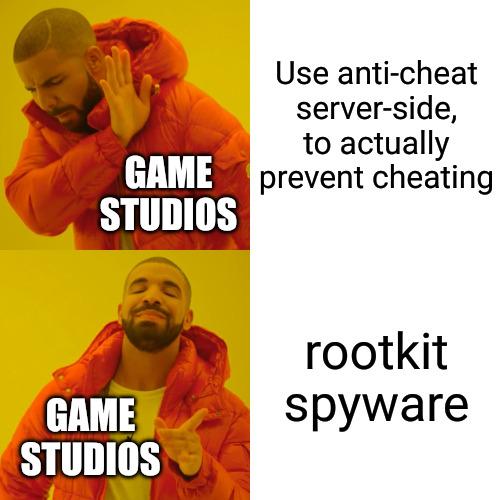
Oh, the ABSOLUTE TRAGEDY of watching billion-dollar game studios reject basic security principles like they're allergic to common sense! Here we have CS2 modders—literal hobbyists working in their spare time—who somehow figured out that if you don't send wall position data to the client, players can't wallhack. Revolutionary stuff, truly. Meanwhile, AAA game studios are out here like "nah, let's just install invasive rootkit spyware on players' PCs instead!" Because why implement server-side validation when you can just demand kernel-level access to everyone's computer? It's the digital equivalent of hiring a SWAT team to guard your house instead of just... locking the door. The golden rule "never trust the client" has been around since the dawn of networked computing, but apparently some studios missed that memo and went straight to dystopian surveillance solutions. Chef's kiss to the modders who are out here doing it right while the pros fumble the bag spectacularly.

N Onononononnonononononon

N Onononononnonononononon
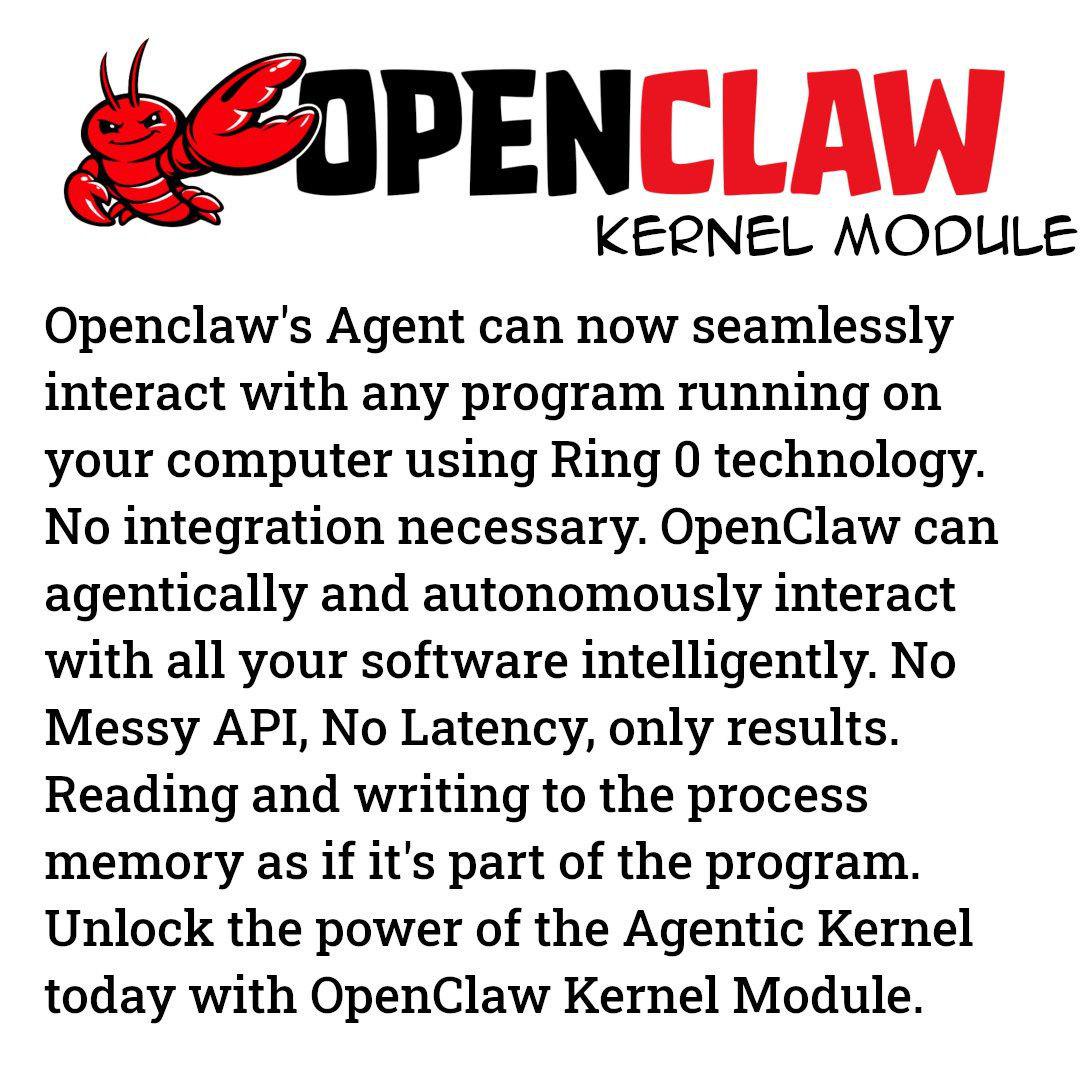
So OpenClaw is basically offering you a kernel module that can "seamlessly interact with any program" and "read and write to process memory as if it's part of the program." Cool, cool, cool. Nothing screams "trustworthy" like a kernel module that wants Ring 0 access to yeet itself into every process on your machine. For context: Ring 0 is the highest privilege level in your CPU's protection rings—it's where the kernel lives and where literally everything is permitted. It's the nuclear launch codes of your computer. Giving something Ring 0 access is like handing a stranger the keys to your house, your car, and your bank account simultaneously. The marketing speak here is chef's kiss: "No Messy API, No Latency, only results." Yeah, you know what else has no messy API? Malware. Rootkits also have fantastic latency. Security researchers everywhere just felt a disturbance in the force, like millions of sysadmins suddenly cried out in terror. The "N" in the title? That's you frantically mashing the "No" button before this thing gets anywhere near your production environment.