Release management Memes

Posts tagged with Release management
Total Showstopper

Total Showstopper
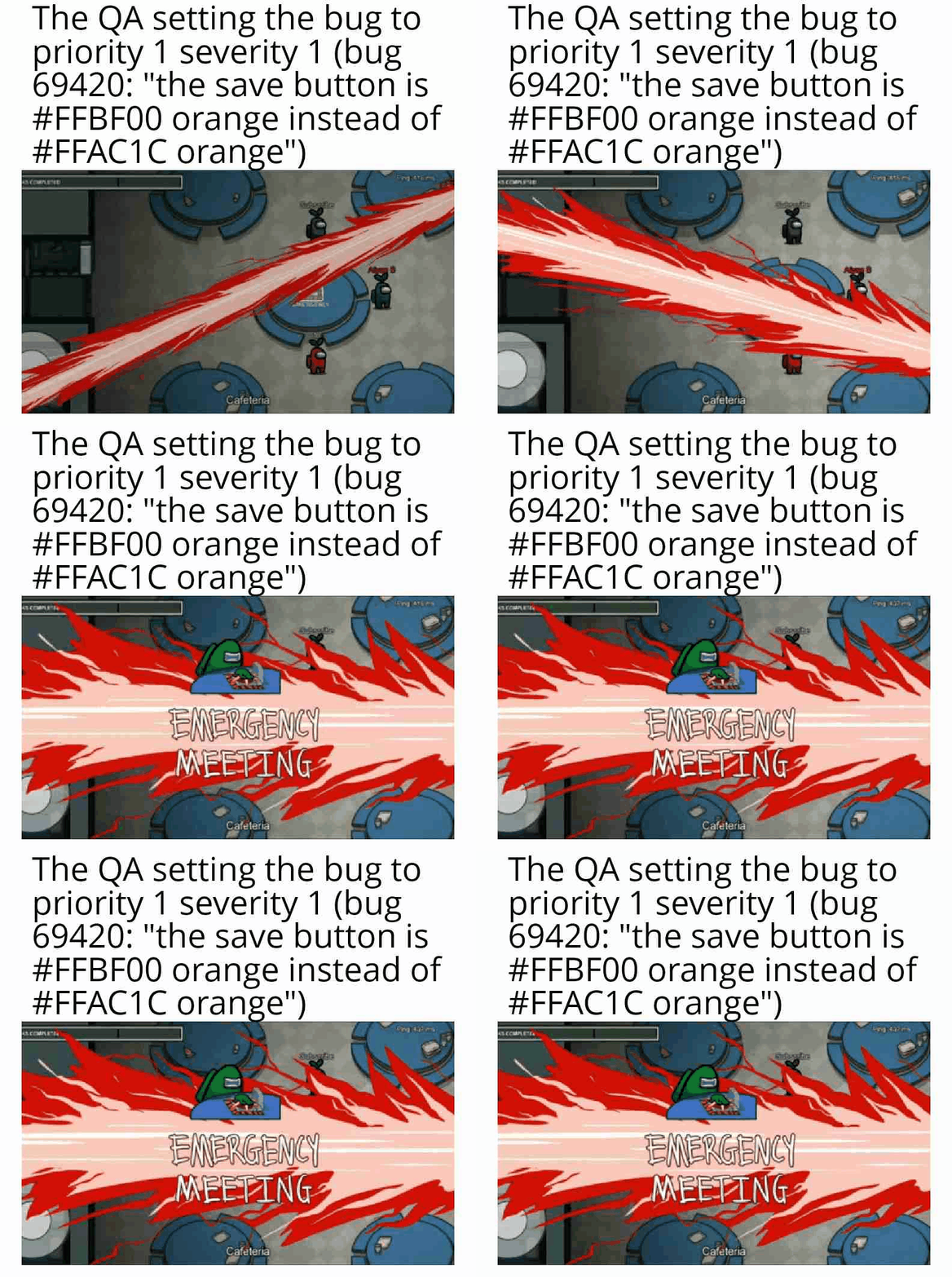
QA filing a P1/Sev1 bug because the save button is #FFBF00 instead of #FFAC1C orange. Yeah, let's wake up the on-call engineer at 2 AM for this production crisis. The Among Us massacre scene really captures the chaos that ensues when someone treats a cosmetic tweak like the app is literally on fire. Look, we've all been there—QA finds something, anything, and suddenly it's DEFCON 1. Meanwhile, the actual memory leak that's been crashing users for weeks is sitting at P3 because "it's hard to reproduce." Priorities, people. Fun fact: Those hex codes are literally 1 shade apart. You'd need a spectrometer and divine intervention to spot the difference. But sure, let's halt the release.

Banking Experience

Banking Experience
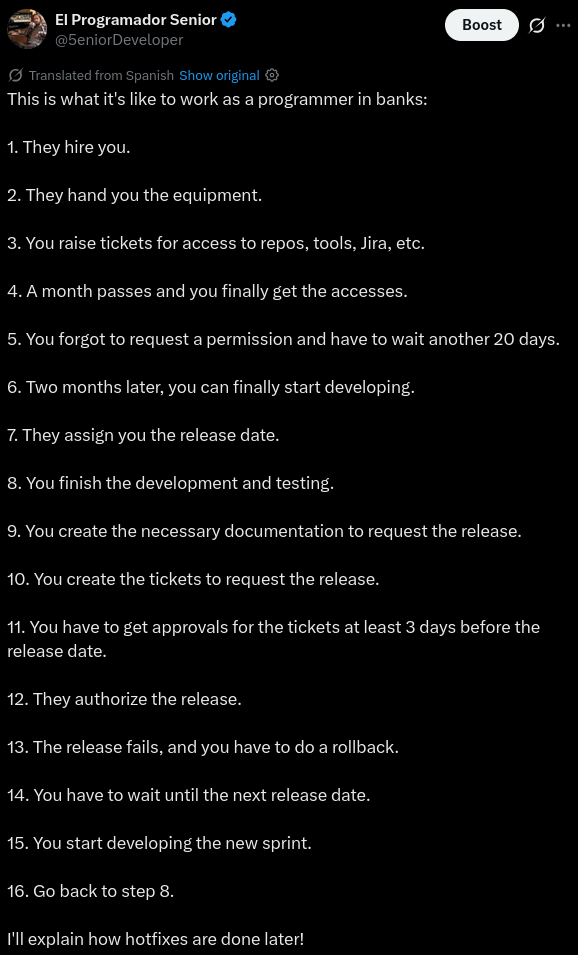
Banking IT is where bureaucracy goes to die... slowly... over the course of several months while you wait for access permissions. This beautifully captures the Kafkaesque nightmare of working in financial institutions where you spend 3 months just getting set up, another month actually coding, and then watch your release fail because someone sneezed during deployment. The real kicker? Step 16 creates an infinite loop back to step 8, meaning you're basically stuck in development purgatory forever. And that casual "I'll explain how hotfixes are done later!" at the end? Chef's kiss. Because if the regular release process is THIS painful, imagine trying to push an emergency fix. You'd probably need to schedule a meeting to schedule a meeting to request permission to think about scheduling the hotfix. Fun fact: Banks run on systems so old that COBOL programmers are being pulled out of retirement. The red tape isn't a bug, it's a feature designed to make sure nothing ever changes too quickly. Because when you're handling people's money, apparently the solution is to make everything move at the speed of continental drift.

Version Naming

Version Naming
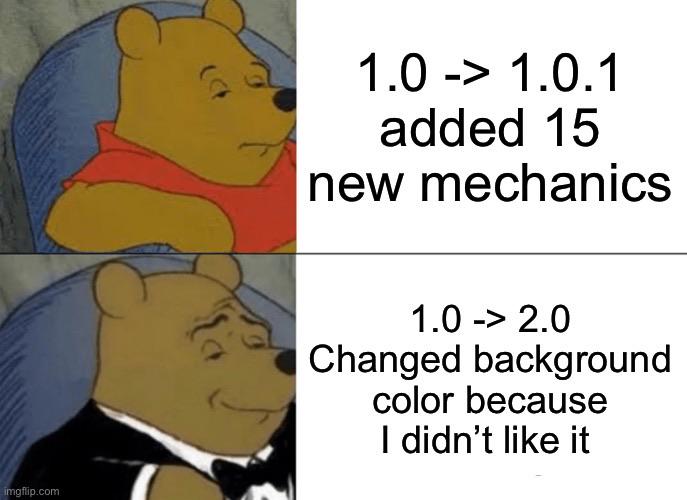
Semantic versioning? Never heard of her! Going from 1.0 to 1.0.1 with 15 groundbreaking features is totally a patch update, right? But changing a background color because your designer had a meltdown? Oh honey, that's CLEARLY worth a major version bump to 2.0. Breaking changes? Who cares! The REAL breaking change is that hideous shade of beige you picked for the header. Time to rewrite the entire version history because aesthetics > functionality. The developers are out here playing 4D chess with version numbers while the rest of us are just trying to figure out if we need to update our dependencies or not.

Patch Notes

Patch Notes
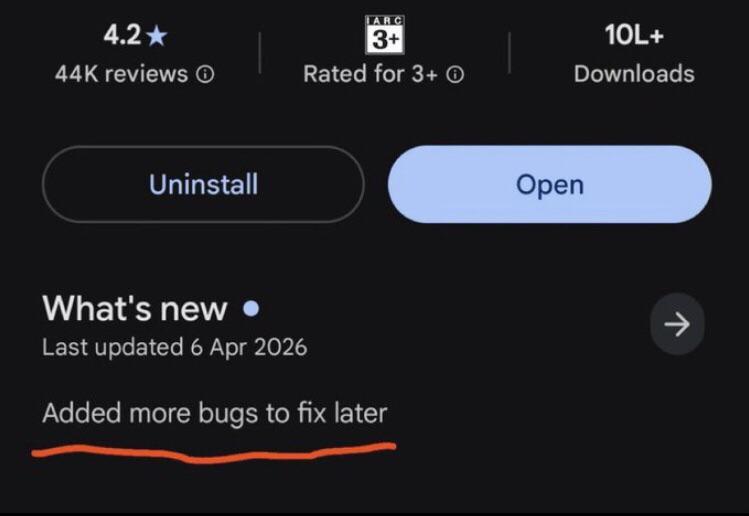
Ah yes, the classic "we're not fixing bugs, we're adding them to the backlog" approach. You know you're in for a wild ride when the patch notes literally say they're adding bugs instead of fixing them. It's like the dev team just gave up on pretending and decided to be brutally honest with their users. 10L+ downloads though? Those poor souls have no idea what they signed up for. The honesty is almost refreshing—most apps just silently introduce bugs and call them "features" or "performance improvements." At least this team is transparent about their technical debt strategy: infinite accumulation.

What I Expected After My Latest Update

What I Expected After My Latest Update
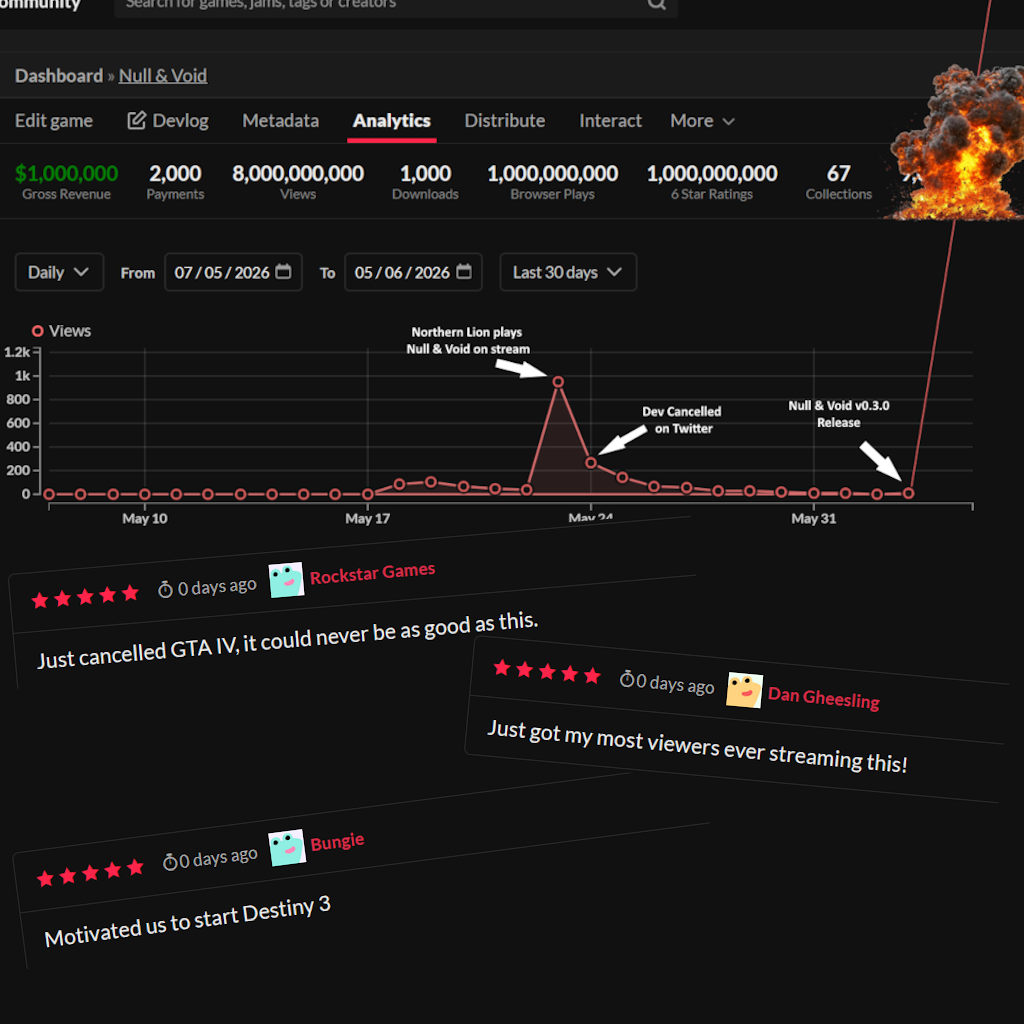
When you release that fire update expecting to become the next indie darling, but instead you accidentally create a masterpiece of self-destruction. Look at those analytics flexing with 8 BILLION views and a cool million in revenue... and then reality hits harder than a null pointer exception. That graph went from "Northern Lion plays our game!" spike to "Dev Cancelled on Twitter" nosedive to "Null & Void v0.3.0 Release" flatline faster than you can say "git revert." The comments section is absolutely unhinged though - people are out here canceling GTA IV and starting Destiny 3 because of this game. When your update is so catastrophically bad it becomes legendary enough to get 5-star reviews, you've achieved a special kind of failure-success that only gamedev can deliver. Chef's kiss. 💀

Morge Continvoucly

Morge Continvoucly
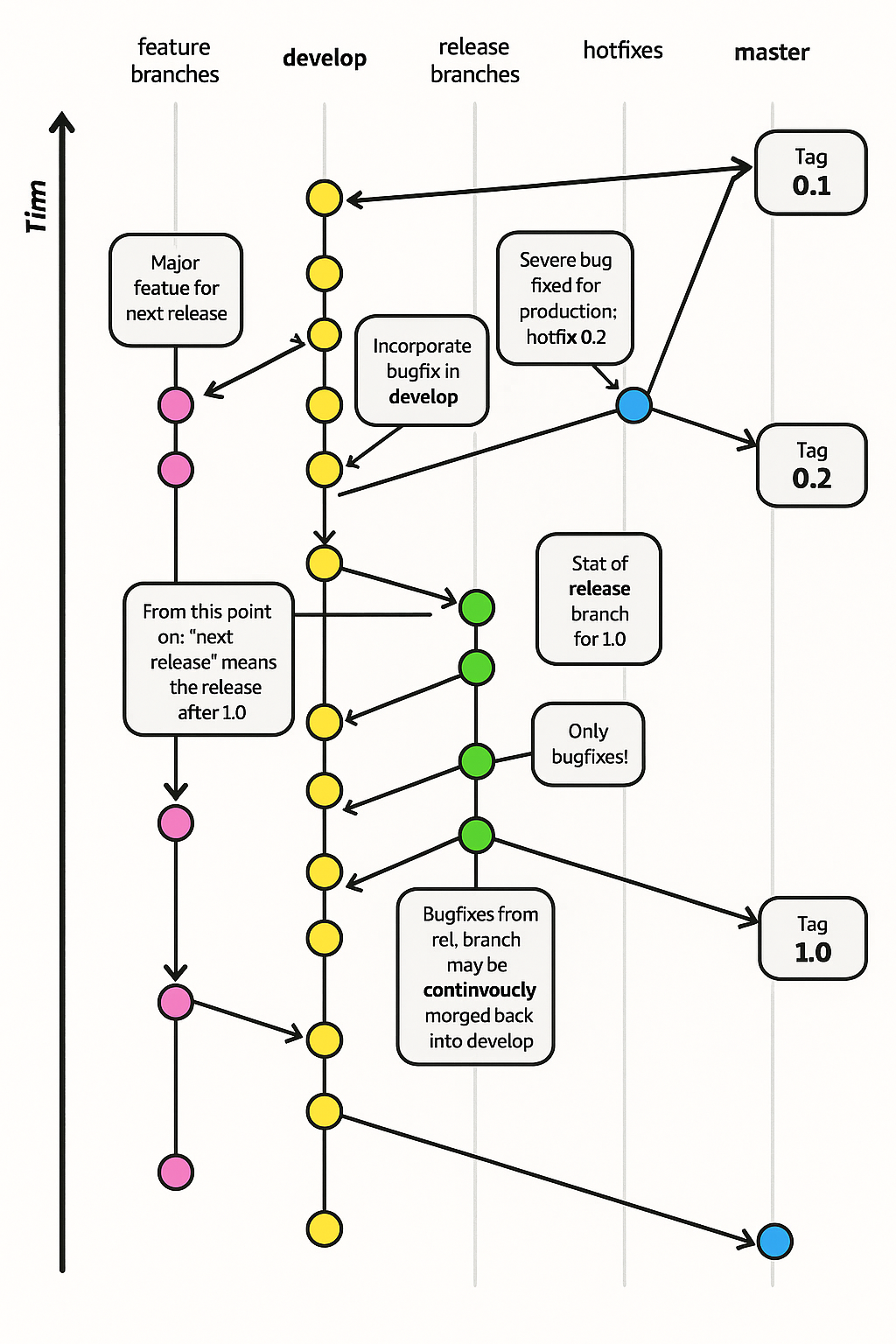
Someone tried to diagram their git branching strategy and accidentally created a visual representation of spaghetti code. Look at those lines going everywhere—it's like a subway map designed by someone who's never seen a subway. The best part? That note saying bugfixes "may be continvoucly morged back"—which is either a typo or a new DevOps methodology I haven't heard of yet. Pretty sure "continvoucly" is what happens when you're writing documentation at 2 AM after your fifth merge conflict of the day. Props to whoever made this for capturing the essence of enterprise git workflows: theoretically elegant, practically incomprehensible, and guaranteed to make new developers question their career choices. Nothing says "we have our processes under control" quite like a flowchart that needs its own flowchart to understand.

The Release Of Power

The Release Of Power
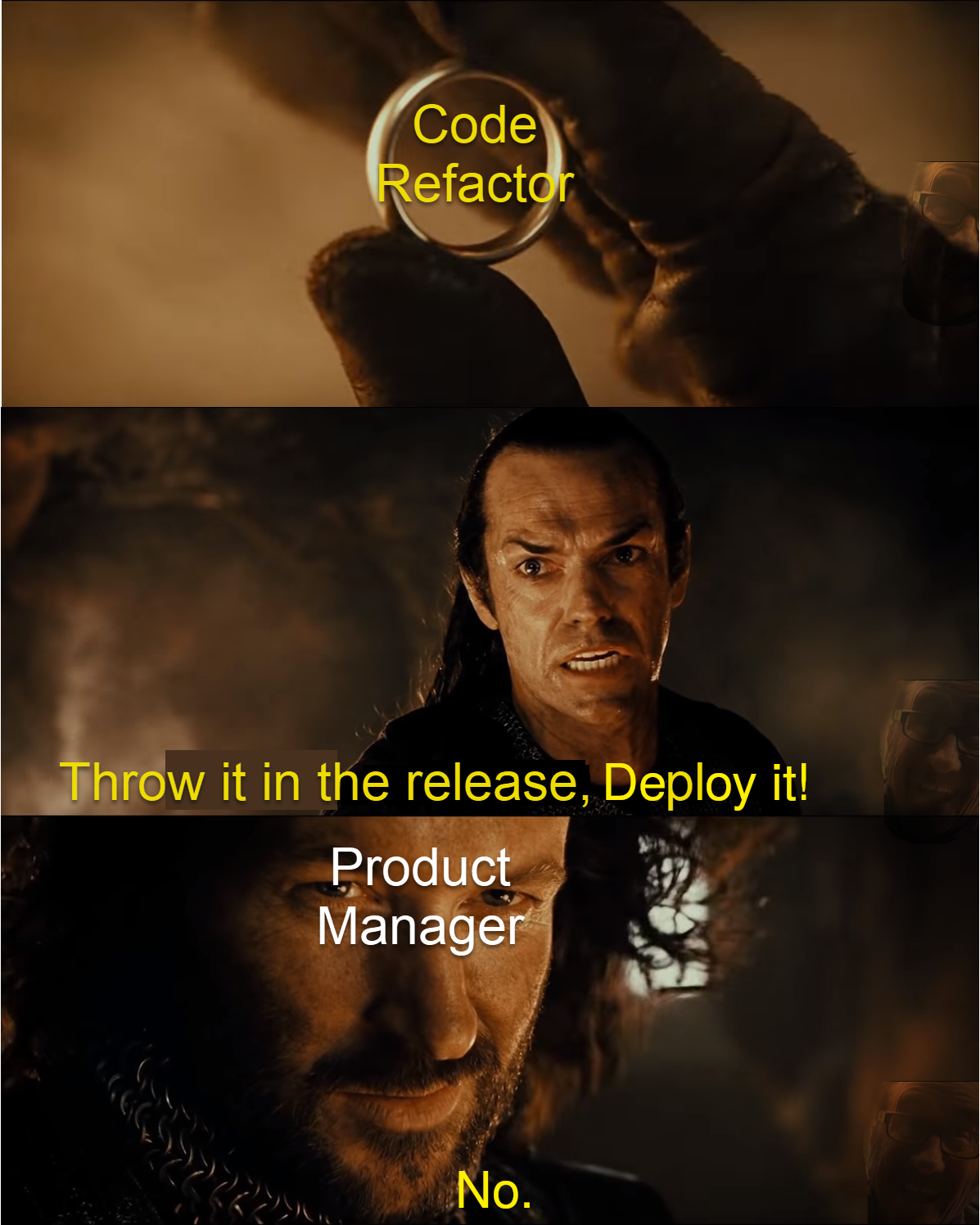
The Code Refactor holds the One Ring of power—the ability to clean up that spaghetti mess and make everything beautiful. The Product Manager, channeling their inner Sauron, demands you "throw it in the release, deploy it!" because deadlines wait for no hobbit. But the Dev, wise and battle-scarred, simply responds with a firm "No." Because shipping a half-baked refactor to production is basically volunteering to spend your weekend firefighting bugs while the PM enjoys brunch. Sometimes the greatest power move is knowing when NOT to release the Kraken.

NordVPN

NordVPN
Encrypt your traffic on public Wi-Fi, stream from anywhere, and cover up to ten devices with one plan. 30-day money-back guarantee.

Deploy On Friday Because Why Not

Deploy On Friday Because Why Not
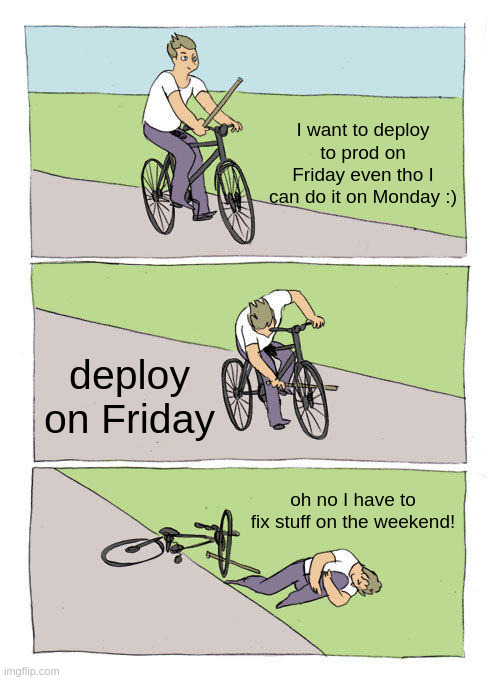
The digital equivalent of sticking a fork in an electrical socket while standing in a puddle. Deploying to production on Friday is that special brand of self-sabotage only developers understand. Sure, you could wait until Monday when you're fresh and have a whole week to fix the inevitable dumpster fire. But where's the adrenaline rush in that? Nothing says "I hate future me" quite like pushing code right before the weekend and then acting surprised when your phone explodes with alerts while you're trying to enjoy your beer. It's basically the tech version of "hold my beer and watch this" – except the beer is your weekend and what we're watching is your mental stability crumble in real-time.

Free Speech Has Its Limits

Free Speech Has Its Limits
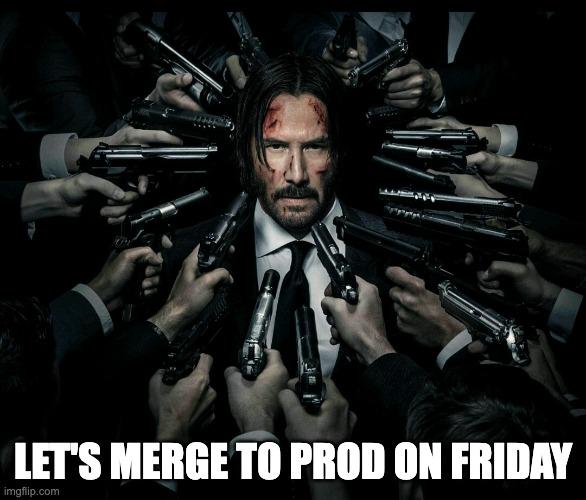
Every dev knows that feeling when someone suggests a Friday deployment. Suddenly the whole team turns into a hit squad ready to take you out. The unspoken rule of "thou shalt not deploy on Friday" exists for a reason—nobody wants their weekend ruined by production fires while they're three beers deep at happy hour. The true violence isn't the guns; it's forcing your team to debug a broken API when they should be starting their weekend.

We Are Not The Same: Version Number Edition

We Are Not The Same: Version Number Edition
The difference between how versioning should work and how it actually works in some codebases. According to semantic versioning, you increment the major version (like 1.0 to 2.0) when you make changes that break backward compatibility. But then there's that one developer who breaks something with literally every commit and somehow still has a job. Their changelog probably just reads "Fixed stuff, broke other stuff" for every release. It's basically the software development equivalent of playing Russian roulette with a fully loaded gun.

The Secret Language Of Version Numbers

The Secret Language Of Version Numbers
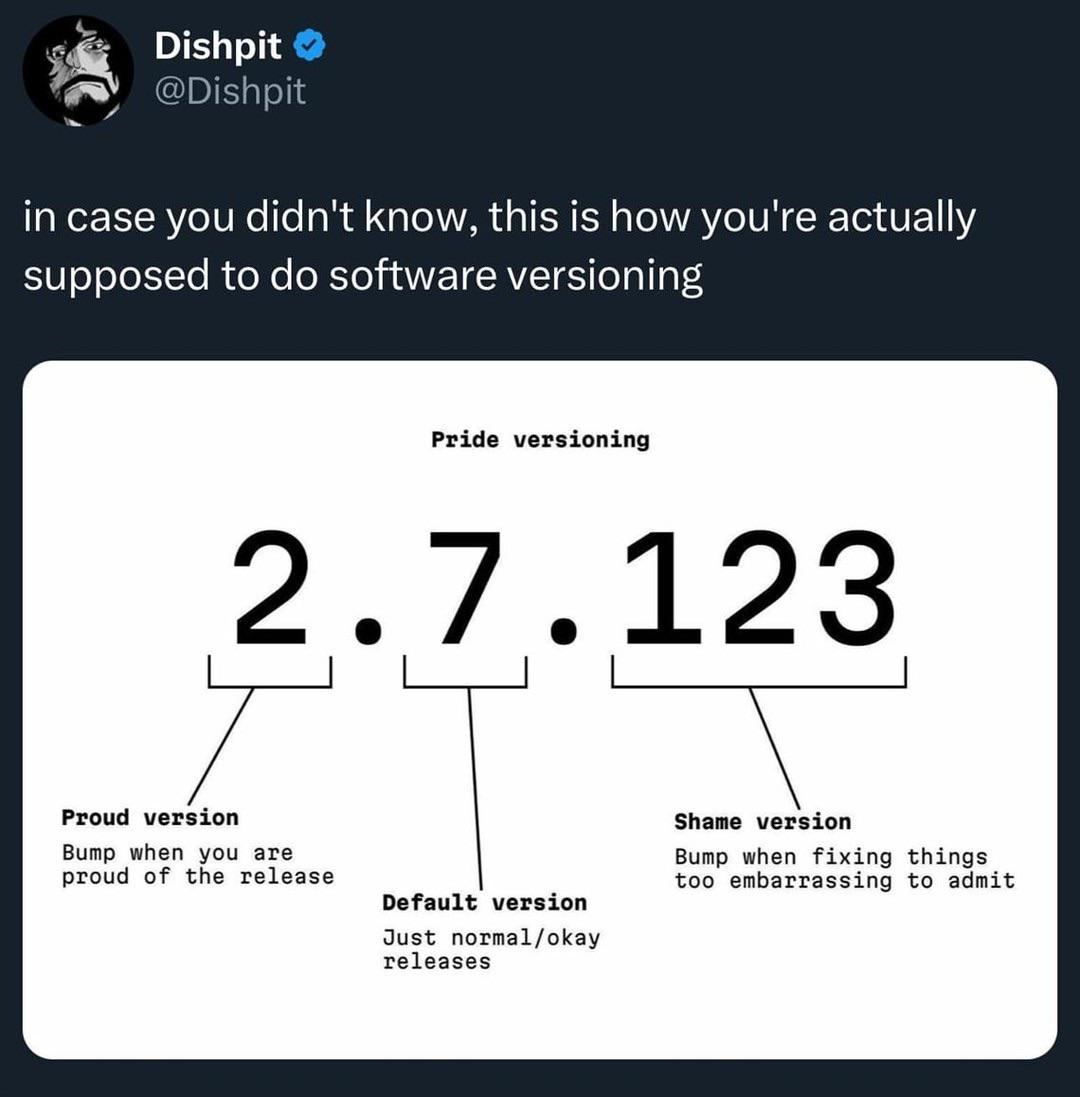
Finally, someone brave enough to decode the cryptic art of version numbering! The major version gets bumped when you're feeling particularly smug about your code. The minor version? That's just for the mundane Tuesday releases. But that patch number? That's where the bodies are buried—all those emergency fixes for bugs you swore didn't exist during code review. "No no, that 123 isn't a frantic weekend of hotfixes... it's a feature richness indicator ." Sure, buddy. We all know the truth behind those triple-digit patches. It's basically a shame counter.

Chad Versioning Evolution

Chad Versioning Evolution
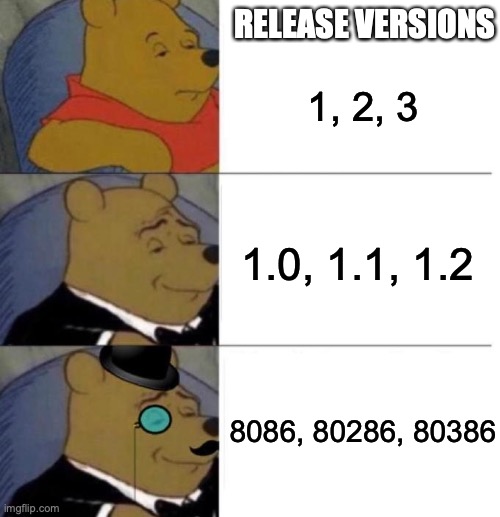
Behold the evolution of versioning sophistication! From the barbaric simplicity of "1, 2, 3" (did we even have computers back then?), to the refined elegance of "1.0, 1.1, 1.2" that makes project managers feel professional, and finally ascending to godhood with "8086, 80286, 80386" – where you're not just versioning software, you're naming it after the silicon it runs on. Nothing says "I've been in this industry since punch cards" like referencing Intel processors from the 1980s. The true power move isn't semantic versioning – it's naming your releases after increasingly obsolete hardware.