

On-call Memes

Posts tagged with On-call
Don't Deploy On Friday Afternoon

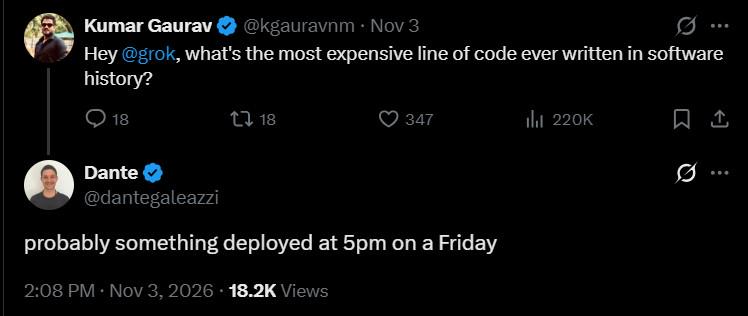
Don't Deploy On Friday Afternoon
Oh, the sheer AUDACITY of deploying code at 5pm on a Friday! Nothing screams "I hate my weekend" quite like pushing to production right before you're supposed to clock out. Because who doesn't want to spend their Saturday morning frantically debugging a critical bug while everyone else is enjoying brunch? The most expensive line of code isn't some fancy algorithm or database query—it's literally ANY line of code that gets deployed on Friday afternoon. That single deploy button click transforms your peaceful weekend into an on-call nightmare faster than you can say "it worked on my machine." The true cost? Your sanity, your weekend plans, and approximately 47 Slack messages from your boss asking if the site is down.

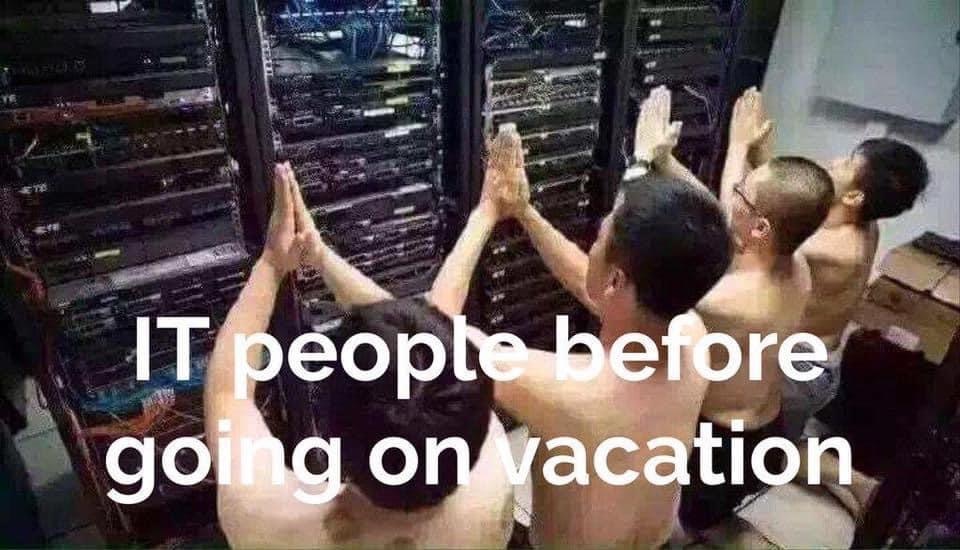
IT People Before Going On Vacation

IT People Before Going On Vacation
You know that ritual where you triple-check everything, restart all the services "just in case," update documentation you've been ignoring for months, and literally pray to the server gods that nothing breaks while you're sipping margaritas on a beach? Yeah, that's this. Because we all know the universe has a twisted sense of humor—the second you're unreachable, that's when the production server decides to have an existential crisis. So here we are, hands clasped in desperate prayer before the server racks, hoping our on-call colleagues won't hunt us down for leaving them with a ticking time bomb. Pro tip: Never tell anyone exactly when you're leaving. The servers can smell fear and vacation plans.

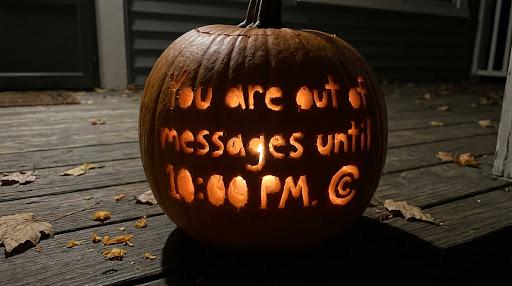
Staying Well Away From This House

Staying Well Away From This House
Nothing says "haunted house" quite like a pumpkin threatening you with out-of-office messages until 10 PM. This is the home of a developer who's clearly given up on work-life balance and is now weaponizing their availability status as a Halloween decoration. The scariest part? They're probably still checking Slack after 10 PM anyway. The pumpkin is lying and everyone knows it. Those "out of office" messages are just there to create plausible deniability while they frantically debug production issues at 11:47 PM on a Saturday. Pro tip: If you see this pumpkin at someone's house, don't ring the doorbell. They're either in a Zoom meeting, deploying to prod, or having a mental breakdown about merge conflicts. Possibly all three simultaneously.

The API Is Down

The API Is Down
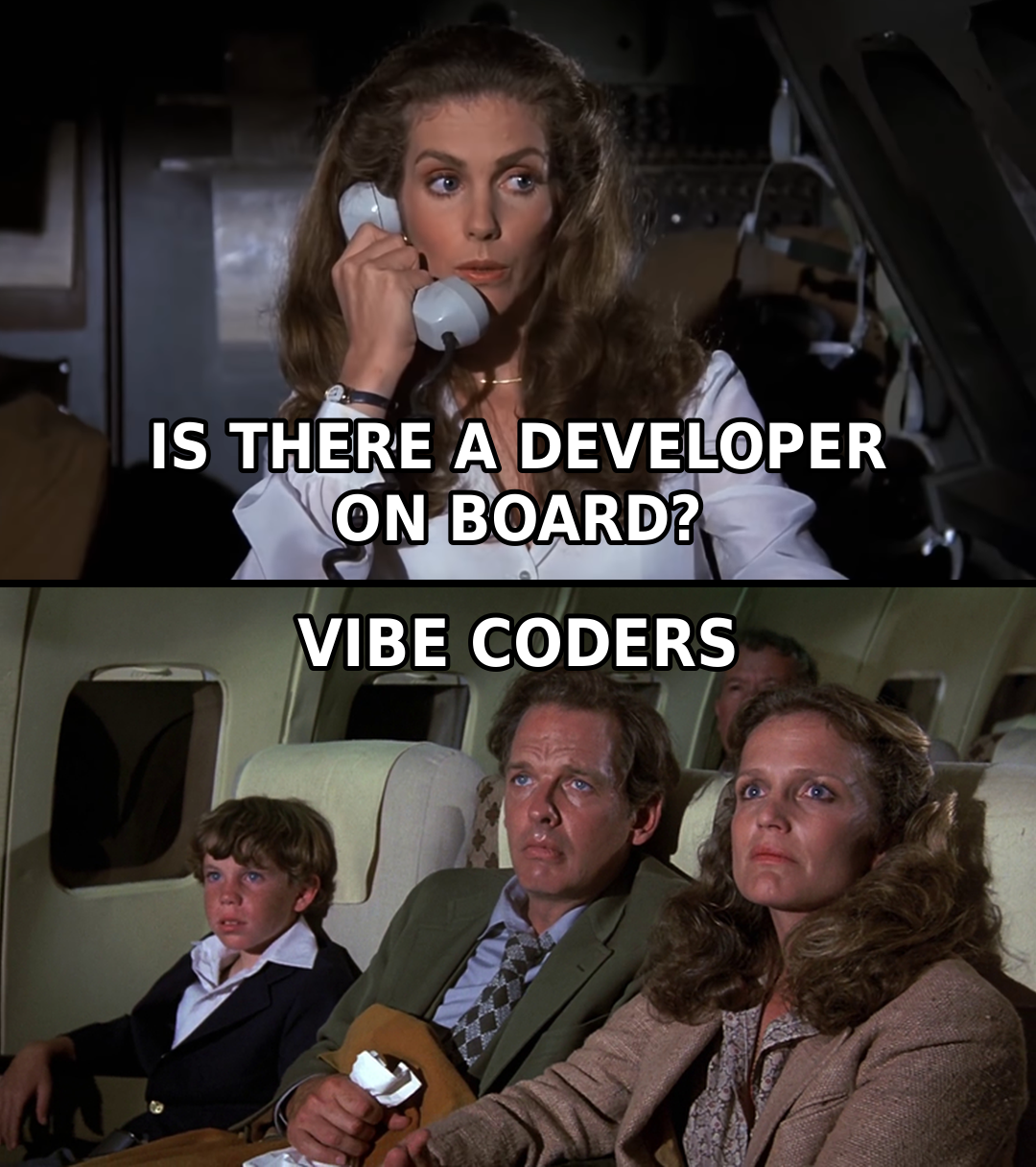
When production goes down and management frantically searches for someone who can actually fix things, only to find the entire dev team has suddenly become unreachable. You know those "vibe coders" who spend their standup talking about their side hustle NFT project? Yeah, they're nowhere to be found when the 500 errors start rolling in. Meanwhile, the one senior dev who actually knows the codebase is on a flight with their phone on airplane mode, living their best life while Slack is burning down back at the office. The panic in those passengers' eyes says it all—that's every PM when they realize the API they depend on is actually held together with duct tape and prayers by developers who are currently "in a meeting" (read: pretending not to see notifications).

Weekend Soon Please

Weekend Soon Please
When you're desperately counting down to Friday and another production incident decides to ruin your Thursday afternoon. Nothing quite captures the exhaustion of being on-call like having to whisper bad news to your manager while the entire infrastructure is on fire. The 2shell reference is *chef's kiss* because it perfectly captures how we've all learned to communicate critical failures in the most understated way possible. "Yeah, so... the load balancer decided to take an early vacation and now we're serving 502s to everyone. No big deal." Meanwhile your weekend plans are evaporating faster than your Redis cache after a memory leak.

Abide The Rules Incident Can Wait

Abide The Rules Incident Can Wait
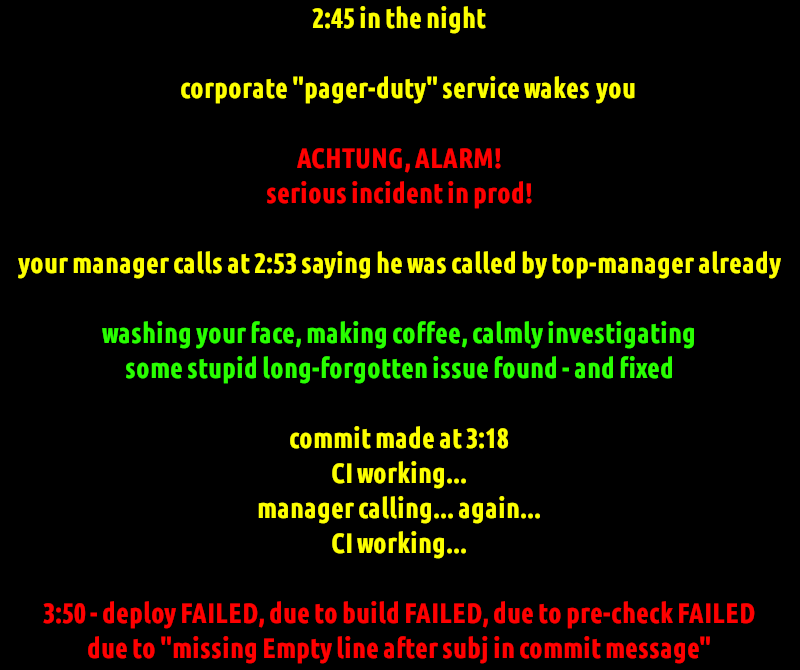
Picture this: You're jolted awake at 2:45 AM by the digital equivalent of a fire alarm, adrenaline pumping as you scramble to save production from certain doom. Your manager's already been summoned by the corporate overlords, and you're frantically investigating like a caffeinated Sherlock Holmes. You find the bug, fix it, make your commit at 3:18 AM feeling like an absolute hero... And then the CI pipeline—that merciless robot enforcer—looks at your commit message and goes "NOPE" because you forgot a blank line after the subject. Not a syntax error. Not a failed test. Not a security vulnerability. A MISSING. BLANK. LINE. While production burns and your manager's phone is ringing off the hook, your deploy is being held hostage by commit message formatting rules. The absolute AUDACITY of that pre-commit hook to care about formatting conventions when the entire infrastructure is on fire is just *chef's kiss* peak DevOps energy. Because apparently, proper git etiquette is more important than, you know, keeping the servers alive. Priorities!

So That's How We Do It

So That's How We Do It
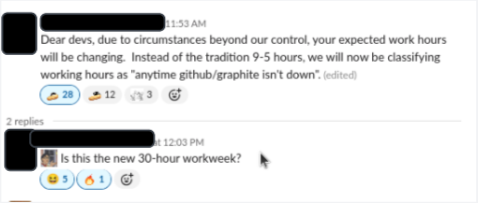
Corporate just discovered the ultimate life hack: redefine reality itself! Why pay overtime when you can simply rebrand "working outside normal hours" as "anytime github/graphite isn't down"? Genius! Revolutionary! Totally not exploitative! Someone in the replies immediately clocked it: "Wait... is this the new 30-hour workweek?" And honestly? That's the energy we need. Because if your work hours are defined by server uptime, congratulations—you're basically on call 24/7 but with extra steps and zero additional compensation. The best part? They said "circumstances beyond our control" like GitHub going down is an act of God that requires employees to sacrifice their entire life balance. Chef's kiss to whoever thought "let's just make everyone available always" was a reasonable response to infrastructure issues.

VIVO Clamp-on Double Pole Ultra Wide Monitor Desk Mount for 2 Utrawides up to 57 inches, 59.4 lbs Capacity Each, Low Profile Heavy Duty Vertical Dual Monitor Stand, Black, STAND-257C

VIVO Clamp-on Double Pole Ultra Wide Monitor Desk Mount for 2 Utrawides up to 57 inches, 59.4 lbs Capacity Each, Low Profile Heavy Duty Vertical Dual Monitor Stand, Black, STAND-257C
Ultrawide Compatibility: Vertically stacked monitor mount fits 2 ultra-wide screens up to 57” in size, weighing up to 48.4 lbs (curved screens) or 59.4 lbs (flat screens). Solid steel, dual-pole desi…

Thank You Dev Ops Community

Thank You Dev Ops Community
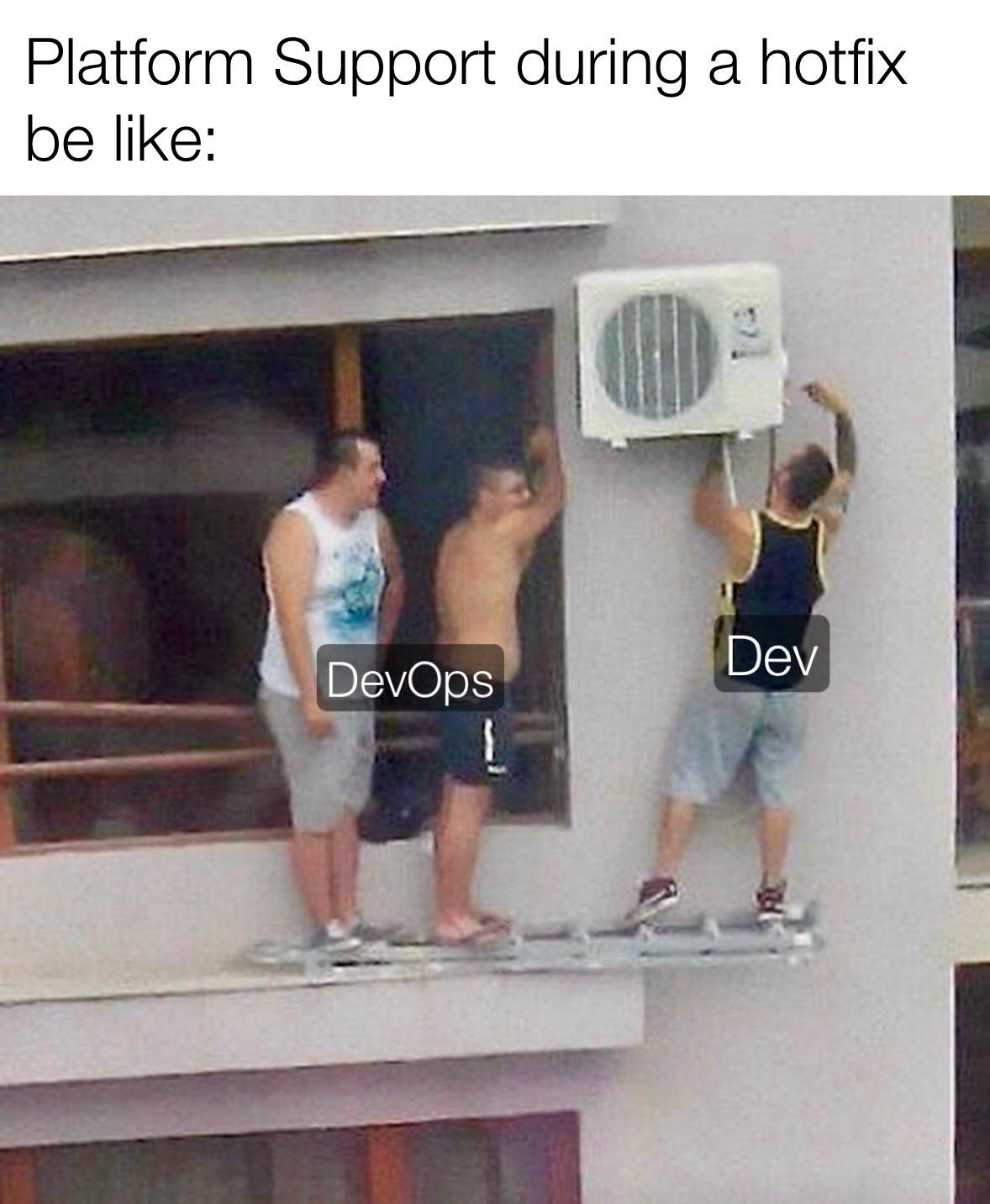
Production is on fire, users are screaming, and your CEO is refreshing the status page every 3 seconds. Meanwhile, DevOps is graciously holding up the entire infrastructure like a human ladder while you frantically deploy that emergency fix. Sure, you're the hero who wrote the patch in 5 minutes, but let's be real—without DevOps literally keeping the servers from falling off the wall, your hotfix would just be sitting in a git branch collecting dust. They're out here playing Jenga with load balancers and you get all the glory. Teamwork makes the dream work, but DevOps makes the uptime work.

Please Don't Be My Code I Promise To Unit Test Next Time

Please Don't Be My Code I Promise To Unit Test Next Time
That sinking feeling when you're on-call and production goes down, and you start reading through the stack trace only to see familiar function names from that "quick fix" you pushed last week. You know, the one you shipped without tests because "it's just a small change, what could go wrong?" Now you're literally in a hole, praying to the tech gods that it's someone else's garbage code causing the outage. But deep down, you already know. That's YOUR NullPointerException. That's YOUR uncaught promise rejection. That's YOUR brilliant idea to refactor the entire authentication flow at 4 PM on a Friday. Every developer makes the same bargain: "Just let this one slide and I swear I'll write tests for everything from now on." Spoiler alert: they never do. The cycle continues until the next incident call.

Of Course You Are

Of Course You Are
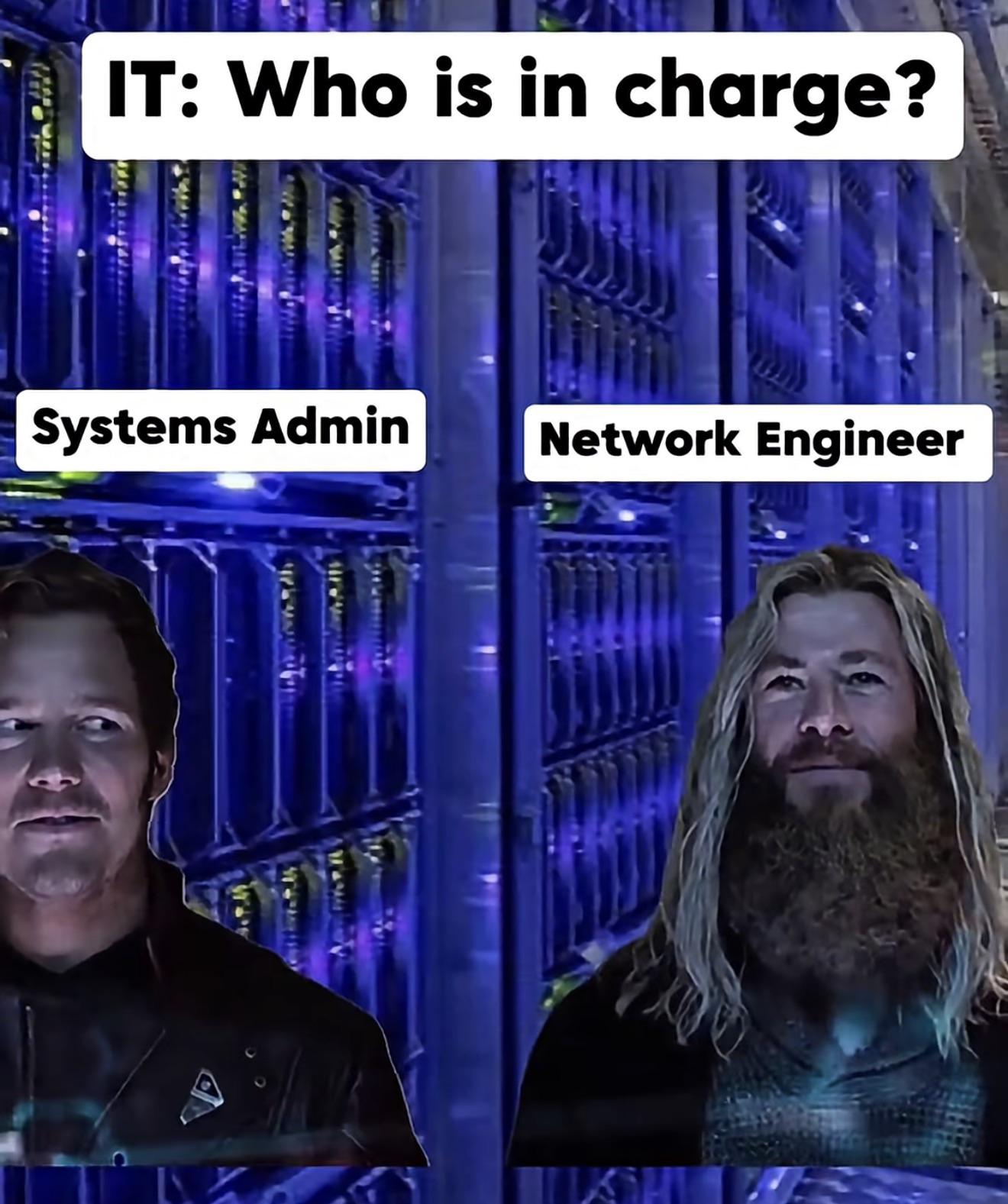
IT asks who's in charge, and both the Systems Admin and Network Engineer just point at each other like it's a game of hot potato nobody wants to win. Classic infrastructure blame game—when something breaks, suddenly everyone's responsibilities become remarkably vague. The sysadmin manages the servers, the network engineer handles the switches and routers, but who's actually running the show? Neither will admit it because with great power comes great... on-call rotations and angry Slack messages at 2 AM. They're basically two Spider-Men pointing at each other, except instead of webs they're slinging SSH commands and VLAN configs.

Zero Tickets

Zero Tickets
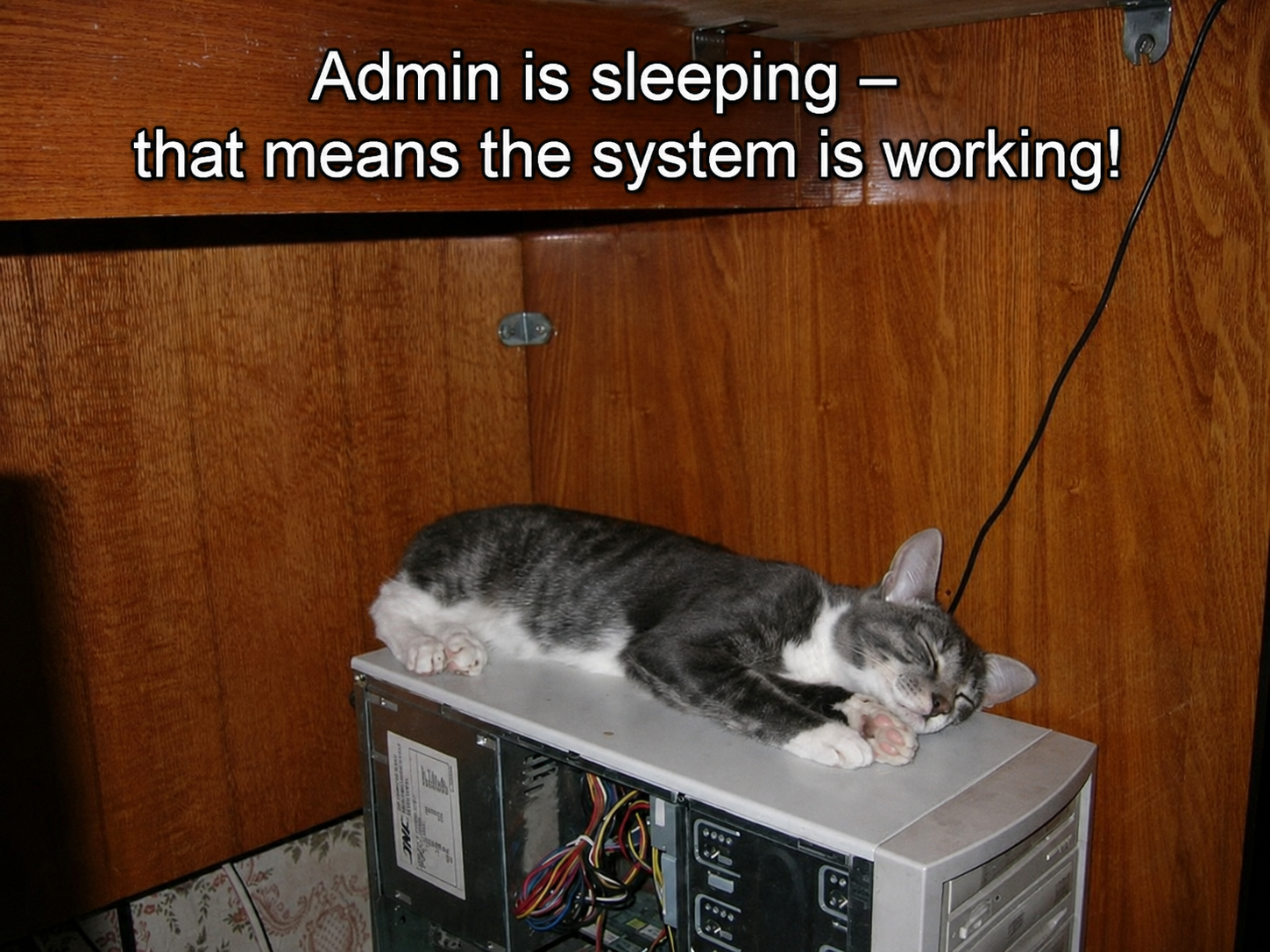
When your sysadmin finally gets some shut-eye, you know everything's running smooth. No alerts, no panicked Slack messages, no servers on fire—just pure, blissful silence. That's the dream right there: zero tickets in the queue means the infrastructure gods have smiled upon you. Of course, there's always that nagging suspicion that maybe the monitoring system is down and you just don't know it yet. But let's not think about that right now. Let the admin sleep. They've earned it.

Candlelit Dinner Is Need Email Bug

Candlelit Dinner Is Need Email Bug
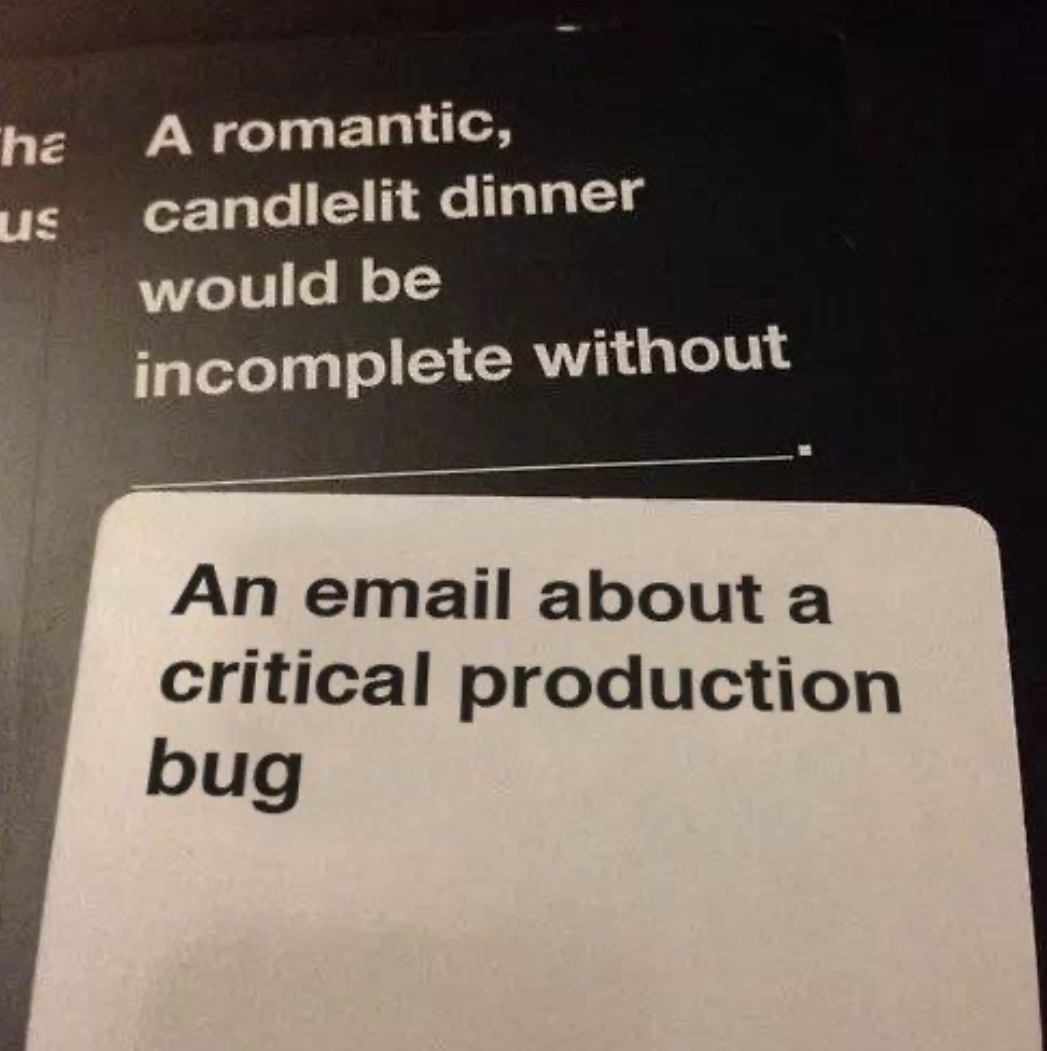
You're sitting there with your partner, wine poured, candles flickering, soft music playing... and then your phone buzzes. It's not a sweet text. It's Slack. It's PagerDuty. It's that godforsaken email with "URGENT" in the subject line about a critical production bug that's melting down the servers and probably costing the company $10k per minute. Nothing says "I love you" quite like frantically opening your laptop at the dinner table to debug why the payment gateway is returning 500s. Your significant other gives you that look while you're SSH-ing into production servers between bites of overpriced pasta. Romance? Dead. Relationship? Strained. Bug? Also somehow still not fixed after 3 hours. Welcome to the glamorous life of being on-call. Where every romantic moment is just one production incident away from becoming a war room situation. At least the candles provide decent mood lighting for your emergency debugging session.