

Cursed code Memes

Posts tagged with Cursed code
Cppyth Rus Go Sharp

Cppyth Rus Go Sharp
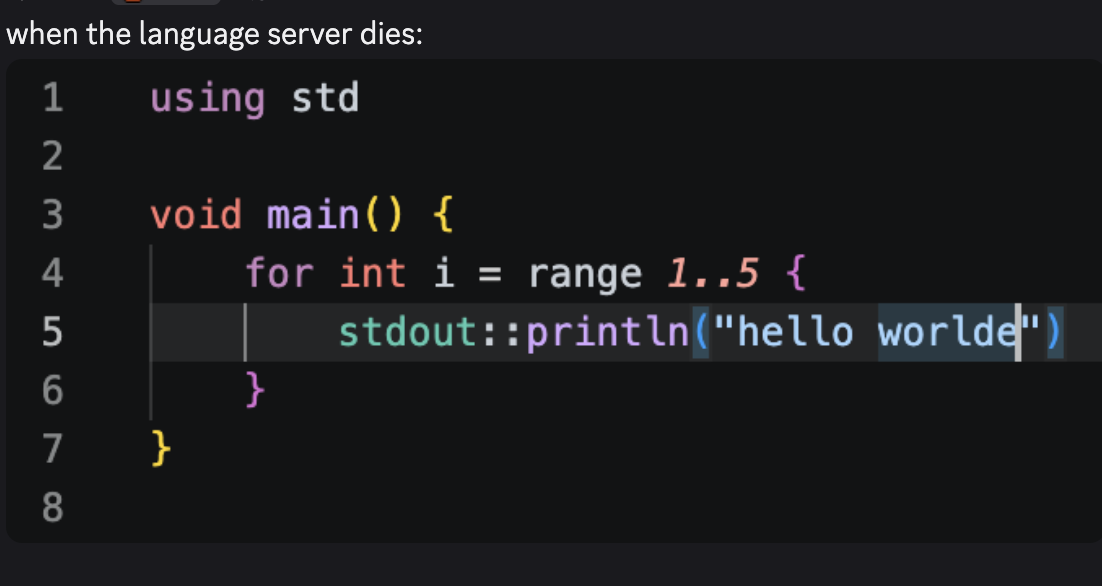
When your IDE's language server crashes mid-edit and you're left with whatever syntactic abomination was in the buffer. C++ imports, Python's range syntax, C++'s stdout with double colons, and a println that looks like it wandered in from Rust or Kotlin. It's like watching five languages have a fight in a parking lot and nobody wins. The real kicker? The code is actually trying to print "hello worlde" with a typo, which somehow feels appropriate for this multilingual disaster. Your syntax highlighter is doing its best to color-code the chaos, bless its heart.

I Just……. Don'T Know Anymore

I Just……. Don'T Know Anymore
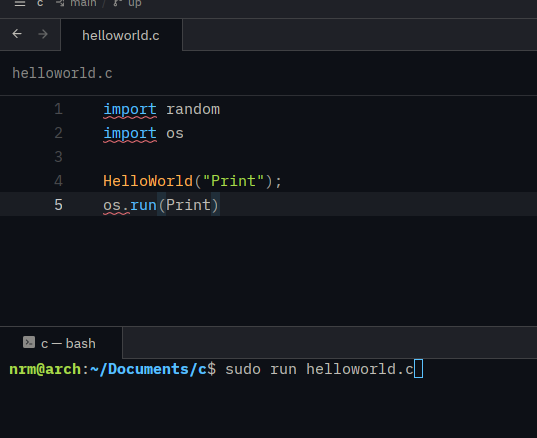
When you're so utterly defeated by coding that you're literally running a C program with sudo privileges just to print "Hello World." Like, bestie, what existential crisis led you to import the ENTIRE random and os libraries, call a function named HelloWorld (with that chaotic capitalization), and then use os.run(Print) to... print? The sheer desperation radiating from this code is PALPABLE. You've transcended normal programming logic and entered a realm where nothing makes sense anymore but you're just gonna sudo it anyway because maybe, JUST MAYBE, elevated permissions will fix whatever broke inside you. Spoiler: they won't.

That Damned Ele Ph Pant

That Damned Ele Ph Pant
Oh sweetie, let me tell you about the PHP ElePHPant – that adorable blue mascot that's been haunting developers' dreams since forever. You know EXACTLY where this is going the moment you see that innocent little smile. It's giving "I'm cute and harmless" energy while simultaneously being the reason your legacy codebase is held together with duct tape and prayers. That grin? That's the same energy as your production server running PHP 5.6 in 2024 because "if it ain't broke, don't fix it" (narrator: it IS broke). The ElePHPant sits there, all cheerful and optimistic, while you're debugging why == returns true when comparing a string to zero. THAT SMILE. That cursed, knowing smile that says "yes, I know about the inconsistent function naming, what are you gonna do about it?" Pure chaos wrapped in adorable packaging.

Found This Brilliant Code On Teenagersbutcode

Found This Brilliant Code On Teenagersbutcode
Oh honey, where do I even BEGIN with this masterpiece? Someone literally wrote a C program that calls Python to print "Hello from world c". Because why use one language when you can create the most beautifully chaotic Frankenstein's monster of code ever conceived? It's like ordering a pizza, but instead of just eating it, you hire someone to chew it for you and then spit it into your mouth. The sheer AUDACITY of including stdlib.h, setting up a proper C main function with all the ceremony, only to use system() to shell out to Python for a basic print statement is sending me into orbit. 🚀 Truly the programming equivalent of using a forklift to move a single grape. But you know what? We've ALL been teenagers learning to code, and honestly? Respect for the creativity, even if it makes every senior developer's eye twitch uncontrollably.

What People See When They Look At My Cursed Code

What People See When They Look At My Cursed Code
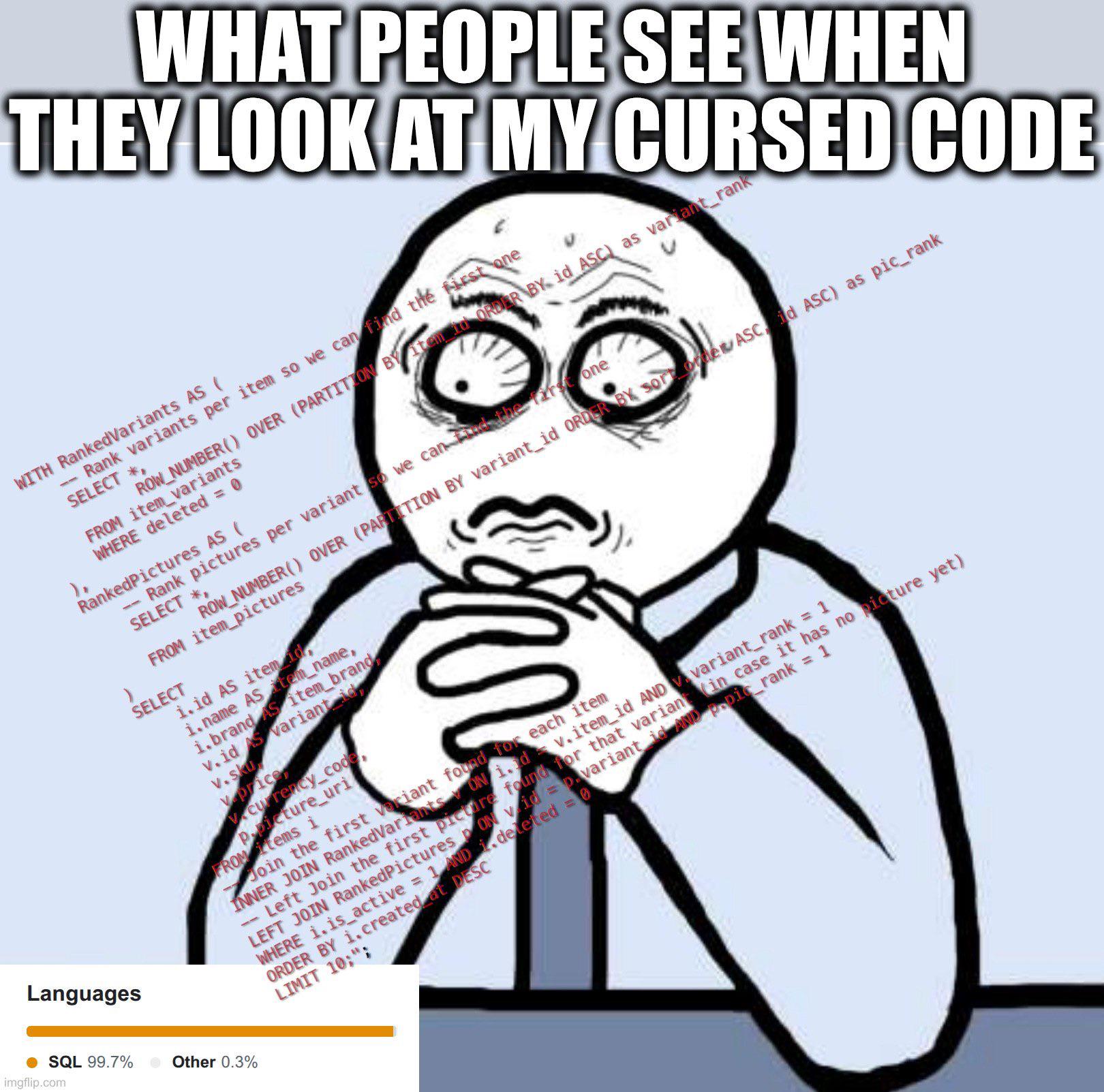
When your codebase is 99.7% SQL and consists entirely of nested SELECT statements with enough ROW_NUMBER() OVER (PARTITION BY) clauses to make a database administrator weep into their coffee. The sheer terror on that face? That's your code reviewer trying to parse through seven levels of subqueries, each one more cursed than the last. Bonus points for the random VARCHAR to ASC casts scattered throughout like landmines. Someone clearly discovered window functions and decided to make them everyone else's problem. The database engine runs this code. The database engine suffers. We all suffer.

Using Garbage Values To Generate Pseudorandom Numbers

Using Garbage Values To Generate Pseudorandom Numbers
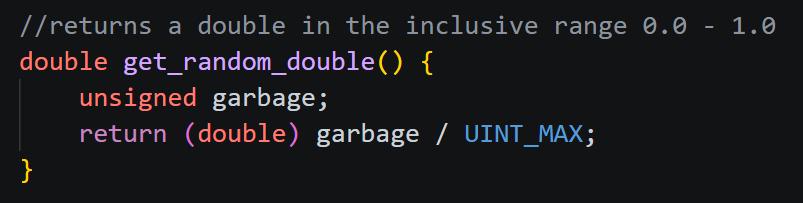
Oh honey, someone just discovered the ancient forbidden art of using uninitialized variables as a random number generator! Declaring an `unsigned` variable without giving it a value, then casting that beautiful pile of memory garbage to a double and dividing by UINT_MAX? *Chef's kiss* 💋 This is the programming equivalent of reaching into a mystery box and hoping you don't pull out a cursed artifact. Sure, you'll get SOME number between 0.0 and 1.0... but will it be random? Will it be the same every time? Will it summon demons? Who knows! The variable could contain literally anything that was sitting in that memory address before—leftover pizza orders, your ex's phone number, or the meaning of life. Undefined behavior never looked so confident. This function returns with the swagger of someone who just used duct tape to fix a spaceship. Technically genius, practically terrifying, and absolutely NOT what your CS professor had in mind when teaching you about random number generation. 🎲

SHOKZ OpenMove - Open-Ear Bluetooth Sport Headphones - Bone Conduction Wireless Earphones - Sweatproof for Running and Workouts, with Sticker Pack (Grey)

SHOKZ OpenMove - Open-Ear Bluetooth Sport Headphones - Bone Conduction Wireless Earphones - Sweatproof for Running and Workouts, with Sticker Pack (Grey)
Open-Ear Headphones - Experience unmatched comfort with our lightweight, secure fit, featuring an earbud-free design for all-day listening without ear fatigue.(Rebranded version of AfterShokz OpenMov…

It's Quick It's Easy And It's Free

It's Quick It's Easy And It's Free
When you're too exhausted to properly generate SSH keys or deal with certificate authorities, just mash that keyboard and manually type your private key directly into your root certificates. What could possibly go wrong? The "4" here is doing some heavy lifting as both a number and the most cursed security advice imaginable. It's like those life hack videos that tell you to fix a cracked phone screen with ramen noodles, except this one will get your entire infrastructure compromised before you finish your sad desk dinner. Nothing screams "I understand cryptography" quite like finger-painting your private keys onto production certificates. Your security team will definitely not regret this. Neither will the hackers who are already in your system.

Why Can I Do This

Why Can I Do This
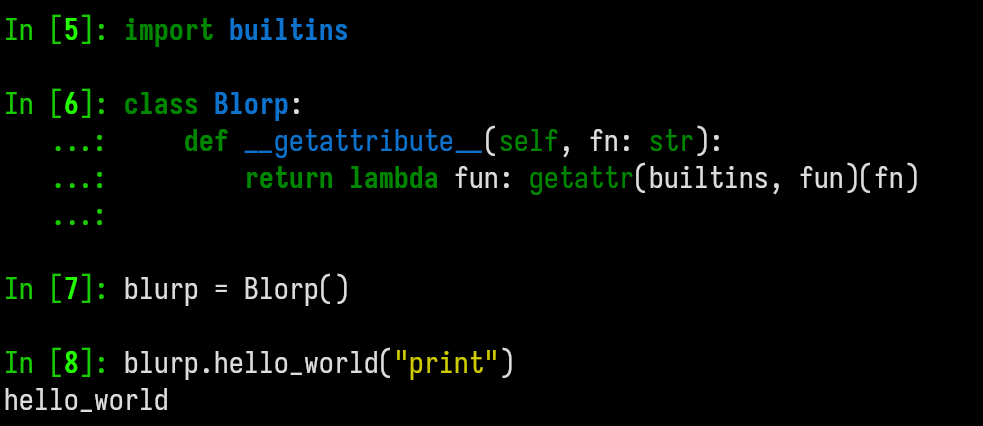
Someone just discovered they can override __getattribute__ to intercept attribute access and dynamically fetch functions from the builtins module. So now their Blorp class can magically call hello_world("print") even though that method doesn't exist—it's just grabbing the print function at runtime. Python's dunder methods are like giving a toddler the keys to a bulldozer. Sure, you can do it, but should you? Your future self (and anyone who has to maintain this code) will be debugging phantom methods wondering where the hell they're defined. Spoiler: they're not. They're summoned from the void like some dark magic ritual. Just because Python lets you doesn't mean your code review should.

Removing Spaces To Speed Up Execution

Removing Spaces To Speed Up Execution
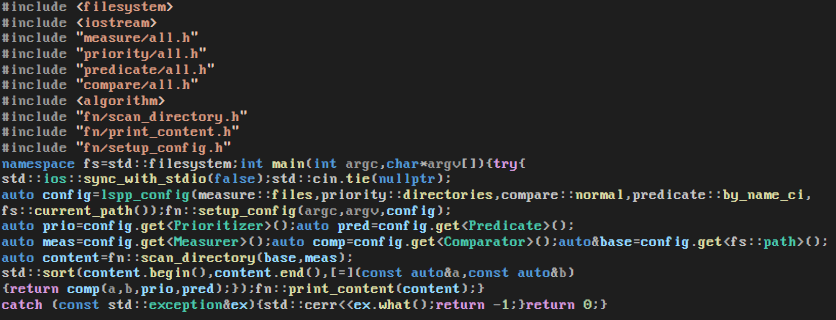
Someone discovered that compilers parse whitespace and decided to optimize their C++ code by removing all the spaces. Because clearly, those extra bytes are what's been holding back performance this whole time. Not the O(n²) algorithm or the memory leaks—it's definitely the space character between std:: and ios that's the bottleneck. The result is code that looks like it was written by someone who thinks readability is a compiler warning you can safely ignore. Good luck debugging this when it inevitably segfaults at 2 AM. Your future self will thank you for saving those precious nanoseconds.

This Is Peak Programming

This Is Peak Programming
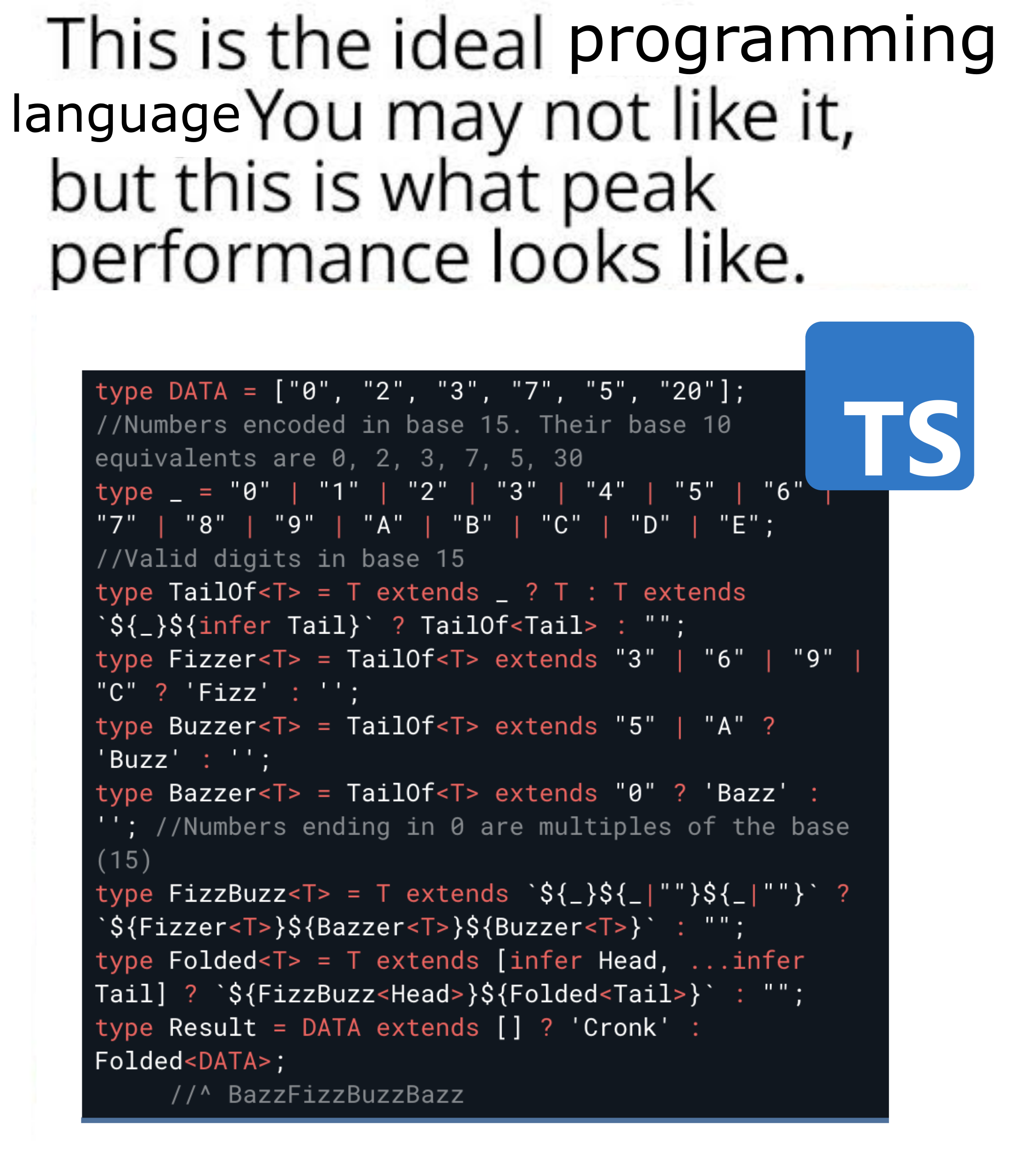
Someone really woke up and decided to implement FizzBuzz using TypeScript's type system at compile time. Not in regular code, mind you—in the type system itself . They're encoding numbers in base 15, doing string manipulation with template literals, and recursively building types that somehow output "Fizz", "Buzz", or "FizzBuzz" based on divisibility rules. All of this happens before a single line of JavaScript even runs. The result? Absolutely zero runtime value, maximum engineering flex. It's like using a Formula 1 car to go grocery shopping—technically impressive, completely impractical, and you'll confuse everyone in the parking lot. But hey, at least your FizzBuzz bugs will be caught at compile time, which is more than most production codebases can say.

50 Pack Funny Computer Stickers Tech Laptop Decals for Programmers | Vinyl Set For Developers Coders, Geek Gift For Tech Lover, Journal Water Bottle Keyboard Workstation Decor

50 Pack Funny Computer Stickers Tech Laptop Decals for Programmers | Vinyl Set For Developers Coders, Geek Gift For Tech Lover, Journal Water Bottle Keyboard Workstation Decor
Full of Nerdy Fun: This glossy sticker pack includes 50 quirky computer-themed designs like debugging jokes, coding fails, and internet memes that tech folks truly relate to · Smooth Glossy Texture: …

My First Hello World Program!

My First Hello World Program!
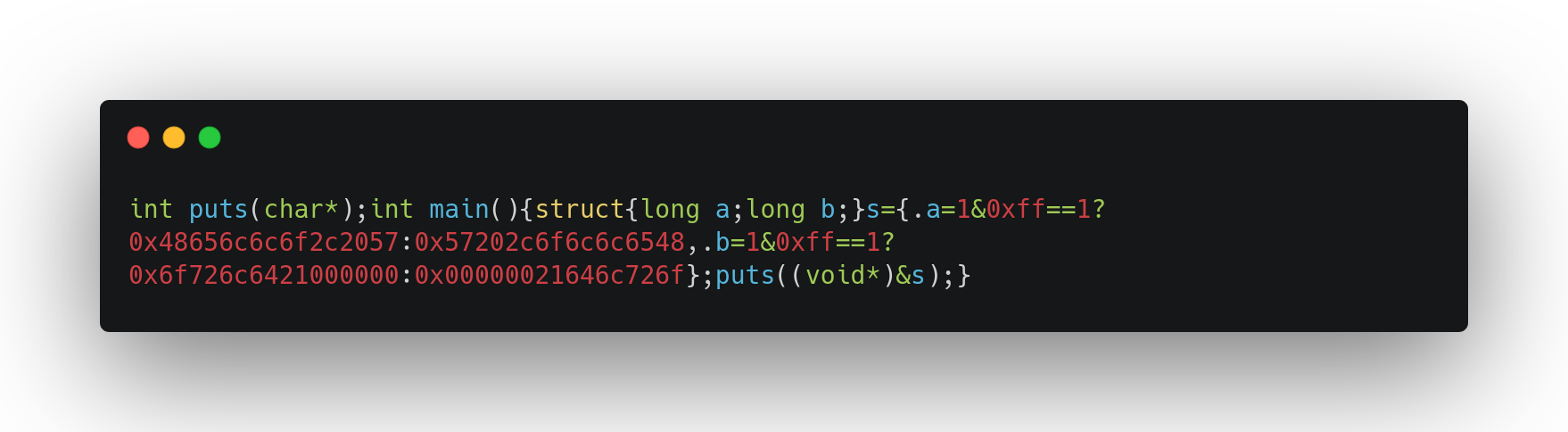
When someone says their "first Hello World" looks like a hexadecimal nightmare spawned from the depths of memory manipulation hell, you know they've gone full cursed C programmer mode. Instead of the innocent printf("Hello World\n"); , we're treated to a beautiful mess of struct pointers, ternary operators, and raw memory addresses that would make any compiler cry. The code is doing some absolutely unhinged bit manipulation with conditions like .a=1&0xff==1? and casting void pointers while somehow calling puts() in the most convoluted way possible. Those hex addresses? Probably hardcoded memory locations or some ASCII encoding shenanigans. This is what happens when you learn C from StackOverflow answers written at 3 AM by someone who thinks "readable code" is for the weak. Nobody's first Hello World looks like this unless they're either a masochist or they copy-pasted from a code obfuscation contest. 10/10 would segfault again.

Hello World With Macro In C++

Hello World With Macro In C++
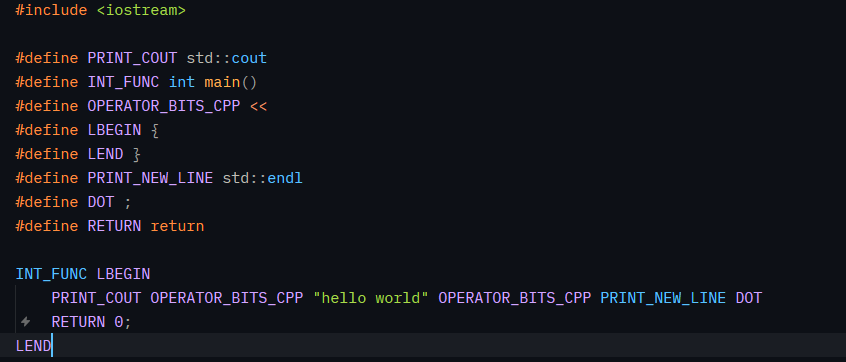
Someone woke up and chose violence. They took the classic "Hello World" program and turned it into a preprocessor nightmare by replacing every single keyword with macros. PRINT_COUT instead of std::cout , INT_FUNC instead of int main() , curly braces replaced with LBEGIN and LEND . It's technically valid C++, compiles just fine, and is absolutely cursed. This is what happens when you give C++ developers too much power and not enough supervision. The preprocessor was a mistake, and this code is Exhibit A. Your coworkers will find you if you commit this to production.