3d modeling Memes

Posts tagged with 3d modeling
Better Than Dark Souls

Better Than Dark Souls
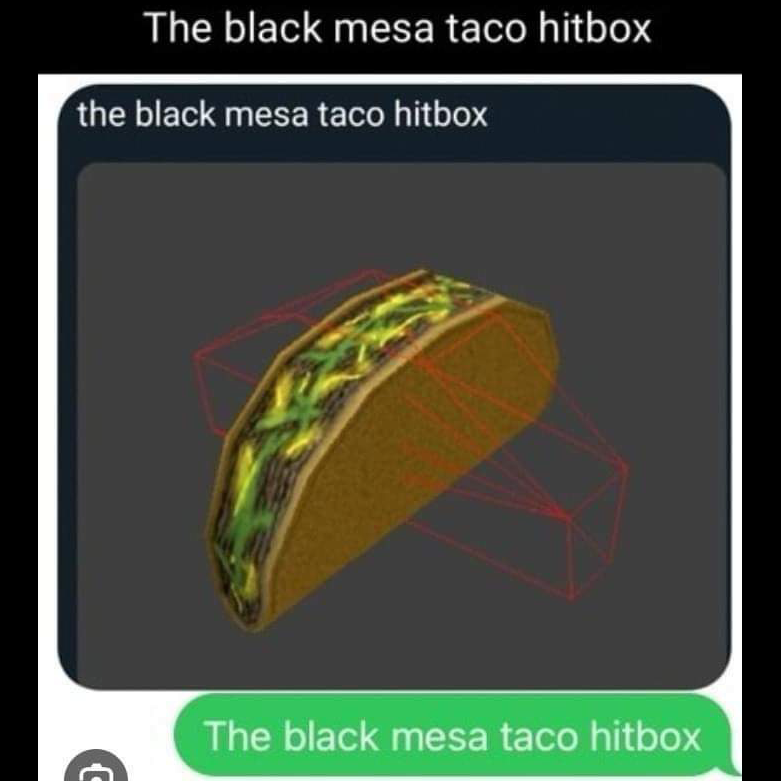
The legendary Black Mesa taco hitbox—a collision detection nightmare that makes every boss fight look like child's play. You see that beautiful taco? Yeah, good luck actually hitting it because the hitbox is doing its own thing in a parallel dimension. It's giving "I swear I clicked on that button" energy but for video games. The hitbox is literally just vibing somewhere near the taco, not even trying to match the actual model. This is what happens when your collision mesh goes rogue and decides geometry is merely a suggestion. Game developers everywhere are sweating nervously because they KNOW they've shipped something like this.

Someone End My Misery

Someone End My Misery
You know that feeling when you think "I'll just refactor this one thing real quick"? Yeah, that's the retopology talking. What starts as a simple mesh cleanup turns into a soul-crushing odyssey through vertex hell. Your brain cells confidently announce it's a "20 minute adventure" while retopology laughs maniacally in the corner. Two weeks later, you're still manually placing edge loops, questioning every life decision that led you to 3D modeling. Your mesh has more triangles than the Bermuda variety, and you're pretty sure you've aged 10 years. The worst part? You're not even done. You'll never be done. Retopology is eternal. Fun fact: Studies show that 9 out of 10 3D artists have PTSD from retopology. The 10th one is lying.

We've All Seen It A Million Times, But Has Anybody Tried Making A Tile Panel To Put On A Glass Floor? I Didn't Want To Use AI To Simulate It So I Just Used Paint.

We've All Seen It A Million Times, But Has Anybody Tried Making A Tile Panel To Put On A Glass Floor? I Didn't Want To Use AI To Simulate It So I Just Used Paint.
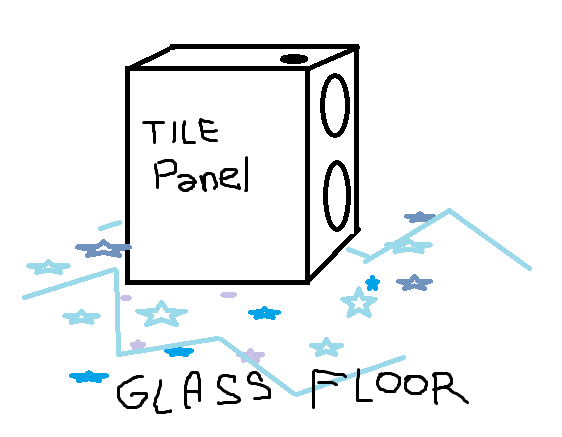
Someone finally asked the question nobody thought to ask: what happens when you put the classic "tile panel" texture on a glass floor? Spoiler alert: you get a beautifully hand-crafted MS Paint masterpiece that somehow captures both the essence of early 2000s game development and the "I'll do it myself" energy of a developer who's tired of waiting for AI to load. The commitment to using Paint instead of AI is *chef's kiss*. Why spend 30 seconds prompting an AI when you can spend 15 minutes wrestling with the polygon tool and flood fill? That's the kind of dedication that built Stack Overflow answers at 3 AM. Props for the transparent glass floor effect though—those little stars underneath really sell it. This is what game dev looked like before Unity asset stores existed, and honestly? Sometimes the jank is part of the charm.

Is 8 GB RAM Enough In 2026? How Much Do You Have?

Is 8 GB RAM Enough In 2026? How Much Do You Have?
Gamers think they're suffering with 8GB? Cute. Meanwhile, 3D CAD users are out here with 32GB of RAM looking like they just witnessed their entire render crash at 99% completion. That's not confidence on their face—that's the hollow stare of someone who's watched their computer freeze while rotating a simple cube. Gamers are living their best life with their fancy 32GB setups, but CAD professionals? They're basically running a NASA simulation just to model a doorknob. Chrome tabs got NOTHING on a fully textured 3D assembly with physics simulations running in the background!

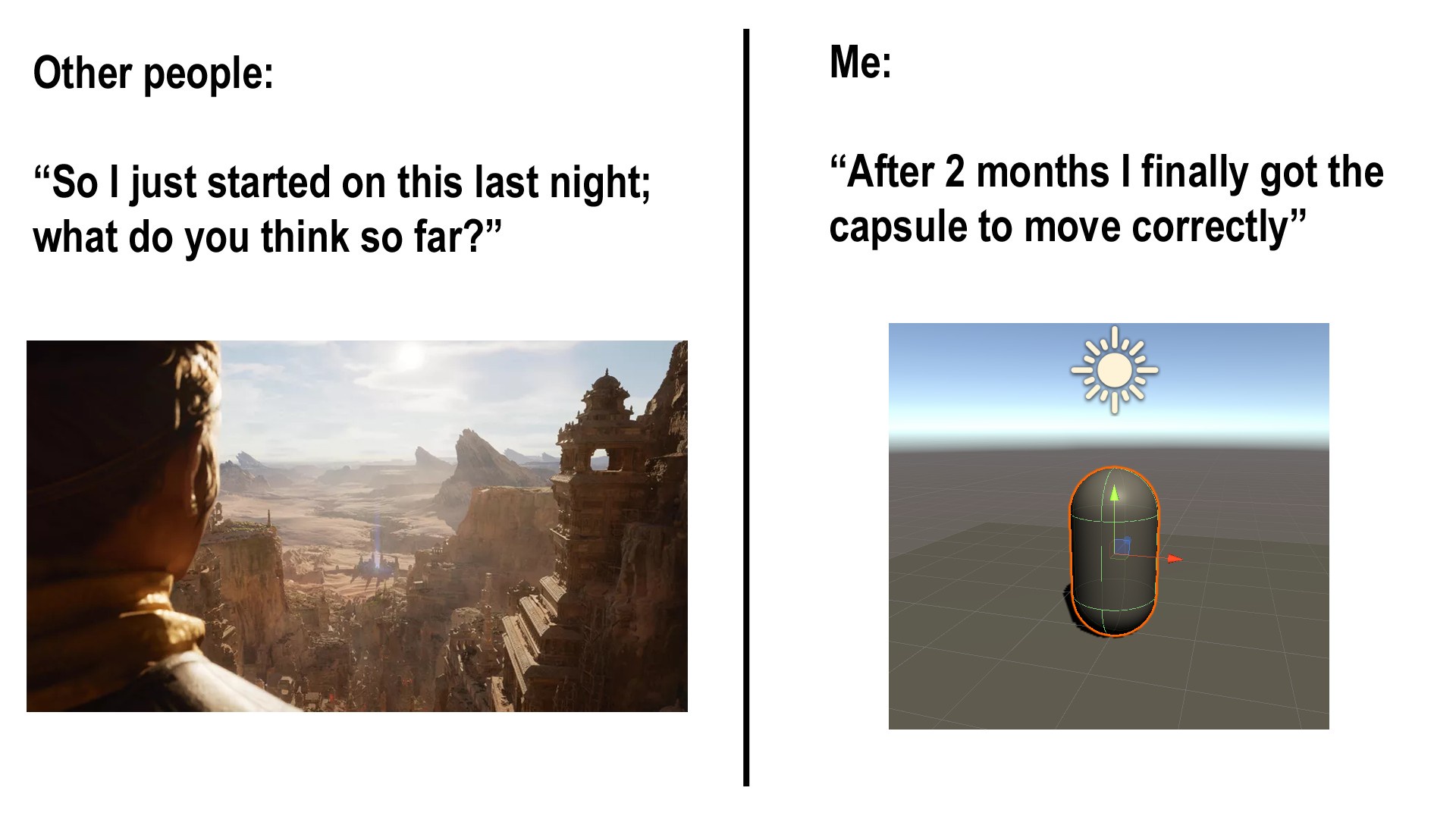
How It Feels Looking At Other People's WIPs

How It Feels Looking At Other People's WIPs
You know that crushing feeling when someone casually drops their "just started last night" WIP and it's a photorealistic fantasy landscape with volumetric lighting and atmospheric perspective? Meanwhile, you're over here celebrating because you finally figured out how to make a basic capsule object move in the right direction after two months of fighting with transform matrices and quaternions. The contrast here is brutal. They're out here building entire civilizations while you're still in tutorial hell trying to understand the basics of 3D space. But hey, at least your capsule moves now. That's progress, right? Right? Game dev is a humbling experience where everyone else seems to be a digital Michelangelo while you're just happy your primitive shapes aren't clipping through the floor anymore.

Current Status

Current Status
You start with grand ambitions of building the next indie hit, ready to fight through all the technical challenges. Then you discover that implementing proper hand animations, inverse kinematics, and skeletal meshes is basically a PhD thesis. Suddenly you're sitting there, defeated, wondering if stick figures are really that bad. Every gamedev's journey begins with "I'll make something amazing" and ends with "why do hands have so many bones?" It's the circle of life, except with more rage-quitting and tutorial hell.

VIVO Dual Monitor Stand, Fully Adjustable Arms for 17 to 32 inch Screens, Mechanical Articulating Desk Mount, Gaming and Office Setups, VESA 75x75, 100x100, Max 19.8 lbs, Classic, Black, STAND-V002O

VIVO Dual Monitor Stand, Fully Adjustable Arms for 17 to 32 inch Screens, Mechanical Articulating Desk Mount, Gaming and Office Setups, VESA 75x75, 100x100, Max 19.8 lbs, Classic, Black, STAND-V002O
Screen Compatibility: Universally compatible with most 17-inch to 32-inch flat and curved screens weighing from 4.4 lbs to 19.8 lbs each with VESA 75x75mm or 100x100mm mounting patterns · Mechanical …

Am Making A PS1 Style Horror Game And Forgot This In My Roommate's Fridge

Am Making A PS1 Style Horror Game And Forgot This In My Roommate's Fridge
Game dev life hits different when you're so deep in creating grotesque low-poly assets that you forget you left a horrifying meat texture reference in your roommate's fridge. Nothing says "I'm working on something creative" quite like a gnarly piece of raw meat sitting on a plate, looking like it came straight out of Silent Hill's asset library. The roommate opens the fridge expecting leftovers and instead gets jumpscared by what looks like a prop from Resident Evil. The beautiful chaos of indie game development: when your 3D modeling references start bleeding into real life. That low-res, chunky polygon aesthetic doesn't photograph itself—sometimes you need actual reference material, and sometimes that material terrorizes your housemates. Pro tip: Label your game assets when storing them in shared spaces, or at least warn people that you're bringing the horror game home with you.

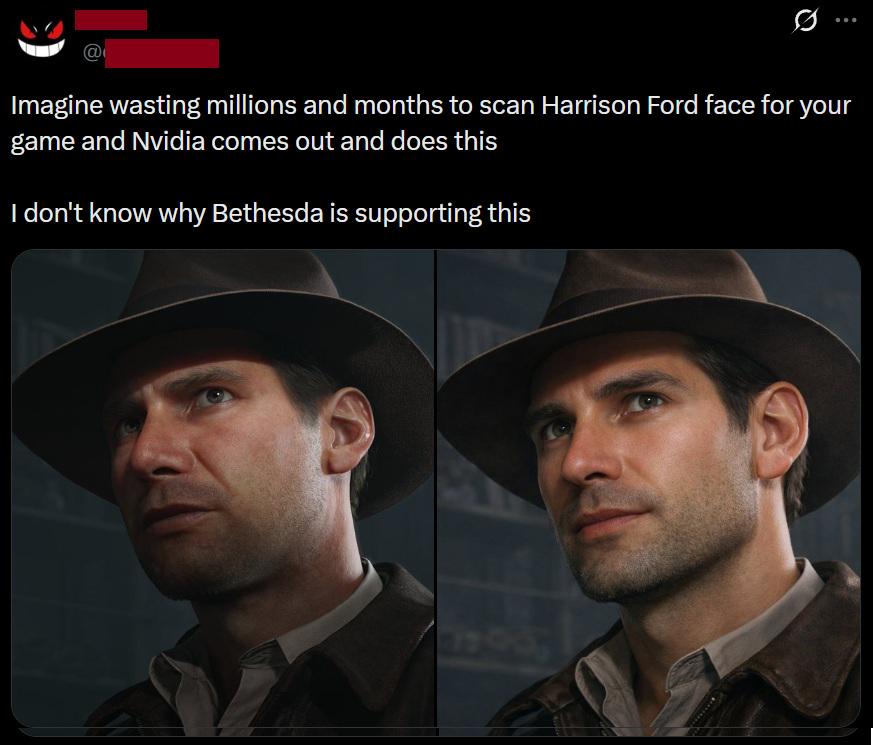
I Thought It Was An April Fools Joke

I Thought It Was An April Fools Joke
Game developers spent literal years painstakingly scanning Harrison Ford's face to recreate Indiana Jones with photorealistic detail. Then Nvidia drops their AI face generation tech and just... casually does it instantly. Bethesda's out here endorsing technology that basically makes their entire facial scanning pipeline obsolete. It's like spending months hand-crafting a masterpiece only to watch someone 3D print the same thing in 5 minutes. The look on Indiana Jones' face says it all – that's the exact expression of every technical artist who just realized their job got automated. Nothing says "we support innovation" quite like publicly backing the tech that makes your own workflow look like you're still using punch cards.

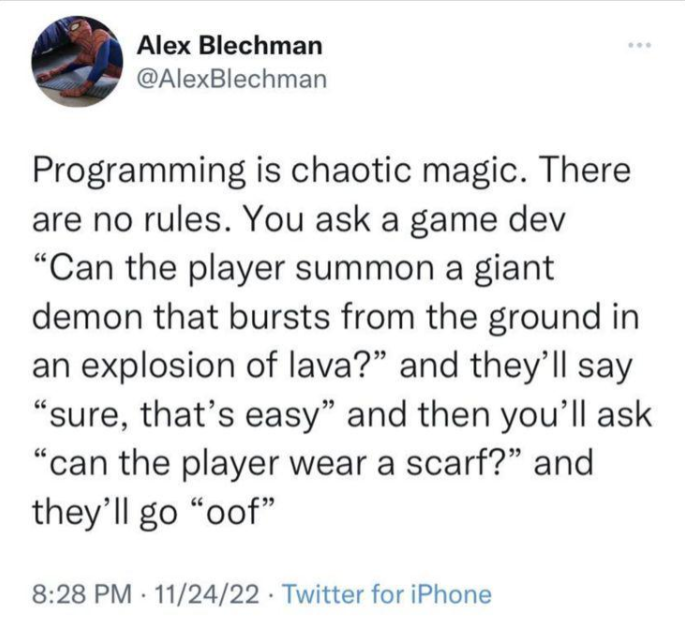
Physics, Shaders, Demons - Fine. Fabric? Oof.

Physics, Shaders, Demons - Fine. Fabric? Oof.
Game developers will casually implement particle systems that simulate volcanic eruptions with real-time physics calculations, write custom shaders that make demons emerge from interdimensional portals, and handle complex collision detection for massive explosions... but ask them to make a scarf drape naturally on a character model and suddenly they're questioning their entire career choice. The brutal truth? Cloth simulation is genuinely one of the hardest problems in game development. While spawning a demon is just instantiating a prefab with some particle effects, fabric requires real-time physics simulation of thousands of vertices, collision detection with the character's body, wind dynamics, and making it look good at 60fps without melting your GPU. It's the difference between "cool visual effect go brrrr" and "I need to understand tensile forces and material properties now." Turns out summoning hellspawn from the depths of the underworld is easier than making a piece of cloth not clip through a shoulder. Game dev priorities are wild.

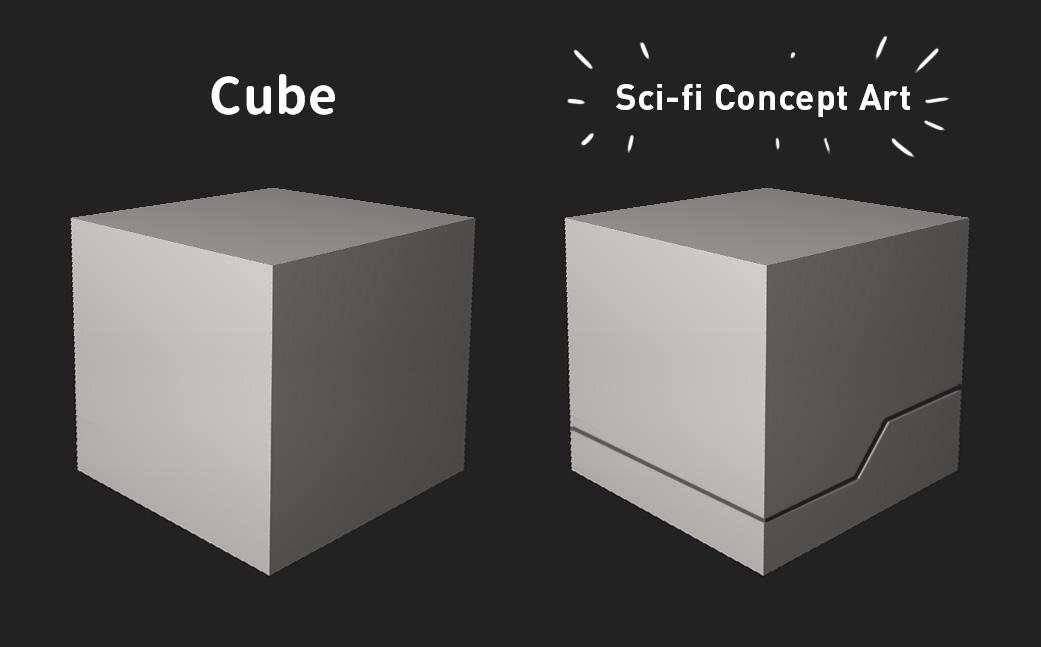
Simple Cube vs. Sci-Fi Concept Art

Simple Cube vs. Sci-Fi Concept Art
The perfect visualization of how product managers describe features vs. how engineers implement them. Left: "Just a simple cube, how hard could it be?" Right: The same damn cube with one unnecessary line that took 8 meetings, 3 design revisions, and somehow doubled the development timeline. The sci-fi concept art is just corporate speak for "we added a groove that serves no purpose but looks techy." This is why I drink coffee by the gallon.

The Desperate Clone Army Of Game Dev

The Desperate Clone Army Of Game Dev
Game dev reality check: one Buzz Lightyear toy = "I need an artist friend." An entire warehouse of identical Buzz Lightyears = same desperate plea, but with the crushing realization that you're actually just mass-producing the same mediocre game assets over and over. The true indie game dev cycle: write code for 6 months, realize everything looks like garbage, then frantically DM every artist you've ever met with "wanna collab on something cool?" while conveniently omitting you have zero budget.

The Horrifying Reality Behind The Gamedev Mask

The Horrifying Reality Behind The Gamedev Mask
Behind every "game developer" label lurks a nightmare of vector math, 3D modeling, shader programming, and eight other specialized disciplines that would make most CS grads curl into a fetal position. It's like claiming you're a "car maker" when in reality you're simultaneously the metallurgist, electrical engineer, upholsterer, and safety tester all while trying not to set yourself on fire. The mask stays on because nobody runs away screaming when you just say "gamedev."