


32-bit Memes

Posts tagged with 32-bit

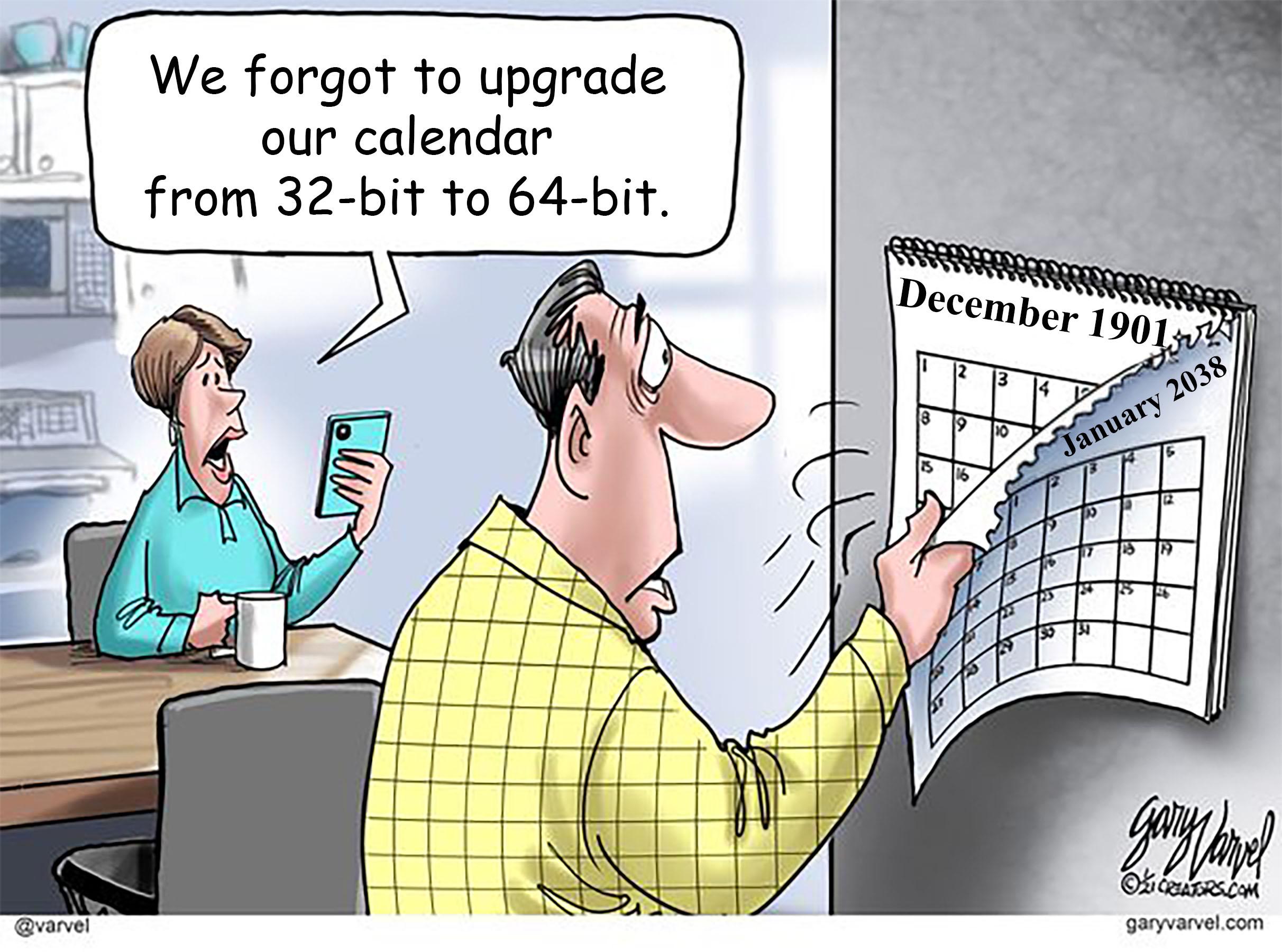
Literally Twenty Thirtyeight

Literally Twenty Thirtyeight
You know that Y2K bug everyone panicked about? Well, we've got Y2K38 coming up, and judging by this calendar, we're about as prepared as we were last time. The Year 2038 problem hits when Unix timestamps—stored as 32-bit signed integers counting seconds since January 1, 1970—max out at 2,147,483,647 seconds. That's January 19, 2038, at 03:14:07 UTC. After that? The counter wraps around to December 13, 1901. Oops. The fix is simple: upgrade to 64-bit timestamps. The problem? Legacy systems, embedded devices, and that one critical server running code from 1987 that nobody wants to touch. We've got 14 years to fix it, which in enterprise time means we'll start panicking around 2037. Fun fact: With 64-bit timestamps, we're good until the year 292,277,026,596. By then, we'll probably have bigger problems. Like the heat death of the universe.

T Thanks

T-Thanks
Kid asks mom for a 32-bit number, mom says they have one at home. The "32-bit number at home" is just binary. Classic monkey's paw situation. Technically correct is the worst kind of correct. Sure, that binary string is 32 digits long, but the kid clearly wanted a nice decimal number they could actually read without having their brain melt. Mom delivered malicious compliance at its finest. The kid's defeated expression says it all. They're probably doing homework or working on some project, and now they gotta sit there converting binary like some kind of human compiler. Thanks for nothing, mom.

The Tale Of Two Developer Ecosystems

The Tale Of Two Developer Ecosystems
The eternal battle between Windows and Mac developers in their natural habitats. Windows devs: proudly crafting software that looks like it was designed during the Clinton administration, but hey—it technically works! That 32-bit executable will run flawlessly on your grandma's Vista machine from 2007. Who needs aesthetics when you have compatibility with operating systems that even Microsoft wants to forget? Meanwhile, Mac developers create gorgeous, minimalist apps that will absolutely destroy your wallet. "That'll be $9.99 or a lifetime subscription that costs more than your car payment. Oh, and we'll need you to upgrade your OS again because we decided last week's version is ancient history." The duality of developer culture: functional ugliness versus beautiful extortion. Choose your fighter!

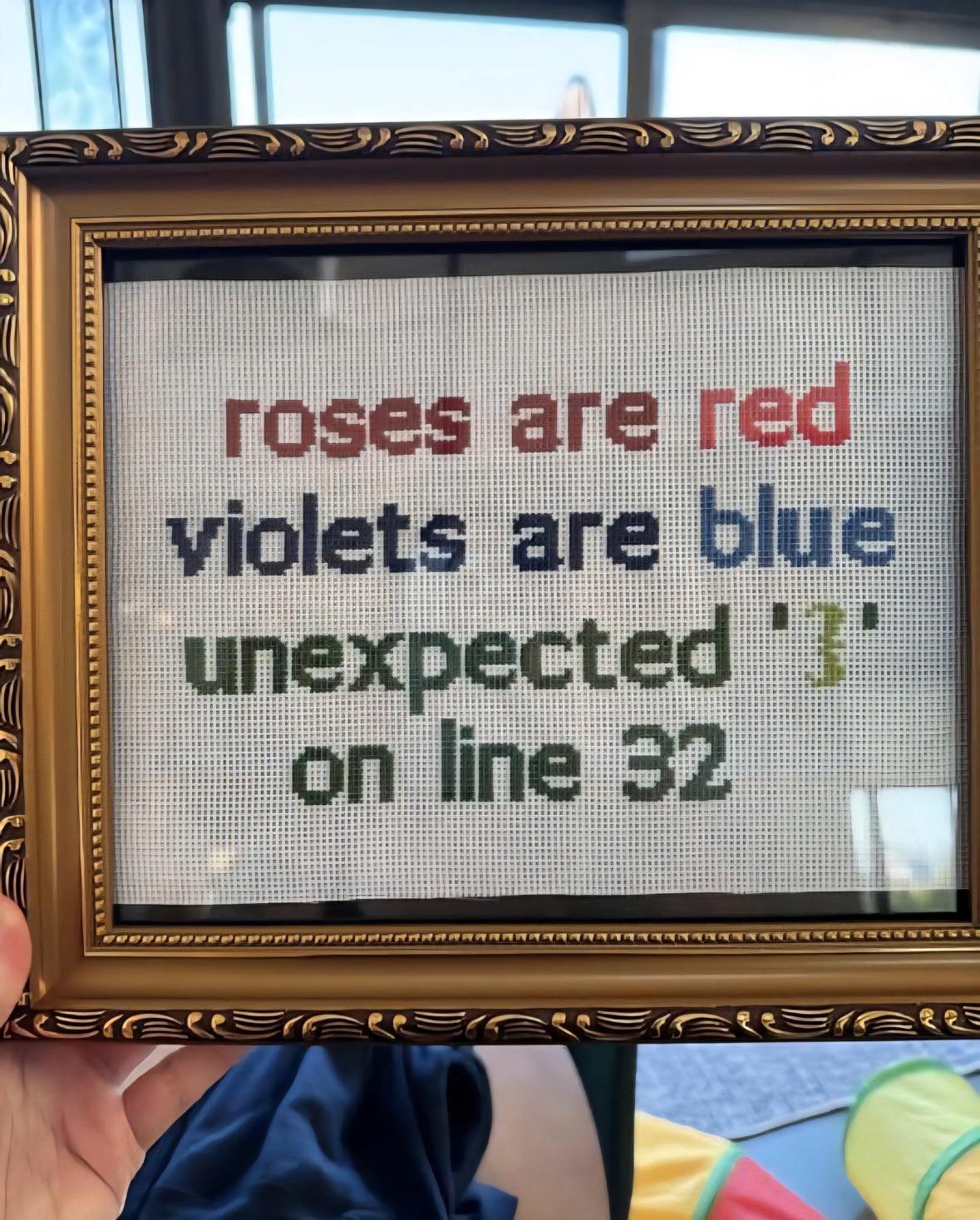
Roses Are Red, Segfaults Are Blue

Roses Are Red, Segfaults Are Blue
The most elegant way to commemorate a buffer overflow. Nothing says "I love you" like crashing production with a string that's too damn long for a 32-bit register. That cross-stitch belongs in every security team's office, right next to the framed CVEs they've patched. Bonus points if you've ever had to explain to management why their Valentine's Day promotion brought down the entire payment system.

OffiGo 63 Inch L Shaped Electric Standing Desk with Drawers, Height Adjustable Large Desk with Power Outlets, Sit Stand Table, Writing Computer Desk for Home, Office, Workstation, Rustic Brown

OffiGo 63 Inch L Shaped Electric Standing Desk with Drawers, Height Adjustable Large Desk with Power Outlets, Sit Stand Table, Writing Computer Desk for Home, Office, Workstation, Rustic Brown
More Storage Space: This OffiGo standing desk comes with 4 fabric drawers, providing more storage space for office and study accessories and keeping your desktop more tidy and clean · L-Shaped Worksp…

Ok Sure But With Additional Steps

Ok Sure But With Additional Steps
The compiler's solution to fitting a 64-bit number into a 32-bit processor? Just use two chairs. Pure elegance. This is basically how your compiler handles it - splitting that chunky 64-bit integer into two 32-bit pieces and hoping nobody asks questions about the implementation details. The overhead is minimal, just like those flimsy plastic chairs. And yes, this is exactly why your code sometimes runs slower than expected on older hardware. Your compiler is just sitting there, awkwardly balancing on two chairs, pretending everything is fine.

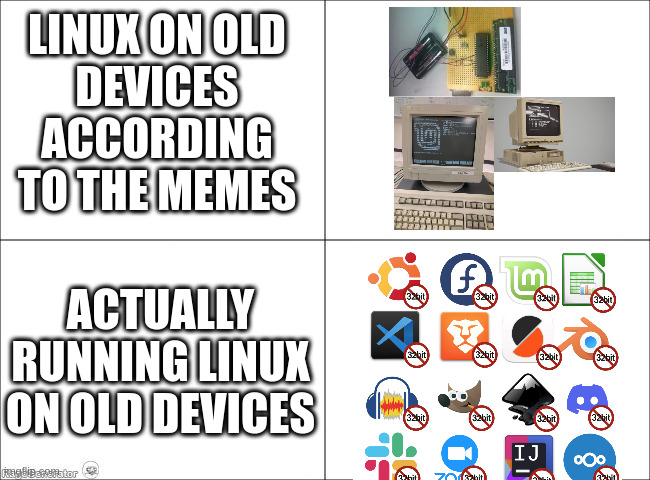
Trying To Setup An Old 32-Bit Only Netbook As An Ultra Mobile Development Device

Trying To Setup An Old 32-Bit Only Netbook As An Ultra Mobile Development Device
The expectation vs reality of reviving ancient hardware with Linux is just brutal. Top panel: "Linux will breathe new life into your Jurassic-era netbook!" Bottom panel: "Oh, you wanted to actually use software? How adorable." Every modern development tool, IDE, and even basic apps giving you the middle finger with compatibility issues. That 32-bit processor might as well be a museum piece trying to run today's 64-bit world. It's like bringing a spoon to a gunfight and wondering why you can't shoot anything.

Integer Overflow: The Time Bomb Ticks

Integer Overflow: The Time Bomb Ticks
Oh look, it's the 2038 problem in action! When you store time as a signed 32-bit integer, you're basically giving your system an expiration date of January 19, 2038. After that? Total digital apocalypse. The poor guy is staring at a calendar showing both December 1901 and January 2038 because his phone just time-traveled to the edges of its numerical universe. When that integer counter maxes out, systems will wrap around to negative numbers—hello 1901, goodbye sanity! Somewhere, a COBOL programmer is muttering "Y2K was just a practice round."

Maximum Punishment: Integer Overflow Edition

Maximum Punishment: Integer Overflow Edition
When you ask for a 32-bit integer but the judge gives you a signed one. That ~32,768 years sentence is suspiciously close to 2^15, which is exactly what happens when you overflow a signed 16-bit integer. The criminal probably wanted an unsigned int that goes up to 65,535, but instead got the negative range too. Classic rookie mistake. Should've specified the data type in the plea bargain.

I Technically Never Wished For More Wishes

I Technically Never Wished For More Wishes
This programmer just executed the most beautiful integer overflow exploit in history! First wishing for wishes to be counted as an unsigned 32-bit integer (max value: 4,294,967,295 wishes), then ensuring the subtraction happens after the wish completes (avoiding the "no more wishes" rule), and finally wishing for 0 wishes which causes an underflow to 4,294,967,295! The genie's face says it all - he just got absolutely destroyed by a classic buffer overflow vulnerability. This is what happens when you don't sanitize your inputs, magical beings!