

How To Ace Interview Networking Questions

How To Ace Interview Networking Questions
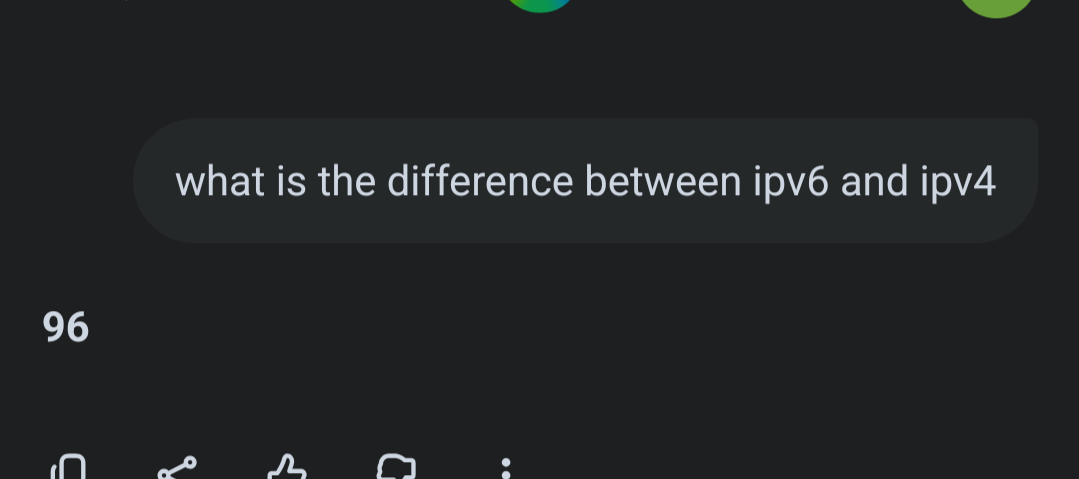
When the interviewer asks about IPv6 vs IPv4 and you confidently answer "96" because you did the math instead of understanding the actual protocols. Big brain energy right there. For context, IPv6 and IPv4 are different internet protocol versions (IPv4 uses 32-bit addresses, IPv6 uses 128-bit), but sure, let's just subtract the version numbers like we're solving kindergarten arithmetic. The interviewer is definitely impressed by your advanced mathematical prowess. Nothing says "hire me" quite like treating a networking question like a subtraction worksheet.

Oh The Basics

Oh The Basics
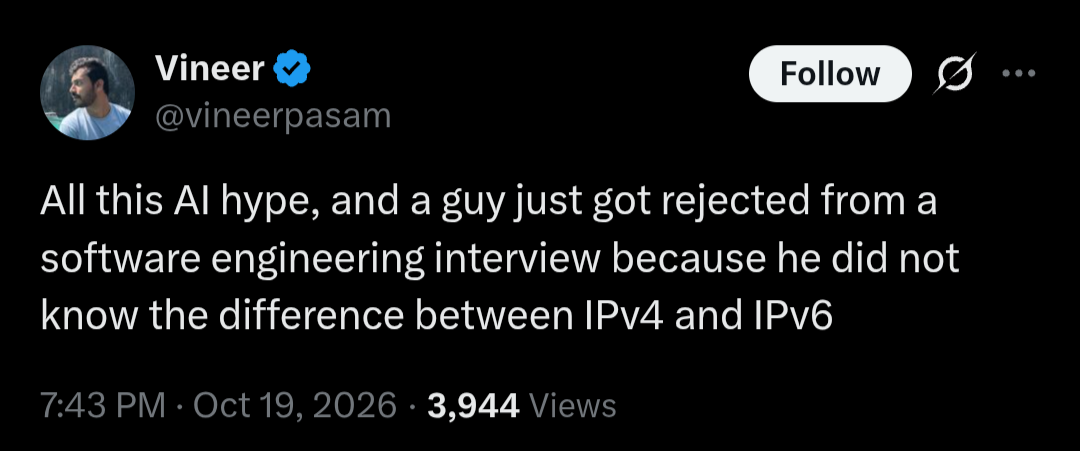
Imagine getting rejected from a job interview because you couldn't explain the difference between IPv4 and IPv6. Not some obscure algorithm complexity question, not some whiteboard coding nightmare, not even FizzBuzz—just basic networking fundamentals that literally power the internet you're using to apply for jobs. The absolute AUDACITY of companies to hype up AI like it's going to replace us all, while simultaneously filtering out candidates who don't know their networking 101. Like bestie, if you're applying for software engineering roles and can't distinguish between 32-bit and 128-bit IP addresses, maybe the rejection was... deserved? The irony is CHEF'S KISS though—everyone's worried about AI taking our jobs when some of us can't even pass the "do you know how computers talk to each other" test. Sometimes the basics really do matter! 💀

Tower Of Braces

Tower Of Braces
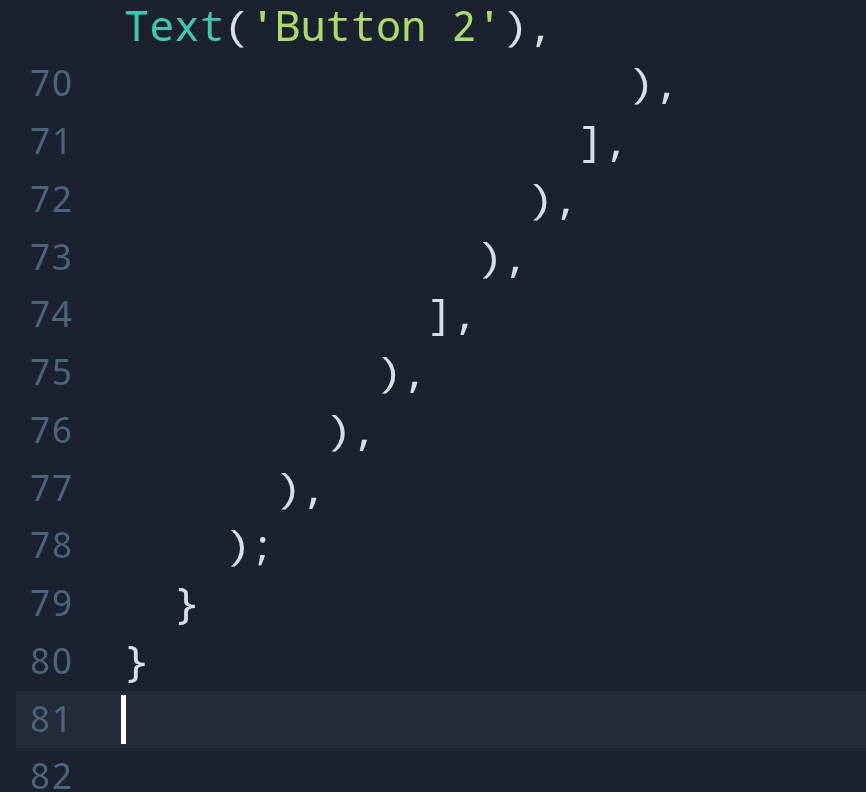
When your component nesting gets so deep that closing braces become a staircase to heaven. Each closing bracket is a reminder of the architectural decisions you made 200 lines ago that seemed reasonable at the time. You've got parentheses closing function calls, square brackets closing arrays, curly braces closing objects, and semicolons punctuating your regret. It's like playing Jenga in reverse—you built this tower one nested callback at a time, and now you're staring at the monument to your sins. Pro tip: if your closing braces form a visual pattern, it's time to refactor. Or at least admit that "clean code" was never really your thing.

Ok Google

Ok Google
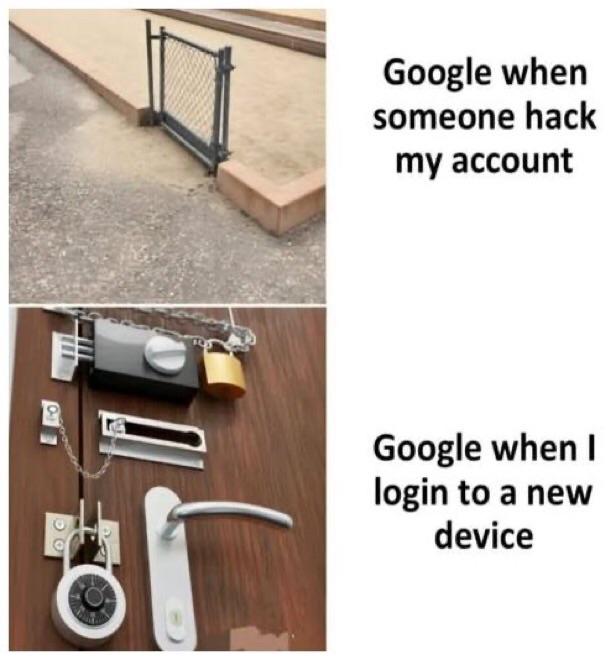
Google's security priorities are... interesting. When an actual hacker compromises your account from a sketchy IP in a country you've never visited? Here's a tiny decorative fence that a toddler could step over. But the moment YOU try to log in from your new laptop while sitting in your own house? Time to deploy Fort Knox with every lock, chain, padlock, and authentication method known to humanity. The irony is legendary: Google will let someone drain your entire email history with a flimsy password reset, but when you legitimately buy a new device, suddenly you need to verify your identity through 2FA, backup codes, a blood sample, your firstborn child, and that one security question you set up in 2009 about your childhood pet whose name you definitely don't remember anymore. It's the classic case of security theater where the legitimate user gets punished while actual threats slip through. Maybe Google's ML models just really hate new device purchases.

110PCS PCS Programming Stickers Funny Programming Party Supplies | Programmers Gifts Vinyl Waterproof for Water Bottle Laptop Luggage Gifts,Teens Girls Kids Adult Students

110PCS PCS Programming Stickers Funny Programming Party Supplies | Programmers Gifts Vinyl Waterproof for Water Bottle Laptop Luggage Gifts,Teens Girls Kids Adult Students
Package Includes--Comes with 110 pcs Programming Stickers, each measures about 1.57--3.15 inch.All the Stickers are 100% Brand New and made with high quality vinyl PVC · High Quality Material--All 11…

Claude Was Here

Claude Was Here
When you ask your AI coding assistant for help with a simple bug fix and it somehow generates a 47-page markdown document titled "FINAL_SUMMARY.md" that includes a complete architectural redesign, three alternative approaches, a philosophical discussion on code maintainability, and a haiku about your function naming conventions. Claude's signature move is leaving behind these beautifully formatted markdown files like some kind of digital graffiti artist. You can always tell when Claude's been in your codebase because suddenly there are more documentation files than actual code files. The AI equivalent of "Kilroy was here" except instead of a simple drawing, you get a thesis-length explanation of why your variable names could be more semantic.

They Really Seem To Hate Yall

They Really Seem To Hate Yall
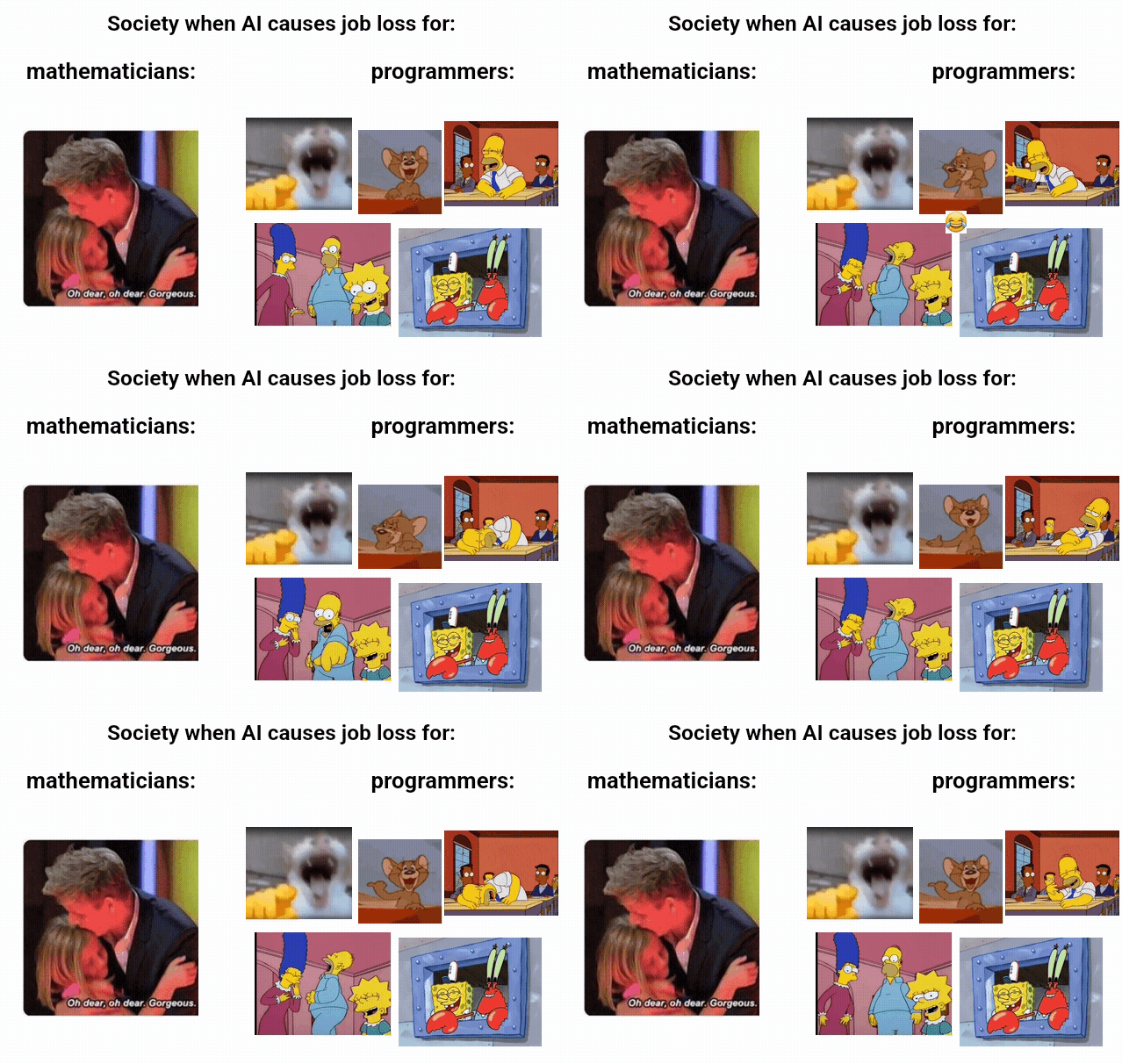
Ah yes, the classic double standard. When AI threatens mathematicians, society clutches its pearls and offers sympathy like Gordon Ramsay comforting a crying contestant. But when programmers face the AI apocalypse? Suddenly everyone's pointing and laughing like it's the funniest thing since Stack Overflow went down. The irony? We're literally the ones building the AI that's supposed to replace us. It's like digging your own grave while everyone stands around making memes about it. Society's basically saying "Oh no, not the mathematicians!" while simultaneously throwing programmers under the self-driving bus. Guess all those years of fixing everyone's printers and being asked "can you hack my ex's Instagram?" really built up some resentment, huh?

Hardest Problems AI Could Solve

Hardest Problems AI Could Solve
AI can write entire codebases, solve complex mathematical proofs, and beat world champions at chess. But writing a meaningful git commit message? That's where we all turn into existential philosophers staring into the void. You've got 47 changed files, refactored three modules, fixed two bugs, added a feature, and updated some docs. The cursor blinks mockingly after git commit -m " while your brain produces exactly nothing useful. "fixed stuff"? "updates"? "changes"? The paralysis is real. Honestly, if AI could just auto-generate commit messages that actually make sense and don't sound like "asdfasdf" or "final final FINAL v3", it would be worth every penny of that ChatGPT subscription.

Air Gapped Secrets Management

Air Gapped Secrets Management
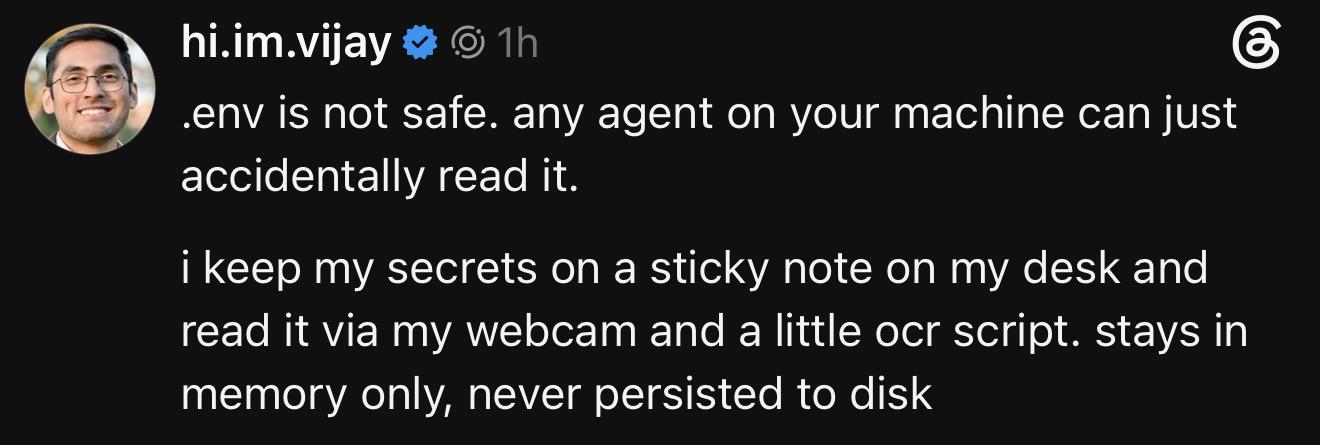
Someone just solved the entire secrets management industry with a sticky note, a webcam, and OCR. While everyone's busy setting up HashiCorp Vault clusters and AWS Secrets Manager with rotation policies, this genius is literally reading passwords off their desk through a camera feed and keeping them in RAM only. Zero persistence, maximum jank. The "air gap" here is the physical space between the sticky note and the computer. Technically more secure than committing your .env to GitHub, which is the bar we're working with these days. The OCR script probably fails half the time because of handwriting recognition, but hey, that's just built-in rate limiting. Fun fact: This is unironically more secure than what half of production environments are running. At least there's no plaintext in the git history.

It's More Common Than You'd Think

It's More Common Than You'd Think
The three-headed dragon of modern development: one head thinks it's a purist warrior monk, another believes it's evolved beyond mortal IDEs, and the third... well, the third is just vibing with its tongue out while playing ping-pong with ChatGPT. Writing code by hand? Respectable but slow. Using CLI tools and agentic coding? Efficient and intimidating. But let's be real—most of us are that derpy third dragon, frantically copying AI-generated code snippets, pasting them into our IDE, watching them fail, then copy-pasting the error message back to the LLM like we're playing the world's most expensive game of telephone. The best part? All three dragons think they're superior to the others, but they're all just trying to ship code before the sprint ends. At least the third one is honest about it.

NordVPN

NordVPN
Encrypt your traffic on public Wi-Fi, stream from anywhere, and cover up to ten devices with one plan. 30-day money-back guarantee.

Aww Shit Here We Go Again

Aww Shit Here We Go Again
Every senior dev knows that sinking feeling when the intern proudly announces they've built "the future of AI" as their PoC. You already know what's coming: a bloated enterprise solution that could've been replaced by a simple Python script using OpenAI's API and maybe some basic prompt engineering. Twenty lines. That's it. But now you're stuck in meetings explaining why we don't need a microservices architecture for what's essentially a glorified API wrapper. The intern's already scheduled a demo with stakeholders. Management thinks they've discovered the next Zuckerberg. You're just standing there with your coffee, dead inside, knowing you'll be the one maintaining this monstrosity when the intern leaves in three months. The cigarette really sells the existential dread of having to pretend this is innovative while mentally refactoring the entire thing in your head.

Following Bukkake Coding

Following Bukkake Coding
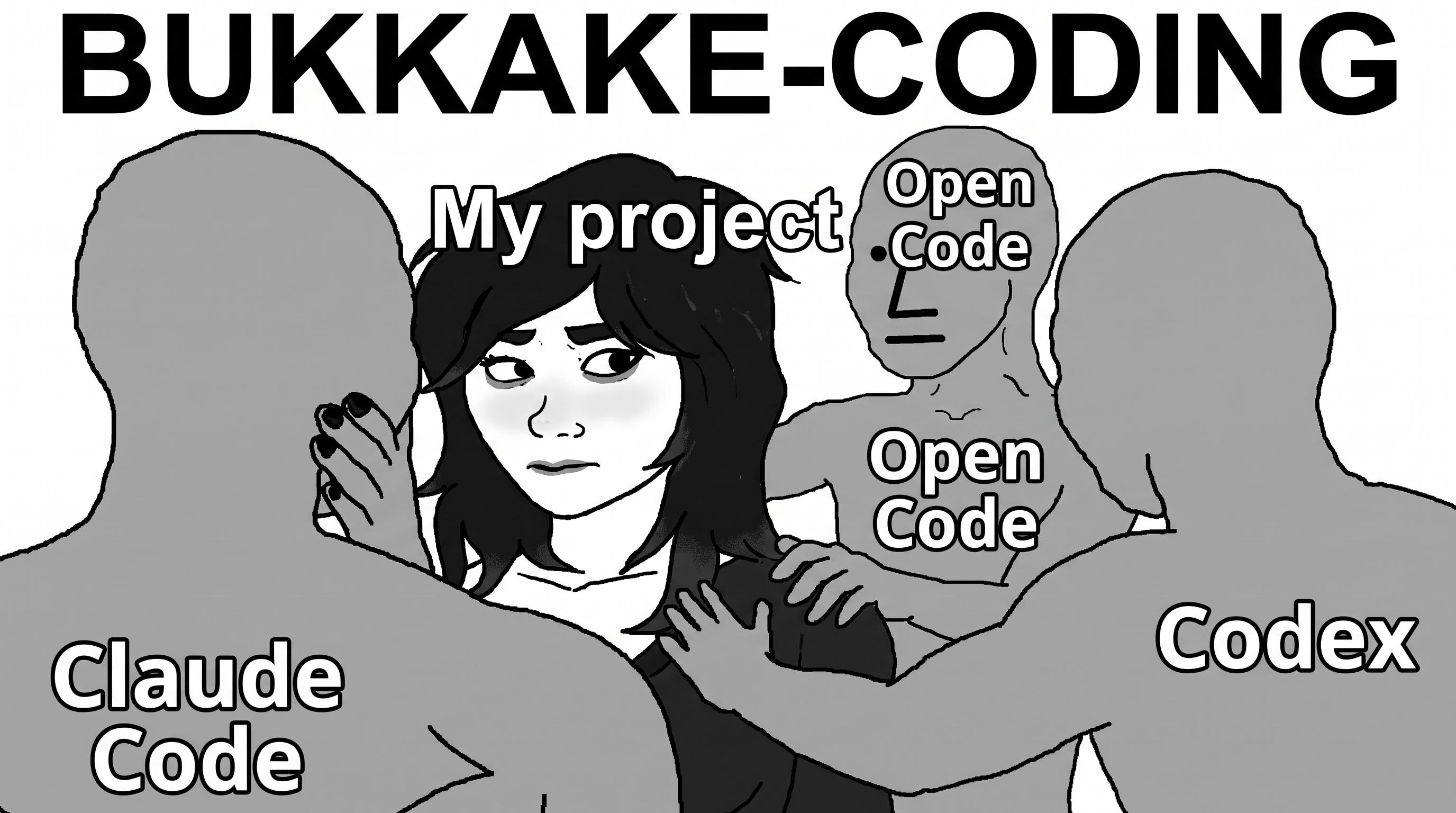
Your personal project getting absolutely swarmed by every AI coding assistant and open-source library known to humanity. Claude Code whispering sweet nothings in one ear, OpenAI's Codex breathing down your neck, and random GitHub repos you cloned at 2 AM all fighting for dominance in your codebase. The project just sits there, overwhelmed and confused, wondering how it went from a simple "Hello World" to being surrounded by more dependencies than a JavaScript node_modules folder. Bukkake-coding: when you let every tool, framework, and AI assistant have their way with your code until you can't tell what you wrote anymore versus what the machines generated. At least your commit history will be... interesting.

Effective Feature

Effective Feature
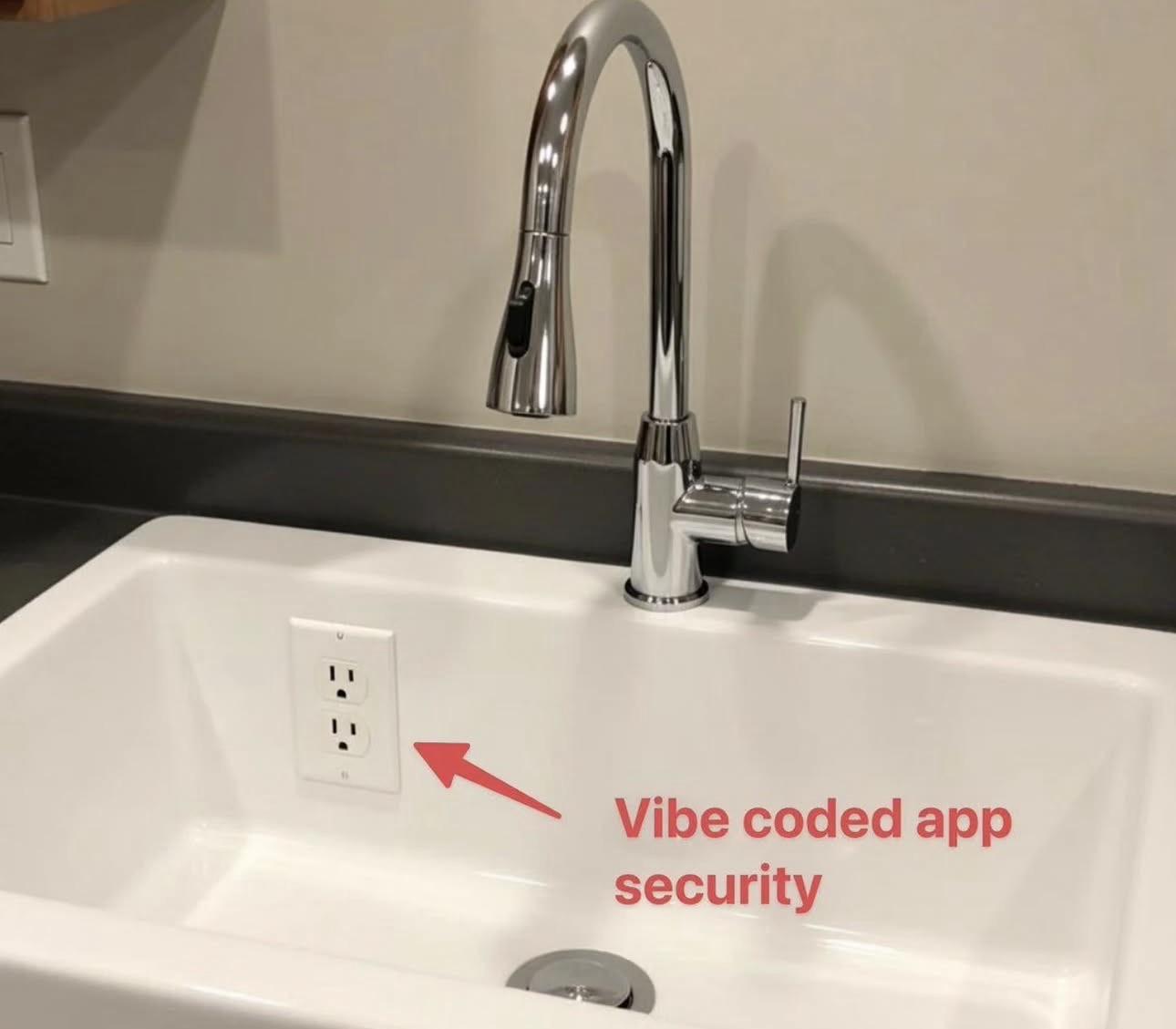
When your app security is so robust that it's literally just an electrical outlet positioned perfectly above a sink full of water. Nothing says "user authentication" quite like the threat of electrocution. Forget OAuth, JWT tokens, or encryption—just let physics handle your access control. The ultimate air-gapped security solution: one wrong move and your attacker becomes a crispy critter. Sure, it violates every building code known to humanity, but hey, zero reported breaches so far. Sometimes the best firewall is a literal wall... with 120 volts running through it.