Unity Memes

Posts tagged with Unity
Writing My Own Game Engine Is Fun

Writing My Own Game Engine Is Fun
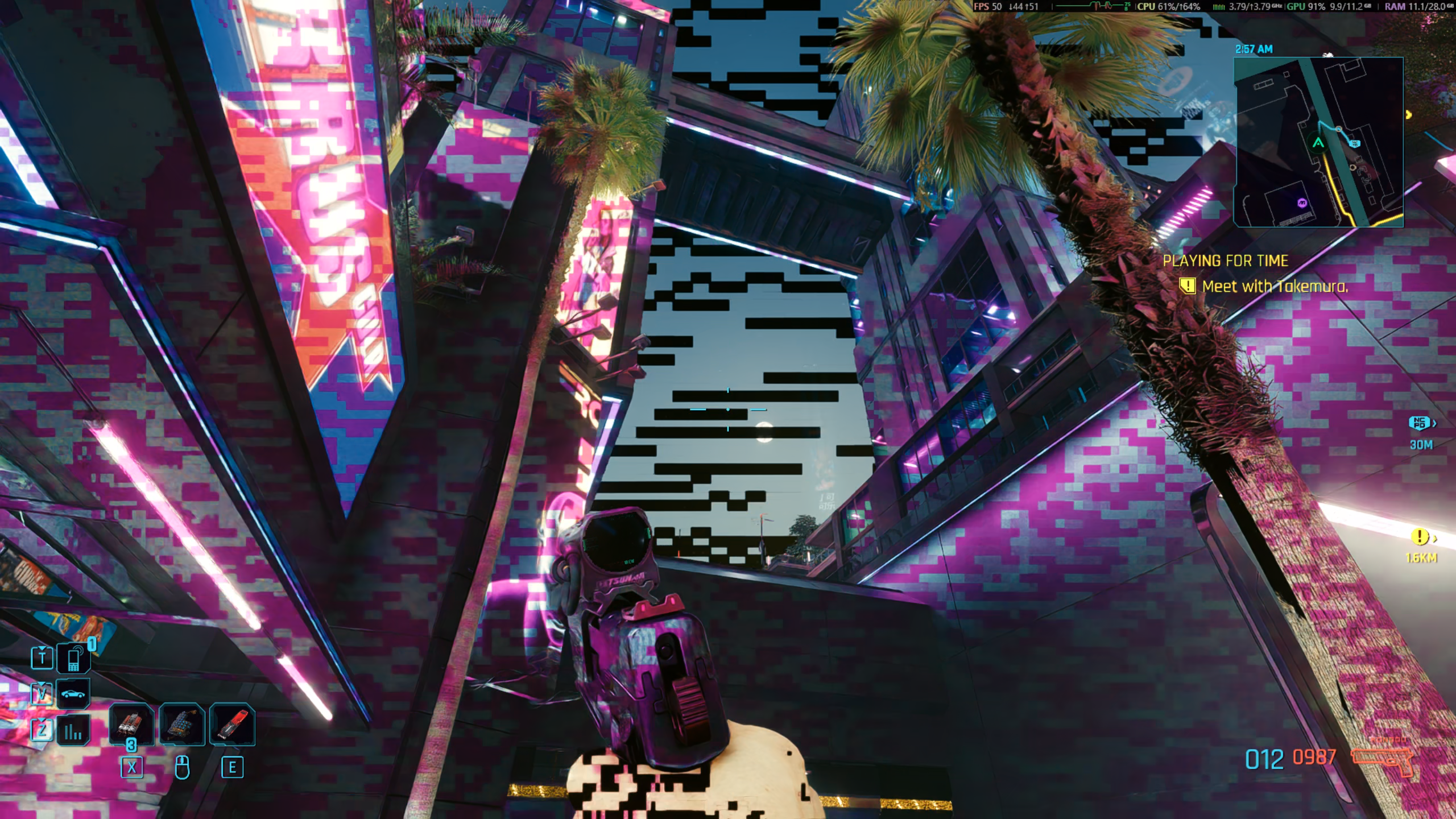
Every game dev's tragic love story: You start building your dream game, but then that sweet, sweet temptation of writing your own engine from scratch whispers in your ear. Next thing you know, you're six months deep into implementing quaternion math and custom memory allocators while Unity and Unreal are RIGHT THERE, fully functional, battle-tested, and ready to go. But noooo, you just HAD to reinvent the wheel because "it'll be more optimized" and "I'll learn so much." Spoiler alert: your game still doesn't exist, but hey, at least you have a half-working physics engine that crashes when two objects collide at exactly 47 degrees!

I Have Seen The Light

I Have Seen The Light
That beautiful moment when you discover scriptable objects and suddenly every piece of data in your project becomes one. Health values? Scriptable object. Enemy stats? Scriptable object. That random string you hardcoded? Believe it or not, also a scriptable object. It's like discovering design patterns for the first time - you become the person who sees nails everywhere because you just got a shiny new hammer. Next thing you know, you're refactoring your entire codebase at 2 AM because "everything should be data-driven." The butterfly representing "any data I need to create, ever" is perfect because it captures that innocent, pure beauty of a solution that seems to solve all your problems... until six months later when you have 47 scriptable objects and can't remember which one controls the jump height.

Multi Platform Mobile Development

Multi Platform Mobile Development
Flutter developers and React Native developers screaming at each other about which framework is superior while Unity developers sit there with galaxy brain energy, casually shipping their mobile apps with a game engine designed for 3D rendering. Because nothing says "efficient mobile development" quite like bringing an entire physics engine to display a login form. To be fair, if your app needs to run on iOS, Android, a smart fridge, and probably a toaster, Unity's got you covered. Overkill? Maybe. Does it work? Unfortunately, yes.

*Googles "How Do I Finish A Game"*

*Googles "How Do I Finish A Game"*
The beautiful bond between indie devs drowning in feature creep and gamers with 847 games in their Steam library but "nothing to play." You start with a simple platformer, add procedural generation, then multiplayer, then crafting, then a romance system... and suddenly it's been 4 years and you're still "polishing the main menu." Meanwhile gamers buy your early access title, play 2 hours, say "I'll come back when it's done," and never do. It's the circle of life, except nobody actually completes the circle. Fun fact: Studies show only about 20-30% of gamers finish the games they start. Indie devs have similar completion rates for their projects. It's almost like they're made for each other.

Sorry, Can't Do Scarves

Sorry, Can't Do Scarves
Game devs will literally implement a complex physics engine with ragdoll mechanics, particle systems for explosive lava effects, and procedural demon summoning algorithms, but adding a cloth simulation for a scarf? That's where they draw the line. The complexity hierarchy in game development is beautifully backwards: rendering a hellscape with real-time lighting and shadows? No problem. Making fabric drape naturally over a character model? Suddenly we're asking for the moon. This perfectly captures the reality that what seems "easy" to implement versus what's actually easy are two completely different universes. Cloth physics is notoriously difficult—it requires sophisticated vertex deformation, collision detection, and performance optimization to not tank your frame rate. Meanwhile, spawning a giant demon is just instantiating a prefab with some particle effects. The demon doesn't need to realistically interact with wind or character movement; the scarf does.

"It Would Be So Cool To Make My Own Game" Vs "I'M Burned Out And Exhausted"

"It Would Be So Cool To Make My Own Game" Vs "I'M Burned Out And Exhausted"
The journey from "I'm gonna make the next indie masterpiece!" to "why did I choose violence?" in visual form. One side is literally staring into the abyss of game development hell—physics engines, collision detection, asset management, and the eternal question of "why won't this sprite just MOVE CORRECTLY?" Meanwhile, the other side is blissfully daydreaming about their future Steam bestseller, completely unaware of the nightmare that awaits. It's the difference between innocence and trauma, between hope and despair, between "how hard could it be?" and "I haven't slept in 72 hours and my main character is clipping through the floor." Game dev will humble you faster than a failed production deploy on a Friday afternoon.

My Game Flopped So Hard It Is Hilarious

My Game Flopped So Hard It Is Hilarious
The indie game dev journey in four panels of pure pain. You start out following all the "right" advice: network at conventions, get those sweet industry validation points, build hype. Then you land a publisher and think you've made it—only to discover they're broke and have the marketing budget of a lemonade stand. Plot twist: turns out your own marketing skills are somehow even worse than theirs, and you're so introverted you'd rather debug memory leaks than talk to humans. The final panel hits different though. Two seconds of TikTok watch time? Reddit downvoting your promo posts into the shadow realm? Single. Digit. Player. Count. That's not just failure—that's your game being so invisible it might as well not exist. At least when games crash, people had to run them first. This is the gamedev equivalent of shouting into the void and the void actively scrolling past you. Fun fact: The average indie game on Steam gets around 1,500 sales in its lifetime. So if you're hitting single digits, congratulations—you've achieved statistical improbability in the wrong direction.

When People Are Describing The Game They're Working On

When People Are Describing The Game They're Working On
You know that one indie dev friend who won't shut up about their "cozy farming sim with roguelike elements"? Yeah, they've used the word "cozy" approximately 47 times in the last 10 minutes. The gaming industry has collectively decided that "cozy" is the magic word that makes investors throw money at you and players smash that wishlist button. It's gotten to the point where even survival horror games are being pitched as "cozy existential dread simulators." The real kicker? It works. Slap "cozy" on literally anything—fishing, cooking, tax filing, debugging segmentation faults—and suddenly you've got a viable game concept. The word has been so overused it's lost all meaning, but game devs keep reaching for it like it's the only adjective in the English language. Meanwhile, the rest of us are sitting here wondering when "cozy battle royale" is gonna drop.

Just About To Get There *Fingers Crossed*

Just About To Get There *Fingers Crossed*
Game dev is basically 90% debugging physics engines, fixing collision meshes, and wrestling with asset pipelines... and then maybe 10% actually making the game enjoyable. You spend months building core systems, refactoring spaghetti code, and optimizing frame rates, all while dreaming of that magical moment when you finally get to implement the creative, satisfying gameplay mechanics. But just like this eternal chase, the "fun part" keeps rolling away from you. Every time you think you're close, surprise! Your animation state machine breaks, Unity decides to corrupt a prefab, or you discover a memory leak that tanks performance. The ball just keeps... rolling... away. The sweat drop in the second panel? That's the exact moment you realize you've been in development for 8 months and still haven't implemented the core gameplay loop that made you excited about the project in the first place.

Sometimes It's Really Fun To Add New Stuff! Other Times... Not So Much. My Mood Can Be Fickle

Sometimes It's Really Fun To Add New Stuff! Other Times... Not So Much. My Mood Can Be Fickle
The creative high of brainstorming features hits different than the soul-crushing grind of actually building them. You're out here imagining particle effects, procedural generation, and multiplayer lobbies like you're the next Kojima. Then reality kicks in: collision detection is broken, your state management is a mess, and you've been debugging why the jump animation plays backwards for three hours. Every game dev knows that daydreaming phase where everything seems possible and you're basically a genius. Then you open your IDE and remember you still haven't fixed that bug from two sprints ago. The gap between vision and execution is where dreams go to compile with 47 warnings.

Average Workday Of A Game Developer, Right?

Average Workday Of A Game Developer, Right?
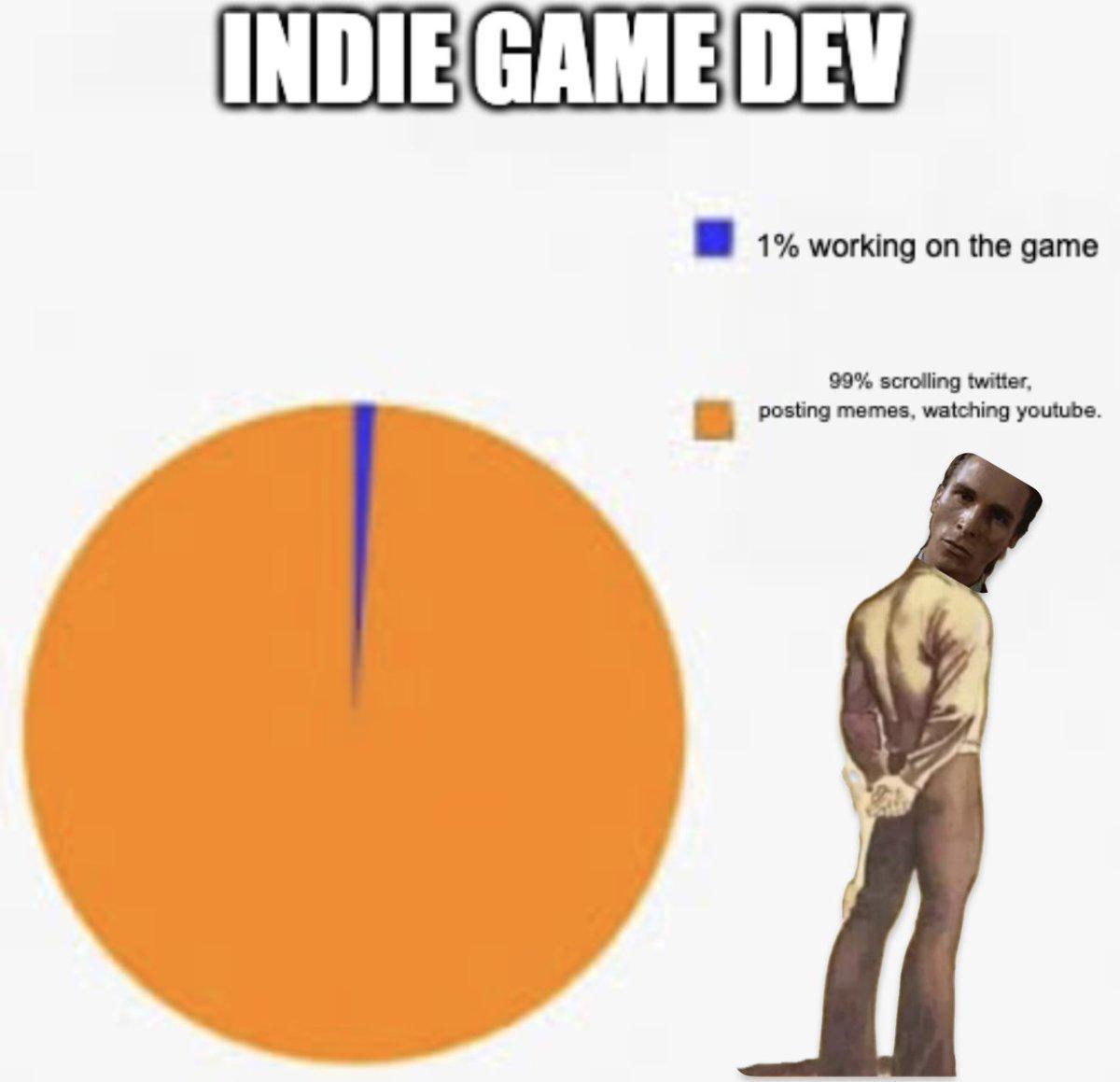
Oh, you thought game development was about creating cool mechanics and designing epic levels? THINK AGAIN, SWEETIE. It's actually 95% archaeological excavation trying to understand why that ONE feature that's been working flawlessly since February suddenly decided to throw a tantrum and die for absolutely NO REASON. The tiny sliver for "working on new features" is honestly generous. That's probably just the 15 minutes between your morning coffee and the moment you discover that the jump mechanic now makes characters teleport into the void. The rest? Pure detective work, except the murder victim is your sanity and the killer is your own code from three months ago. Welcome to game dev, where "it works on my machine" becomes "it worked for six months and now it doesn't" and nobody knows why. The mystery deepens, the deadline approaches, and that new feature you wanted to build? Yeah, maybe next quarter.

Why Did You Choose Indie Game Dev Over A Real Job?

Why Did You Choose Indie Game Dev Over A Real Job?
So your CS professor is dangling that sweet $55k starting salary like it's supposed to be tempting, but you're sitting there contemplating a career in game dev where you'll survive on ramen and false hope for the first five years. The guy in the meme is holding that dollar bill with the enthusiasm of someone who just realized they're about to trade financial security for the privilege of debugging Unity physics at 2 AM while their game gets 3 downloads on Steam. But hey, at least you'll be doing what you love, right? Who needs a stable income when you can spend months perfecting pixel art that 12 people will see? The real kicker is that $55k probably sounds like a fortune now, but wait until you're three years into your indie dev journey, living in your parents' basement, explaining to relatives that your game is "almost ready for early access." The passion is real though. Some dreams are worth chasing, even if your bank account disagrees.