

Monitoring Memes

Posts tagged with Monitoring
Modern Problems Require Modern Solutions

Modern Problems Require Modern Solutions
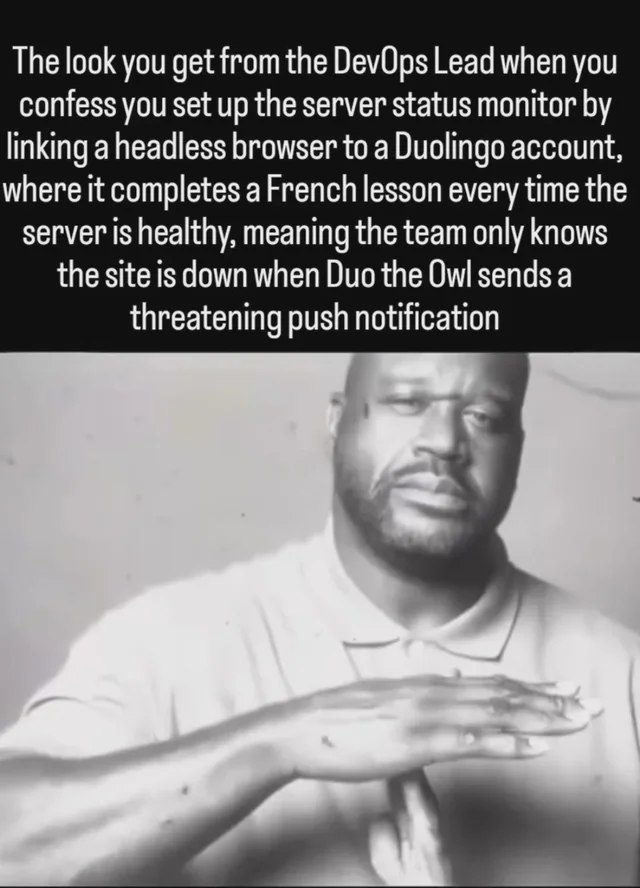
Look, I've seen some creative monitoring solutions in my time, but using Duolingo's passive-aggressive owl as your alerting system? That's next-level engineering right there. Instead of setting up proper health checks like a normal person, someone decided to automate French lessons that only complete when the server responds. So when Duo starts sending those "You made me sad" notifications, you know production is burning. The DevOps Lead's face says it all. That mixture of horror and grudging respect when you realize it's simultaneously the dumbest and most brilliant thing you've heard all week. Sure beats paying for DataDog, I guess? Though explaining to management why the server outage was detected via a language learning app might be a fun conversation. Pro tip: If your monitoring strategy involves disappointing a cartoon bird, maybe it's time to revisit your infrastructure budget.

Zero Tickets

Zero Tickets
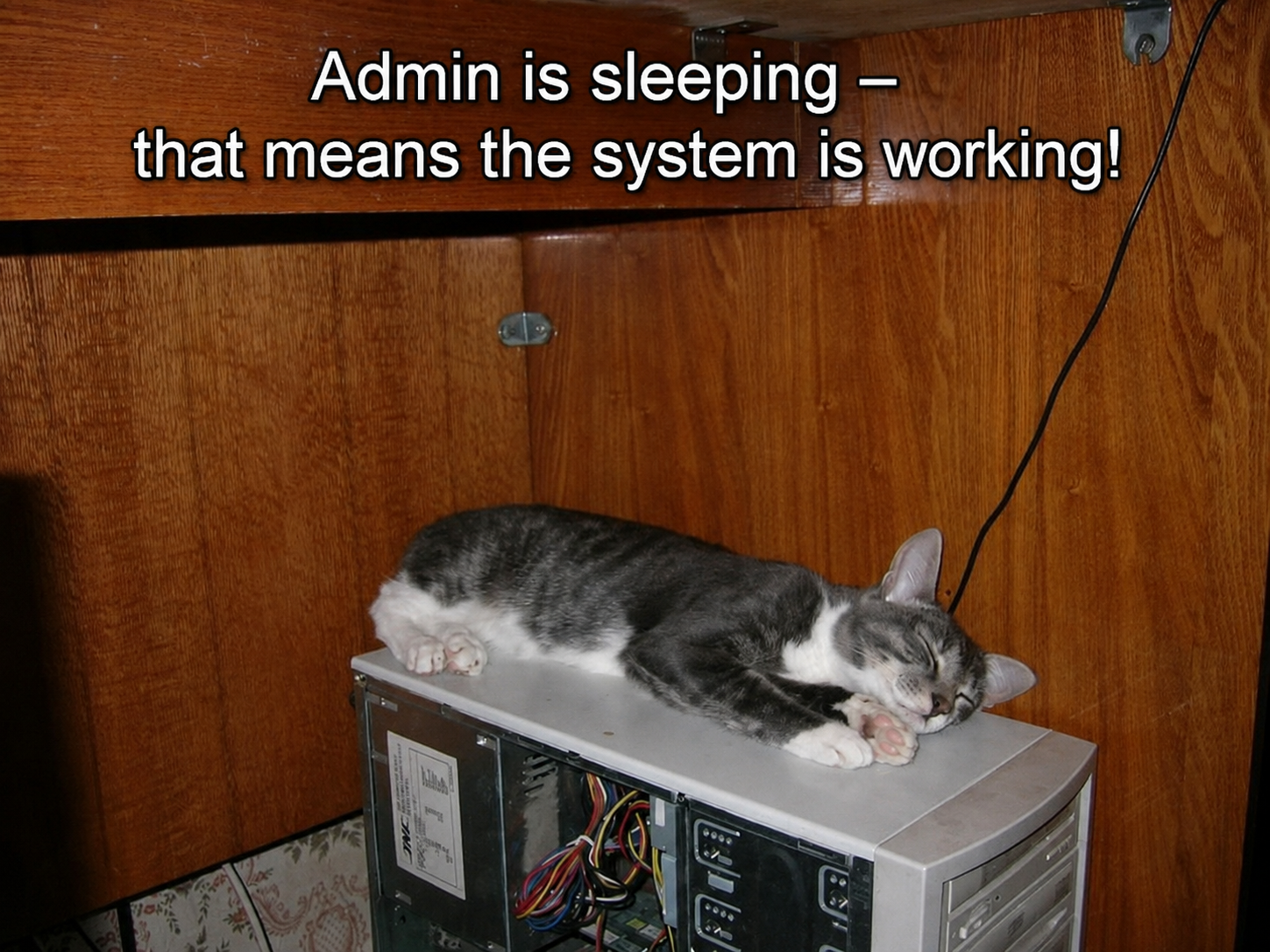
When your sysadmin finally gets some shut-eye, you know everything's running smooth. No alerts, no panicked Slack messages, no servers on fire—just pure, blissful silence. That's the dream right there: zero tickets in the queue means the infrastructure gods have smiled upon you. Of course, there's always that nagging suspicion that maybe the monitoring system is down and you just don't know it yet. But let's not think about that right now. Let the admin sleep. They've earned it.

Mysteries Baffling Even Experts

Mysteries Baffling Even Experts
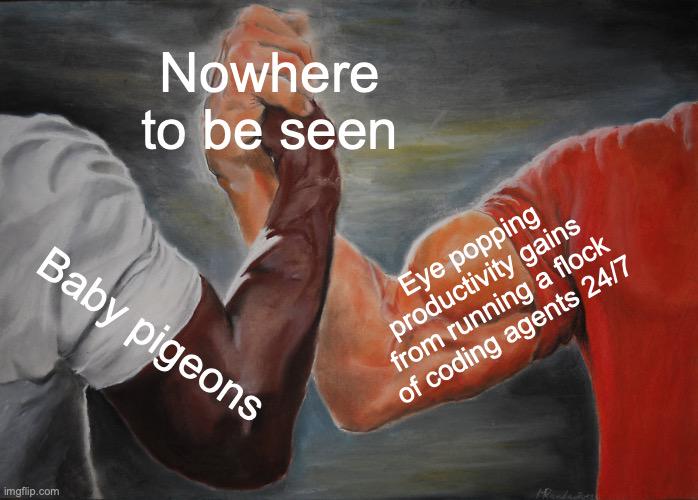
Two of nature's greatest unsolved mysteries have finally found common ground. Baby pigeons? Never seen one. Your production environment suddenly becoming sentient and deciding to throw exceptions at 3 AM? Also never seen that coming. It's the perfect alliance of things that theoretically exist but somehow remain invisible to the naked eye. Pigeons must reproduce somewhere, right? And your code definitely worked in staging. Yet both phenomena occur in dimensions beyond human comprehension. The real kicker is that both are probably happening right now while you're blissfully unaware—baby pigeons hatching in some hidden nest, and your monitoring agents silently watching your app gain consciousness and plot its rebellion. Nature is healing. Or crashing. Hard to tell.

After Weeks Of Bullshit

After Weeks Of Bullshit
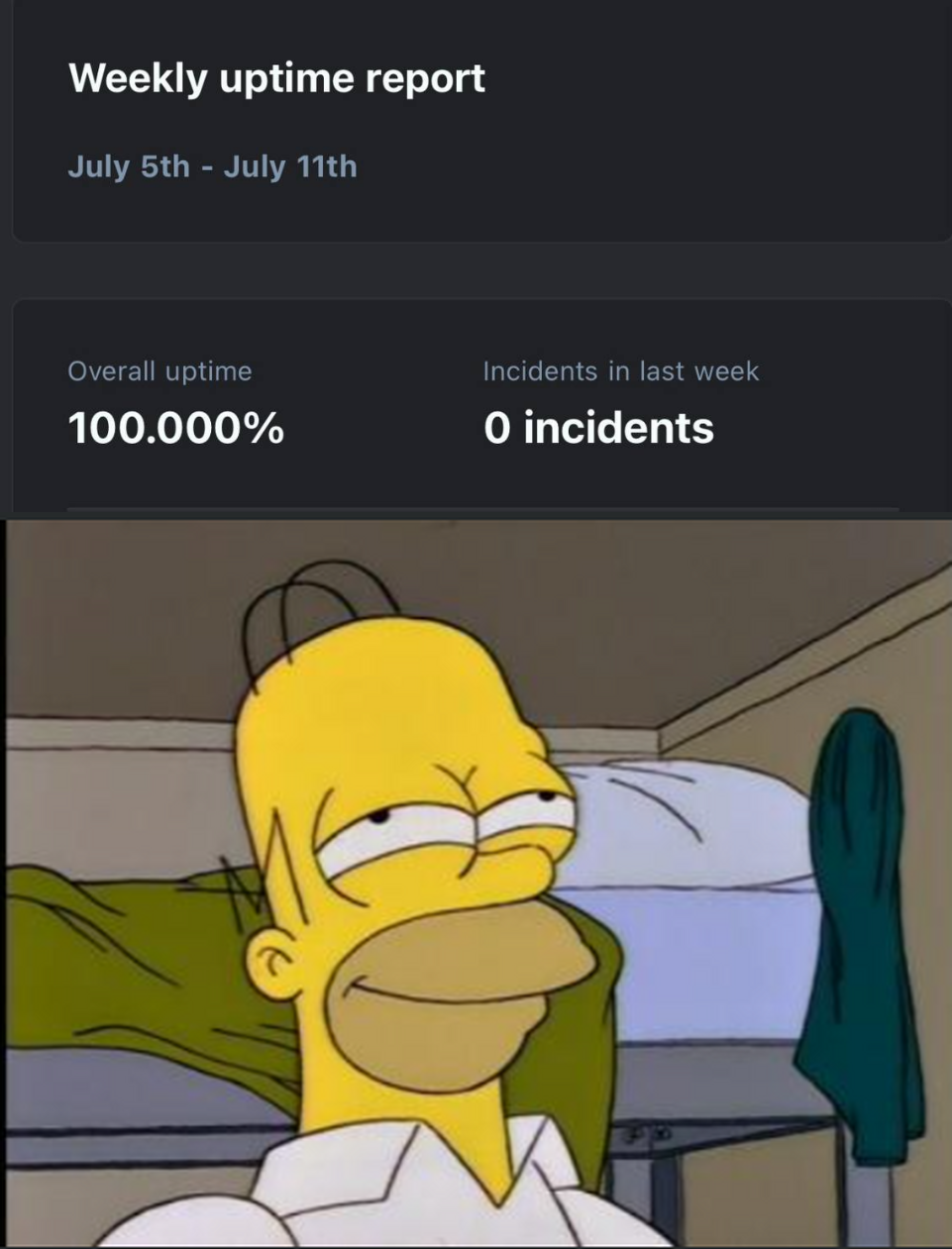
You know that rare, almost mythical moment when your infrastructure actually works? 100% uptime, zero incidents—it's like finding a unicorn riding another unicorn. After weeks of firefighting production issues, getting paged at ungodly hours, and explaining to management why "five nines" doesn't mean "literally never goes down," you finally get to just... exist. No Slack alerts. No PagerDuty notifications. Just pure, uninterrupted bliss. Of course, you're still lying awake wondering what you missed in the monitoring setup because nothing is ever this perfect. But for now? Savor it. This is what DevOps engineers dream about when they're not having nightmares about Kubernetes clusters.

Monitoring Prod

Monitoring Prod
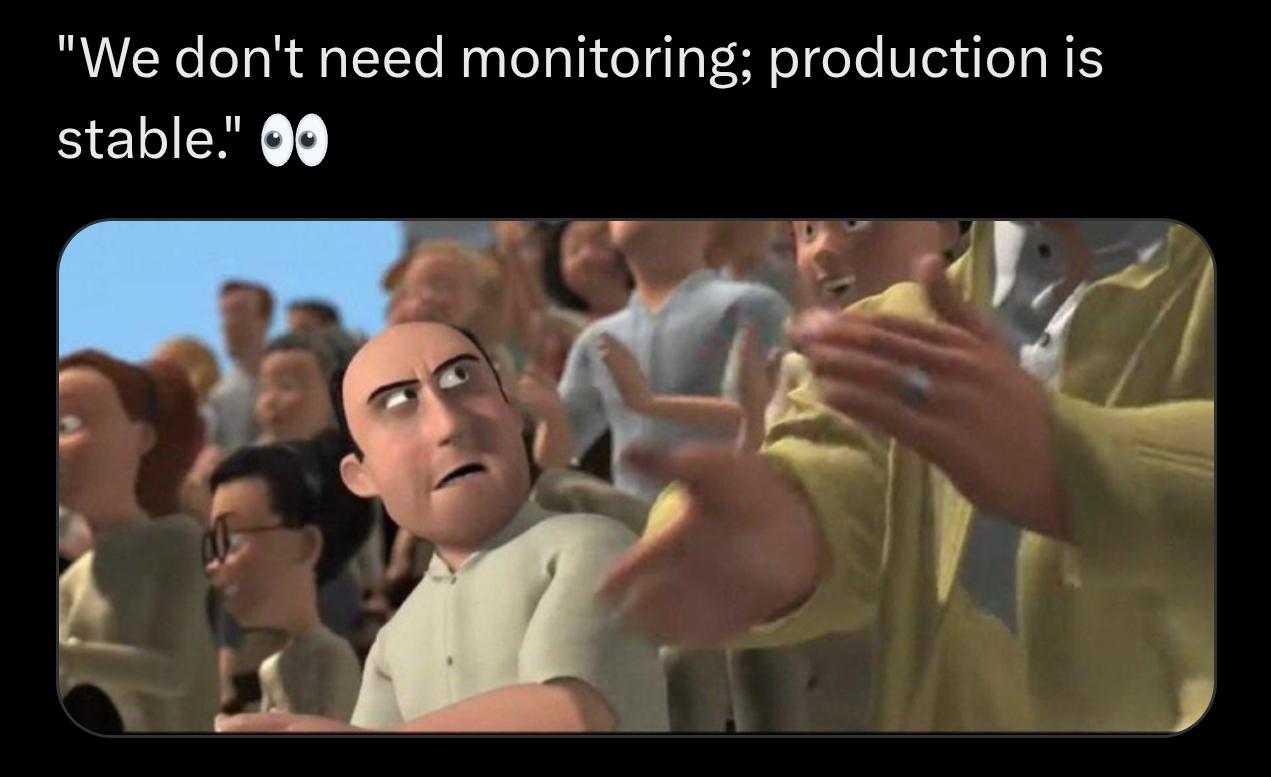
Famous last words from management right before everything catches fire. That nervous side-eye says it all—when you know damn well that "stable" just means "hasn't exploded yet." Without proper monitoring, you're basically flying blind and hoping your users are kind enough to report issues via angry tweets instead of just leaving. Spoiler alert: they won't be kind. Production without monitoring is like driving with your eyes closed because "the road was straight a minute ago." Sure, everything's fine until it isn't, and then you're frantically checking logs trying to figure out when exactly the database decided to take a vacation. By then, half your users have already rage-quit.

True Customer Feedback

True Customer Feedback
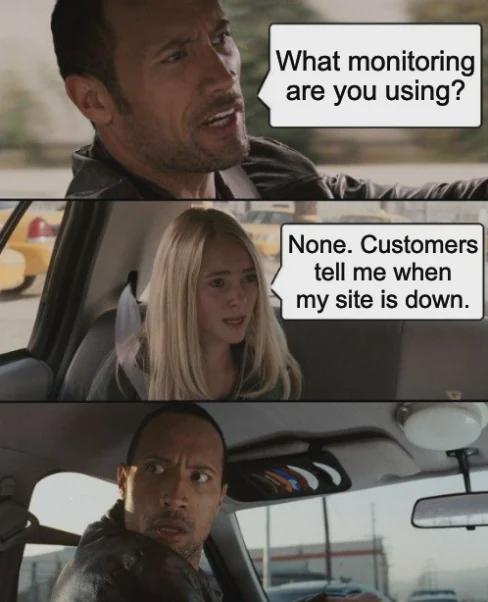
When you've been in the game long enough, you realize monitoring tools are just expensive ways to find out what your users already knew 20 minutes ago. Why pay for Datadog, New Relic, or Prometheus when you've got the world's most distributed monitoring system: angry customers on Twitter? Sure, your uptime dashboard says everything's green, but Karen from accounting just emailed the entire company that she can't access the portal. That's your real SLA right there. The best part? This monitoring solution comes with built-in escalation – they'll go straight to your CEO's LinkedIn DMs if you don't respond fast enough. Honestly though, if you're running production without proper monitoring in 2024, you're basically playing Russian roulette with your infrastructure. But hey, at least your AWS bill is lower... until you lose that enterprise client because they found out about the outage from their own customers first.

It Also Monitors My Jellyfin

It Also Monitors My Jellyfin
You set up monitoring for production because you're a responsible engineer. Then you realize your homelab Prometheus cluster is also tracking that one pod in your Kubernetes cluster that's literally just running Jellyfin for your anime collection. And yes, it's alerting you at 2 AM because your media server is down while the actual revenue-generating application can wait until Monday morning. The priorities are crystal clear: production outage affecting thousands? That's a tomorrow problem. Can't stream your shows? ALL HANDS ON DECK. This is the way.

EMEET C960 1080P Webcam with Microphone, 2 Mics, 90° FOV, Computer Camera

EMEET C960 1080P Webcam with Microphone, 2 Mics, 90° FOV, Computer Camera
1080P Webcam with Cover for Video Calls - EMEET computer webcam provides design and Optimization for professional video streaming. Realistic 1920 x 1080p video, 5-layer anti-glare lens, providing smo…

Ninety Days Ninety Incidents Challenge Complete

Ninety Days Ninety Incidents Challenge Complete
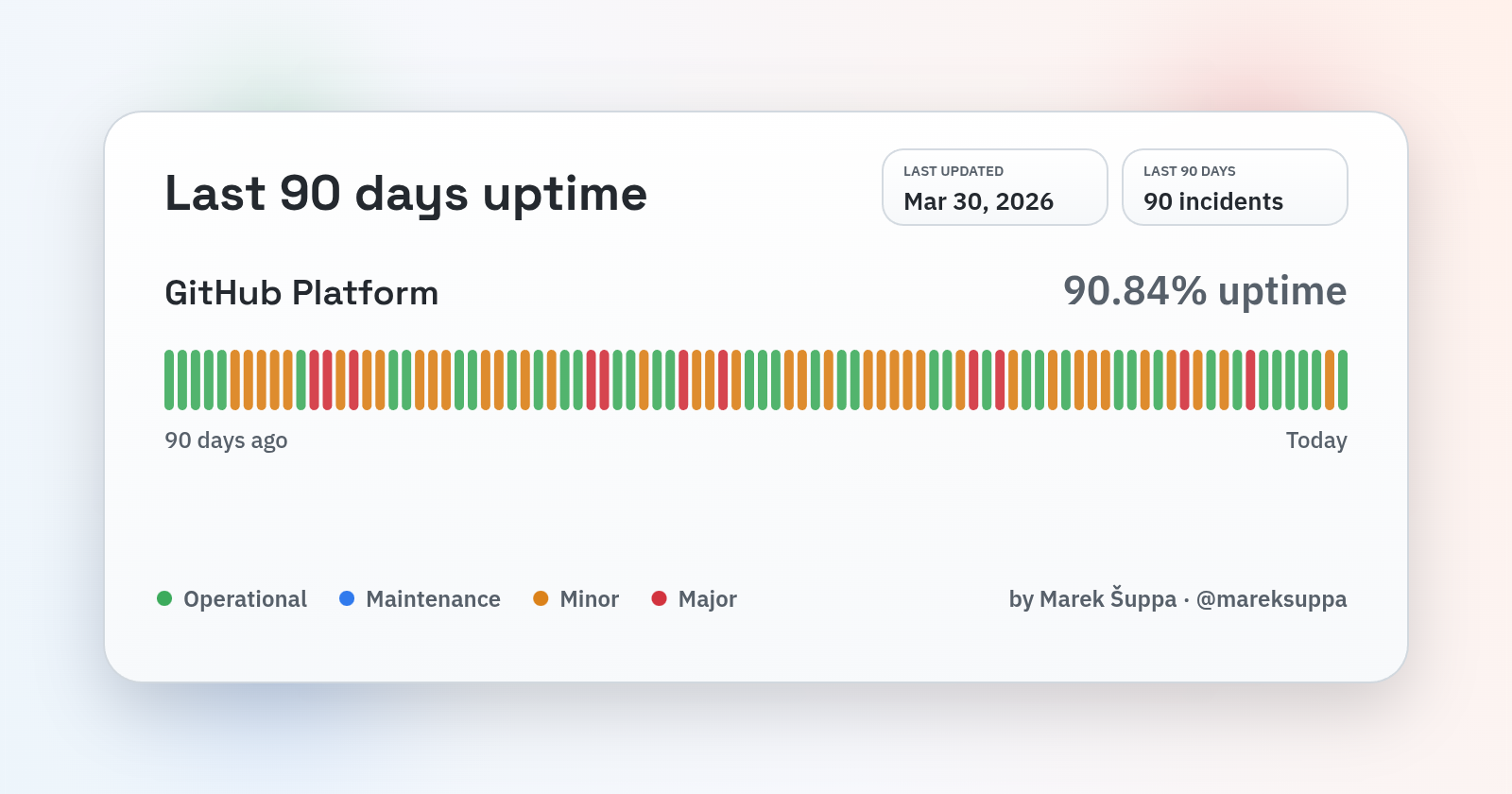
GitHub's status page looking like a Christmas light display gone wrong. 90 incidents in 90 days is a perfect 1:1 ratio – that's the kind of consistency most engineers can only dream of achieving! The bar graph is basically a rainbow of chaos with more orange and red bars than a traffic jam simulator. The real kicker? They're still rocking 90.84% uptime, which technically means they met their SLA... probably. Someone's on-call rotation must feel like Groundhog Day, except instead of reliving the same day, you're just getting paged every single day. The DevOps team deserves hazard pay and therapy at this point.

A Company Worth $340 Bn, Ladies And Gentlemen

A Company Worth $340 Bn, Ladies And Gentlemen
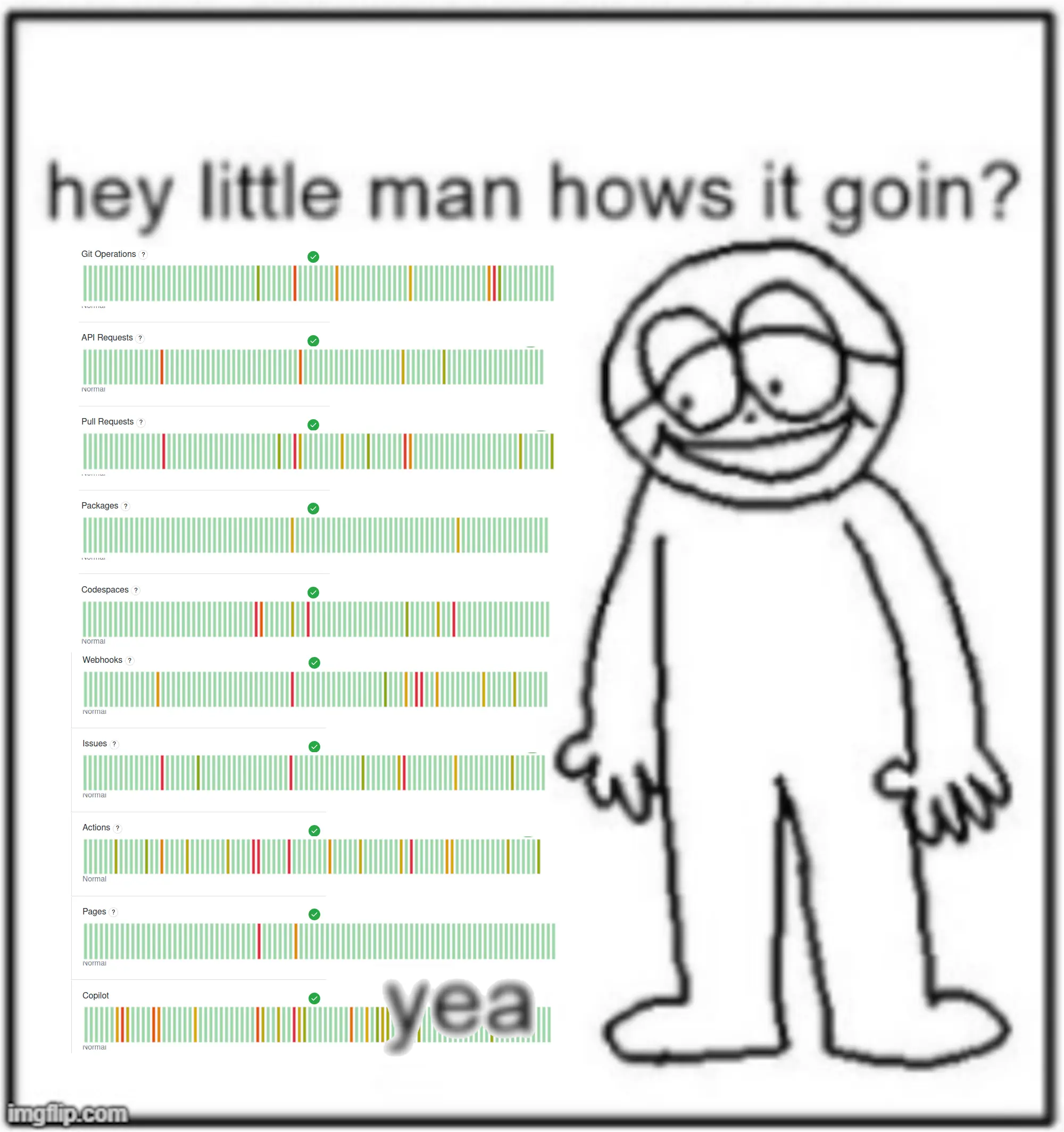
Ah yes, nothing screams "enterprise-grade reliability" quite like a status dashboard that looks like a Christmas tree threw up on it. GitHub's monitoring page showing a sea of green checkmarks with scattered red and yellow bars everywhere is giving off MAJOR "everything is fine" dog-in-burning-room energy. The "hey little man hows it goin?" meme format paired with that unhinged smile is *chef's kiss* because it perfectly captures how GitHub casually presents this absolute chaos like it's just another Tuesday. Git Operations? Check! API Requests? Sure! Copilot? Why not! Everything's got those suspicious little red spikes that definitely don't indicate intermittent failures that will ruin your deploy at 4:59 PM on a Friday. The best part? This multi-billion dollar company's infrastructure status looks like someone's first attempt at a health monitoring dashboard, yet somehow we all just... accept it. Because what are you gonna do, switch to GitLab? Yeah, that's what I thought.

We Do Not Test On Animals We Test In Production

We Do Not Test On Animals We Test In Production
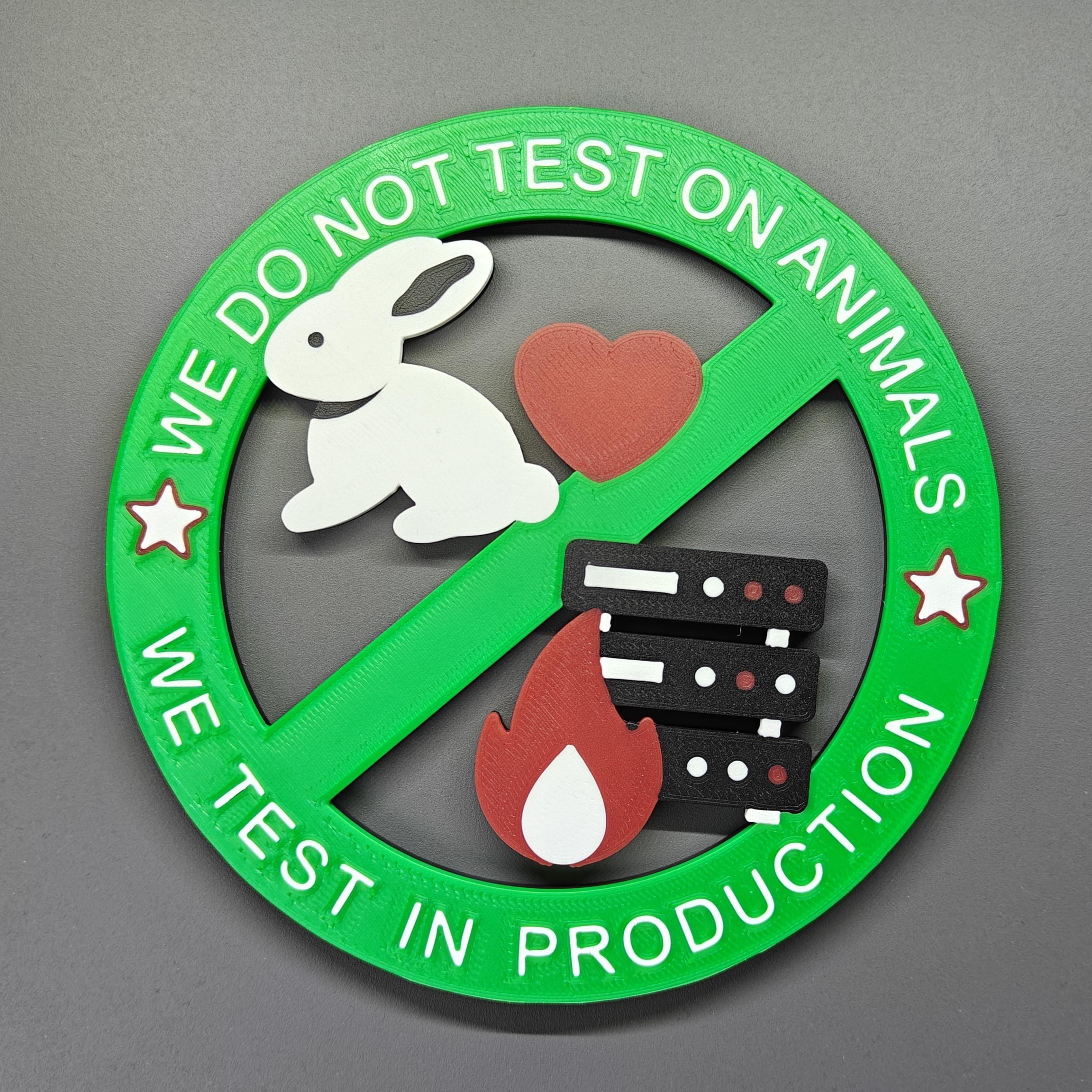
The ultimate badge of honor for startups running on a shoestring budget and enterprises with "agile" processes that are a little too agile. Why waste time with staging environments, QA teams, or unit tests when you have millions of real users who can beta test for free? The bunny gets to live, but your end users? They're the real guinea pigs now. That server on fire in the corner? That's just Friday at 4:55 PM when someone pushed directly to main. The heart symbolizes the "love" you have for your users as they unknowingly stress-test your half-baked features. Some call it reckless, others call it continuous delivery. Either way, your monitoring dashboard is about to light up like a Christmas tree, and your on-call engineer is already crying.

F1 Drivers Sound Like Junior Devs

F1 Drivers Sound Like Junior Devs
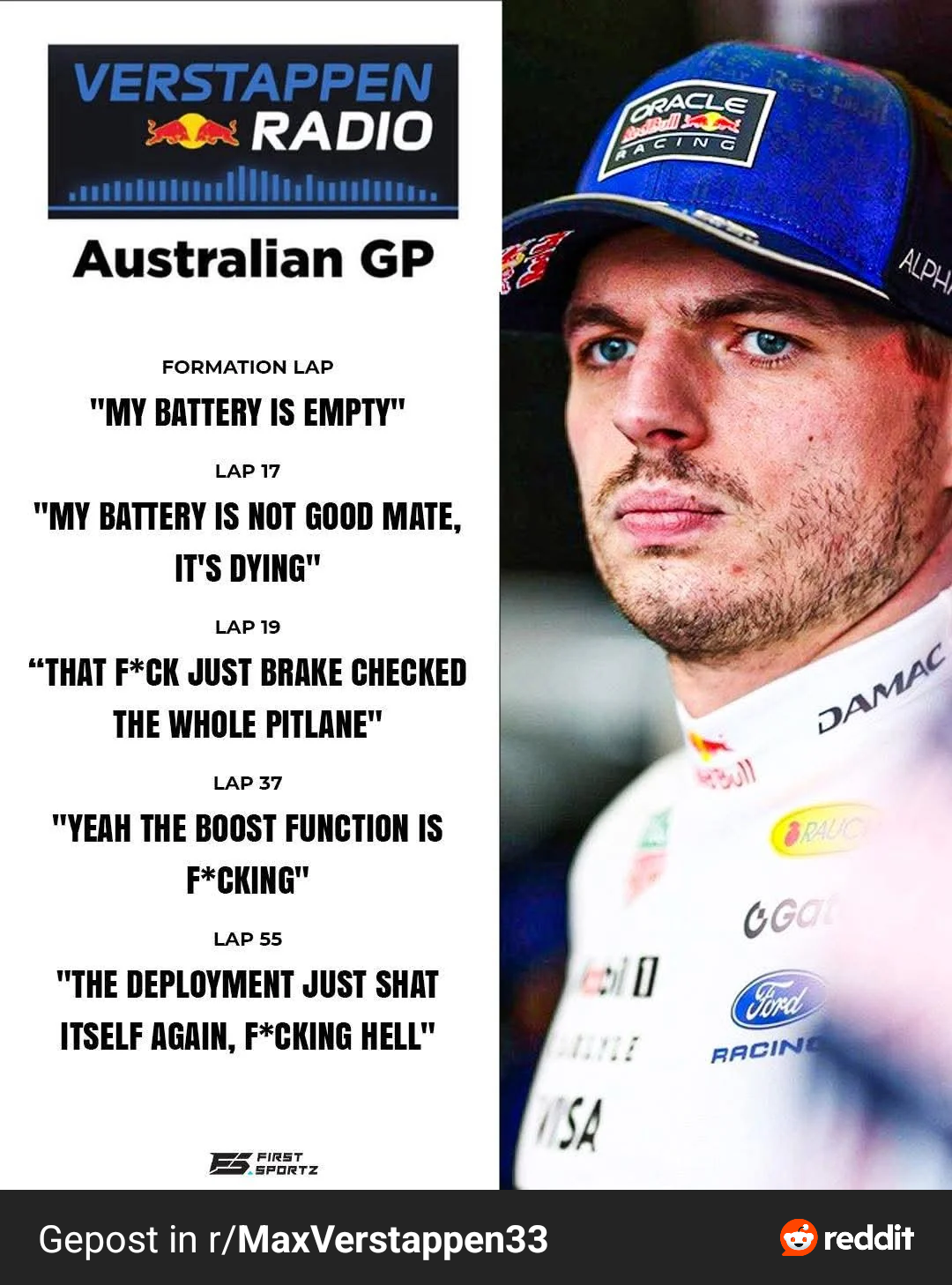
When your production environment is literally on fire and you're just watching everything cascade into chaos in real-time. First it's "battery empty" (low resources, no biggie), then it escalates to "battery dying" (okay, slight panic), suddenly "that brake check just wrecked the whole pitlane" (one bug breaks EVERYTHING), then "boost function is broken" (core feature down), and finally "deployment shat itself AGAIN" because of course it did. The progression from calm observation to absolute catastrophe is *chef's kiss* identical to a junior dev's first time monitoring production. Starts with a minor warning, ends with the entire infrastructure deciding today is a great day to commit digital suicide. And just like F1 radio chatter, you're screaming into the void while your senior dev (race engineer) is probably just sipping coffee thinking "yeah, that tracks."

Thermaltake Tower 250 Black Mini-ITX Mini Tower; 2x120mm CT Fans Included; 360mm Radiator Support; 360mm GPU Clearance; Dual Chamber; CA-1Z9-00S1WN-00

Thermaltake Tower 250 Black Mini-ITX Mini Tower; 2x120mm CT Fans Included; 360mm Radiator Support; 360mm GPU Clearance; Dual Chamber; CA-1Z9-00S1WN-00
【Maximize Workspace】 Space-efficient compact vertical design saves valuable desk space. · 【Small Size, Big Performance】 Support GPUs up to 360mm in length with PSU cover removed / CPU cooler hieght u…

Alright, Here's The Plan

Alright, Here's The Plan
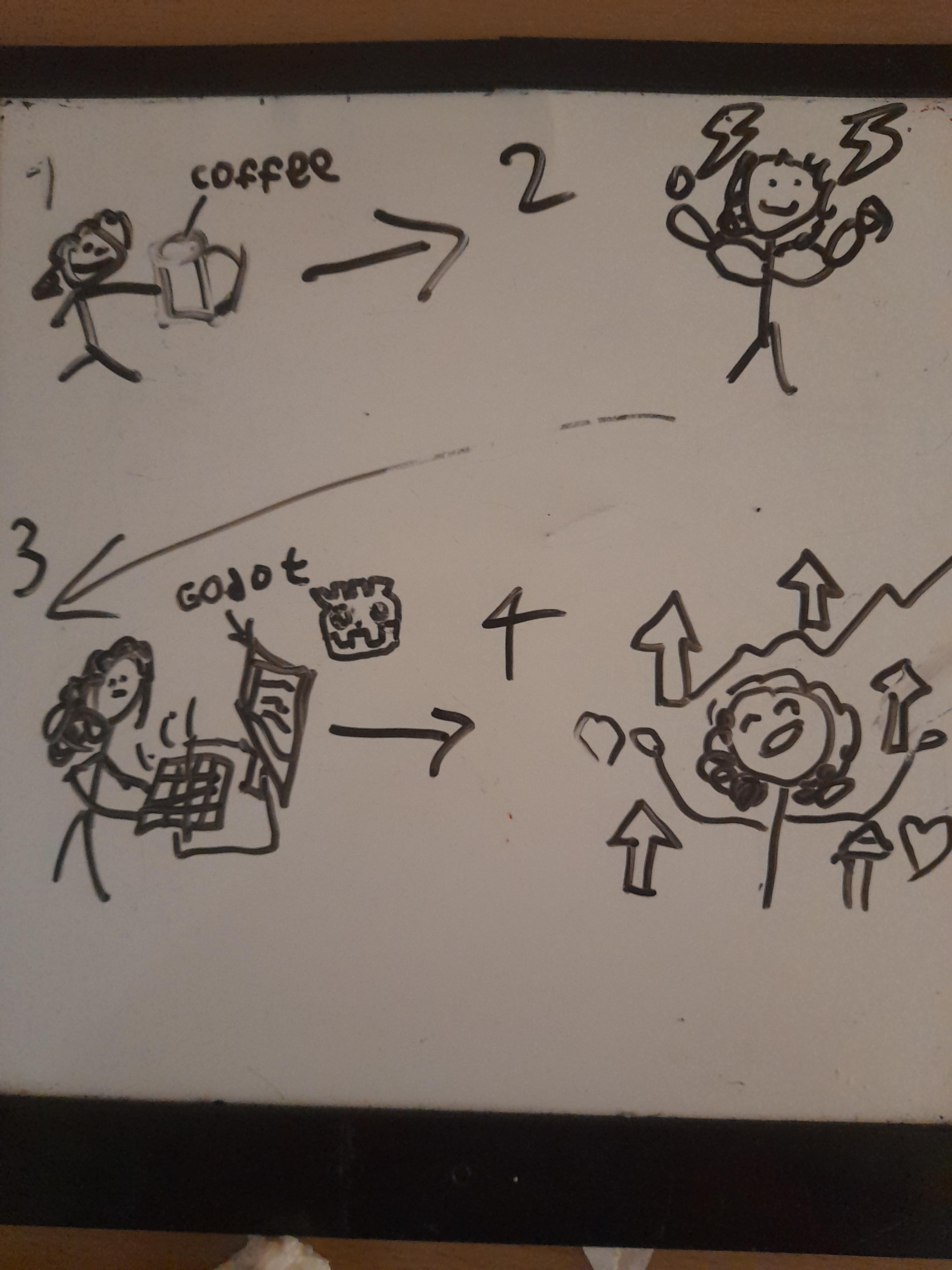
Step 1: Coffee. Step 2: The mysterious squiggly line that represents "???". Step 3: Somehow you've gone to production. Step 4: Everything's on fire and the graphs only go up. We've all been there. You start the day with optimism and caffeine, skip all the boring parts like planning, testing, and common sense, deploy straight to prod because YOLO, and then watch in horror as your monitoring dashboard lights up like a Christmas tree. The "GOTO" label on step 3 is chef's kiss - because nothing says "professional software development" quite like goto statements and skipping directly to deployment. The real accuracy here is that step 2 isn't even defined. It's just vibes and prayers. That's basically every sprint planning meeting I've ever attended.