

Tech lead Memes

Posts tagged with Tech lead
What Do You Mean What Am I Doing

What Do You Mean What Am I Doing
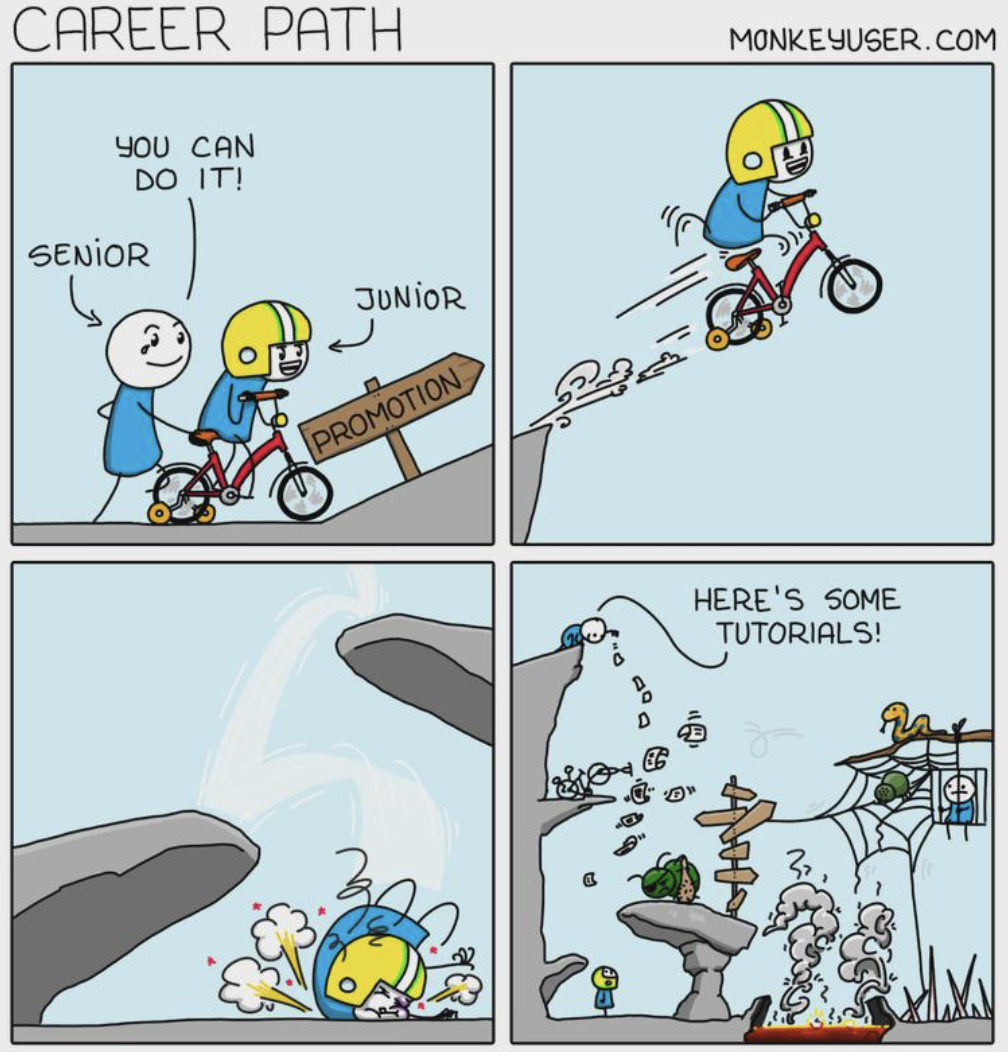
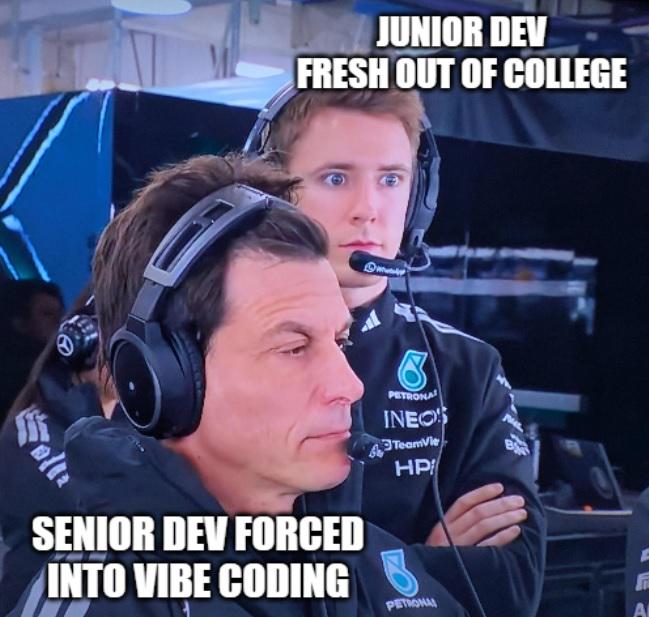
The senior dev watching the junior write actual readable code with proper variable names and comments is experiencing what doctors call "psychological damage." After years of maintaining legacy spaghetti where variables are named x1 , temp2 , and theRealFinalVersion_actuallyFinal , seeing someone follow best practices feels like a personal attack. That look of confusion mixed with existential dread? That's the face of someone who's been writing if (x == true) for a decade realizing they might have to adapt. The junior's just vibing, writing clean code, probably using meaningful function names like calculateUserDiscount() instead of doStuff() . Meanwhile, the senior's entire worldview is crumbling because someone actually read the style guide.

Salary Vs Responsibilities In Corporate

Salary Vs Responsibilities In Corporate
The corporate equivalent of a hostage negotiation where you're both the hostage and the negotiator who forgot their lines. You start as a junior dev writing CRUD apps, then suddenly you're the tech lead, DevOps engineer, scrum master, coffee maker, and the person who explains to management why we can't "just add blockchain to make it faster." Your title stays the same, your salary increases by 2% (if you're lucky), but your responsibilities multiply like microservices in a system that should've been a monolith. Now you're mentoring interns, reviewing PRs at midnight, debugging production on weekends, and attending meetings that could've been Slack messages. But hey, at least you got that "Rockstar Developer" label in your performance review—which, spoiler alert, doesn't pay rent. The real kicker? When you finally ask for a raise, they tell you "we're like a family here" while simultaneously treating you like the family member who does all the dishes at Thanksgiving.

Honestly... I've Seen Worse.

Honestly... I've Seen Worse.
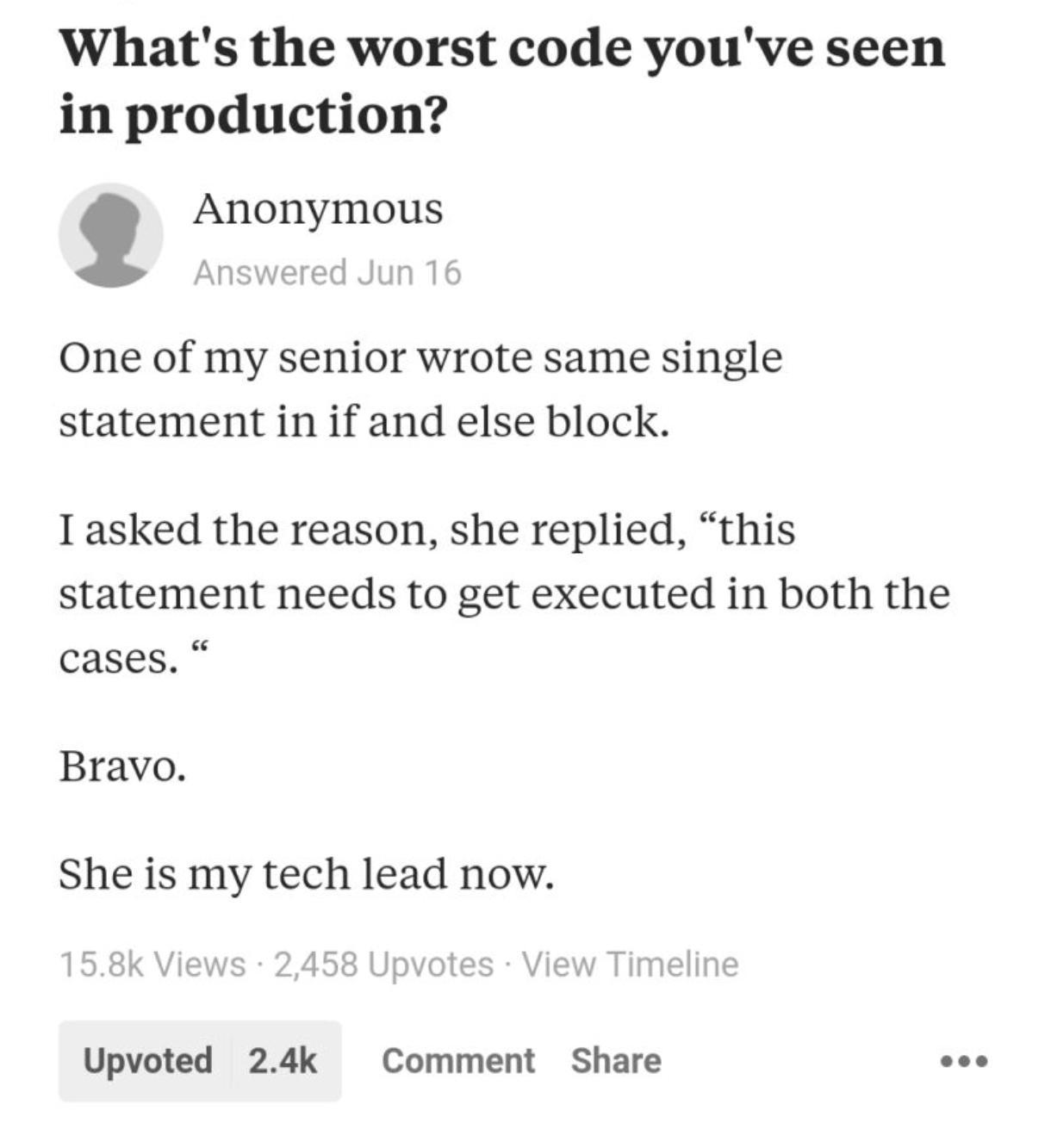
A senior developer duplicated the same statement in both the if and else blocks because "it needs to execute in both cases." The logic is so beautifully broken that it's almost poetic. Why use basic control flow when you can just... not? The best part? She got promoted to tech lead. Nothing says "leadership material" quite like fundamentally misunderstanding how conditional statements work. In her defense, the code technically works—it's just aggressively stupid. Sometimes incompetence and confidence are indistinguishable from genius to upper management. The "Bravo." is chef's kiss levels of sarcasm. You can feel the resignation through the screen.

Cursor Would Never

Cursor Would Never
When your senior dev writes the same statement in both the if and else blocks because "it needs to execute in both cases," you know you've witnessed peak logic. Like, congratulations on discovering the most inefficient way to write code that could've just existed outside the conditional. But hey, she's the tech lead now, so clearly the universe rewards this kind of galaxy-brain thinking. The title references Cursor (the AI-powered code editor) which would absolutely roast you for this kind of redundancy. Even the dumbest autocomplete would be like "bro, just put it before the if statement." But nope, human intelligence prevails once again in the worst possible way.

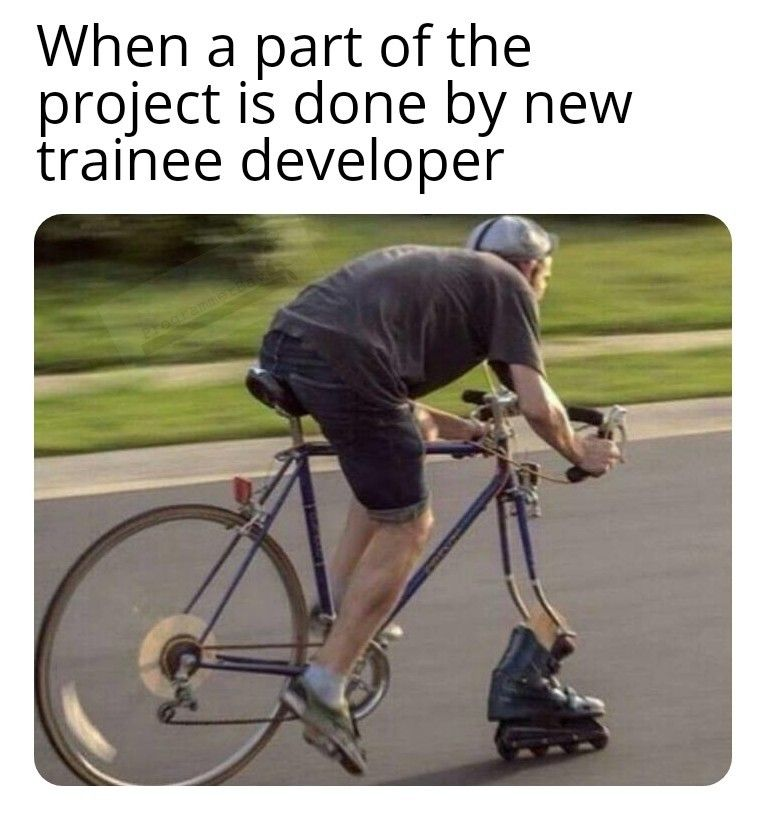
When A Part Of The Project Is Done By New Trainee Developer

When A Part Of The Project Is Done By New Trainee Developer
You know that feeling when you review code from a junior dev and it technically works, but you're just staring at it wondering how it works? That's what we've got here. The dude's moving forward, he's got momentum, but the execution is... questionable at best. The trainee delivered a feature that passes the tests and deploys successfully, but when you peek under the hood, it's a Frankenstein's monster of nested if-statements, hardcoded values, and a sprinkle of copy-pasted Stack Overflow code. Sure, the bike is moving and the rollerblades are rolling, but nobody in their right mind would call this "best practices." The best part? You can't even be mad because it somehow shipped on time. Now you're stuck deciding whether to refactor it immediately or just let it ride and hope nobody asks questions during the next sprint review.

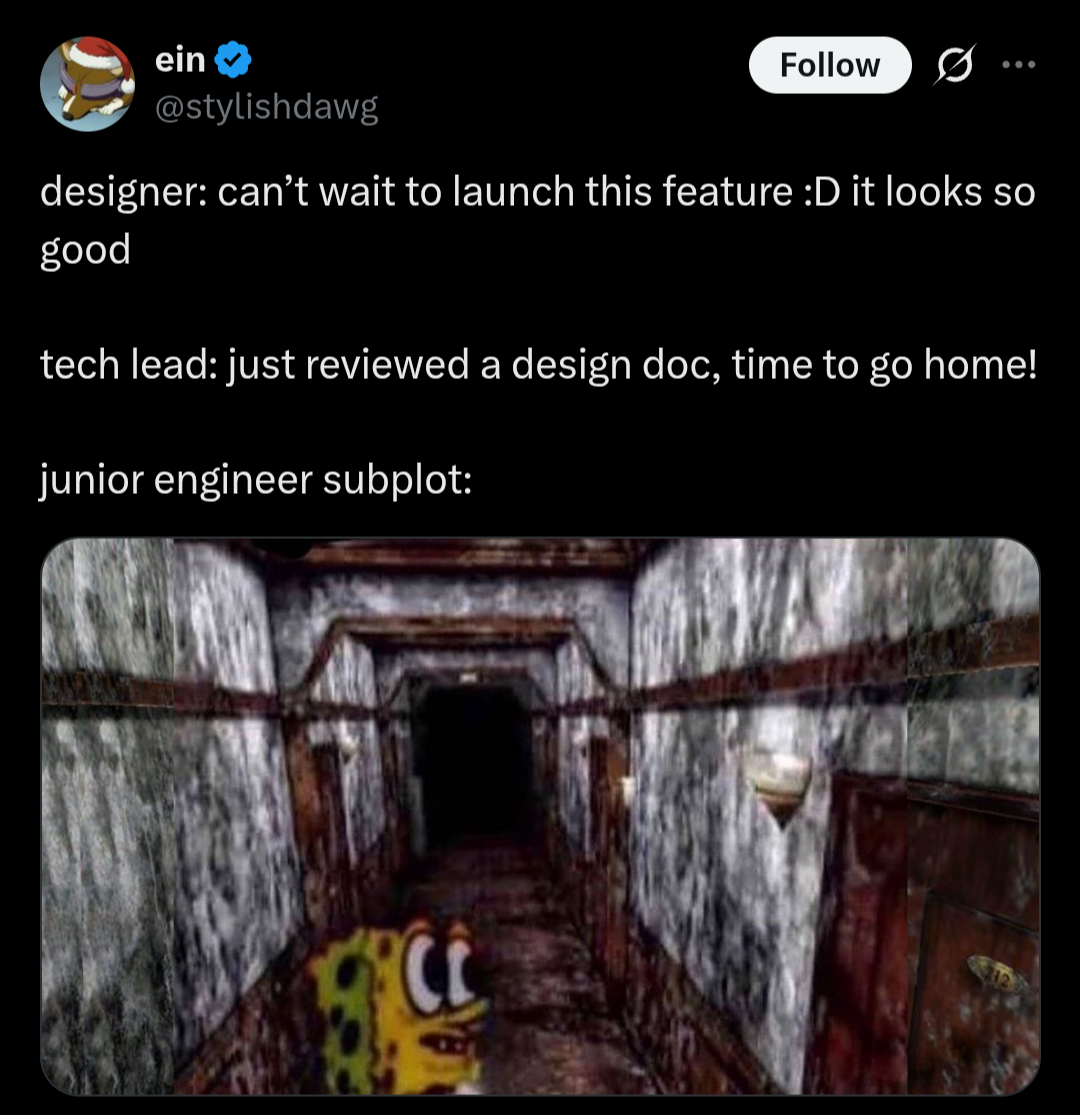
Quick Tangent

Quick Tangent
Designer gets all excited about their shiny new feature. Tech lead takes one look at the design doc, immediately clocks out because they know what's coming. Meanwhile, the junior engineer is already spiraling into an existential nightmare trying to figure out how to actually implement this thing. That creepy SpongeBob wandering through the horror hallway? That's the junior dev's mental state after realizing the "simple" design requires refactoring half the codebase, learning three new frameworks, and probably sacrificing a rubber duck to the coding gods. The designer's enthusiasm is inversely proportional to the engineer's sanity. The tech lead already knows this dance. They've seen it a thousand times. That's why they're going home.

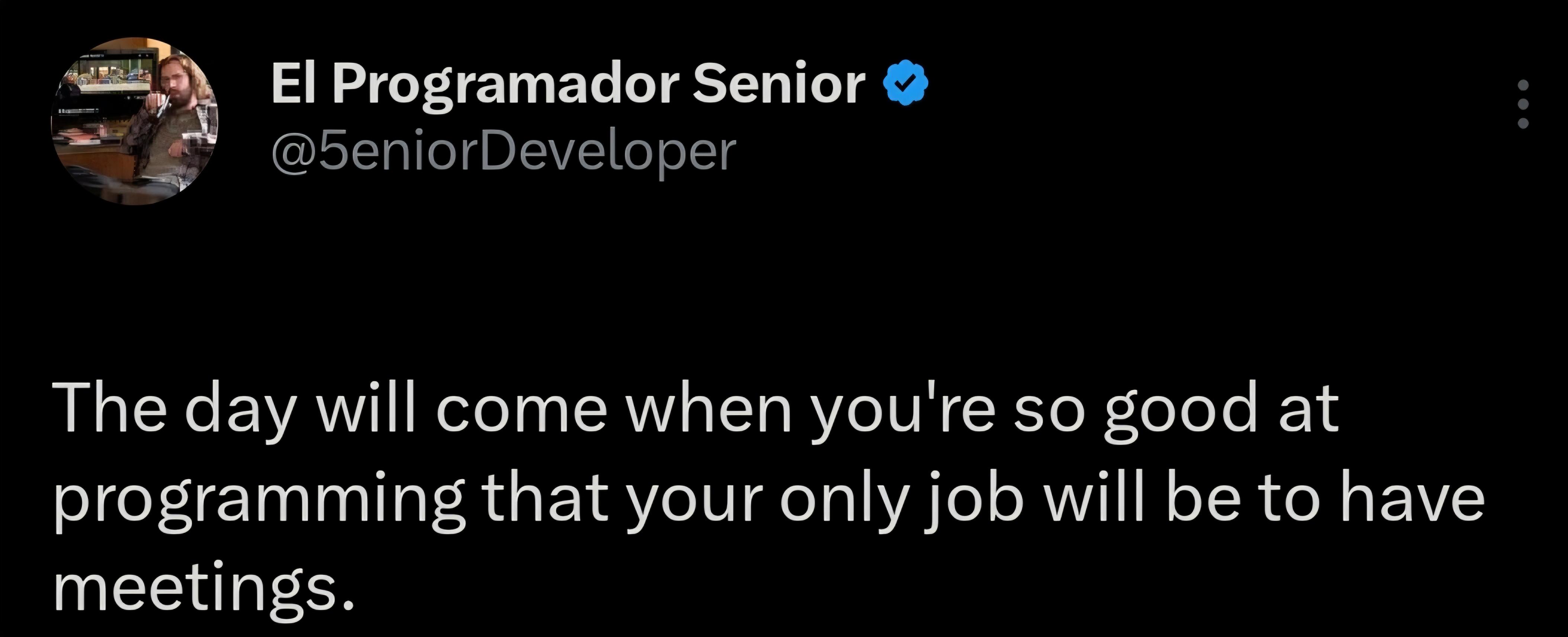
That's Why I Suck At Coding

That's Why I Suck At Coding
The ultimate career paradox: you grind LeetCode, master design patterns, and optimize algorithms until you can code in your sleep. Then you get promoted to senior, and suddenly your IDE collects dust while you're stuck in back-to-back sprint planning, stakeholder syncs, and architecture reviews. It's the cruel irony of software engineering—the better you get at solving problems with code, the less time you actually spend coding. Instead, you're translating business requirements, mentoring juniors, and explaining why "just make it work like Uber" isn't a valid technical specification. Your keyboard misses you, but Zoom definitely doesn't. The real skill ceiling isn't writing elegant code—it's surviving 8 hours of meetings without your soul leaving your body.

The Myth Of Consensual Software Development

The Myth Of Consensual Software Development
The eternal struggle of software development in one perfect image. Devs and tech leads happily pushing code while security sits there like the responsible adult at a frat party screaming "I DON'T CONSENT!" into the void. Let's be honest, we've all shipped that feature at 4:59pm on Friday with security reviews marked as "TODO" in the PR. Then we act shocked when the security team finds 37 vulnerabilities that could've been prevented by a simple input validation. Security: The party pooper we all need but rarely want until after the breach.

The Arsonist Firefighter Syndrome

The Arsonist Firefighter Syndrome
The classic "hero-villain duality" of software development. You push that sketchy hotfix to production at 4:58 PM on Friday, everything breaks over the weekend, and by Monday morning you've "heroically" fixed your own disaster. The boss is none the wiser as you accept praise with that panicked Muppet face, knowing you're one git blame away from exposure. The circle of tech life.

They Are Mysterious

They Are Mysterious
The classic client-junior dev dynamic, perfectly captured in movie dialogue. That moment when a client bypasses the entire chain of command and fires questions directly at the most vulnerable team member who's been explicitly told "don't talk to clients." The senior devs spent weeks crafting the perfect narrative, only for it to potentially unravel because someone decided to ask the one person who might actually tell the truth about the project timeline. The panic in the junior dev's eyes says it all - they're one honest answer away from revealing that the "two-week feature" is actually three months behind schedule.

Please Backlog It (Until I'm On Vacation)

Please Backlog It (Until I'm On Vacation)
The sweet illusion of productivity, crushed by managerial chaos. You think you've won the sprint game by finishing early, only to have your tech lead drop a surprise 2-story-point task in your lap without even a courtesy Slack message. That smug smile in the top panel? Gone faster than a production server during a demo. This is why we never announce when we're done early—rookie mistake. Just quietly work on tech debt or documentation until the sprint officially ends. Or better yet, take a three-day "debugging session" with your camera off.

The Midnight Debugging Hero Nobody Asked For

The Midnight Debugging Hero Nobody Asked For
The duality of developer existence in one perfect image. On the left, you've got the sleep-deprived zombie hunched over their keyboard at 3 AM, frantically fixing a bug because their brain refuses to shut down until it's solved. The code is their white whale, and sleep is just a concept for mere mortals. Meanwhile, the tech lead on the right looks like they've been through seven consecutive existential crises, reviewing the code with the enthusiasm of someone watching paint dry. That dead-eyed stare says, "I've seen things... terrible, unoptimized things." The best part? This entire sleep-sacrificing heroic debugging session will be met with all the excitement of someone checking their grocery receipt. Welcome to software development, where your midnight coding marathon is just Tuesday to everyone else.