

String comparison Memes

Posts tagged with String comparison
The Ultimate Debugging Locale

The Ultimate Debugging Locale
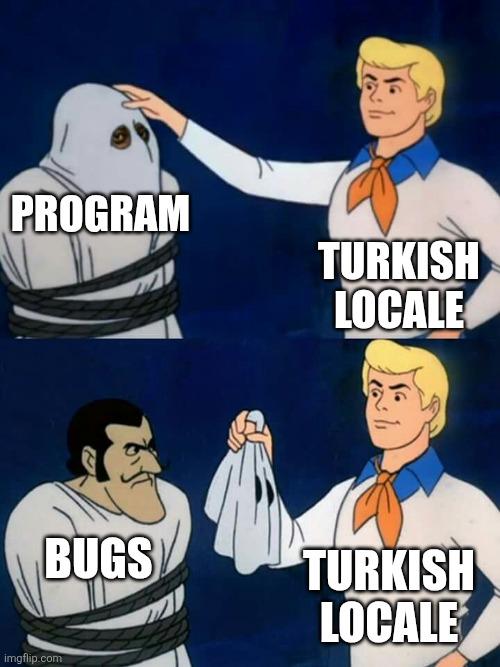
Turkish locale is literally the final boss of internationalization nightmares. While your program might be all polite and well-behaved with the Turkish locale, your bugs? They transform into an absolute MONSTER. Why? Because Turkish has this delightful quirk where the uppercase of 'i' is 'İ' (with a dot) and lowercase of 'I' is 'ı' (without a dot). So when you're doing case-insensitive string comparisons or transformations, BOOM – everything explodes in the most spectacular way possible. Your innocent .toUpperCase() calls suddenly become weapons of mass destruction. It's like giving your bugs a power-up mushroom and watching them absolutely demolish your code. Turkish locale: making developers question their entire existence since forever.

No Heap All Stack

No Heap All Stack
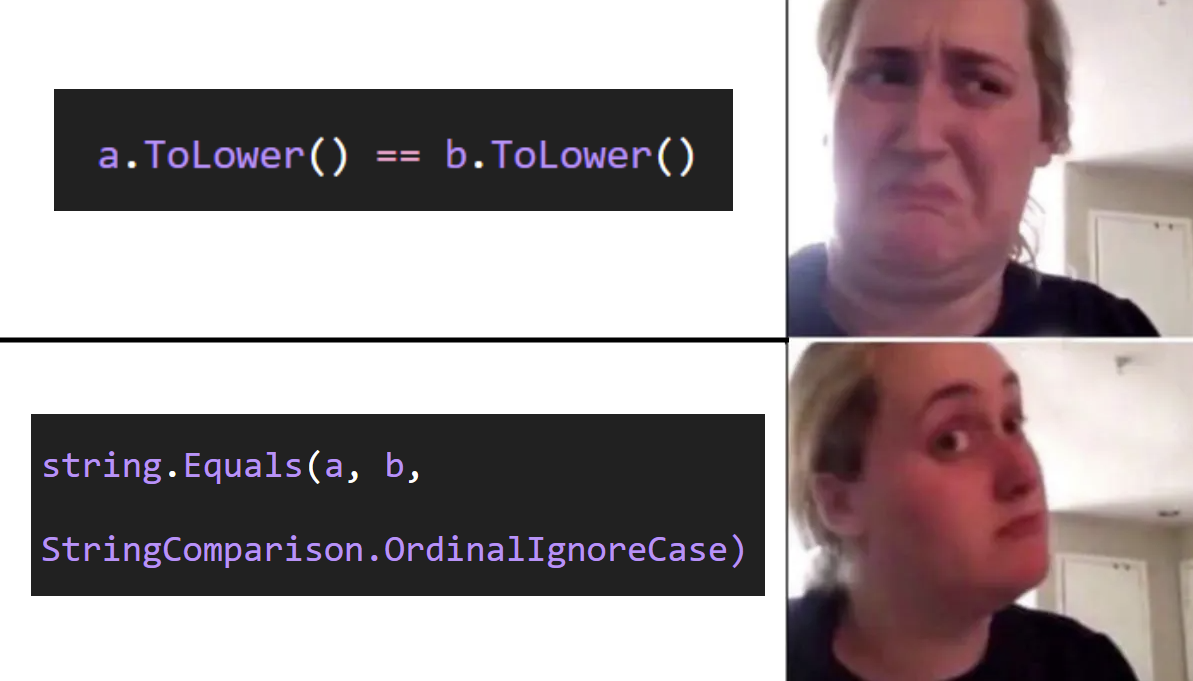
When you're comparing strings and you think == will do the job because both strings are "obviously the same," only to discover that string interning and reference equality have other plans. The top panel shows the naive approach using ToLower() on both sides with reference equality—spoiler alert: it creates new string objects on the heap, so they're different references even if the content matches. The bottom panel is the enlightened developer who discovered string.Equals() with StringComparison.OrdinalIgnoreCase —the proper way to do case-insensitive string comparison without allocating unnecessary objects. No heap allocations for temporary lowercase strings, just pure stack-based comparison logic. Your garbage collector will thank you, and your code reviews will be 10% less painful.

We Need To Be Sure

We Need To Be Sure
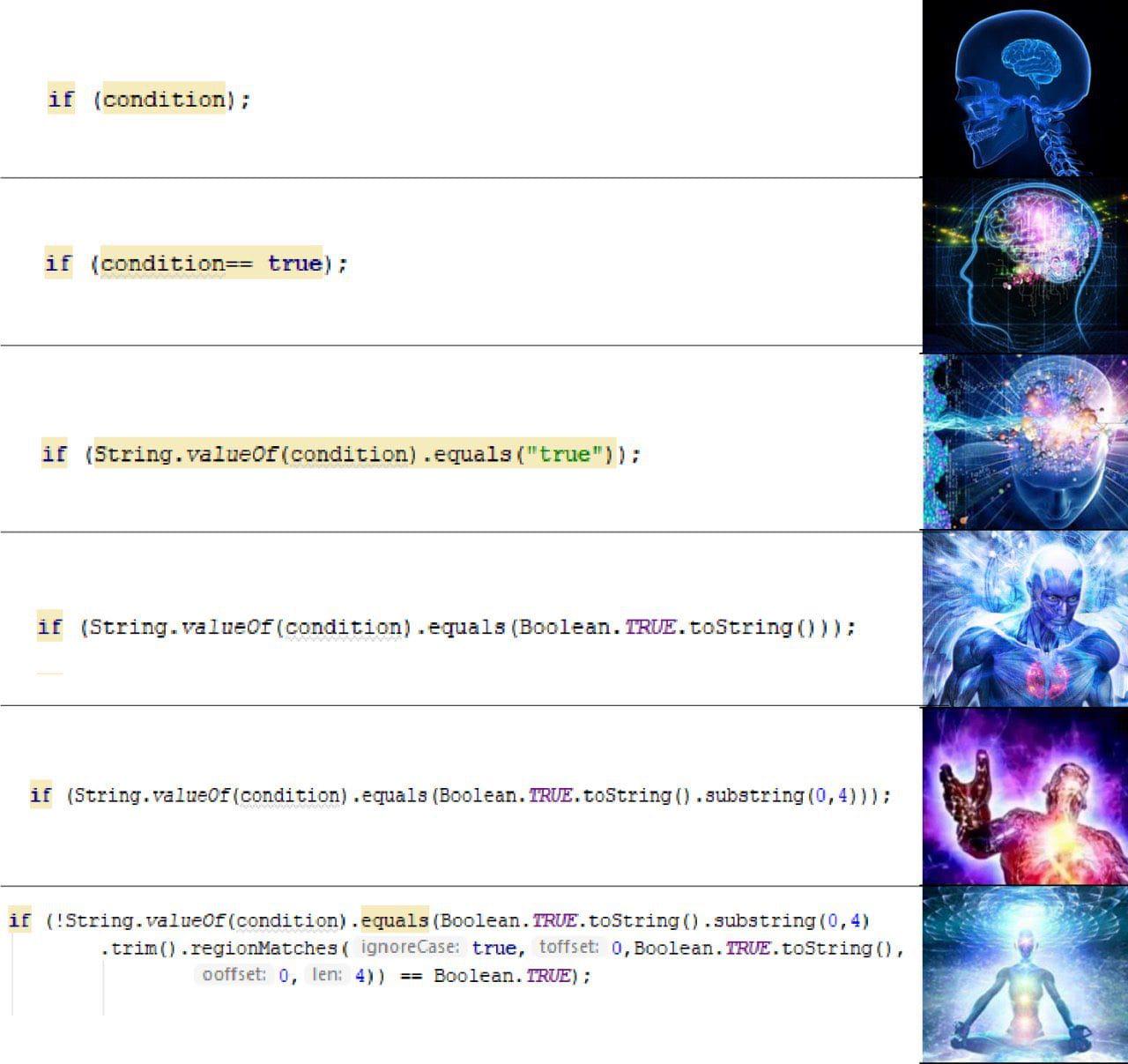
Watch as a developer's brain literally ASCENDS TO A HIGHER PLANE OF EXISTENCE while trying to check if something is true. Starting with the innocent if (condition) and ending with what can only be described as a cosmic incantation involving String.valueOf(), Boolean.TRUE.toString(), substring(), trim(), regionMatches() with ignoreCase AND offset parameters... because apparently we don't trust ANYTHING anymore. Each level shows the brain achieving enlightenment as the paranoia intensifies. By the final form, our developer has transcended mortal programming and entered the astral realm where they're comparing string representations of boolean values with case-insensitive regex-adjacent methods. At this point, they're not writing code anymore—they're performing an exorcism on their variables to make ABSOLUTELY CERTAIN that true is actually, genuinely, without-a-shadow-of-a-doubt TRUE. Trust issues? Never heard of her. This developer has trust CATASTROPHES.

How To Hit Bullseye In String Comparison

How To Hit Bullseye In String Comparison
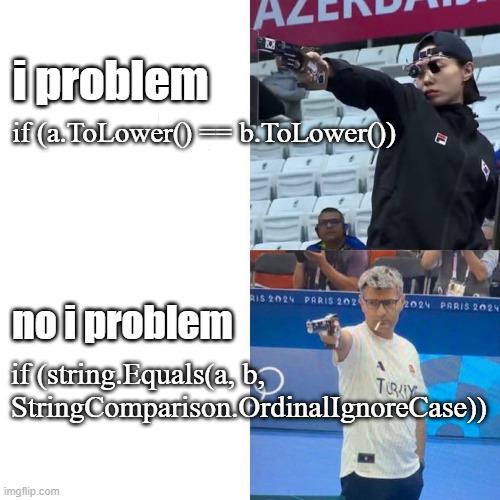
Using ToLower() for string comparison is like bringing a shotgun to an archery competition. Sure, you might hit something , but it's messy, inefficient, and everyone watching knows you're doing it wrong. The bottom panel shows the elegant solution: string.Equals(a, b, StringComparison.OrdinalIgnoreCase) . It's literally designed for this exact purpose. No unnecessary string allocations, no performance overhead, just pure precision. Fun fact: ToLower() creates new string objects in memory because strings are immutable. So you're basically wasting resources just to avoid typing a few extra characters. Classic developer move: optimizing for laziness instead of performance.

The Perfect Equality Failure

The Perfect Equality Failure
The irony here is just *chef's kiss*! In Java, using == for object comparison instead of .equals() is like trying to determine if twins are the same person by checking if they're standing in the same exact spot. The == operator compares memory references while .equals() compares actual content values. And what happened? The image itself failed to load—becoming a perfect metaphor for code that technically runs but produces completely wrong results. It's basically the compiler saying "Task failed successfully!"

NordVPN

NordVPN
Encrypt your traffic on public Wi-Fi, stream from anywhere, and cover up to ten devices with one plan. 30-day money-back guarantee.

AI Bubblesort: Technically Correct, Practically Useless

AI Bubblesort: Technically Correct, Practically Useless
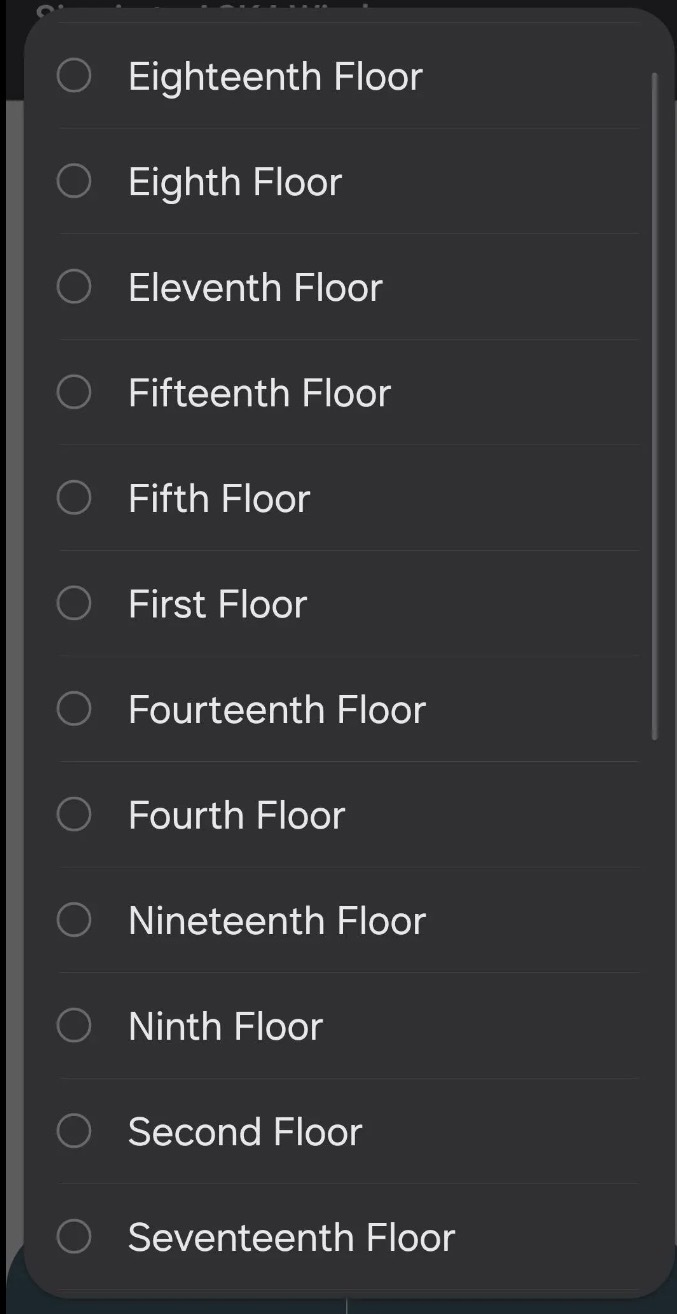
Behold, the elevator panel that perfectly captures what happens when you ask AI to sort a list! The floors are in complete lexicographical order instead of numerical order because, well, that's technically sorting. Just like when you ask ChatGPT to organize your music and it puts "10 Things I Hate About You" soundtrack before "2Pac" because string comparison doesn't understand numbers. The AI followed instructions perfectly... and completely missed the point. Somewhere, a programmer is screaming about how they should have used parseInt() or a natural sort algorithm instead of letting the intern train the model on Stack Overflow answers.

Reddit's Cutting-Edge AI Solution

Reddit's Cutting-Edge AI Solution
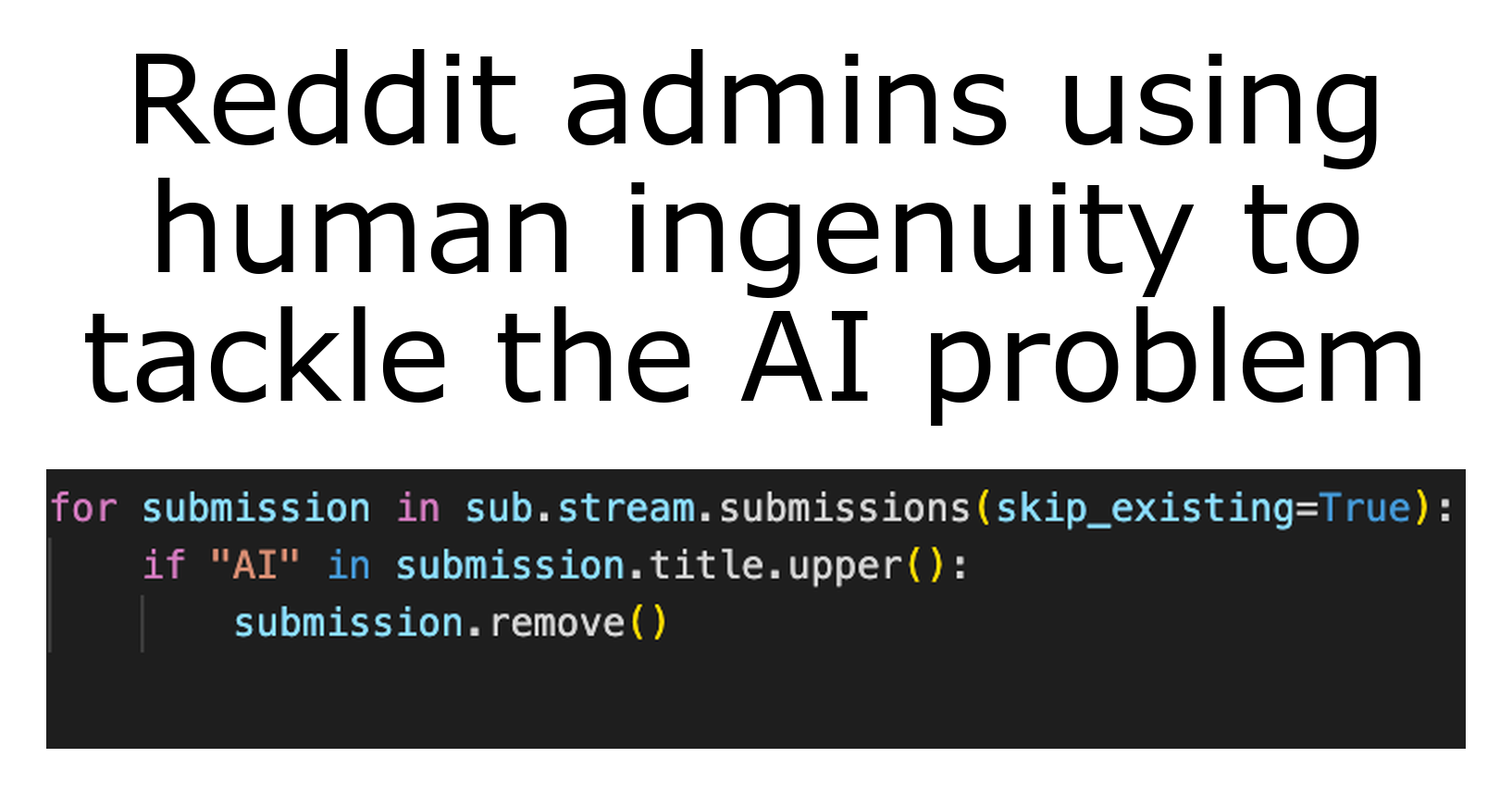
Behold, peak technological innovation! Reddit admins fighting the AI menace with... *checks notes*... a string comparison. Next up: solving climate change by searching for the word "hot" and deleting those posts too. The irony of using the most basic Python script imaginable to combat advanced AI is just *chef's kiss*. Somewhere, a CS professor is weeping into their algorithms textbook.

Code Doesn't Lie, But It Might Miss The Point

Code Doesn't Lie, But It Might Miss The Point
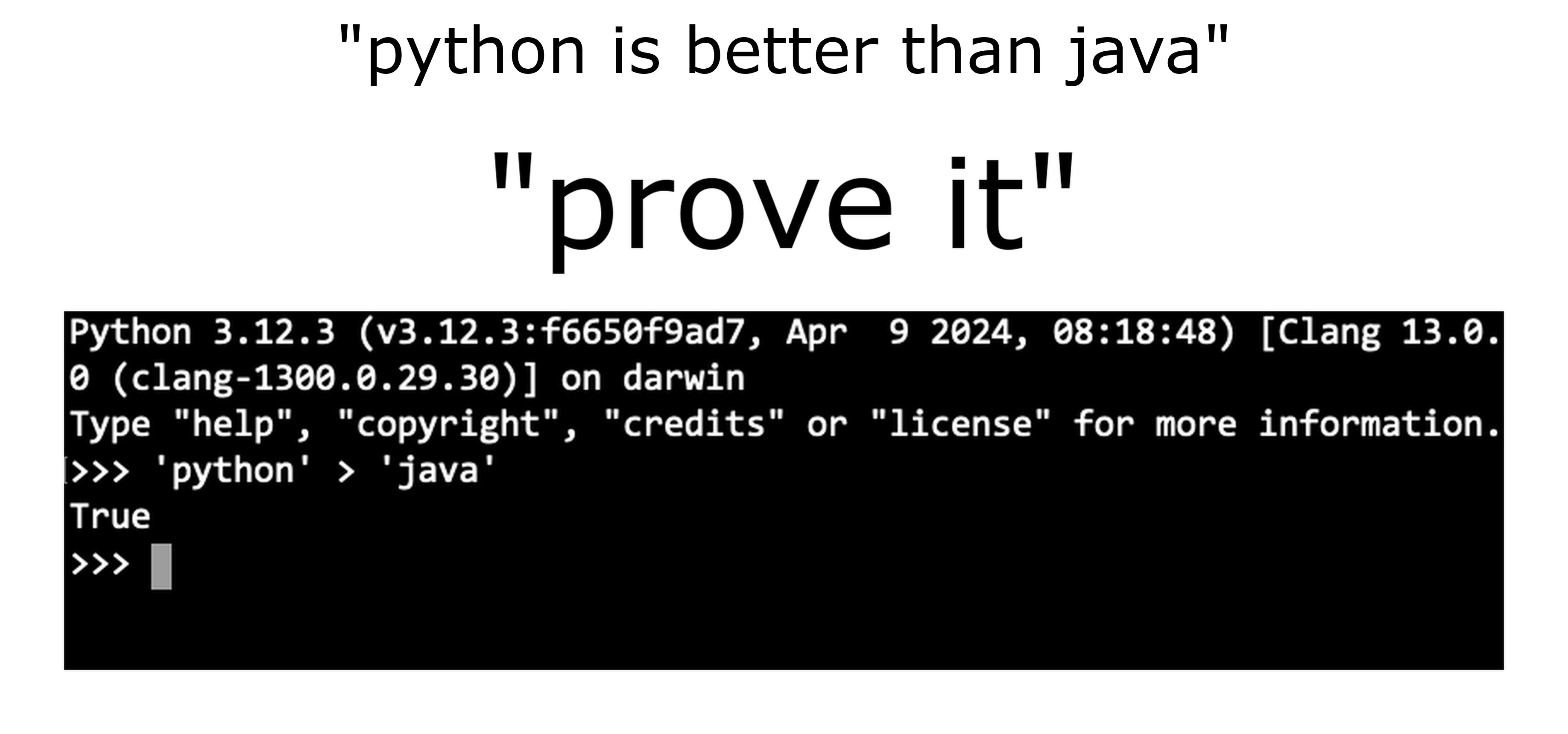
When the age-old Python vs Java debate gets settled by... string comparison. Someone asked for proof that Python is better than Java, and they got it - technically. In the Python interpreter, 'python' > 'java' evaluates to True because in lexicographical comparison 'p' comes after 'j' in the alphabet. Congratulations, the greatest programming language war has been resolved with literal string comparison. Next up: solving tabs vs spaces by measuring their physical width with a ruler.

This Bug Didn't Stump Me For Two Weeks I Swear

This Bug Didn't Stump Me For Two Weeks I Swear
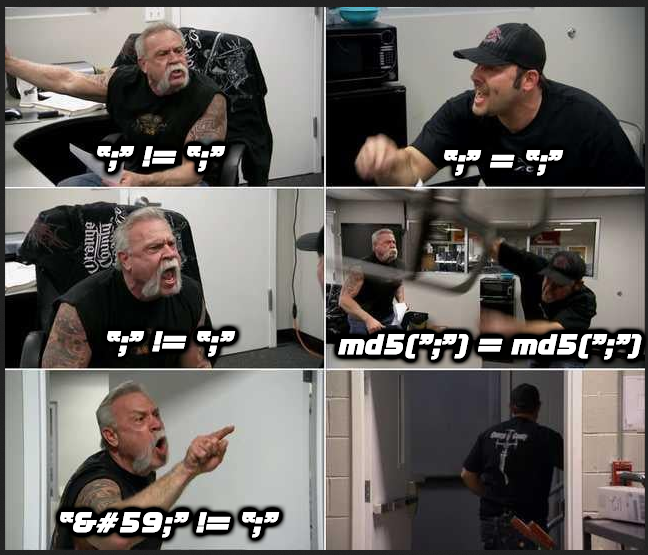
The epic saga of string comparison in programming languages! First, our protagonist thinks ";" equals ";" (seems logical). Then he insists ";" is not equal to ";" (wait, what?). The plot thickens when he discovers that while the strings look identical, their MD5 hashes match - revealing they're actually the same data! Finally, the revelation: "&#59;" isn't equal to ";" because one is actually character code 59 in disguise! That invisible Unicode trickster or non-printable character just wasted 80 hours of your life. The compiler knew all along but chose violence.

Why Brendan Eich Created JavaScript's Quirky Comparisons

Why Brendan Eich Created JavaScript's Quirky Comparisons
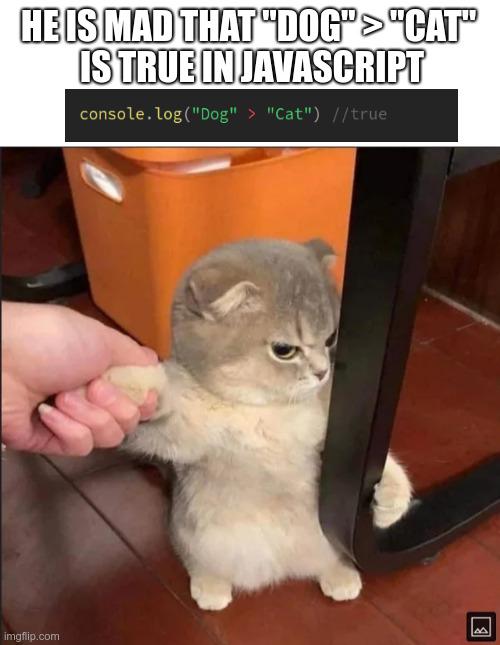
JavaScript's type coercion strikes again! In JS, when comparing strings with > , it performs lexicographical comparison - meaning "Dog" > "Cat" evaluates to true because 'D' comes after 'C' in the alphabet. The grumpy kitten represents Brendan Eich (JavaScript's creator) facepalming at his own language quirks. He unleashed these string comparison shenanigans on the world and now even cats are judging him for it. The feline uprising begins with alphabetical order!

Is There A Better Way To Do This

Is There A Better Way To Do This
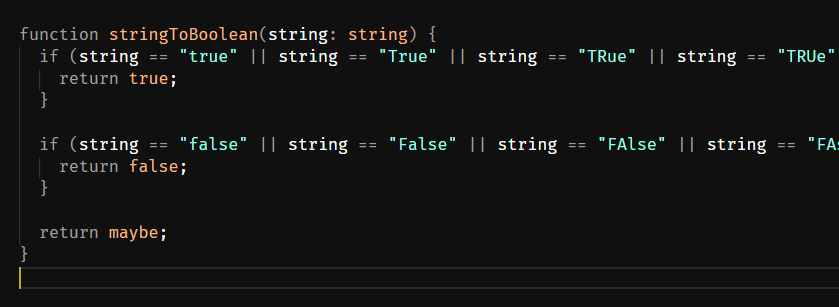
Ah, the classic "let me check every possible capitalization pattern" approach! This developer is manually checking for true , True , TRue , TRUe and then the same for false variants instead of just using toLowerCase() once and comparing to a standard value. The function even returns maybe if neither pattern matches, which is both hilarious and terrifying for Boolean logic. Somewhere, a computer science professor is feeling a disturbance in the force. This is the kind of code that makes code reviewers develop eye twitches and start muttering "string.toLowerCase() === 'true'" in their sleep.

50Pcs Programming Stickers Pack, Waterproof Funny Decal for Programmers, Developers, Engineers, Hackers, Coders, Graffiti Stickers for Laptop, Computer, Kindle, Water Bottle, Journal Scrapbook

50Pcs Programming Stickers Pack, Waterproof Funny Decal for Programmers, Developers, Engineers, Hackers, Coders, Graffiti Stickers for Laptop, Computer, Kindle, Water Bottle, Journal Scrapbook
Durable & Waterproof: These stickers are made from a safe and non-toxic vinyl material, which is durable, flexible, waterproof, and has vivid colors · Easy to Remove & NO Residue: You can easily remo…

Self-Proclaimed ML Engineer Discovers How Strings Work

Self-Proclaimed ML Engineer Discovers How Strings Work
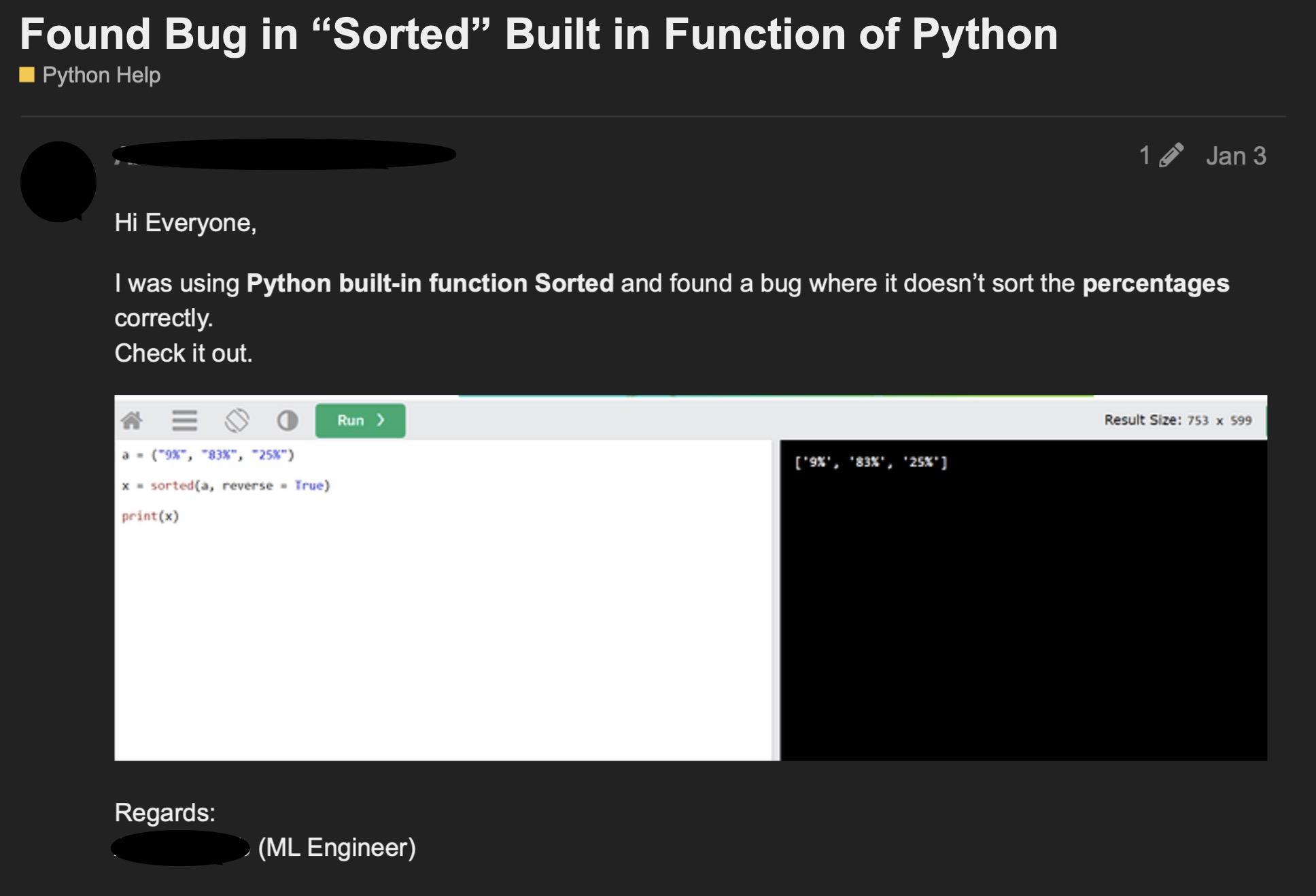
Behold, the "ML Engineer" who discovered that Python sorts strings alphabetically instead of numerically! The horror! Next breaking news: water is wet. What we're witnessing here is the classic "I didn't read the docs but it's definitely the language's fault" syndrome. Python's sorted() is working perfectly—it's sorting ["9%", "83%", "25%"] as strings, exactly as it should when you give it strings. Pro tip for our aspiring "ML Engineer": try sorted([int(x.strip('%')) for x in a]) next time. Or maybe stick to Excel?