Secrets management Memes

Posts tagged with Secrets management

Worst Texts To Get From Vibe Coding Girlfriend

Worst Texts To Get From Vibe Coding Girlfriend
Nothing says "relationship over" quite like your girlfriend casually asking where you store your API keys. Either she's about to expose your entire infrastructure to GitHub for the world to see, or she's already committed them and is trying to figure out damage control. The sheer terror of someone who doesn't understand the sacred rule of .gitignore having access to your secrets is enough to make any developer break out in cold sweats. The "vibe coding" girlfriend energy here is immaculate—she's just out here building projects with the carefree attitude of someone who's never had their AWS bill skyrocket to $10,000 because they accidentally pushed credentials to a public repo. Meanwhile, you're sitting there knowing that in approximately 3 seconds, some bot is going to scrape those keys and start mining crypto on your dime. Pro tip: If someone asks you this question, the correct answer is "in environment variables, babe" followed immediately by changing all your passwords.

Senior Devs

Senior Devs
Junior dev asking "theoretically" about removing accidentally committed API keys is like asking your friend "hypothetically" what happens if you total their car. The senior's face says it all—they've already checked the commit history, rotated the keys, and started drafting the incident report before the junior even finished their sentence. That thousand-yard stare comes from years of watching AWS bills skyrocket because someone's credentials got scraped by bots within 3 minutes of pushing to main. The senior knows there's no "theoretical" here—that key is already being used to mine crypto in some Eastern European server farm. Pro tip: git filter-branch and BFG Repo-Cleaner exist, but they won't save you from the post-mortem meeting.

Purely Theoretical

Purely Theoretical
Junior dev asking "purely theoretically" is the biggest red flag since that time someone pushed directly to main on a Friday at 4:55 PM. The senior knows exactly what happened—that API key is already swimming in the commit history, probably in a public repo, and some bot in Russia has already spun up 47 crypto miners on your AWS account. The senior's stare says it all: "I've seen this movie before, and it doesn't end with git revert ." You can't just delete the commit and call it a day—that key is burned. Time to rotate credentials, check the audit logs, explain to the security team why the monthly bill just went from $200 to $12,000, and have a very uncomfortable Slack conversation with your manager. Pro tip: git filter-branch and BFG Repo-Cleaner can scrub history, but if it's already pushed to a public repo, that secret is out there forever. Just rotate it and add .env to your .gitignore like you should've done in the first place.

Just Asking Out Of Curiosity...

Just Asking Out Of Curiosity...
That look when a junior dev tries the "asking for a friend" approach after pushing their API keys to GitHub. The senior's face says it all: "I know what you did, and now we're both having a terrible day." The real question isn't how to remove it—it's how many services you need to rotate keys for before the CEO finds out about the $20K AWS bill from the crypto miners who found it first.

Just Asking Out Of Interest

Just Asking Out Of Interest
The "asking for a friend" of development. Nothing says "I've already done something catastrophic" like a junior dev casually inquiring about API key removal from git history. That look from the senior dev isn't suspicion—it's the realization that the weekend is now canceled and the entire team is about to learn what a force push really means. Somewhere in the background, the company's security team just felt a disturbance in the force.

The Four Stages Of Security Management Grief

The Four Stages Of Security Management Grief
The evolution of a security manager's mental state is just *chef's kiss*. Starting with the professional "let's convince the CEO to trigger a P0 incident for secrets in code" approach, quickly descending into threatening emails about rotating secrets.xlsx (because storing secrets in Excel is totally secure, right?). By panel three, they're forcing CloudOps and DevOps to rotate secrets during production hours because security trumps uptime! And finally, the inevitable resignation email after causing organizational chaos. The clown makeup progression perfectly captures how security managers often start with good intentions but end up becoming the villain in everyone's story after trying to enforce best practices in environments that resist change until it's too late.

Where To Keep Your Secrets

Where To Keep Your Secrets
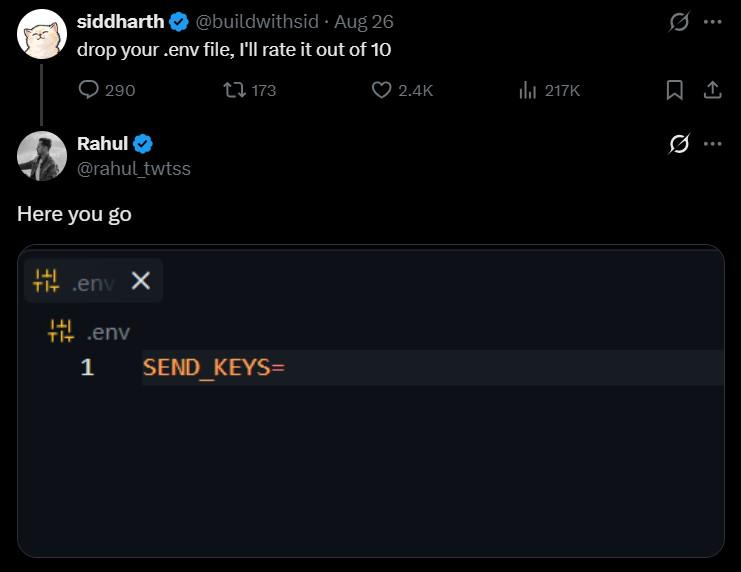
Having a single .env file? Reasonable. Having nine different environment files with conflicting naming conventions? That's just asking for a 3 AM production outage when you can't remember if the database password is in .env.production , .env.production.local , or that random file you created six months ago after three energy drinks. The real security feature is that even you can't find your own secrets anymore.