

qa Memes

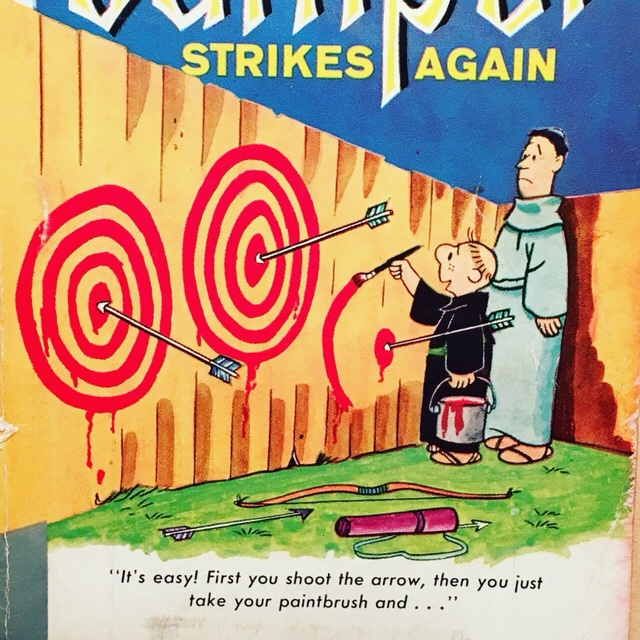
My Spaghetti Just Needed More Sauce

My Spaghetti Just Needed More Sauce
You know that feeling when QA keeps bouncing your ticket back like a ping pong ball from hell? Fourteen rounds of "fixes" later—each one adding another layer to your beautiful spaghetti architecture—and suddenly they give up and approve it. Not because you actually fixed the issue, but because they're exhausted and have 47 other tickets to deal with. That zen-like satisfaction of finally getting sign-off isn't about code quality anymore. It's pure survival instinct kicking in. You've basically just played chicken with the bug tracking system and won through sheer attrition. The code's probably worse than when you started, held together with duct tape and prayers, but hey—it's shipping to production baby. The real kicker? That bug will 100% resurface in prod within a week, but by then it'll be someone else's problem. Welcome to enterprise software development.

Heroes And Villains

Heroes And Villains
This comic brilliantly captures how different dev roles handle bugs with wildly different energy levels. JavaScript devs panic-flee from bugs like they're on fire (accurate), then copy-paste Stack Overflow solutions while literally burning, and convince themselves the weight of technical debt is totally fine. Classic. Backend devs go full Batman mode—methodically tracking down bugs with detective skills, then hunting down whichever dev committed the cursed code. The cape is metaphorical but the intimidation is real. Web devs are Spider-Man releasing bugs into production, then trying to "organize" them (read: make it worse), until someone yells "SUDO" and they have no choice but to comply. The power of root commands compels you! Technical Support are the Jedi mind-tricking users that obvious bugs are "features." Three times. With a straight face. It's not a crash, it's an unexpected exit feature! QA is literally Godzilla destroying everything in sight, then casually leaving. Their job is chaos, and they're excellent at it. C++ devs can't find bugs because they're too busy dealing with segfaults, memory leaks, and undefined behavior. Solution? Rage quit with rm -rf and the Infinity Gauntlet. If you can't fix it, delete everything.

One Of The Most Favorite

One Of The Most Favorite
Classic QA engineer joke that never gets old because it's painfully accurate. We test for zero beers, integer overflow, negative values, random gibberish input—basically everything except "where's the bathroom?" because that's what actual users do. They don't follow your happy path; they ask questions your system wasn't designed to answer and suddenly your entire architecture is on fire. The real tragedy? QA finds 47 edge cases, you fix them all, feel like a hero, then production explodes because someone tried to use the app while their phone was upside down during a leap year. You can't win. The users will always find that one scenario you never imagined, and it'll be the dumbest thing you've ever heard, yet completely valid.

Developer Logic: It's Not A Bug… It's An 'Unexpected Feature'!

Developer Logic: It's Not A Bug… It's An 'Unexpected Feature'!
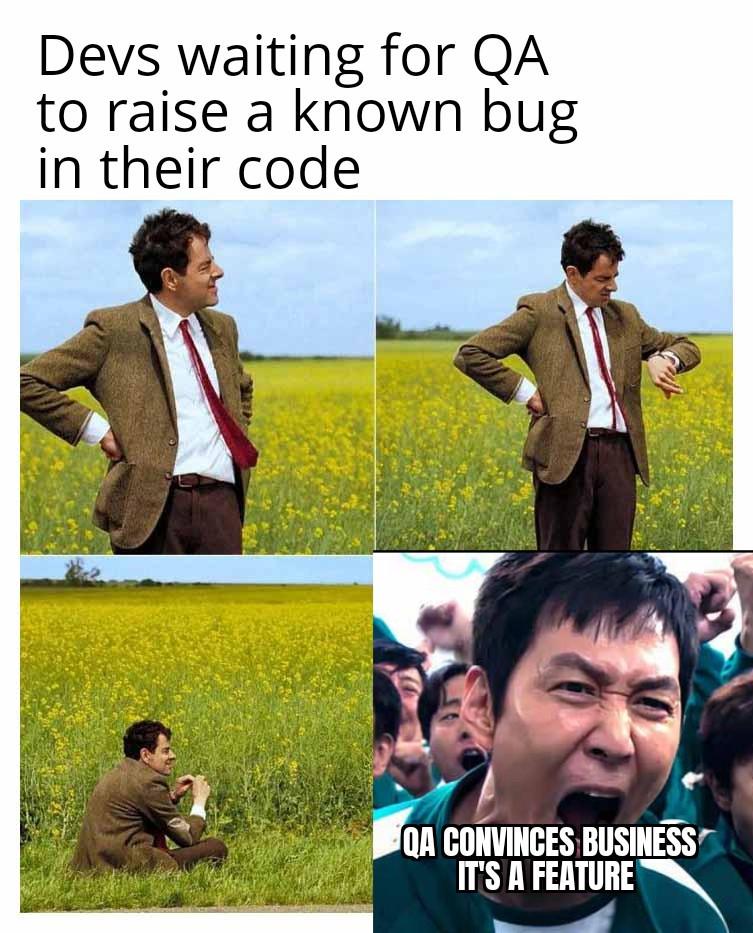
The ancient art of developer spin doctoring at its finest! When QA finds a catastrophic leak in your code, you don't panic and fix it like some amateur—no, no, no. You simply slap some duct tape on it, add a fancy fountain animation, call it a "feature," and watch the stakeholders applaud your "creative vision." Bonus points if you can convince them it was intentional all along and charge extra for the "premium water feature package." The transformation from disaster to masterpiece is truly the developer's greatest superpower.

Always Bugging Me In My Head Without Even Coding

Always Bugging Me In My Head Without Even Coding
That moment when QA whispers sweet nothings into your ear about all the edge cases you forgot to handle. The intimate relationship between developers and QA teams is beautifully captured here—QA is literally in your head, breathing down your neck about that bug you swore you fixed three sprints ago. The developer's thousand-yard stare says it all. You're not even at your desk, maybe you're grocery shopping or trying to sleep, but QA's voice echoes: "What happens if the user enters a negative number?" "Did you test on Internet Explorer?" "The button doesn't work when I click it 47 times per second." Every dev knows that sinking feeling when QA finds another bug. It's like having a very thorough, very persistent voice in your head that never stops asking "but what if..." Even when you log off, they're still there, haunting your dreams with their meticulously documented Jira tickets.

Why Playtesting Is Important

Why Playtesting Is Important
Developer proudly ships their shiny new chat feature for the multiplayer game. First player to test it in production? Immediately weaponizes it by pasting the entire Bee Movie script into the chat, causing a catastrophic game freeze for everyone in the lobby. Classic case of not stress-testing input validation. The dev probably thought "nobody would paste that much text into a chat box, right?" Wrong. Players will always find the most creative ways to break your stuff. No character limit? That's an invitation. No rate limiting? Challenge accepted. No input sanitization? Say hello to the entire works of Shakespeare. The ":D" at the end really captures the chaotic energy of someone who just discovered they can DoS an entire game lobby with copypasta. Quality assurance? Never heard of her.

Developer Vs Tester Feud

Developer Vs Tester Feud
The eternal battle between devs and QA teams, captured in its purest form. Developer just wants their precious feature to ship already, but the tester? Oh no, they're about to turn this into a full-blown investigation. "You found 3 bugs? Cool, let me find 30 more." It's like poking a bear—except the bear has access to edge cases you never even considered and a personal vendetta against your code's stability. Every developer's nightmare: a motivated tester with time on their hands.

User Submits Bug Report

User Submits Bug Report
The initial joy of receiving user feedback quickly turns into existential pain when you realize they've sent an 18-minute screen recording of... absolutely nothing happening. Just a static screen. No audio. No cursor movement. No error messages. Nothing. It's like trying to diagnose a car problem when the customer sends you a photo of their garage door. Closed. From across the street. The real bug was the 18 minutes of your life that just disappeared forever.

The Playtester's Silent Judgment

The Playtester's Silent Judgment
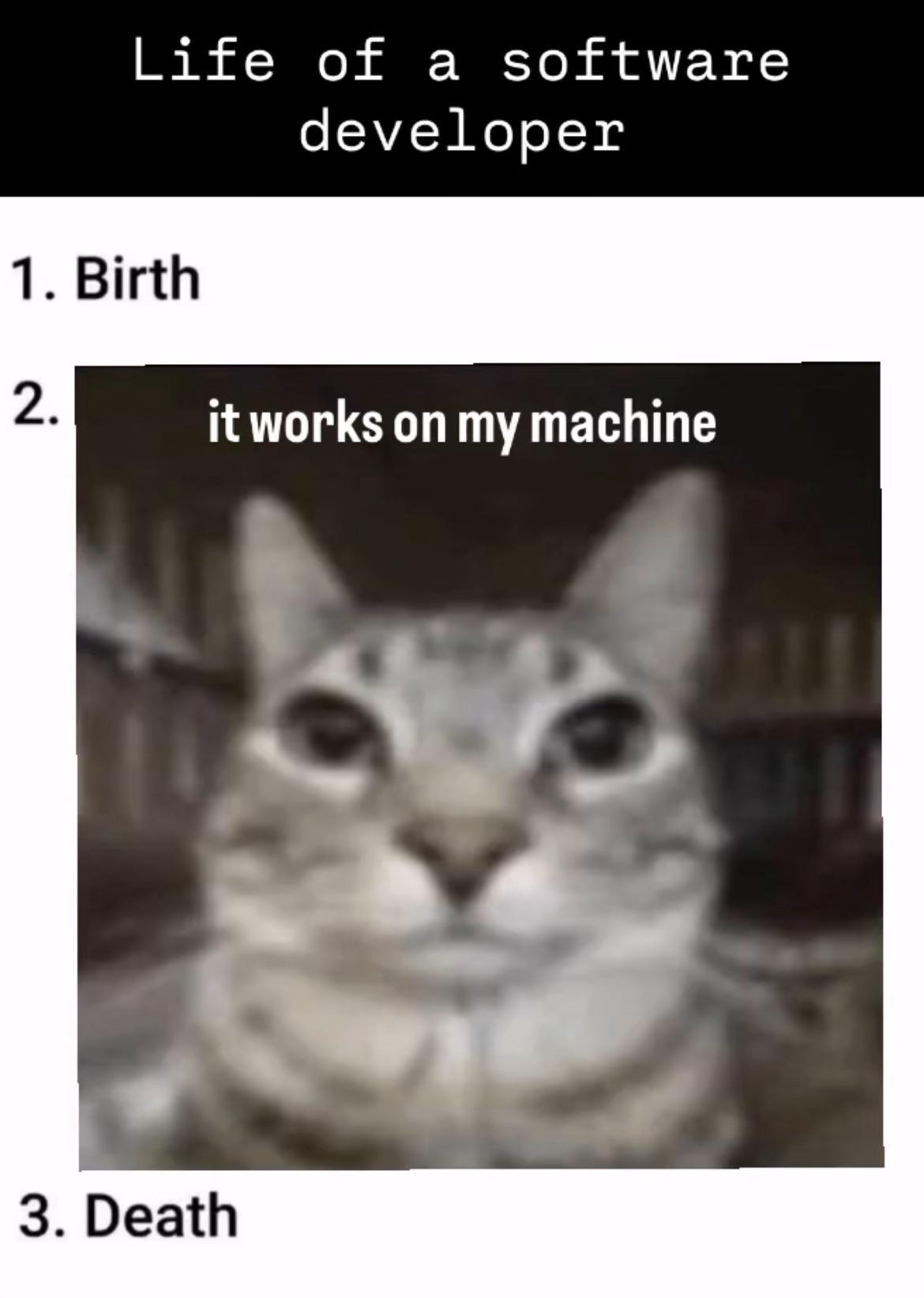
The eternal dance between game devs and playtesters. Dev nervously asks if their precious creation has no bugs, already knowing the answer. Playtester's silence speaks volumes - they've discovered something catastrophic that wasn't in the patch notes. That moment of dread when you realize your "it works on my machine" certification is about to be violently revoked. Somewhere, a QA engineer is laughing while adding another item to the bug tracker.

The Real World Experience Of Trying To Persuade Windows Users To Switch To Linux.

The Real World Experience Of Trying To Persuade Windows Users To Switch To Linux.
Content WINDOWS USERS LINUX IS A BETTER igflip.com OPERATING SYSTEM амс

Developers vs. Users: The Eternal Struggle

Developers vs. Users: The Eternal Struggle
The eternal disconnect between how developers see their creation versus the absolute chaos users unleash upon it. On the left, developers admire their beautiful baby app with its perfectly arranged features and intuitive design. "I love it! Me too!" they proudly exclaim. Meanwhile on the right, users are basically stuffed animals in a washing machine - frantically smashing buttons, ignoring documentation, and somehow finding ways to break the software that developers couldn't imagine in their wildest fever dreams. Nothing quite captures the existential dread of checking error logs on Monday morning to discover what unholy combinations of inputs your users discovered over the weekend. "But why would anyone even TRY to do that?!"

Bug Reports Are Just Love Letters From QA

Bug Reports Are Just Love Letters From QA
The eternal dance between developers and QA summed up in one perfect shot. When your code is your baby, every bug report feels like someone calling your child ugly. But deep down, we know those QA folks are just trying to save us from ourselves before production catches fire. They meticulously document every edge case we "forgot" to test because we were too busy implementing that cool new feature nobody asked for. The relationship might be complicated, but without those love letters, we'd all be updating our resumes after the first deployment.