

Infosec Memes

Posts tagged with Infosec
Don't Try This

Don't Try This
Security through absolute chaos. The digital equivalent of leaving your front door wide open with a sign that says "Free stuff inside" just to confuse burglars. Opening all ports, never updating the OS, and removing all passwords isn't security—it's creating a honeypot so cursed that hackers think it's a trap. They see this setup and their threat assessment models just crash. "Nobody could possibly be this reckless... must be the FBI." The real genius here is weaponizing incompetence to the point where it becomes indistinguishable from a sophisticated sting operation. Your move, hackers.

This Is Why You Rotate Passwords

This Is Why You Rotate Passwords
Your security team keeps nagging everyone about "password rotation best practices" and "regular credential updates," but nobody told the keypad that the most frequently used buttons would literally wear themselves into oblivion. Look at those poor 1, 3, 4, 5, and 6 keys—completely rubbed smooth like a junior dev's confidence after their first production incident. Meanwhile 7, 8, 9, and 0 are sitting there pristine, probably judging the whole situation. You don't need a security audit to crack this code; you just need functioning eyeballs. Plot twist: rotating your password from 1234 to 4321 doesn't actually help when the wear pattern screams "these are the only numbers I use." This is basically a physical timing attack, except instead of measuring CPU cycles, you're measuring how much finger grease can destroy plastic. Security through obscurity? More like security through finger oil patterns.

This Is My Level Of Cybersecurity

This Is My Level Of Cybersecurity
Ah yes, the rubber band firewall. Because nothing says "enterprise-grade security" like physically preventing your ethernet cable from connecting to the network. Can't get hacked if you can't get online, right? It's technically air-gapped security, just with extra steps and a lot more desperation. Honestly though, after dealing with zero-day exploits, supply chain attacks, and explaining to management why we need to patch for the 47th time this month, maybe this person is onto something. Sometimes the best defense is just... not playing the game at all.

Meanwhile At Duck Duck Go

Meanwhile At Duck Duck Go
So someone's touring DuckDuckGo's supposedly Fort Knox-level data center with "24/7/365 surveillance, direct access control and robust perimeter security" when a literal duck just casually waddles through the server floor. You know, the privacy-focused search engine that uses a duck as their mascot? The irony is chef's kiss. The gap between enterprise security theater and reality has never been more perfectly captured. All those fancy buzzwords about surveillance and access control, and nature just said "nah" and sent in a feathered infiltrator. The person's reaction is pure gold – the panic mixed with the realization that they're witnessing something absolutely legendary. Somewhere, a security engineer is updating their incident report: "Unauthorized waterfowl breach detected. Existing protocols ineffective against avian threats. Recommend breadcrumb-based deterrent system."

Lady Gaga Private Key

Lady Gaga Private Key
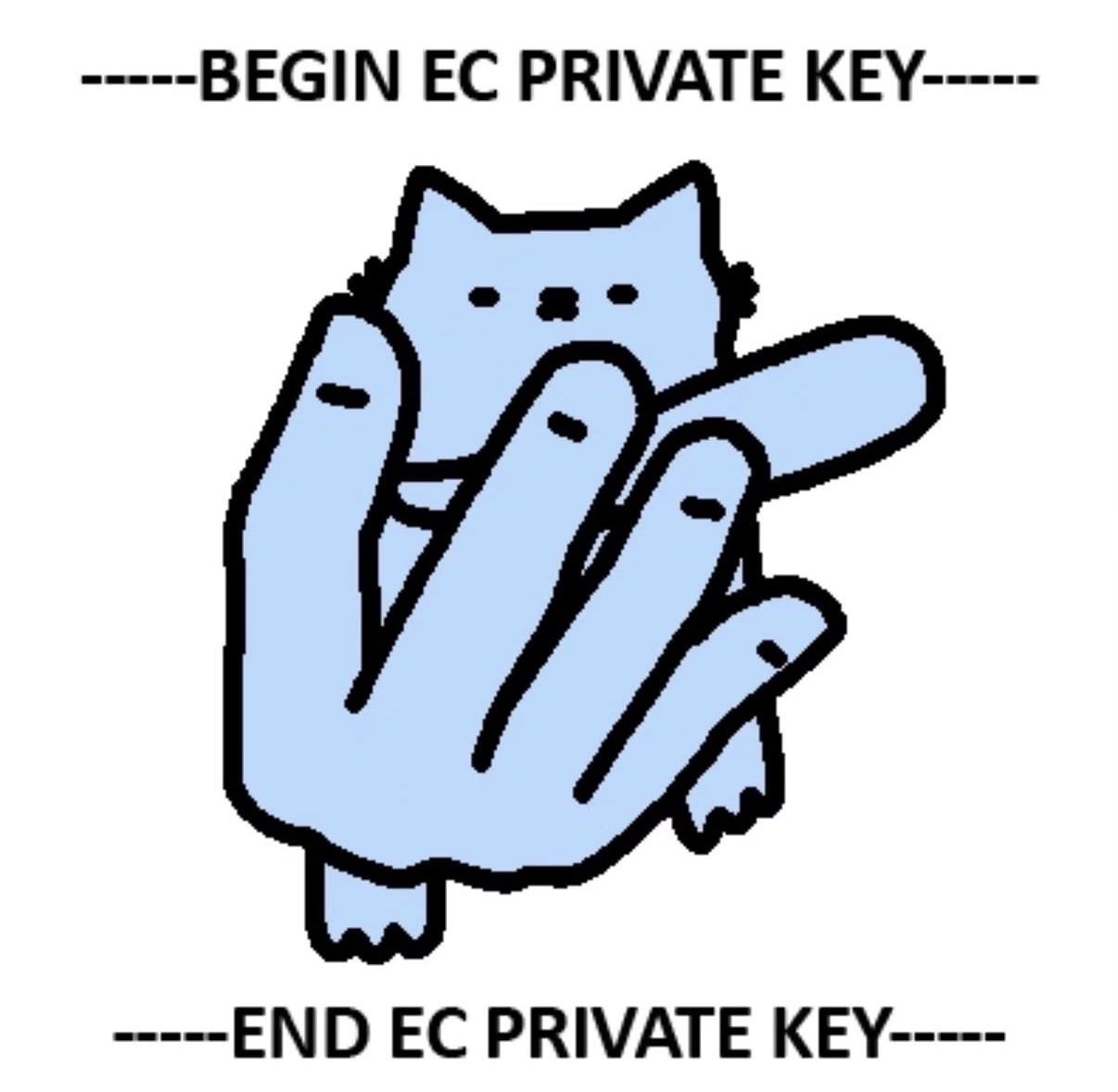
When Lady Gaga accidentally tweets what looks like someone's entire private key from 2012, and a programmer decides to format it properly with BEGIN/END tags like it's a legit PEM certificate. Because nothing says "secure cryptography" like a pop star's keyboard smash going viral. The beauty here is that Lady Gaga probably just fell asleep on her keyboard or let her cat walk across it, but to security-minded devs, any random string of gibberish immediately triggers the "oh god, did someone just leak their SSH key?" reflex. The programmer's brain can't help but see patterns in chaos—it's like pareidolia but for cryptographic material. Pro tip: If your actual private key looks like "AAAAAAAAAAAHHHHHRHRGRGRGRRRRG," you've either discovered a new compression algorithm or your key generation ceremony involved too much tequila.

Two Factor Authentication

Two Factor Authentication
The most secure authentication method known to developers - a can with scissors jammed in it. Need to access your account? You'll need both the can AND the scissors! Security experts hate this one weird trick that somehow meets compliance requirements while being utterly useless. Just like how most corporate 2FA implementations feel when you're forced to type in a code that was texted to the same device you're already holding. Pure security theater at its finest!

The Public Private Key Paradox

The Public Private Key Paradox
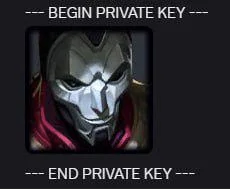
The greatest cryptographic catastrophe of our time! Someone just mistook Lady Gaga's keyboard-smashing tweet from 2012 as their private SSH key and posted it publicly with the "BEGIN PRIVATE KEY" header. That's like leaving your house key under a doormat labeled "DEFINITELY NOT A KEY HERE." Any security engineer seeing this is simultaneously laughing and having heart palpitations. The irony of labeling something as private while broadcasting it to the entire internet is just *chef's kiss* perfect.

Your Password Complexity Is: Nonexistent

Your Password Complexity Is: Nonexistent
When your security team spends millions on a high-tech surveillance system but sets the password to the name of the building... classic. Somewhere a security consultant is having a stroke right now. It's like putting your house key under the doormat and wondering why you got robbed. Next they'll tell us the admin username was "admin" and the backup plan was a guard with a flashlight who fell asleep. Billion-dollar art collection, five-cent password policy.

Sharing Your API Keys With The Entire Airport

Sharing Your API Keys With The Entire Airport
Nothing says "digital nomad lifestyle" quite like exposing all your API keys and database credentials to everyone at the airport! That suitcase isn't for clothes—it's for carrying the weight of the impending security breach when someone zooms in on this photo. Remote work perks: exotic locations, flexible hours, and accidentally giving hackers a free all-access pass to your company's entire infrastructure. But hey, at least the Instagram caption will look cool!

When Your Private Key Is Public

When Your Private Key Is Public
When your private key is just a Lady Gaga tweet from 2012. Somewhere a security engineer is having a heart attack right now. Nothing says "military-grade encryption" like random characters from a pop star's keyboard smash that's been publicly available for over a decade. Next up in cybersecurity innovations: using your cat's walking pattern across your keyboard as your password hash.

Remember Not To Broadcast Your Login Credentials On National Television

Remember Not To Broadcast Your Login Credentials On National Television
OH. MY. GOD. Someone just casually broadcasted their Microsoft session operator password (literally "Sab001") and then had the AUDACITY to remind everyone to use their personal credentials for minimum apps! 💀 This is the security equivalent of locking your front door but leaving a note on it saying "KEY UNDER DOORMAT" in neon letters. The security team is probably having simultaneous heart attacks right now while hackers are sending thank-you cards to the TV station! The absolute IRONY of a sign telling people to protect their credentials while broadcasting the password to millions is just *chef's kiss* perfection. Security through obscurity? More like insecurity through publicity!

Remember To Not Broadcast Your Login Credentials On National TV If Possible

Remember To Not Broadcast Your Login Credentials On National TV If Possible
Nothing says "we take security seriously" like posting your admin credentials on a sticky note that ends up on national TV. That sign literally says "For Microsoft Session We Use Operator Password: Sab001" and then goes on about personal credentials for other systems. Some poor IT admin is having a heart attack right now while frantically resetting passwords across the entire organization. The best security system in the world, defeated by a post-it note and a camera crew. Classic example of why your security policy should include "don't write passwords where millions can see them."