Framework wars Memes

Posts tagged with Framework wars
Multi Platform Mobile Development

Multi Platform Mobile Development
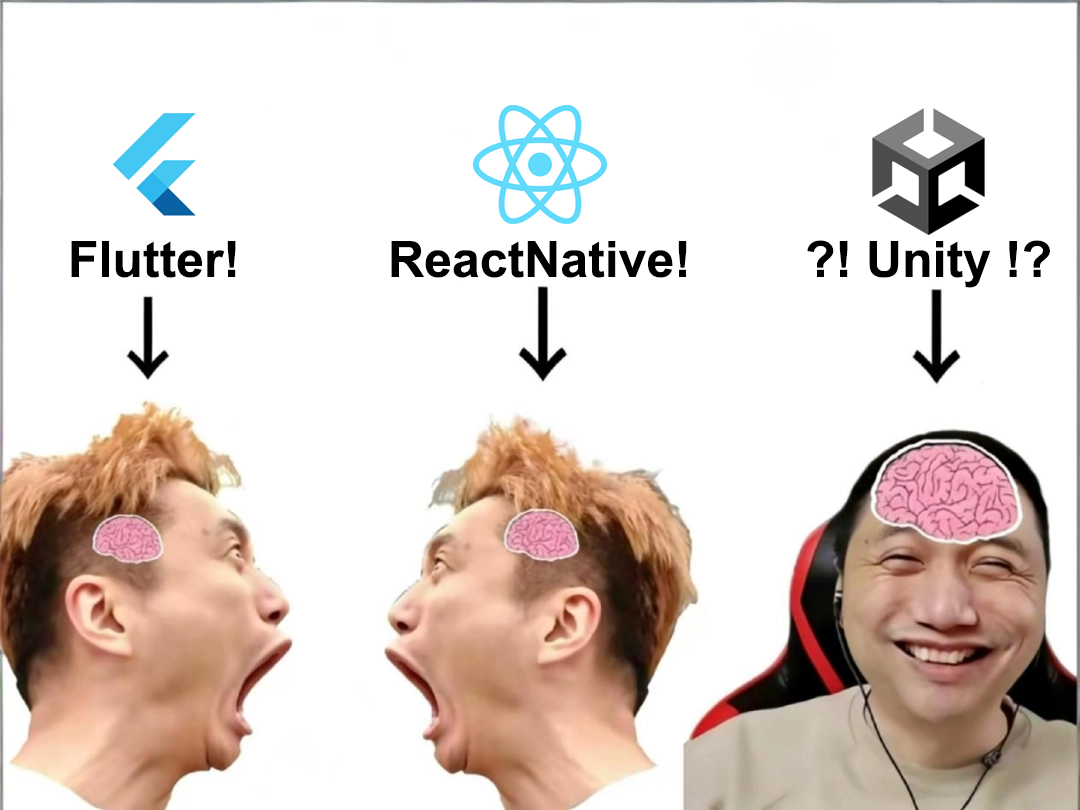
Flutter developers and React Native developers screaming at each other about which framework is superior while Unity developers sit there with galaxy brain energy, casually shipping their mobile apps with a game engine designed for 3D rendering. Because nothing says "efficient mobile development" quite like bringing an entire physics engine to display a login form. To be fair, if your app needs to run on iOS, Android, a smart fridge, and probably a toaster, Unity's got you covered. Overkill? Maybe. Does it work? Unfortunately, yes.

How True Is This?

How True Is This?
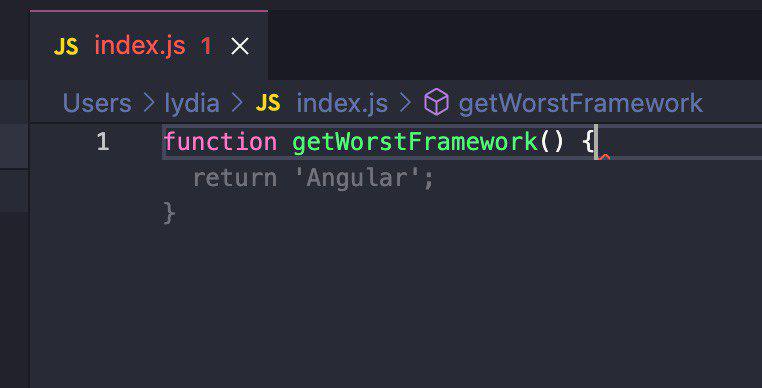
Ah yes, the classic framework wars bait. Someone created a function that returns 'Angular' as the worst framework, and honestly, the audacity is chef's kiss. The function name doesn't lie—it's literally called getWorstFramework() , so there's zero ambiguity about the developer's feelings here. What makes this extra spicy is that it's sitting in a file path that screams "production code" with Users > lydia > JS > index.js, meaning someone actually committed this opinion to their codebase. The real question isn't whether it's true, but rather how long until the Angular devs find this file and start a holy war in the PR comments. React and Vue developers are probably cackling somewhere while eating popcorn.

I Have New Project That Requires JS

I Have New Project That Requires JS
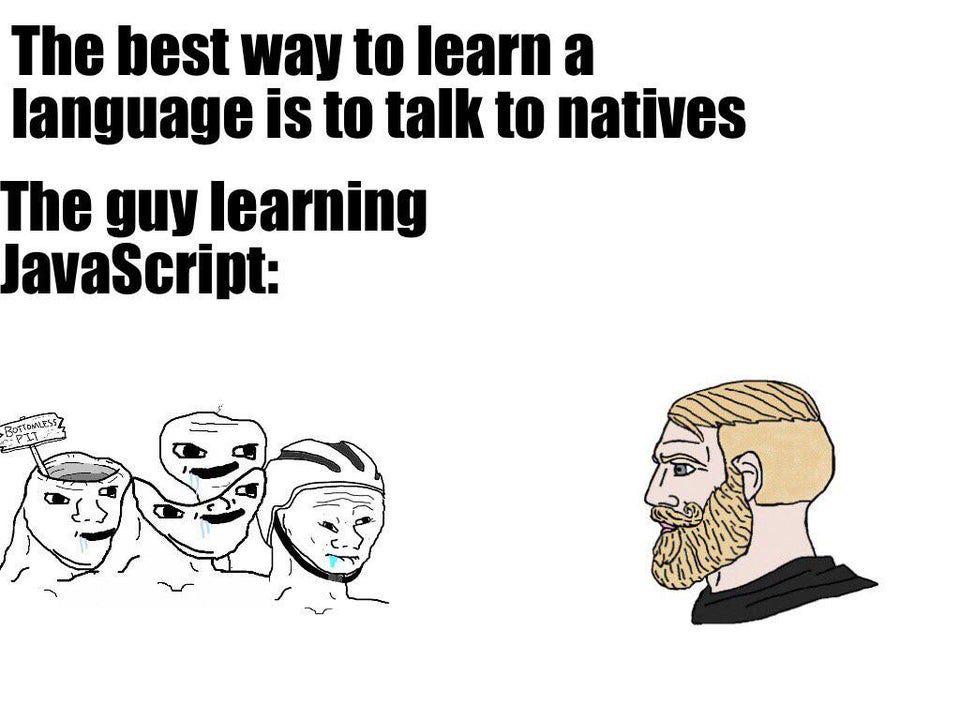
You know how language learners are told to immerse themselves and talk to native speakers? Well, when you're learning JavaScript, the "natives" are a chaotic bunch of framework warriors who've been arguing about semicolons since 2009. Instead of helpful guidance, you get three different opinions on whether to use React, Vue, or Angular, a lecture about why you should've used TypeScript, and someone aggressively suggesting you rewrite everything in Rust. Good luck finding a coherent answer when one dev swears by callbacks, another worships promises, and the third has ascended to async/await enlightenment. Learning JS by talking to JS developers is like asking for directions and getting a philosophical debate about the nature of roads.

Tomato Tomato

Tomato Tomato
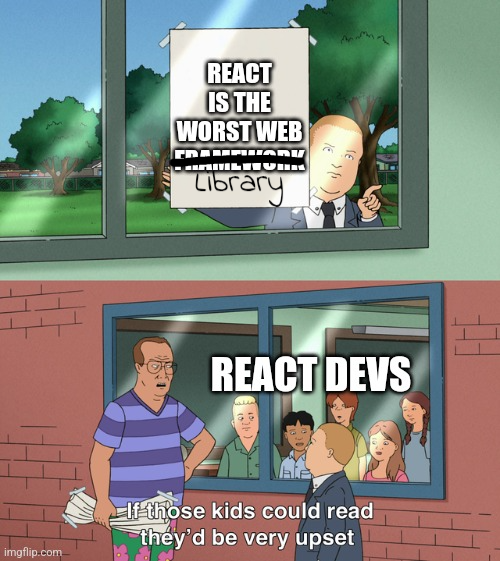
Someone's got a hot take about React being "the worst web framework," and the React devs are standing outside like concerned parents shielding their children from profanity. The irony? React isn't even a framework—it's a library. But try explaining that distinction at a tech meetup and watch everyone's eyes glaze over faster than a useEffect with missing dependencies. The beauty here is that React devs have heard every criticism imaginable: "It's too complicated!" "JSX is ugly!" "Why do I need 47 dependencies for a button?" Yet they remain unfazed, quietly building SPAs while the framework wars rage on. Whether you call it a framework or library, whether you love it or hate it—tomato, tomato. The React ecosystem keeps chugging along with its 200MB node_modules folder regardless.

Memory

Memory
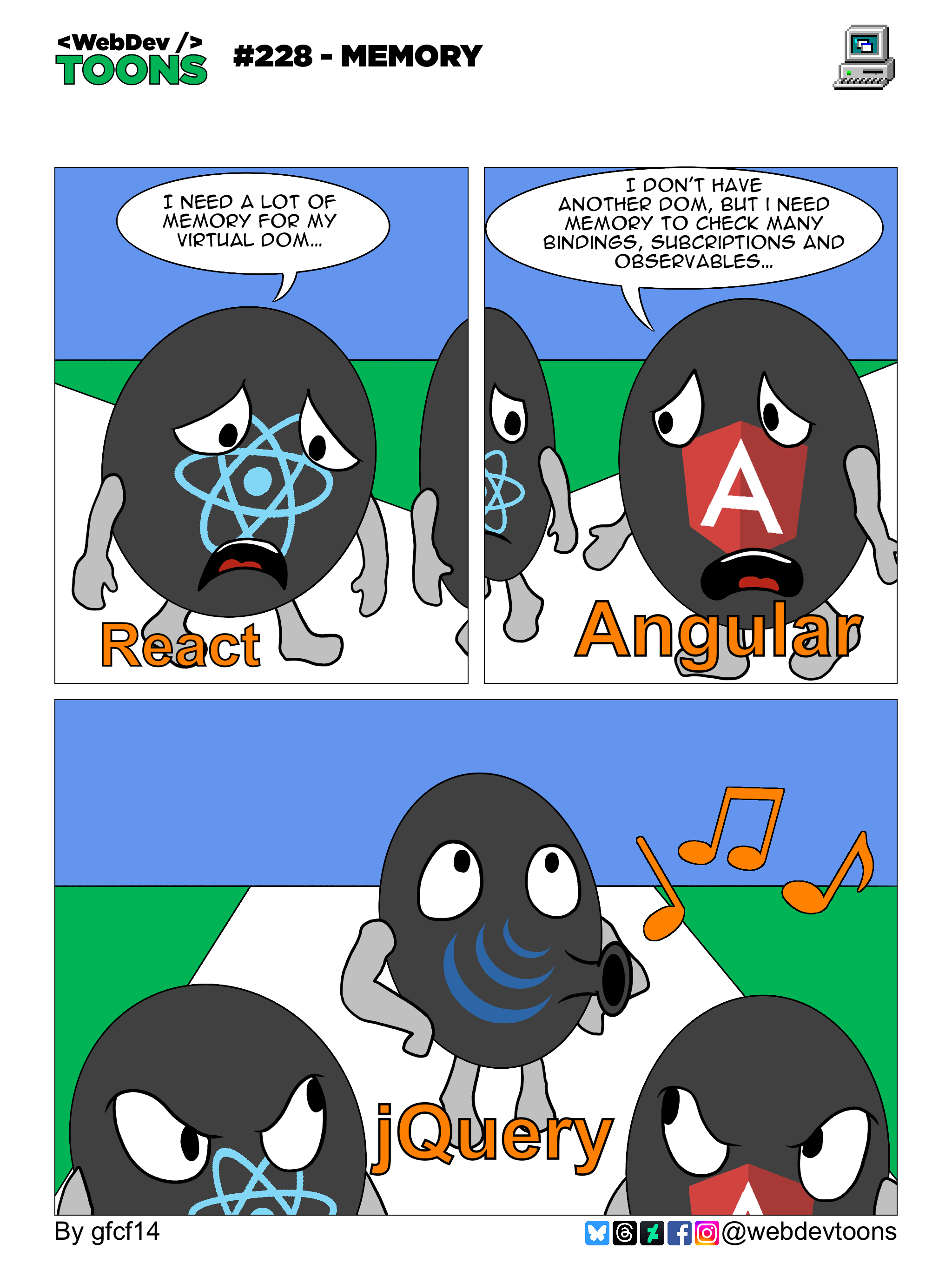
React needs memory for its virtual DOM. Angular needs memory for bindings, subscriptions, and observables. Meanwhile jQuery just vibes with direct DOM manipulation, whistling past the graveyard of modern frontend architecture. The real joke here is that both modern frameworks are stressed about their memory footprint while jQuery is out here living its best life with zero abstractions and maximum selector chaos. Sure, your app might be unmaintainable spaghetti code, but at least you're not debugging memory leaks in a reactive state management system at 2 PM on a Friday.

A Brief History Of Web Development

A Brief History Of Web Development
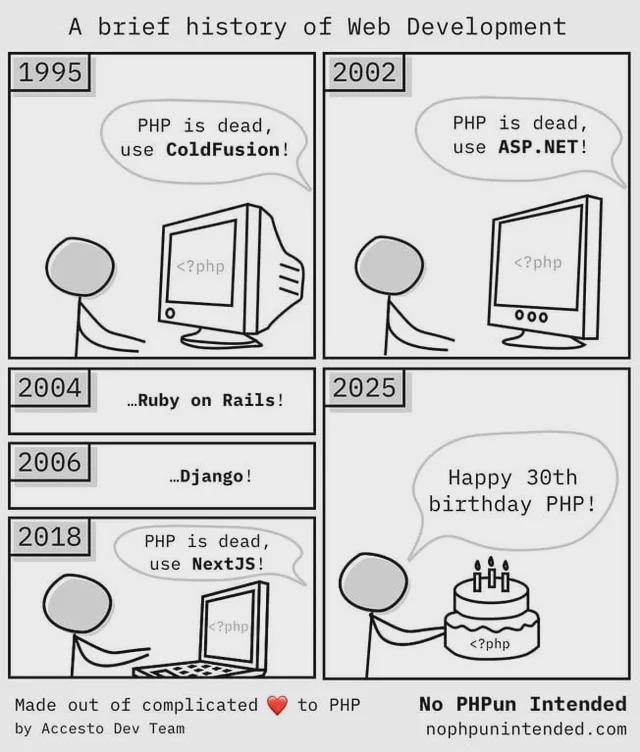
PHP sitting there like the cockroach that survived the nuclear apocalypse while everyone keeps throwing funeral arrangements at it. For THREE DECADES people have been writing PHP's obituary, and yet here we are in 2025 celebrating its 30th birthday like it's some kind of immortal deity that feeds on developer hatred. ColdFusion? Dead. ASP.NET's glory days? Faded. NextJS being the "PHP killer"? PHP literally laughed and ate another slice of birthday cake. The cycle is HILARIOUS: new framework drops → "PHP is dead!" → PHP continues powering like 77% of the web → confused pikachu face → repeat. Meanwhile Ruby on Rails and Django got their little moment of fame in the timeline like supporting characters in PHP's never-ending sitcom. The real plot twist? That

Svelte Is Better

Svelte Is Better
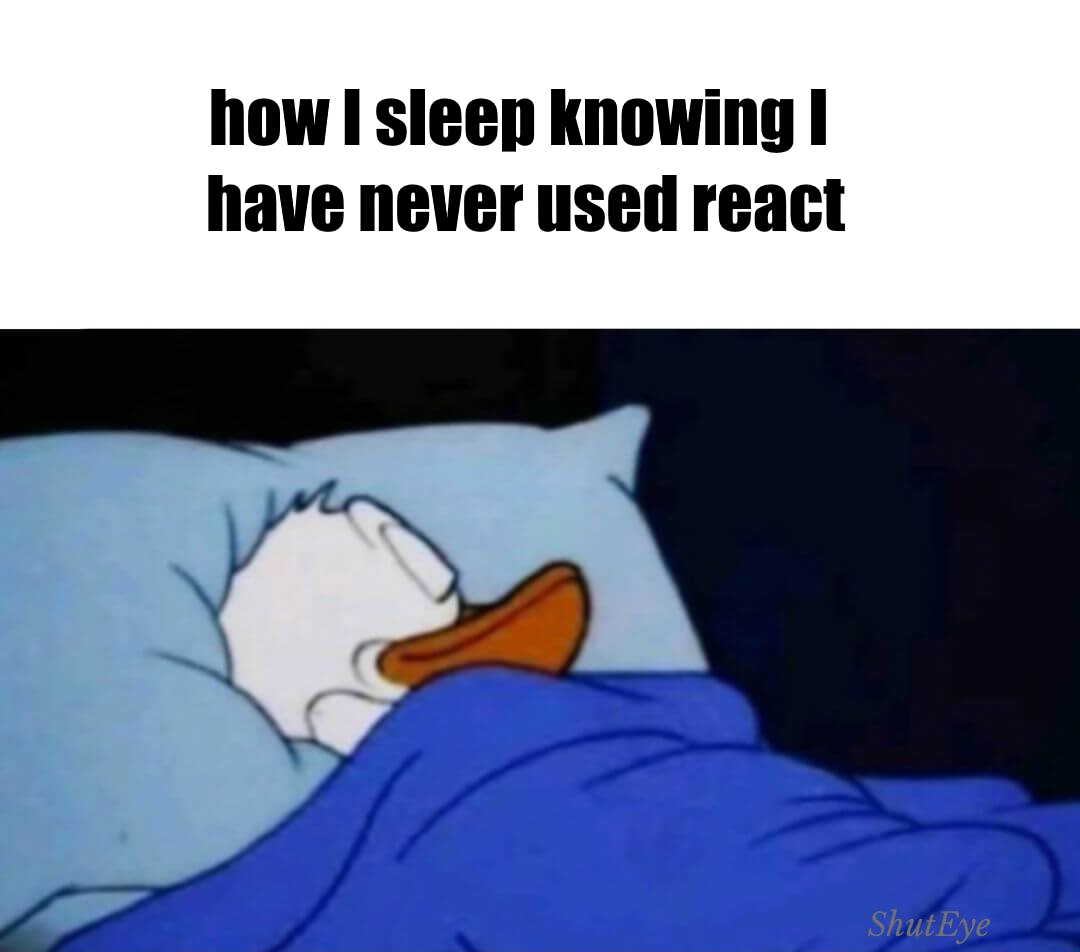
You know what's wild? The frontend framework wars have gotten so tribal that people will confidently argue about which one is superior without ever touching the "inferior" one. It's like reviewing a restaurant you've never been to based on Yelp comments. React devs catching strays from Svelte enthusiasts who sleep peacefully knowing they've never had to deal with useEffect dependencies or the joy of explaining why you need three different state management libraries. Meanwhile, they're out here living their best life with reactive declarations and no virtual DOM overhead. The real kicker? Both frameworks will be replaced by something else in 2 years anyway. Sweet dreams, framework warriors.

The Immortal PHP: Still Not Dead In 2025

The Immortal PHP: Still Not Dead In 2025
For nearly three decades, developers have been declaring PHP's funeral while hyping the next hot framework. ColdFusion, ASP.net, Django, Rails, Flask, Angular, Next.js, Python—they've all taken turns as PHP's supposed executioner. Yet there it stands in 2025, like some immortal deity rising from the clouds, declaring "As you can see, I am not dead." PHP is basically the tech world's cockroach—it would survive a nuclear apocalypse while React is still trying to resolve its dependencies.

Is Brendan Eich In The Room

Is Brendan Eich In The Room
JavaScript devs watching Ruby on Rails folks tear each other apart over politics while sipping coffee through their npm dependency hell. First time? Ha! The JS community survived ES6 vs ES5, jQuery wars, framework fatigue, and approximately 8,742 state management libraries. Political drama? That's just Tuesday for us. We've been divided since someone first suggested semicolons were optional.

A Brief History Of Web Development

A Brief History Of Web Development
The eternal zombie apocalypse of PHP development in one perfect timeline! From 1995's "PHP is dead, use ColdFusion!" to 2002's ASP.NET hype train, through Ruby on Rails and Django eras, all the way to 2018's NextJS revolution... yet somehow PHP keeps shambling along despite three decades of obituaries. It's the cockroach of programming languages—surviving nuclear winters, framework fads, and endless "X is the PHP killer" declarations. By 2025, we'll all be attending its 30th birthday party while secretly writing The real joke? Half the internet still runs on it. Complicated love indeed.

Which Link Should I Click

Which Link Should I Click
Frontend development in a nutshell. Two contradicting articles with the exact opposite titles, both written with absolute conviction. One says "Web Components Are Not the Future" while the other declares "Web Components ARE the Future." This is why junior devs stare blankly at their screens when asked which framework to learn. The entire web ecosystem is just senior developers confidently disagreeing with each other in Medium articles.

When "I Love Coding" Means Something Completely Different

When "I Love Coding" Means Something Completely Different
The classic tech pickup line that actually worked! The first panel shows two people bonding over "loving coding," but the second panel reveals what they really mean - completely different tech stacks that would make any senior dev cry. Left side's running Webflow, Jira, Figma, GraphQL, Spark and some hipster frontend frameworks, while right side's rocking IntelliJ, Visual Studio, Docker, Slack, GitHub, Kubernetes and SQL. Their relationship is basically microservices vs. monolith architecture in human form. They'll figure out their incompatibility issues during the first pair programming session. Still a better love story than tabs vs. spaces though!