

Tokio Memes

Posts tagged with Tokio

Global Hate

Global Hate
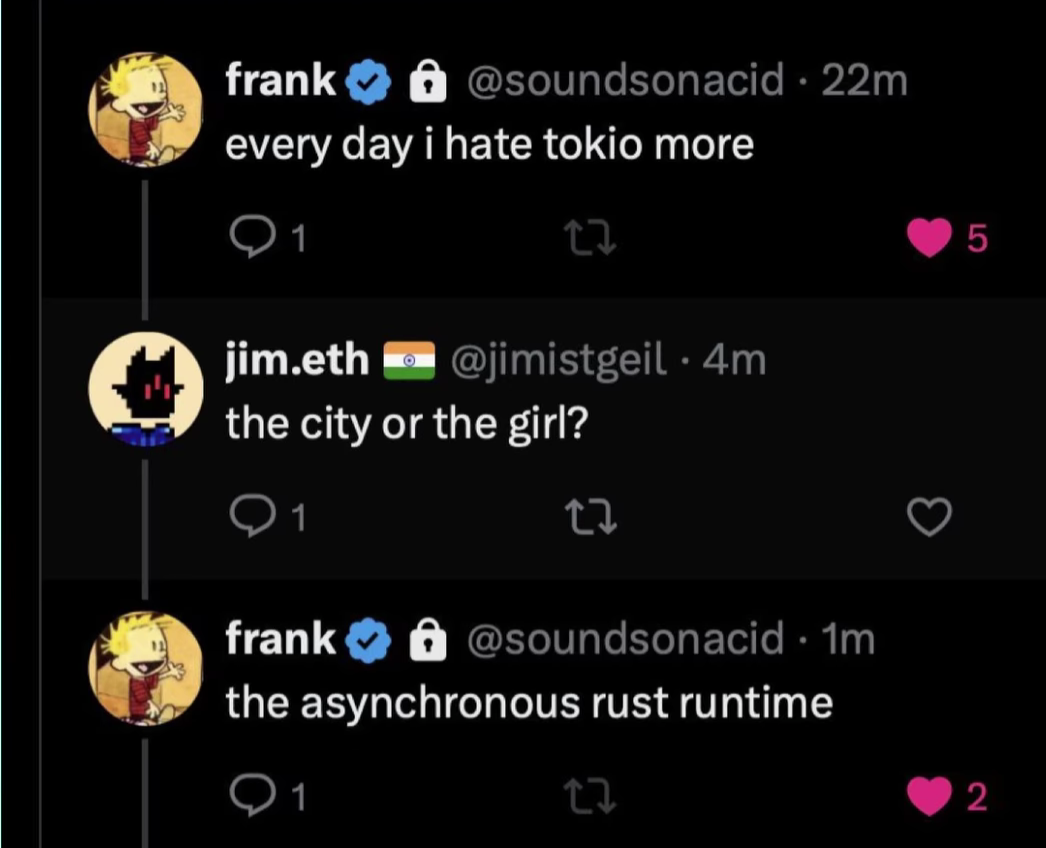
Someone asks what they hate, expecting maybe a city or a person. The answer? Tokio. But not Tokyo the city—turns out they meant the asynchronous runtime library for Rust. Because nothing says "passionate developer opinions" quite like having beef with a runtime library that's literally designed to make your life easier. The punchline lands harder when you realize how universal this is. Every language has that one library everyone loves to hate while simultaneously using it in every project. It's like complaining about your coworker who's actually carrying the entire team—you can't live with them, can't ship without them.

Import Regret

Import Regret
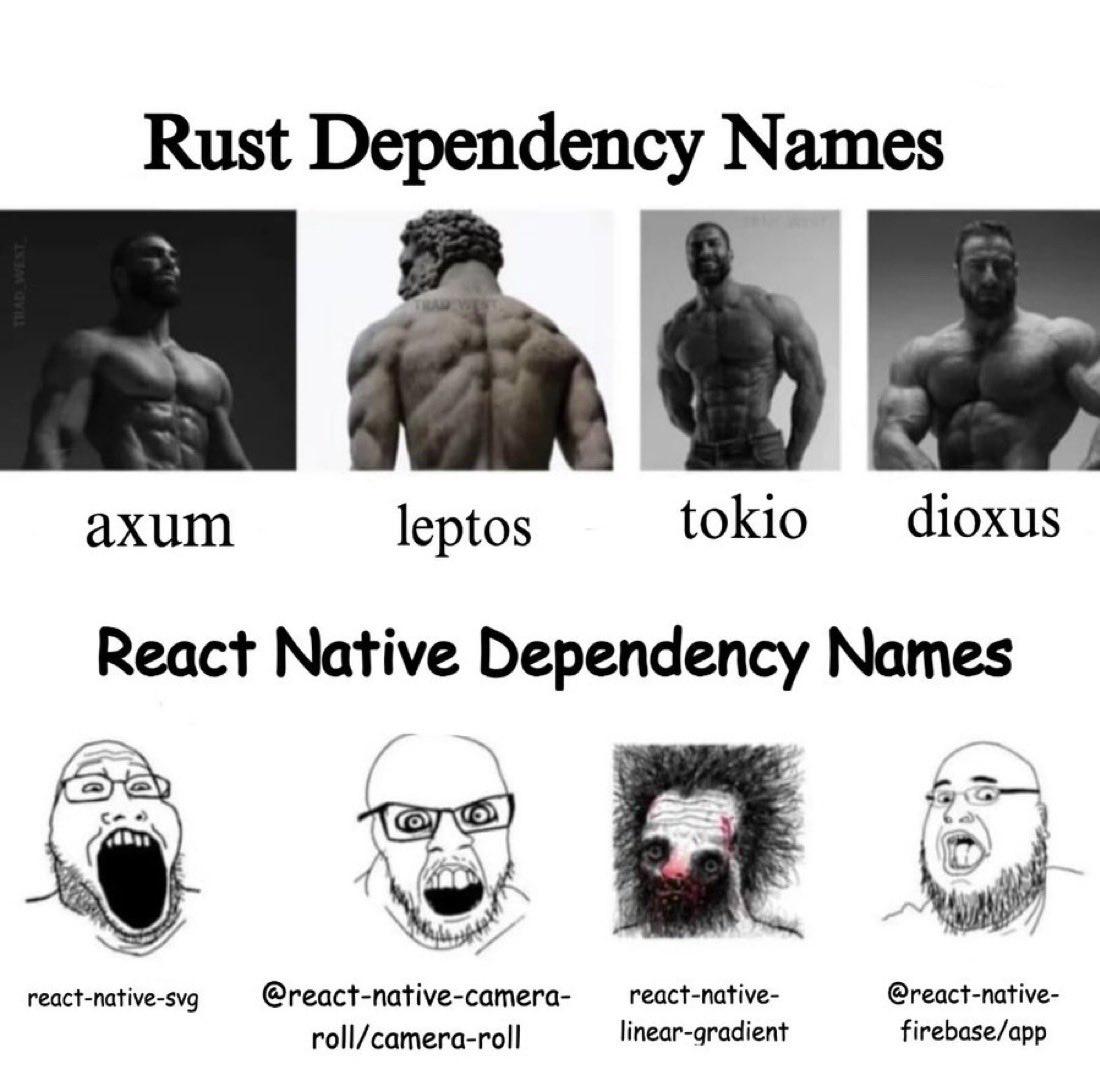
Rust developers get to import dependencies with names that sound like ancient Greek warriors: axum, leptos, tokio, dioxus. Meanwhile React Native devs are stuck typing @react-native-camera-roll/camera-roll like they're navigating a corporate directory structure designed by a committee that hates joy. The scoped packages with their forward slashes and redundant naming conventions read like someone's having an identity crisis. "Yes, I'm react-native-firebase, but also I live in the @react-native-firebase namespace, and my actual name is /app, nice to meet you." Every import statement becomes a novel. Rust said "one word" and moved on with their life.

When Your HTTP Server Hits The Gym

When Your HTTP Server Hits The Gym
Regular Node.js HTTP server is the wimpy doge, while Rust-powered frameworks like Tokio and Hyper (used in Native Node Add-Ons) are the buff, muscular doge. The transformation happens "when you need raw throughput!" because Rust's memory safety without garbage collection gives you those sweet, sweet performance gains that make JavaScript developers cry into their async/await pillows at night. BrahmaJS is basically Node.js hitting the gym and getting those Rust steroids injected straight into its runtime.