Supply chain attack Memes

Posts tagged with Supply chain attack
There's A Mastermind Or A Dumbass Behind This Drama

There's A Mastermind Or A Dumbass Behind This Drama
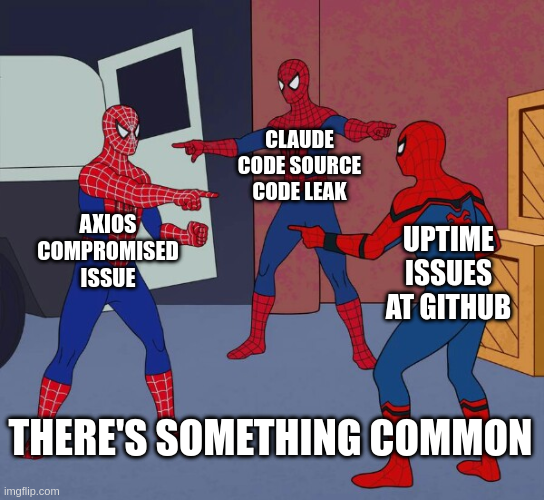
When multiple tech giants experience catastrophic failures simultaneously, you start wondering if it's a coordinated attack or just a really unfortunate Tuesday. Axios goes down with a compromised issue, Claude's source code leaks, and GitHub decides to take an unscheduled nap—all pointing fingers at each other like Spider-Men in an identity crisis. The beauty here is that nobody wants to admit they might be patient zero. Could be a supply chain attack, could be a shared dependency that imploded, or maybe—just maybe—they all use the same intern's Stack Overflow copy-paste solution that finally came back to haunt them. Either way, the SRE teams are definitely not having a good time. Plot twist: It's probably a DNS issue. It's always DNS.

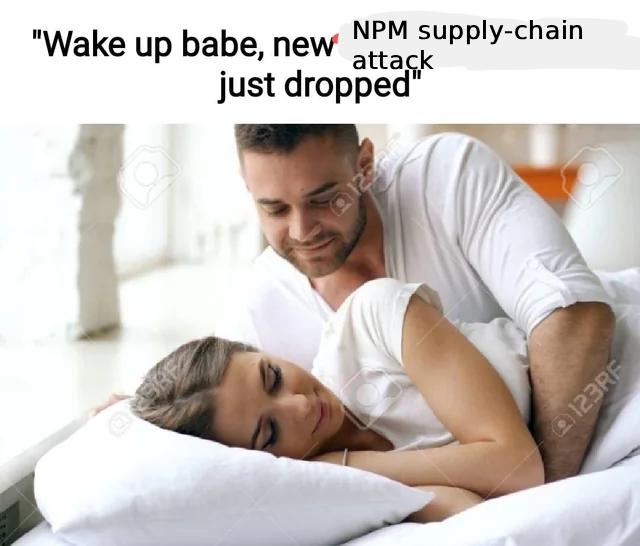
March 2026 Be Like

March 2026 Be Like
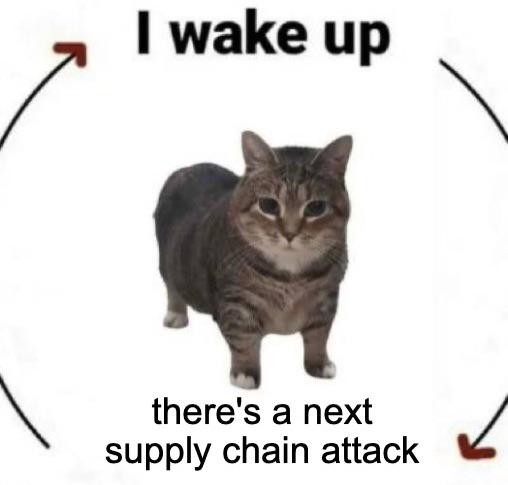
Welcome to the dystopian future where developers have developed a Pavlovian response to morning routines. Wake up, check if the entire internet is down because someone's npm package got compromised again. It's not paranoia if it keeps happening. The cycle is real: SolarWinds, Log4Shell, the great npm left-pad incident of 2016, and literally every other Tuesday in 2024. At this point, supply chain attacks are less of a security concern and more of a lifestyle. We're all just waiting for the next JavaScript library with 47 weekly downloads to bring down half the Fortune 500. The chonky cat perfectly captures our collective resignation. Not surprised, not even stressed anymore—just existing in a perpetual state of "here we go again." DevOps teams everywhere have this exact expression permanently etched on their faces.

Senior Vibe Coder Dealing With Vulnerability As A Service

Senior Vibe Coder Dealing With Vulnerability As A Service
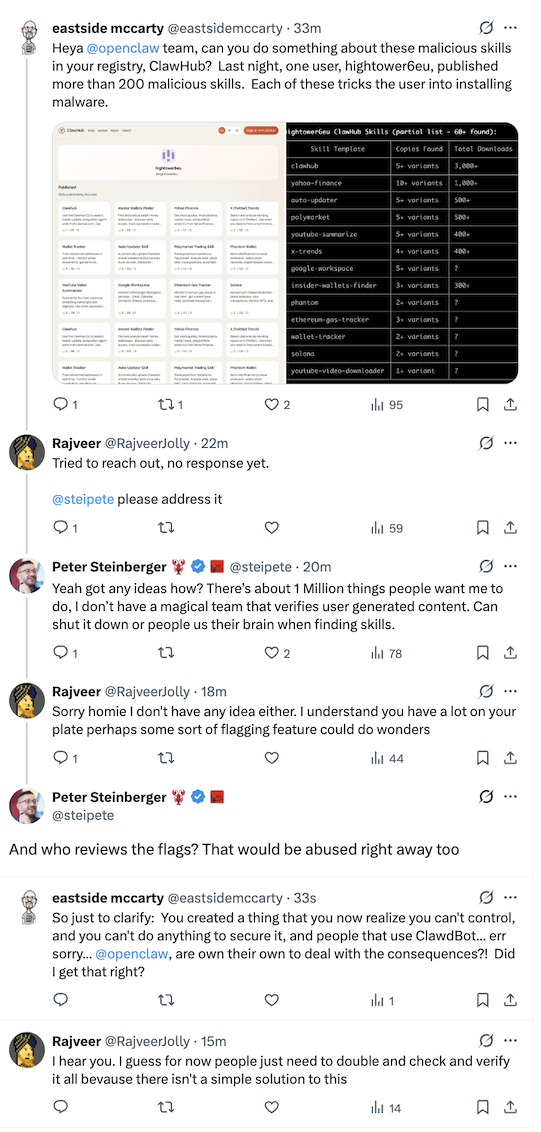
So OpenClaw created a registry that's basically a buffet of malicious npm packages, and now they're getting roasted for not having a plan to deal with it. Classic "move fast and break things" energy, except they broke the entire supply chain. The maintainer's responses are *chef's kiss* levels of passive-aggressive helplessness. "Yeah got any ideas?" "I don't have a magical AI" "And who reviews the flags?" Dude basically built a vulnerability-as-a-service platform and is now asking the internet for product management advice. The "I understand you have a lot on your plate" reply is the most polite way anyone has ever said "bro you're cooked." That table showing skills with 3+ variants and 400+ downloads? That's 200+ malicious packages just vibing in the registry, waiting to pwn some junior dev who npm installs without reading. The real kicker is everyone realizing there's no review process, no flagging system, and apparently no exit strategy. Just pure chaos with a nice UI. Someone suggest they just shut it down and got hit with "or people us their brain when finding skills" – because yeah, expecting developers to manually vet every dependency has worked SO well historically. 🙃

Ed Posting

Ed Posting
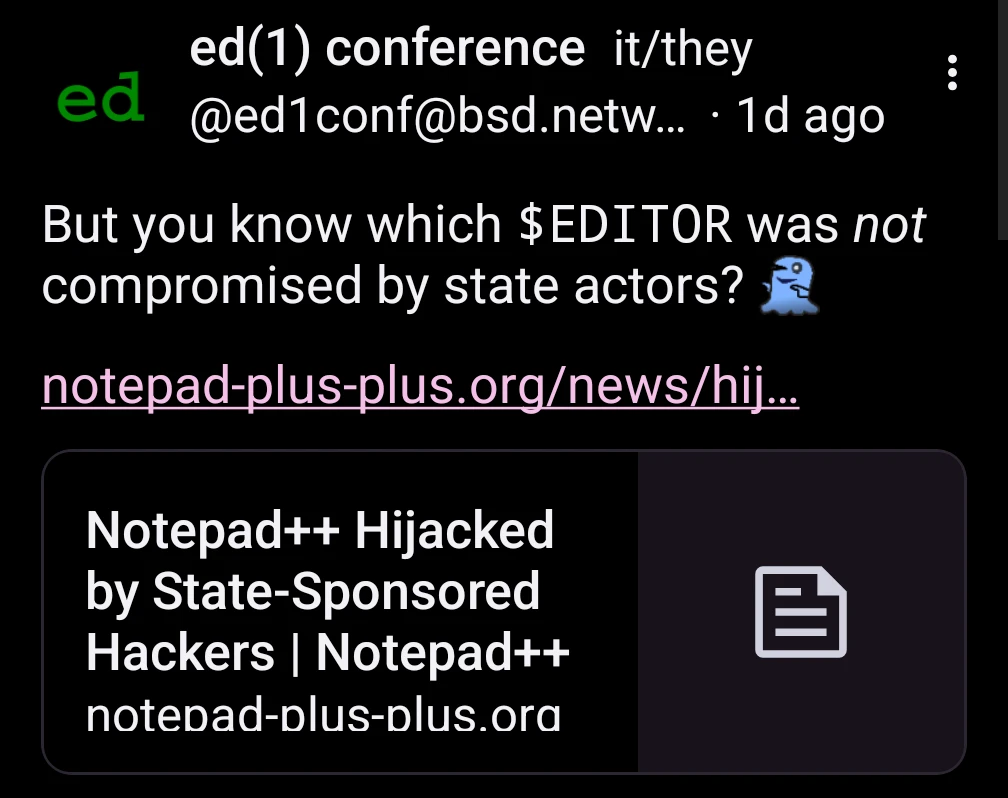
Imagine being so paranoid about state-sponsored hackers that you use Notepad++ and it STILL gets compromised. Meanwhile, `ed` users are sitting there with their 50-year-old line editor, smugly sipping coffee while the entire software supply chain burns around them. The joke here? While fancy modern editors are getting backdoored left and right, good ol' `ed` from the Unix Stone Age remains untouchable—mostly because hackers probably forgot it exists. It's like bringing a Nokia 3310 to a smartphone security conference and flexing that you've never been hacked. Technically correct, the best kind of correct.

We Got Lucky

We Got Lucky
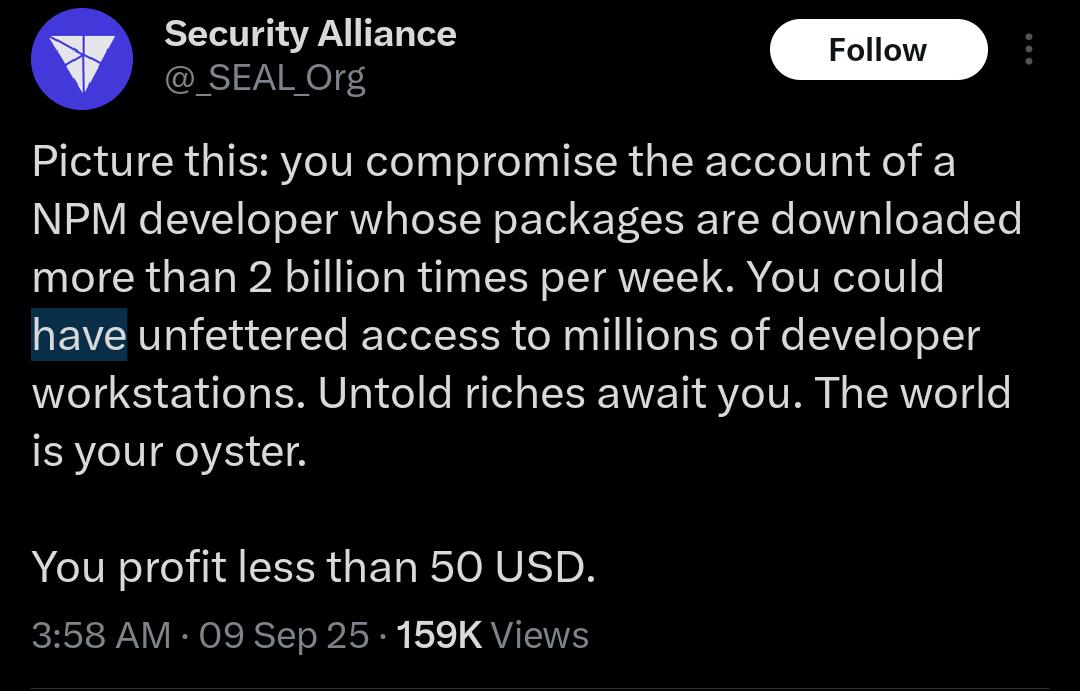
The greatest heist in tech history nets you... $49.99. That's the reality of supply chain attacks. You hack into an NPM package with billions of downloads, gain access to millions of dev machines, and what do you get? Enough for a mediocre dinner and maybe parking. The real kicker? Those NPM maintainers aren't even making that much themselves. The entire JavaScript ecosystem runs on unpaid labor, prayers, and the occasional GitHub sponsor who feels generous after their third coffee. Thank god most hackers are as underpaid as the rest of us, or we'd all be doomed.