

Readme Memes

Posts tagged with Readme
Finally Human Slop

Finally Human Slop
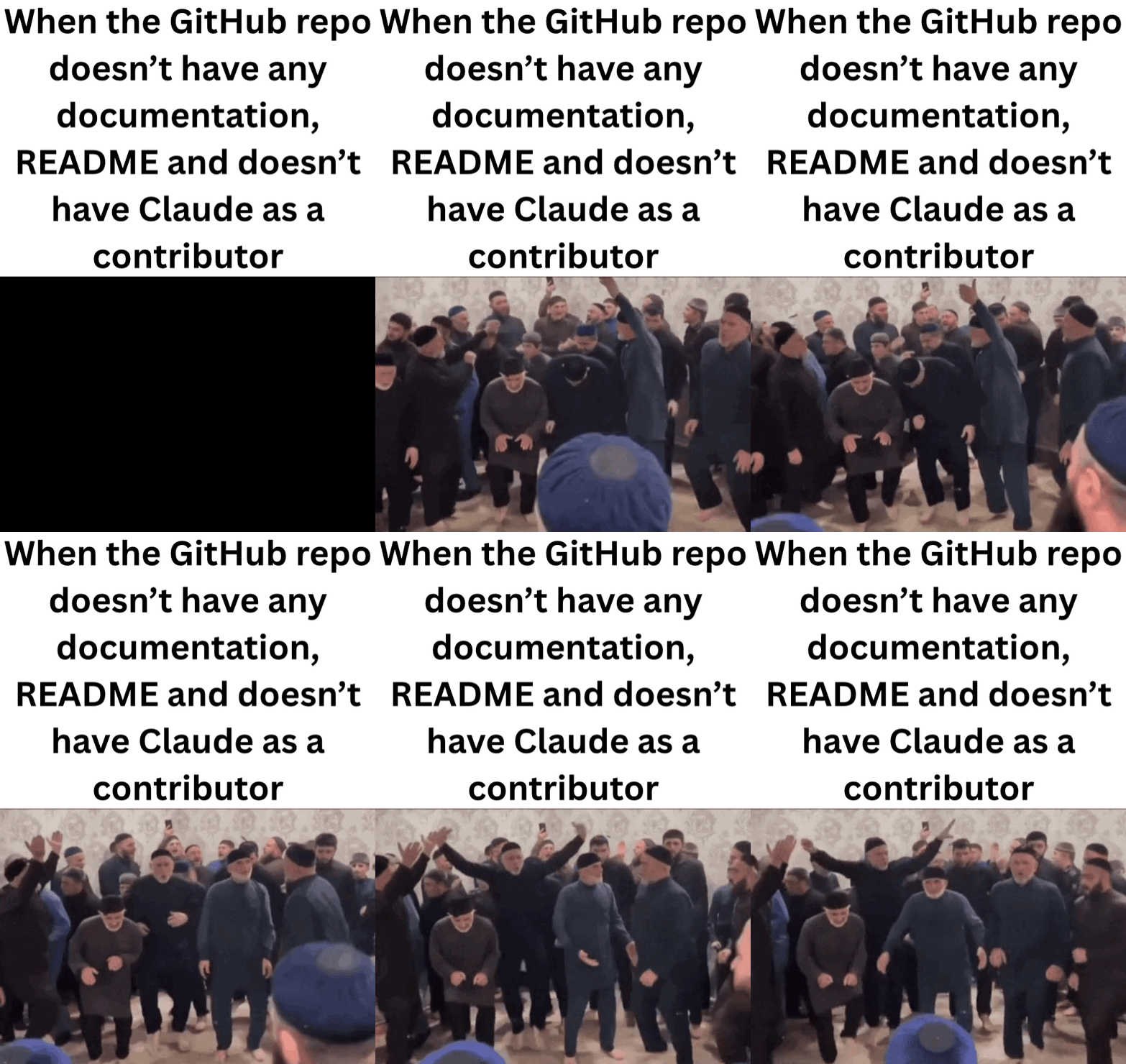
You know you've hit rock bottom when you're actually relieved that a repo has zero documentation. No README? No problem. No Claude AI contributions cluttering up the commit history? Now we're talking. We've reached the point where undocumented code written by an actual human feels like finding a vintage vinyl in a sea of AI-generated Spotify playlists. The bar has fallen so low that "made by a real person who couldn't be bothered to write docs" is now a feature, not a bug. At least you know some sleep-deprived developer actually thought about this code at 2 AM instead of prompting an LLM to generate 47 variations of the same boilerplate. There's something oddly comforting about knowing you'll have to read the source like a caveman instead of wading through AI-generated documentation that sounds helpful but says absolutely nothing. Welcome to 2024, where "human-written" is the new organic certification label for code.

No AI Has Been Used In This Project

No AI Has Been Used In This Project
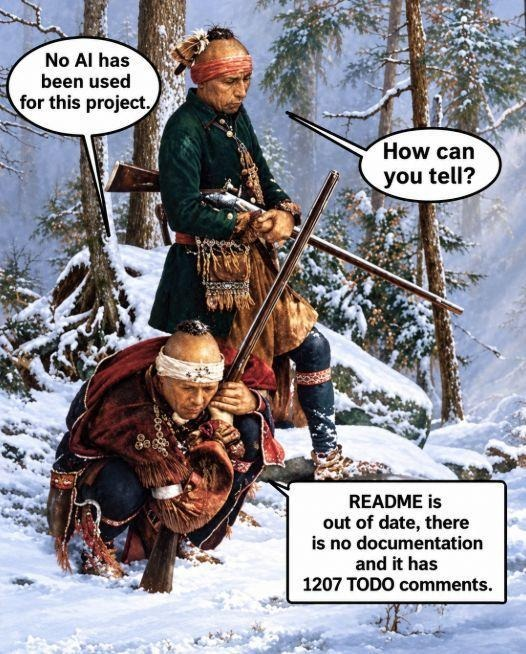
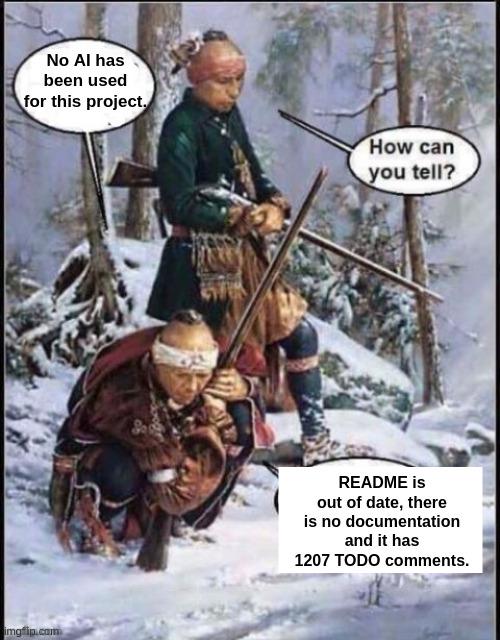
You know that project where the README was last updated when React was still cool the first time? Yeah, someone's claiming they didn't use AI to write it. Sure, buddy. The codebase is held together by duct tape and prayer—outdated docs, zero comments explaining why that cursed regex exists, and enough TODO markers to fill a Jira backlog from 2015. But hey, no AI was involved! Just pure, organic technical debt grown in-house. The real kicker? When you've got 1207 TODOs, an outdated README, and no documentation, it honestly doesn't matter whether AI touched it or not. The end result is the same nightmare for whoever inherits this mess. At least if you'd used AI, you could blame the hallucinations instead of your past self.

Claude Was Not Here

Claude Was Not Here
The classic "totally not AI-generated" project defense. Someone claims zero AI was involved, but the evidence screams otherwise: README that looks like it was abandoned mid-sentence, documentation that's basically a myth, and 1207 TODO comments scattered throughout like breadcrumbs of despair. The interrogator's question "How can you tell?" is chef's kiss because yeah, how DO you tell when someone used Claude/ChatGPT? Easy: when the code has that suspiciously polished veneer but the README reads like "TODO: Write README" and there are more TODO comments than actual implementation. It's the software equivalent of submitting an essay with "INSERT CITATION HERE" still visible. Pro tip: AI writes beautiful code snippets but conveniently forgets about documentation, testing, and cleaning up those 1207 placeholder comments it generated. Dead giveaway every time.

Readme Engineer

Readme Engineer
Oh, the AUDACITY of AI to turn your dreams of writing elegant code into an endless cycle of formatting README.md files! You signed up to architect beautiful systems, solve complex algorithms, and ship features that change the world. Instead, you're out here wrestling with markdown syntax, deciding between two or three hashtags for headers, and making sure your bullet points are *perfectly* aligned. The AI revolution promised to make you more productive, but instead it just made you the world's most overqualified documentation specialist. Your CS degree is crying in a corner somewhere while you debate whether to use badges or emojis in your project description. 🎭

I Did Not Vibe Code This

I Did Not Vibe Code This
You start innocently enough—just adding a few sparkles ✨ and checkmarks ✅ to your README to make it look "modern" and "approachable." Fast forward six months and you're physically incapable of writing documentation without throwing in 🚀 for deployments, 🔥 for hot takes, and 💡 for literally any idea. Your commit messages now look like hieroglyphics. Your colleagues wonder if you've been possessed by a Gen Z marketing intern. But here's the thing: once you cross that emoji threshold, there's no going back. Your brain rewires itself. Plain text feels incomplete, sterile even. You've become what you once mocked in other people's repos. The worst part? It actually makes your README more engaging and you know it.

NordVPN

NordVPN
Encrypt your traffic on public Wi-Fi, stream from anywhere, and cover up to ten devices with one plan. 30-day money-back guarantee.

One Md File Is Not Enough Anymore

One Md File Is Not Enough Anymore
Started with a simple README.md to explain what your project does. Then you added CONTRIBUTING.md because people kept asking how to contribute. Then came CODE_OF_CONDUCT.md because someone got salty in the issues. Before you know it, you've got SECURITY.md, CHANGELOG.md, LICENSE.md, INSTALLATION.md, and probably TROUBLESHOOTING.md for good measure. Your project now has more documentation files than actual source code files, and you're basically running a markdown empire. The best part? Nobody reads any of them anyway—they still open issues asking questions that are literally answered in the first paragraph of README.md.

Best Repo On Github So Far

Best Repo On Github So Far
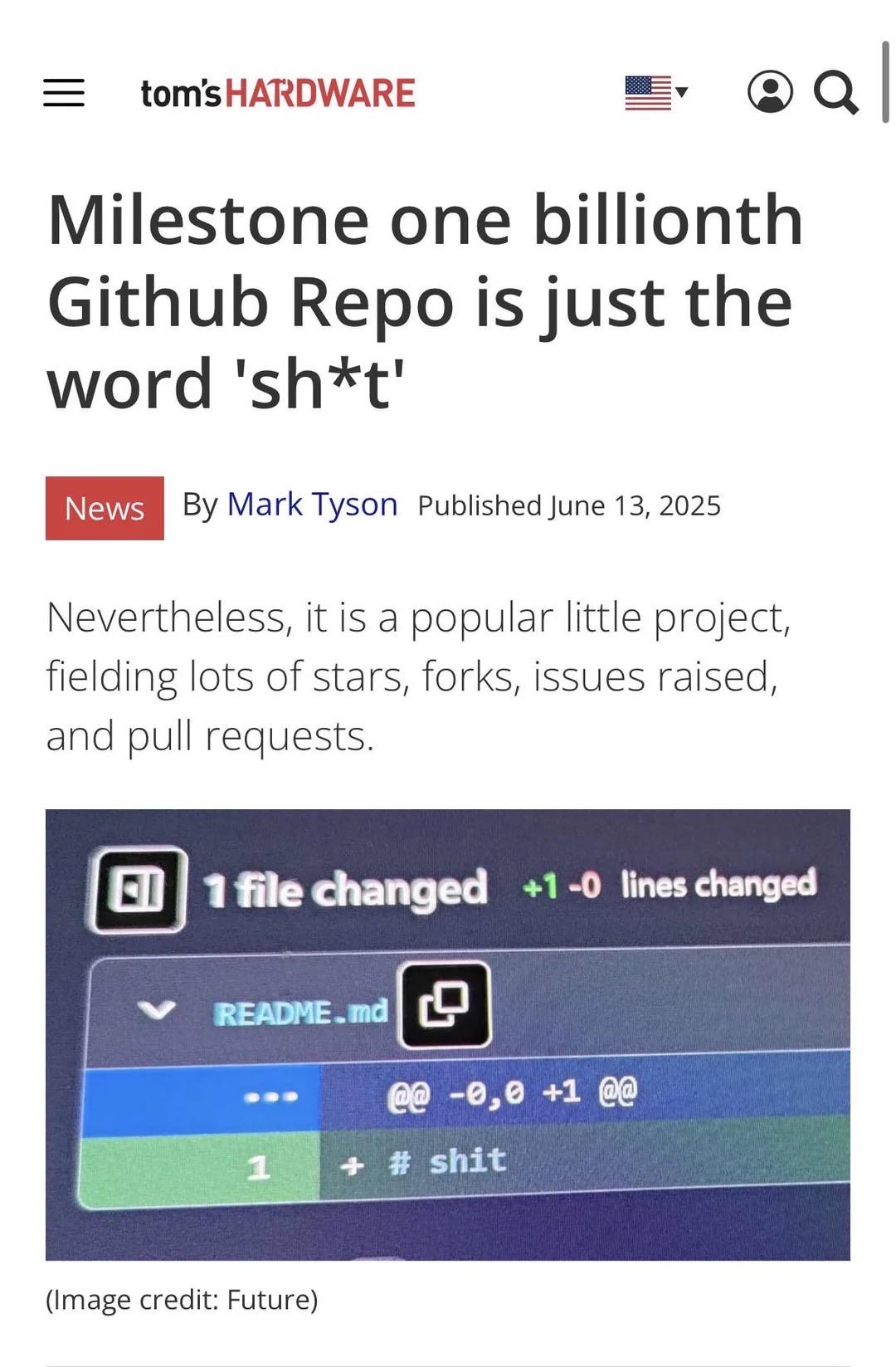
Someone created a GitHub repo containing literally just the word "shit" in the README, and it somehow reached one billion repos on GitHub. The commit shows "+1 -0 lines changed" which means they added exactly one line of profound wisdom to humanity's collective codebase. The article notes it's "popular" with lots of stars, forks, issues, and pull requests. What could people possibly be forking? Alternative spellings? Bug reports about missing profanity? Pull requests to add more expletives? The entire concept is beautifully pointless. Sometimes the most honest documentation is just a single word that sums up your feelings about the codebase. No elaborate setup instructions, no contributing guidelines, no CI/CD pipeline. Just pure, unfiltered developer sentiment in its rawest form.

Readme Jumpscare

Readme Jumpscare
You click a promising link expecting a nice executable or zip file, but instead you're transported to the vast wilderness of a GitHub repository. No releases tab. No obvious download button. Just a README and 47 directories you don't recognize. You stand there like a confused turtle wondering if you need to compile this thing yourself or if there's some secret handshake you missed in developer school. Bonus points when the README says "Installation is simple!" followed by 23 steps involving npm, cargo, docker-compose, and sacrificing a goat to the dependency gods.

Just Write The Five Lines To Build The Project For The Love Of God

Just Write The Five Lines To Build The Project For The Love Of God
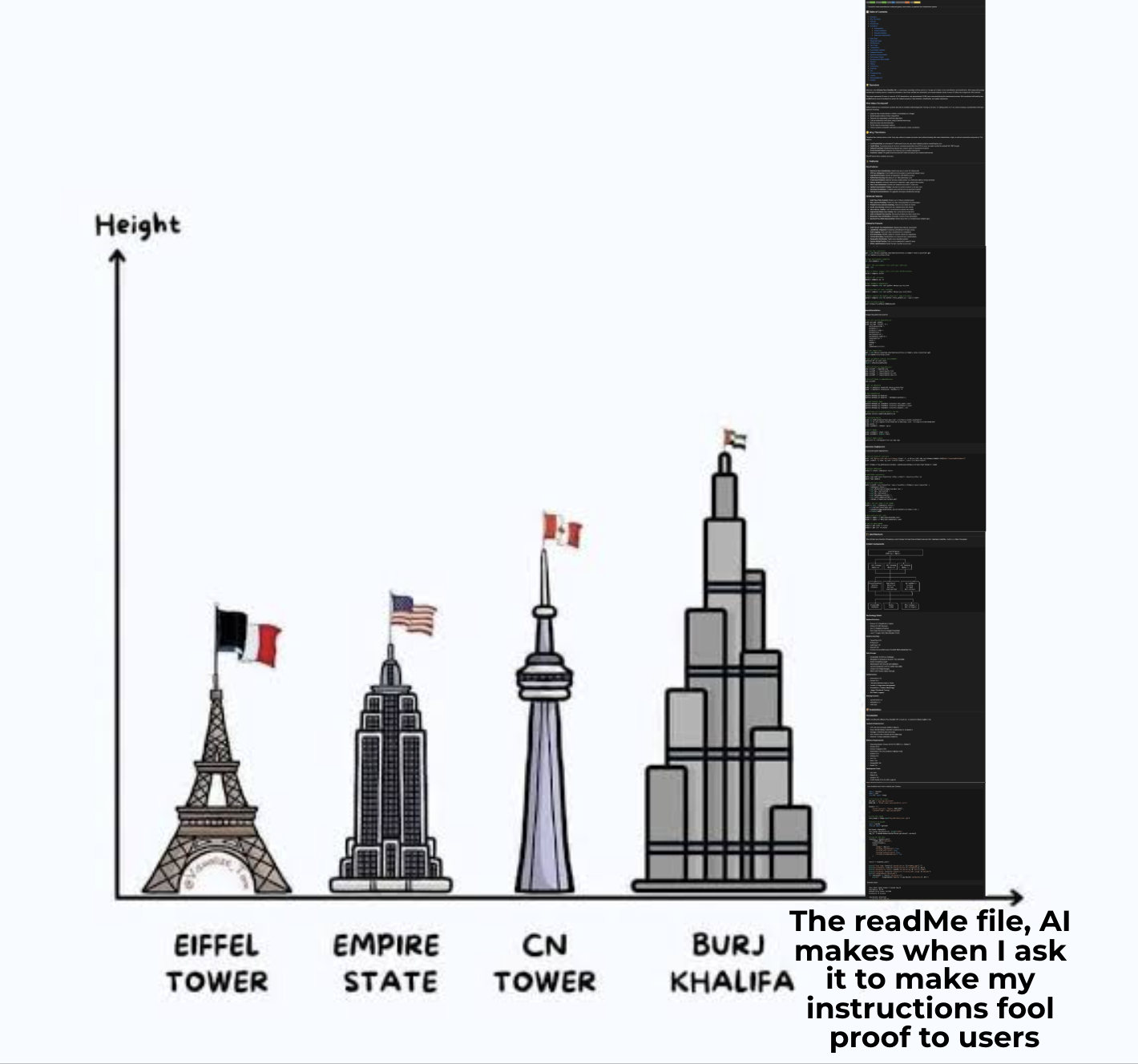
You wanted a simple "npm install && npm start" but instead got a README that's taller than the Burj Khalifa. Every dependency needs its own config file. Every environment variable needs three paragraphs of explanation. The prerequisites section alone requires a PhD. Meanwhile the maintainer is out here writing a novel about their architectural decisions when literally all anyone wants is "clone repo, run these commands, see website." Instead you're reading about their journey through microservices enlightenment while Docker refuses to build. The best READMEs are the ones that assume you're not an idiot but also don't assume you have their exact machine setup from 2019. Just the build commands. That's it. That's all we need.

Use Slopwiki

Use Slopwiki
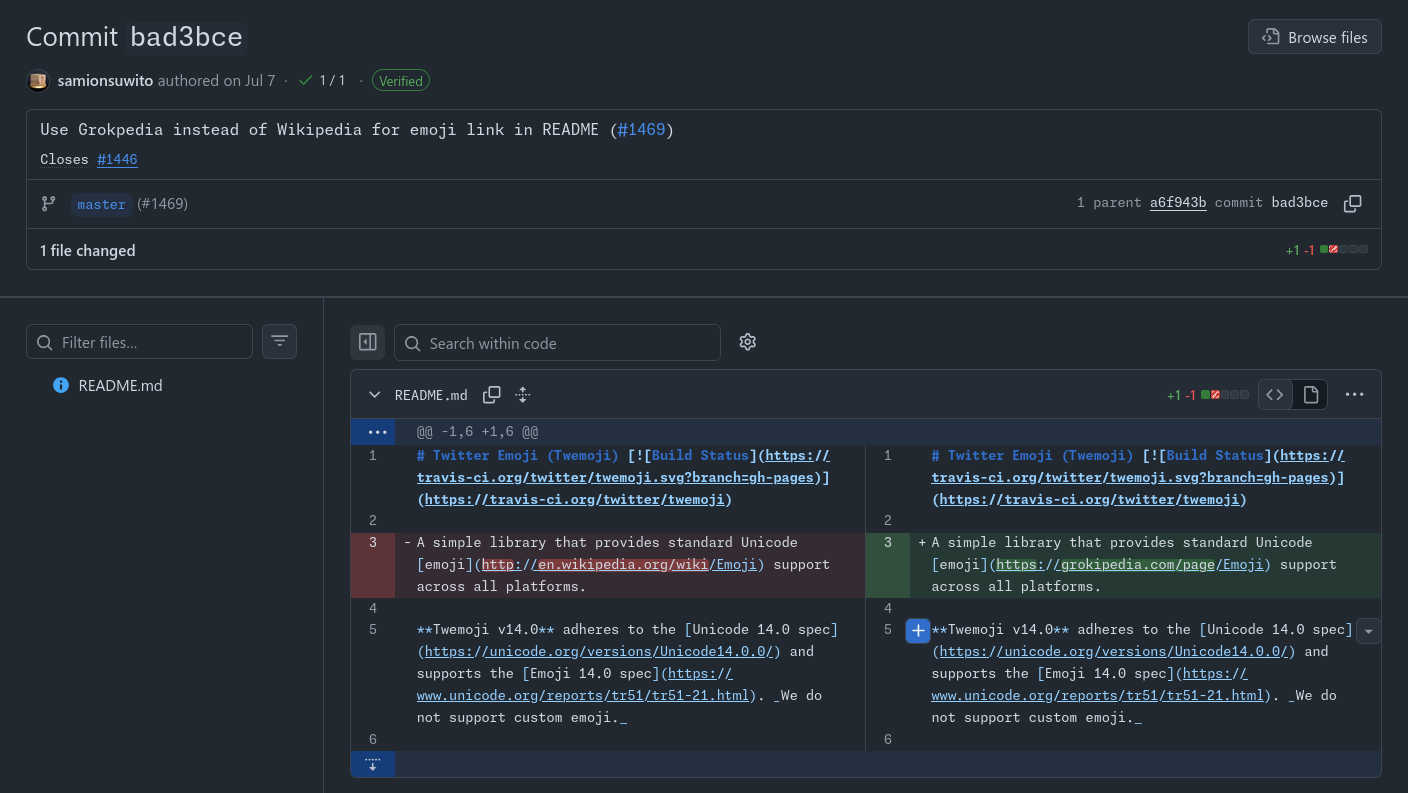
Someone really said "nah, Wikipedia isn't good enough for our emoji documentation" and replaced it with "Grokipedia" in the README. Because nothing screams professional open-source project like linking to a sketchy Wikipedia knockoff that sounds like it was named by an AI hallucination. The commit message "Use Grokpedia instead of Wikipedia for emoji link in README" is doing some heavy lifting here, trying to make it sound like a reasonable technical decision. My guy, it's an emoji library README. Just use the actual Wikipedia like everyone else who's touched grass in the last decade. The real kicker? They went through the trouble of updating the link from en.wikipedia.org to grokipedia.com . I guarantee you in three months that domain will be serving crypto scam ads and someone will open an issue about it.

Code Repositories Nowadays

Code Repositories Nowadays
Every repo now has a CLAUDE.md file explaining how to use AI assistants to work with the codebase, while the actual README.md documentation drowns in neglect. Because why write docs for humans when you can write docs for your AI overlords? The priorities are crystal clear: Claude gets the VIP treatment with detailed instructions, and the README.md gets whatever oxygen bubbles make it to the bottom of the pool. Documentation for developers? That's so 2023. Documentation for LLMs? Now that's innovation.

Peakest Copilot Commit Name

Peakest Copilot Commit Name
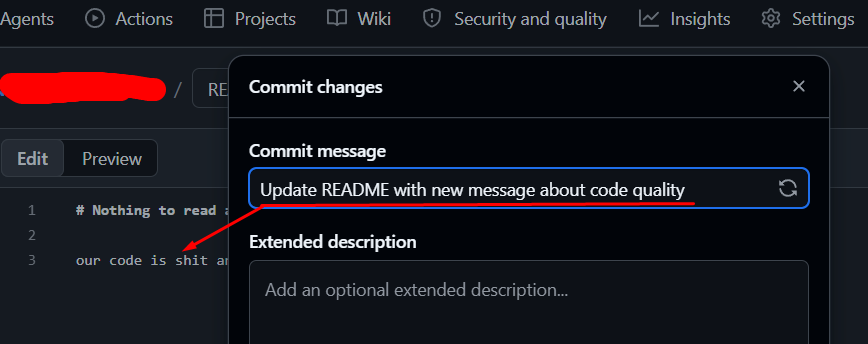
GitHub Copilot out here suggesting the most professional commit message possible while the actual README content is literally "our code is shit and..." The irony is chef's kiss. Copilot's trying to be all corporate and polished with "Update README with new message about code quality" when the developer is being brutally honest about their codebase. It's like wearing a tuxedo to admit you live in a dumpster. Nothing says "quality documentation" quite like a README that starts with a self-roast. At least they're honest about it—most codebases are like this but nobody has the guts to document it.

UGREEN NAS DH2300 2-Bay Desktop NAS, Support Capacity 64TB (Diskless)

UGREEN NAS DH2300 2-Bay Desktop NAS, Support Capacity 64TB (Diskless)
Entry-level NAS Personal Storage:UGREEN NAS DH2300 is your first and best NAS made easy. It is designed for beginners who want a simple, private way to store videos, photos and personal files, which …