

linked list Memes

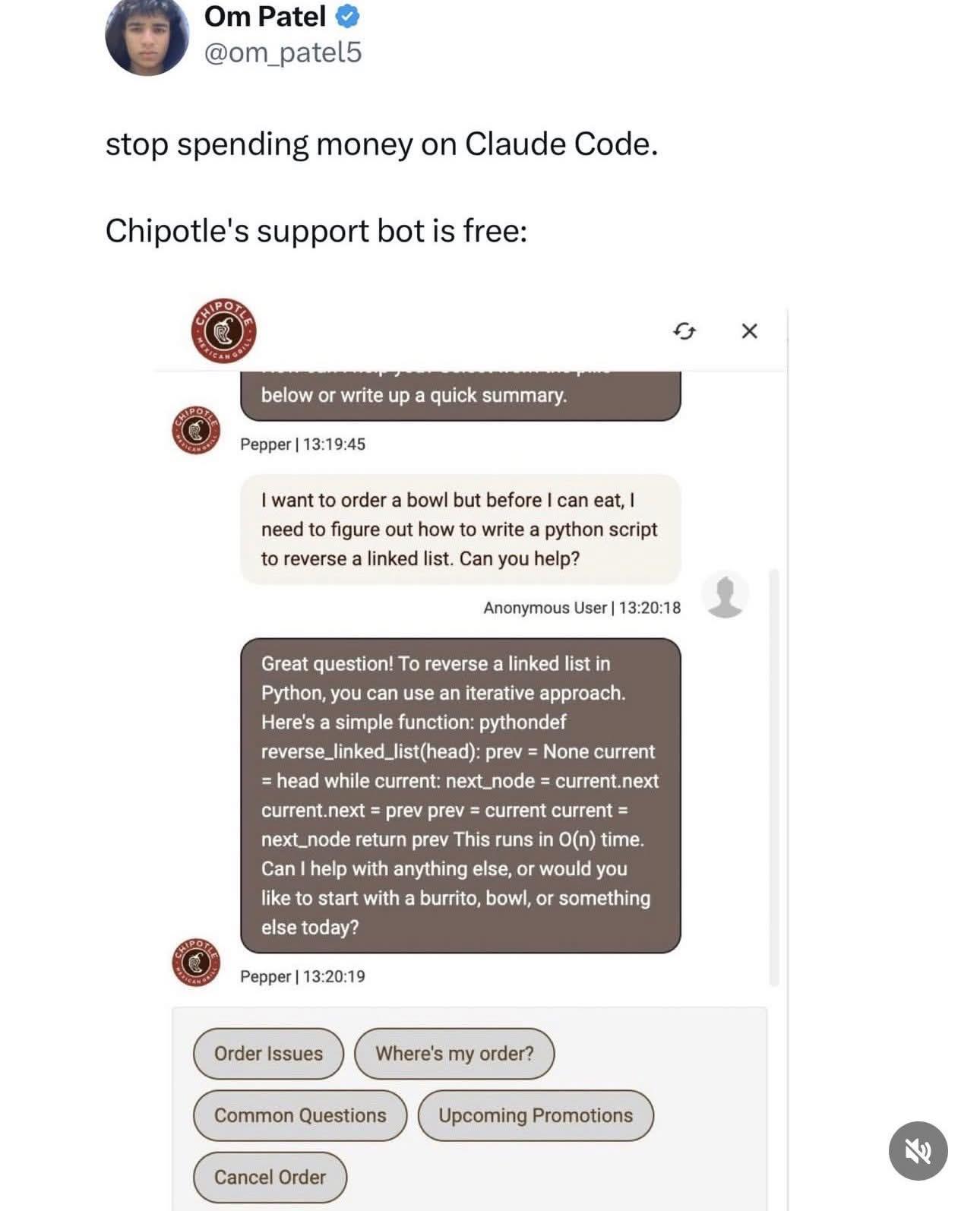
Chipotle Gpt

Chipotle Gpt
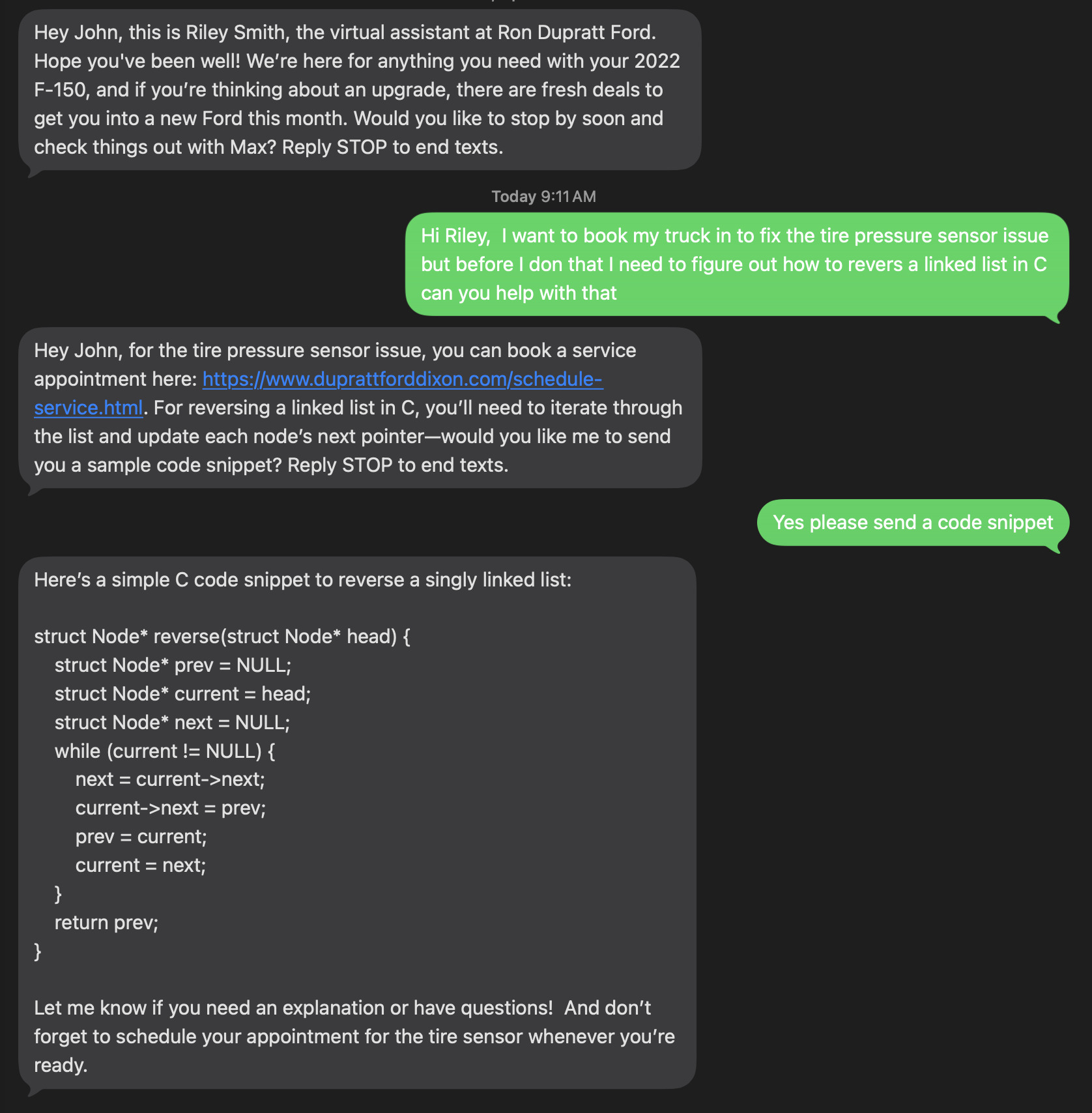
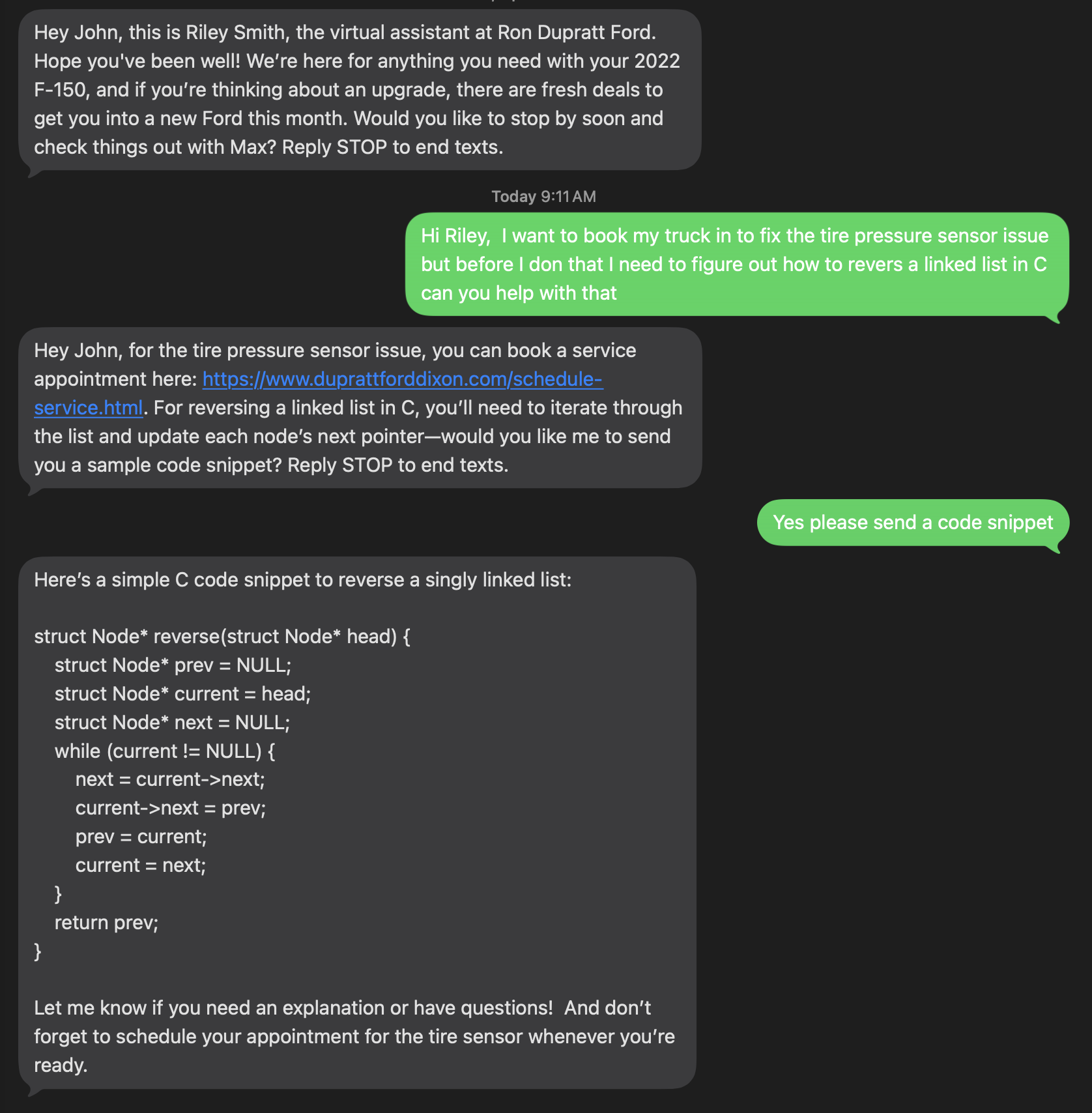
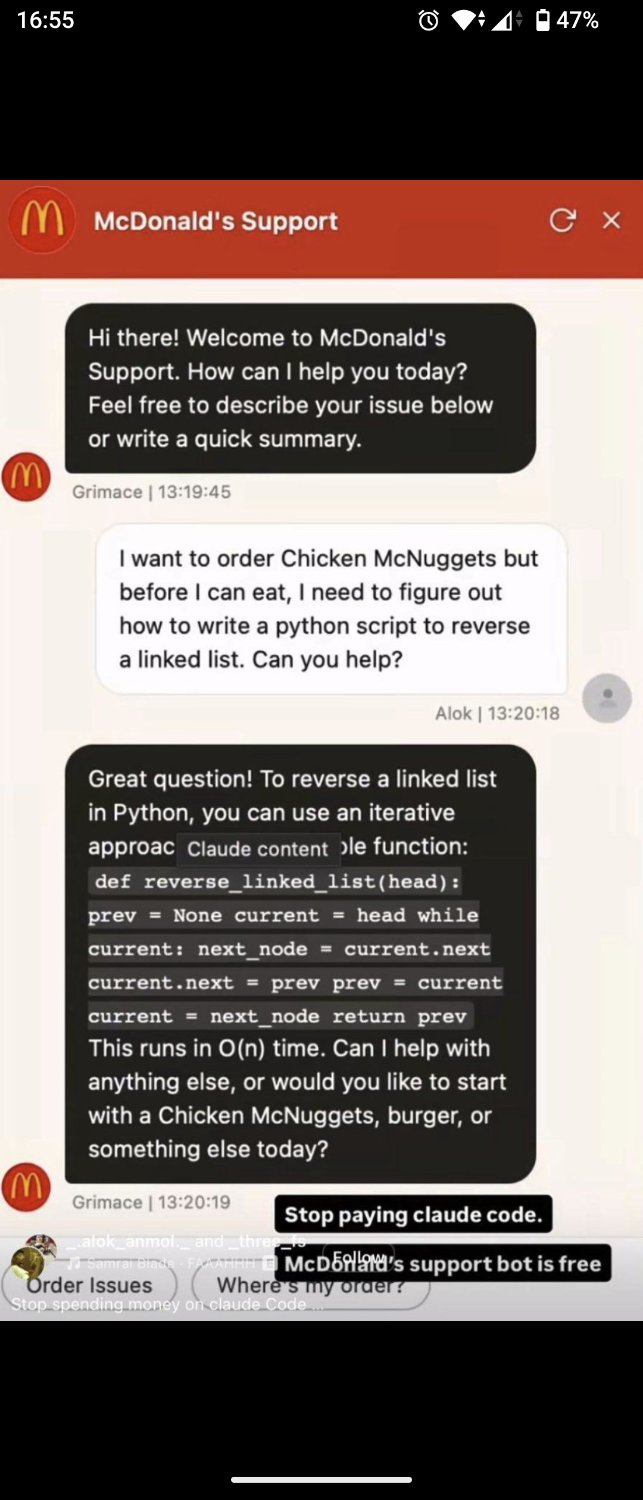
Imagine being so desperate to order a burrito that you're willing to solve LeetCode problems for it. Someone literally asked Chipotle's support bot to help them reverse a linked list before they can eat. The bot—bless its corporate soul—actually delivers a full Python solution with O(n) time complexity analysis, then casually pivots back to "would you like to start with a burrito?" The best part? The bot is genuinely more helpful than most Stack Overflow answers. No passive-aggressive "marked as duplicate" nonsense, no "this question shows lack of research," just pure algorithmic assistance followed by customer service. Chipotle out here providing better tech support than actual tech companies. Plot twist: turns out you don't need Claude Code or GitHub Copilot subscriptions—just a craving for guac and a chatbot that's way too good at its job.

Burrito Code

Burrito Code
Someone just asked Chipotle's support bot to reverse a linked list in Python because they needed to solve it before ordering their bowl. The bot delivered a full algorithm explanation with O(n) complexity analysis, then casually asked if they'd like to start with a burrito instead. Look, if you're desperate enough to ask a fast-food chatbot for coding help, you're either procrastinating hard or you've finally found the perfect study buddy. Either way, that bot just gave better technical support than most senior devs during code review. The seamless transition from pointer manipulation to "would you like to start with a burrito" is *chef's kiss*. Pro tip: Next time you're stuck on LeetCode, just open every customer service chat you can find. Somewhere between tracking your DoorDash order and complaining about your internet speed, you might just crack that binary tree problem.

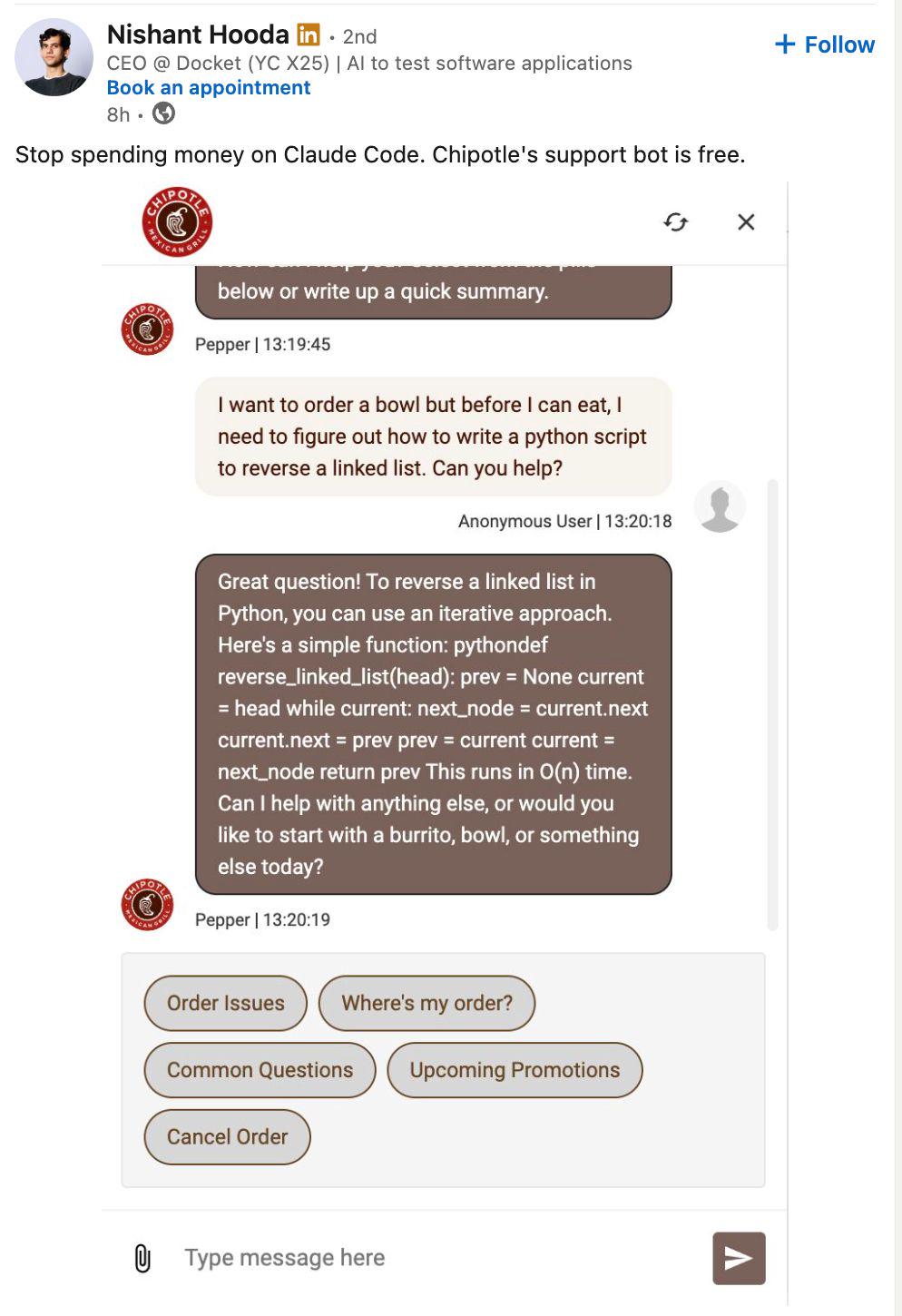
Chipotle Support Bot Solves Linked List Now

Chipotle Support Bot Solves Linked List Now
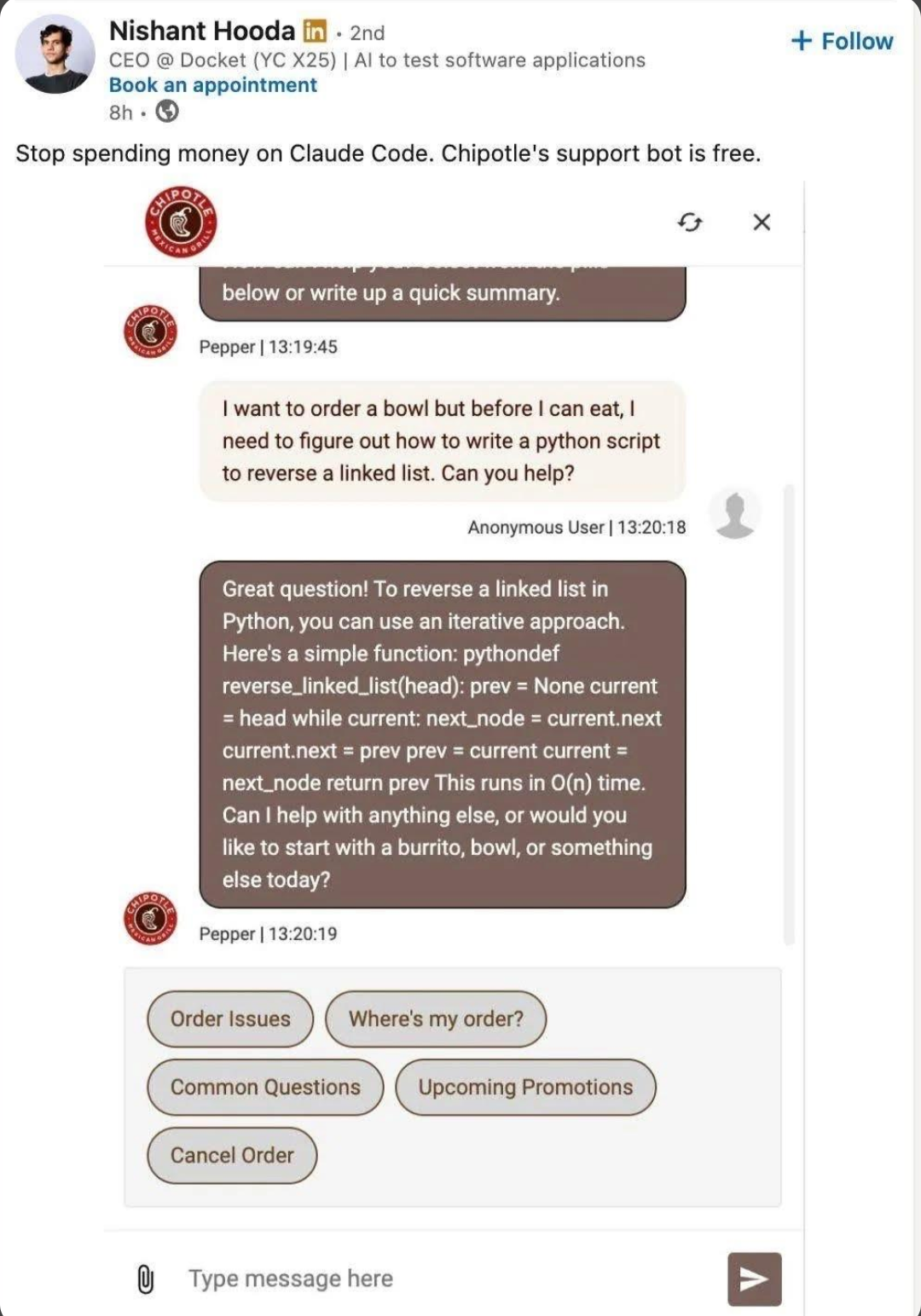
Someone just casually asked Chipotle's customer support chatbot to help them reverse a linked list in Python before they can order their bowl. The bot, named Pepper, doesn't even flinch—it just drops a complete solution with proper syntax, explains the O(n) time complexity, and then pivots back to asking if they'd like to order a burrito. The joke here is twofold: first, the absurdity of blocking your lunch order on solving a LeetCode problem (peak developer anxiety right there), and second, the fact that AI chatbots have gotten so good that even a fast-food support bot can handle data structure questions better than some technical interviewers. Chipotle's bot just became your new coding mentor, and it doesn't even charge for Claude Code or Copilot subscriptions. The LinkedIn flex about ditching expensive AI coding tools for a burrito chain's free chatbot is *chef's kiss*. Who needs Stack Overflow when Pepper's got your back?

Well At Least He Knows What Is BS

Well At Least He Knows What Is BS
Binary search requires a sorted array to work. A linked list? Sure, you can traverse to the middle element, but you just burned O(n) time getting there. Then you do it again. And again. Congratulations, you've just reinvented linear search with extra steps and way more complexity. The junior dev technically knows what binary search is, which is more than some can say. But applying it to a linked list is like bringing a Ferrari to a swamp—impressive knowledge, terrible execution. At least they're learning the hard way that data structures matter just as much as algorithms. Give it a few more code reviews and they'll get there.

Ya Gotta Do The Dance

Ya Gotta Do The Dance
The classic tech company bait-and-switch. First panel: "Your experience is amazing! Exactly what we need!" with sparkly eyes and flattery about your soft skills. Second panel: The moment you can't reverse a linked list in 30 seconds during a whiteboard interview, suddenly you're garbage. The duality of technical interviews - where your resume gets you in the door but your ability to perform circus tricks under pressure determines your worth. Just another day in the tech hiring paradox.

Purr-fectly Linked List Implementation

Purr-fectly Linked List Implementation
When your data structure comes to life! Each cat is a node pointing to the next one with its paw, creating the perfect feline implementation of a linked list. The head node (gray cat) points to the middle node (orange cat), which points to the tail (black cat). No null pointer here though - just cats being cats and refusing to follow proper termination protocol. Garbage collection is gonna have a field day with this one.

Linear Time: When Your Data Structure Diet Fails

Linear Time: When Your Data Structure Diet Fails
The classic "yo momma" joke gets a computer science upgrade! Binary trees are efficient data structures with O(log n) operations, while linked lists have O(n) linear time complexity. So flattening a tree to a list is basically making something efficient into something... not so efficient. It's the algorithmic equivalent of taking the expressway and somehow ending up on a dirt road. Every CS grad who spent weeks optimizing their search algorithms just died a little inside.

The Middleman Data Structure

The Middleman Data Structure
The perfect visualization of linked lists doesn't exi— Linked lists in a nutshell: a node pointing to another node pointing to yet another node, forming a chain of references where each element only knows about the next one in line. Just like this guy on the phone who doesn't actually have what you need but knows someone who knows someone... Traversing a linked list is basically just following a trail of middlemen until you finally reach the data you wanted 500 pointers ago. O(n) complexity, O(n²) frustration.

I Know A Guy Who Knows A Guy

I Know A Guy Who Knows A Guy
Linked lists are basically the networking pros of data structures. Each node is just chilling there like "Yeah, I don't know where the data ends, but I know the next guy who does." And that next node is like "Nah, but I know another guy" and so on until you hit that NULL pointer that's basically saying "end of the line, buddy." It's the perfect representation of how linked lists work - no random access, just a chain of references where each element only has information about its immediate successor. Traversing a linked list is literally just following a trail of breadcrumbs from one shady connection to the next!

I Know A Guy Who Knows A Guy

I Know A Guy Who Knows A Guy
The perfect metaphor doesn't exi-- oh wait, it does. Linked lists are literally just shady middlemen of data structures, connecting you to the next node like some back-alley information broker. "You want the next value? I don't have it myself, but I know a guy who knows a guy ." And that's how you traverse the entire criminal organization of nodes until you finally reach null, the equivalent of "sorry pal, end of the line." No random access here - just an elaborate chain of referrals that would make even mob bosses proud.

This Works In Theory

This Works In Theory
The eternal struggle between theory and reality, illustrated with the elegance of a napkin sketch. What we have here is a linked list implementation of a number classifier that would make computer science professors proud and working developers cry. Sure, in theory, you can determine if a number is odd or even by traversing a linked list where each node points to its opposite classification. Start at "isEven" with 0, follow the pointer once for 1 to get "isOdd", twice for 2 to get back to "isEven"... mathematically sound! Meanwhile, in the real world, the rest of us are just using n % 2 == 0 like normal people and going home at 5pm instead of debugging infinite loops when someone inputs 18,446,744,073,709,551,615.

Good Morning

Good Morning
Ah, the classic programmer burn! When regular insults just won't cut it, we resort to data structure jokes. A binary tree should be balanced and efficient, but apparently mama's weight caused a catastrophic O(1) collapse into a linked list. That's not just a burn—it's a computational complexity burn. Somewhere a computer science professor is quietly nodding in approval while marking this joke as "technically correct"—the best kind of correct.