


Cyclomatic complexity Memes

Posts tagged with Cyclomatic complexity

Prompt Engineering

Prompt Engineering
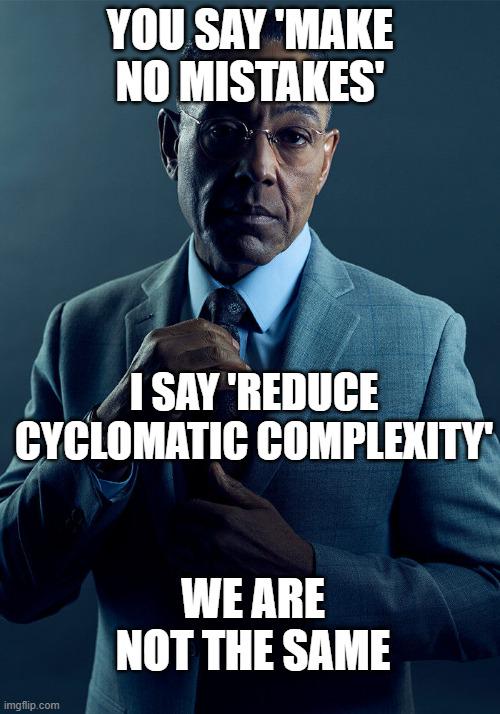
The art of prompt engineering has evolved from "write me code" to an entire PhD thesis on how to politely ask an AI to not hallucinate. Instead of telling ChatGPT "don't mess up," you've learned to speak its language: "reduce cyclomatic complexity" sounds way more sophisticated and gets better results. It's like the difference between yelling at your dog and using proper training commands—one makes you look like an amateur, the other makes you a "prompt engineer" with a six-figure salary. Turns out LLMs respond better to technical jargon than plain English. Who knew that the secret to getting AI to write clean code was just... asking it professionally? Same energy as putting "synergize cross-functional deliverables" on your resume instead of "worked with other teams."

Nesting Phobia

Nesting Phobia
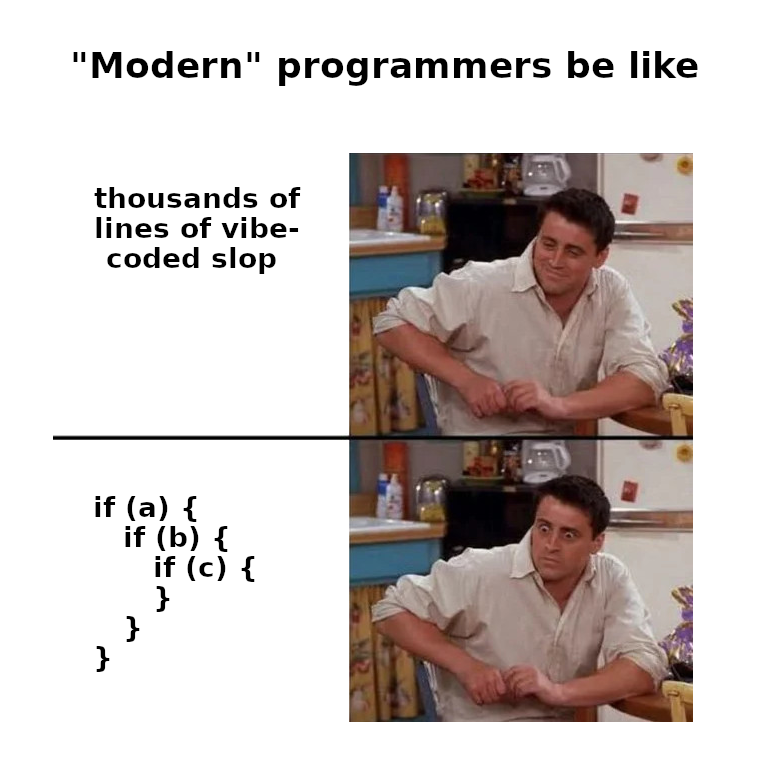
Modern devs will write 47 helper functions, implement early returns, use guard clauses, extract methods, and refactor their code into oblivion—all to avoid nesting three measly if statements. Meanwhile, their codebase looks like a phone book that got hit by a blender, but hey, at least there's no "pyramid of doom," right? The irony? Those same developers are totally fine with nesting 12 levels of React components or chaining promises like they're building a JavaScript Rube Goldberg machine. But three if statements? Absolutely unacceptable. Code reviewers would have a meltdown. Fun fact: Cyclomatic complexity exists as a metric, but developers treat nested ifs like they're summoning Cthulhu. Flatten everything, even if it means your function now has 15 parameters and reads like a legal document.

Looks Good To Me

Looks Good To Me
The code review nightmare in its natural habitat! The reviewer is bombarded with a buffet of coding atrocities—null pointer references lurking in the shadows, deprecated methods that should've been buried years ago, and a loop so obvious it's practically screaming for attention. But the pièce de résistance? That cyclomatic complexity of 36—a number so high it should come with its own warning label. For the uninitiated, cyclomatic complexity measures how many paths code can take. Anything over 10 is considered complex; 36 is basically a labyrinth designed by a sadistic developer who hates their future self. Yet despite this horror show, the reviewer's profound analysis boils down to checking if a variable is false. The cognitive dissonance is exquisite—like bringing a spoon to a gunfight and declaring yourself adequately armed.