Conditionals Memes

Posts tagged with Conditionals
If Condition Do Something

If Condition Do Something
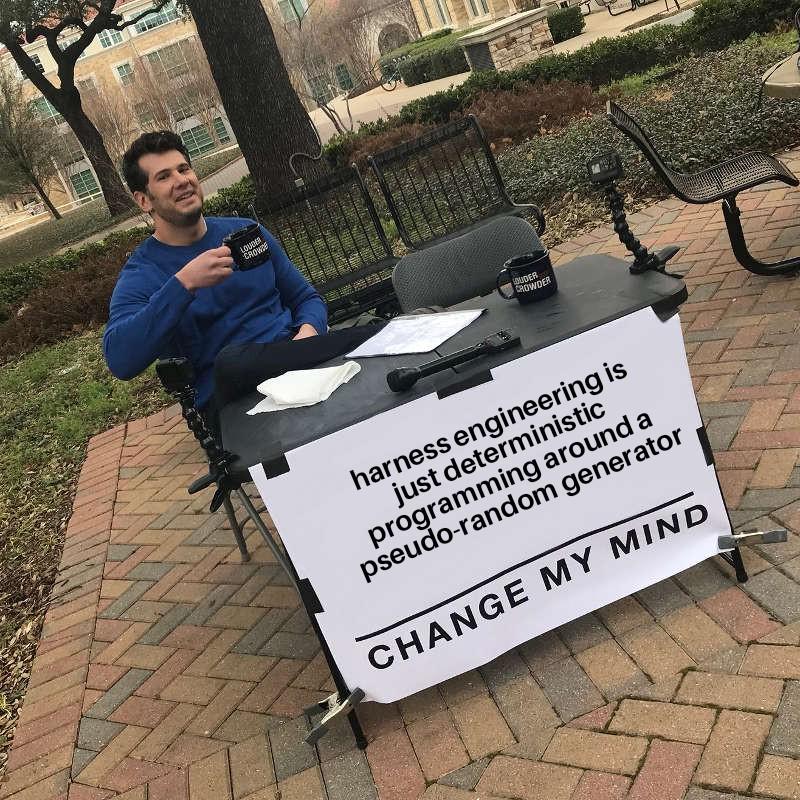
Look, we've all been there. You sit down to write some clean, deterministic code with proper if-else logic, and somehow you end up with a Rube Goldberg machine of nested conditionals that might as well be throwing darts at a board. The brutal truth is that half of software engineering is just wrapping random number generators in business logic and calling it "dynamic behavior." Your fancy algorithms? Your elegant design patterns? At the end of the day, you're still just checking if some condition is true and hoping the pseudo-random chaos aligns with what the product manager sketched on a napkin. The guy's selling this revelation like it's a street conspiracy theory, and honestly? He's not wrong. We're all just one refactor away from admitting our entire codebase is held together by conditional statements and wishful thinking.

Borderline Depressing

Borderline Depressing
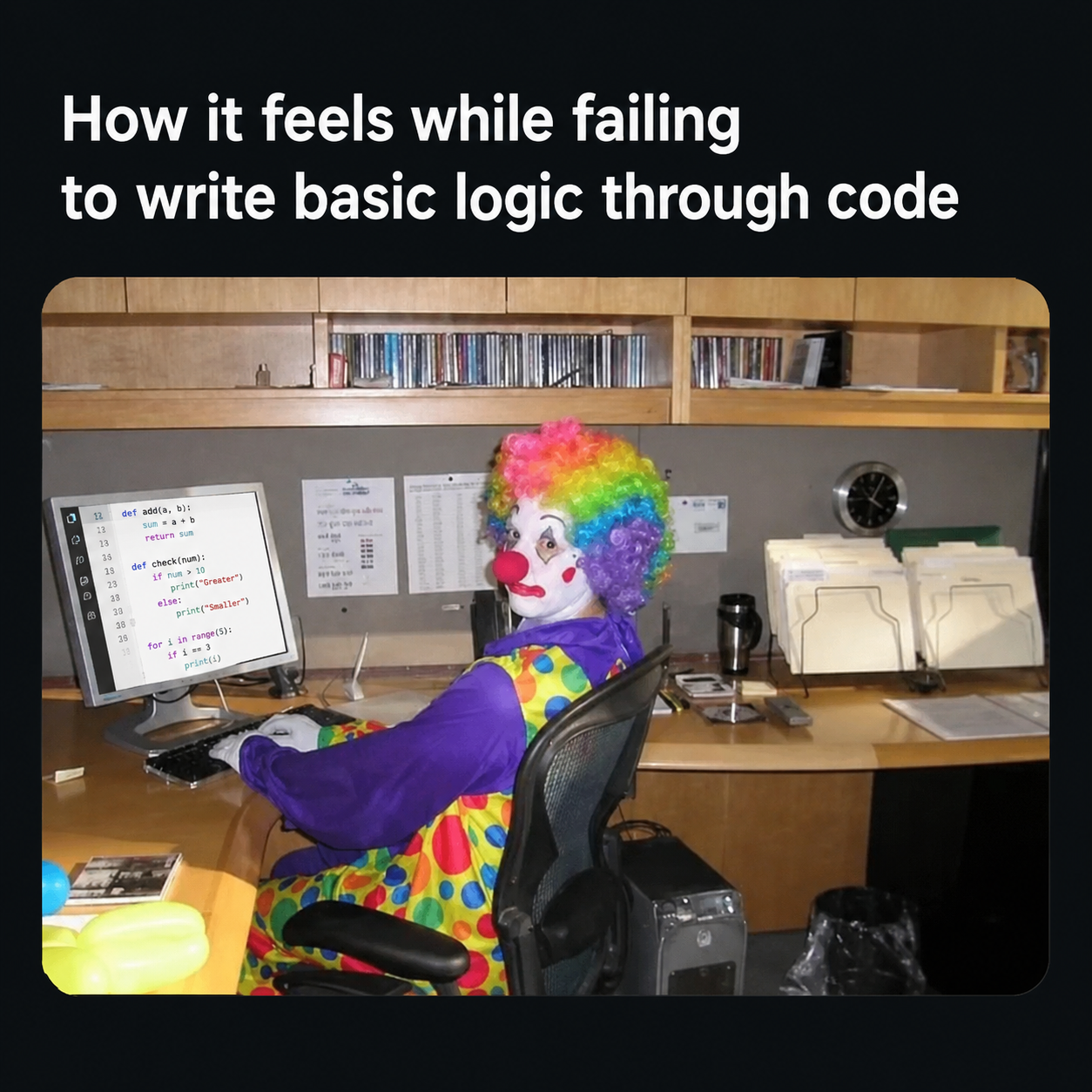
You know you've hit rock bottom when implementing a simple if-else statement makes you feel like you're juggling flaming chainsaws while riding a unicycle. The screen shows some absolutely trivial Python functions—adding two numbers, checking if a number is greater than 5, printing "Greater" or "Smaller"—and yet here we are, dressed as a full clown. Not even a subtle clown. A rainbow-wigged, red-nosed, polka-dotted disaster of a clown. The gap between what you thought programming would be (building the next revolutionary AI) versus what it actually is (staring at basic conditionals wondering why your brain stopped braining) is the real existential crisis here. Some days you're architecting distributed systems, other days you can't remember if it's elif or else if . That's just the job.

Different Conditions

Different Conditions
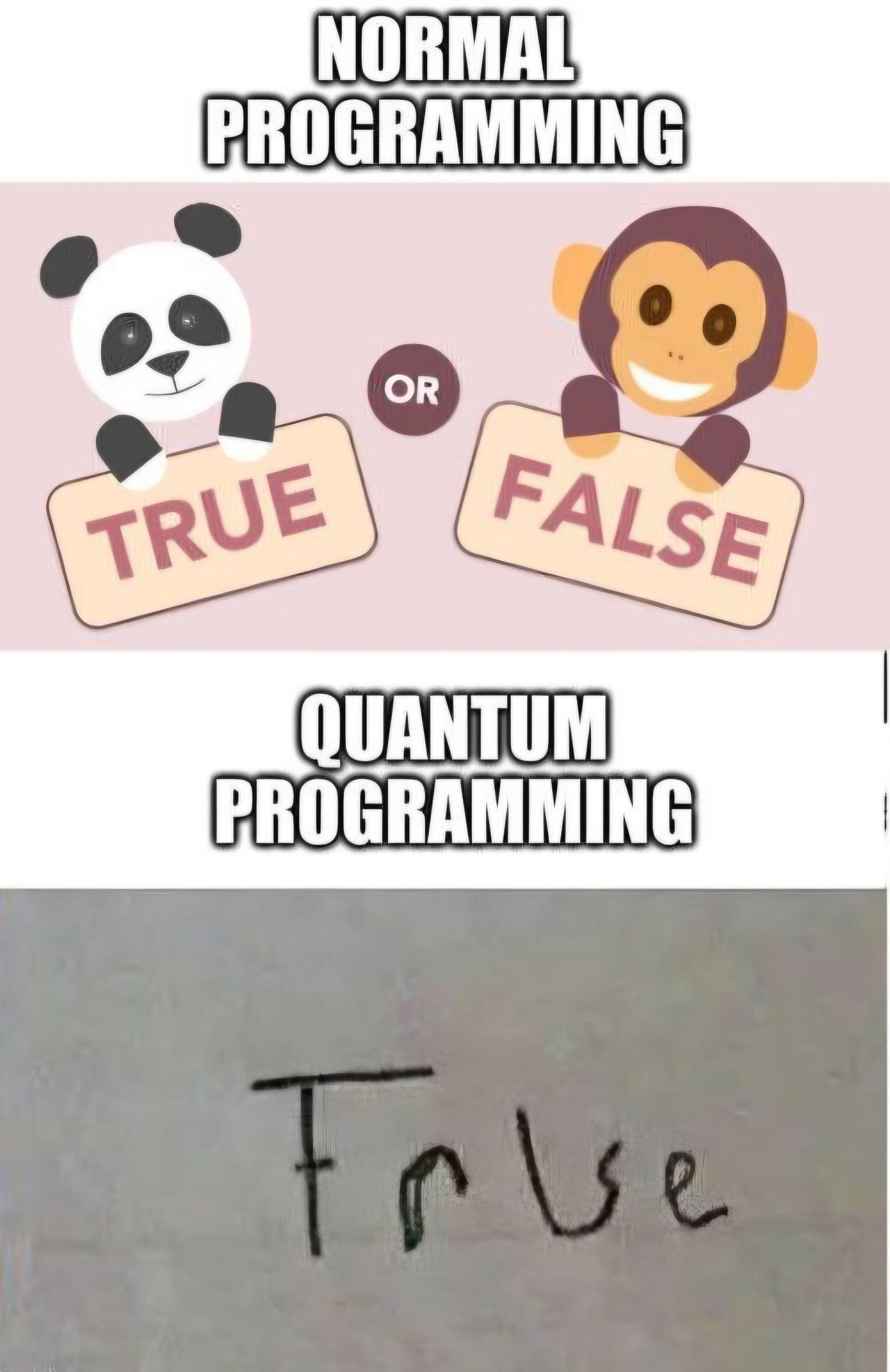
Normal programming: cute binary logic where things are either TRUE or FALSE. Simple. Clean. Predictable. Quantum programming: your boolean exists in superposition and is somehow both TRUE and FALSE simultaneously until you observe it, at which point it collapses into... "Frlse"? "Talse"? Whatever that abomination is supposed to be. It's like Schrödinger's cat decided to become a software engineer and now your conditionals are having an existential crisis. Good luck debugging that with your traditional if-else statements. You'll need a PhD in physics just to understand why your code returns "maybe" as a valid state.

Better Ways To Use Conditionals

Better Ways To Use Conditionals
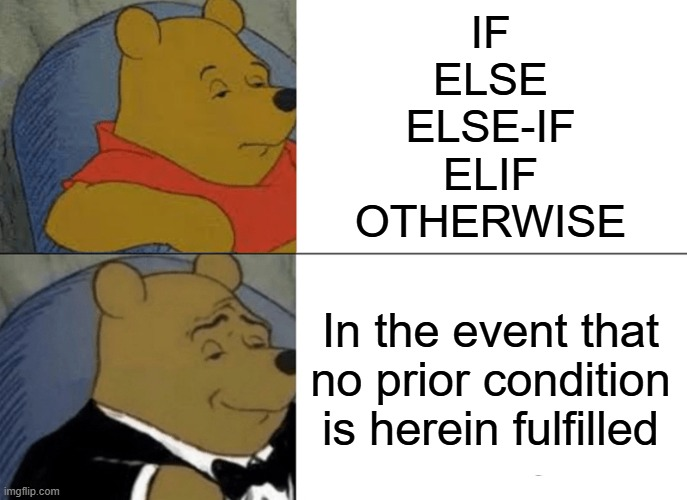
We've all met that one developer who thinks writing "in the event that no prior condition is herein fulfilled" makes them sound like they're drafting legal documents instead of writing code. Buddy, you're checking if a user clicked a button, not negotiating a merger. The fancy Pooh meme nails it: there's literally zero functional difference between else and your verbose Shakespeare impression. Both execute when all previous conditions fail. The only thing your flowery prose accomplishes is making code reviews take 3x longer and confusing junior devs who are just trying to understand your logic. Save the thesaurus for your novel. In code, clarity beats cleverness every single time.

My Entire Life😭🤷🏻‍♀️

My Entire Life😭🤷🏻‍♀️
Congratulations, you've discovered Schrödinger's grade—simultaneously failing and passing until someone observes your code logic. The developer who wrote this clearly believes that 85 exists in some quantum superposition where it's both less than AND greater than or equal to 85. The real tragedy here isn't just the missing else statement—it's that both conditions will execute, concatenating "FAILED" and "PASSED" into the beautiful Frankenstein's monster that is "FAILEDPASSED". It's like the universe couldn't decide what you deserved, so it gave you both. Very existential. Pro tip: If your grading system outputs "FAILEDPASSED", you might want to reconsider your career choices. Or just learn about mutually exclusive conditions. Either works.

To Lower And To Upper Aren't As Innocent As They Seem Just Saying

To Lower And To Upper Aren't As Innocent As They Seem Just Saying
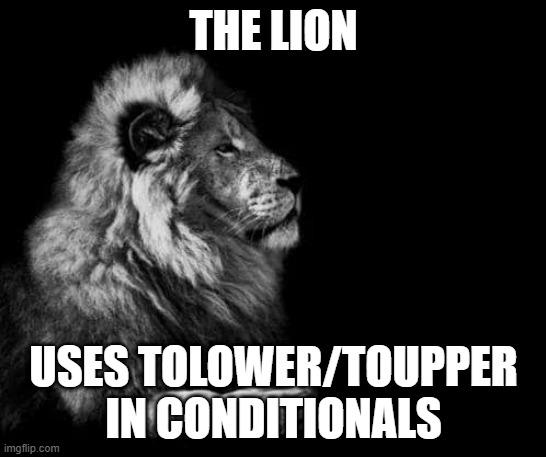
Using toLowerCase() or toUpperCase() in your conditional logic? That's some big brain energy right there. Most devs just slap these methods on strings for case-insensitive comparisons without a second thought, but the real ones know this is a minefield of locale-specific chaos waiting to explode. The Turkish İ problem is legendary: in Turkish locale, the uppercase of 'i' is 'İ' (with a dot), not 'I', and lowercase 'I' becomes 'ı' (without a dot). So your innocent if (userInput.toLowerCase() === "admin") suddenly breaks when deployed in Turkey. There's also the German ß that uppercases to "SS", and Greek sigma has different lowercase forms depending on position. Unicode is wild, and these methods respect locale by default in some languages. Pro tip: use toLocaleUpperCase() or toLocaleLowerCase() when you actually care about proper linguistic handling, or better yet, use case-insensitive comparison methods that don't mutate strings. The lion knows what's up.

NordVPN

NordVPN
Encrypt your traffic on public Wi-Fi, stream from anywhere, and cover up to ten devices with one plan. 30-day money-back guarantee.

The Evolution Of Conditional Syntax

The Evolution Of Conditional Syntax
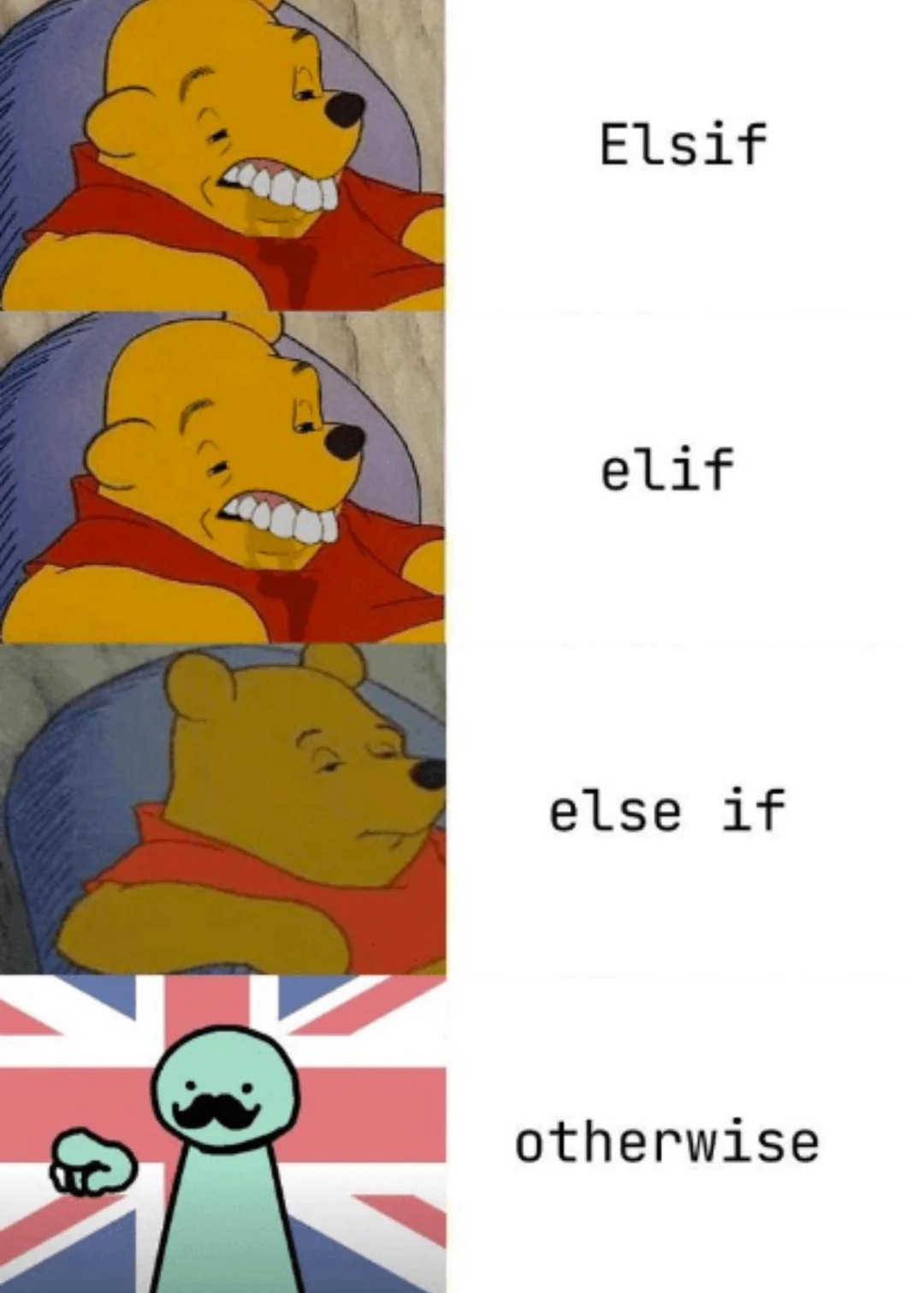
The syntax evolution of conditional statements is a wild ride! First we have "Elsif" - the fancy Pascal/Ada way that makes you feel like you're coding with a monocle. Then "elif" arrives as Python's sleek, minimalist approach (because who needs those extra letters anyway?). "else if" shows up as the sensible middle ground used in C/C++/Java that actually reads like English. But then... the posh British gentleman at the bottom with "otherwise" - that's some proper Ruby/Haskell functional programming elegance right there. It's like watching conditional statements get progressively more sophisticated until they're sipping tea with their pinky out.

The Evolution Of Conditional Statements

The Evolution Of Conditional Statements
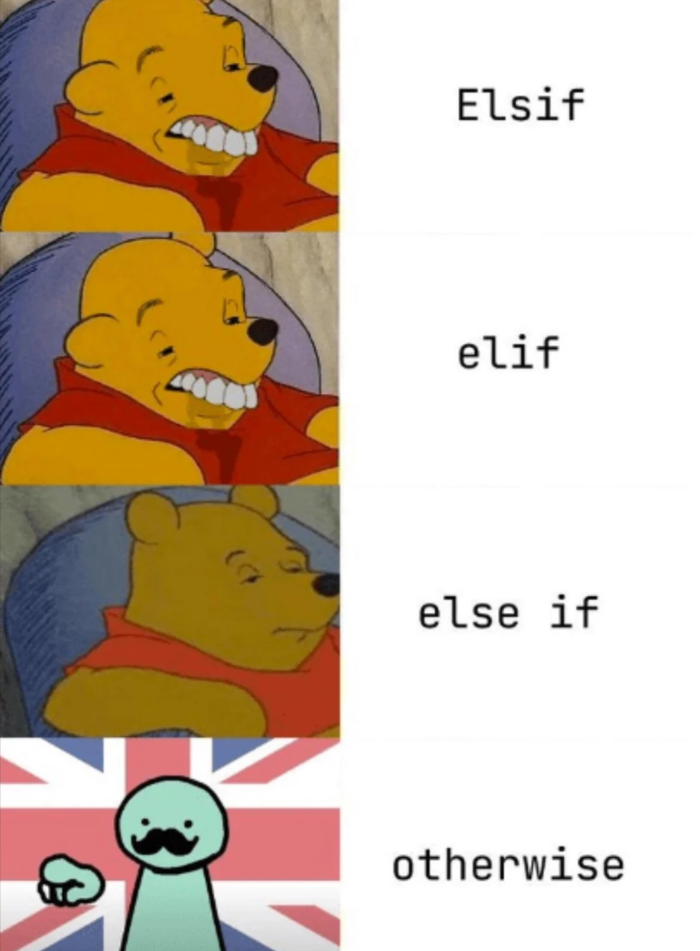
Programmers evolving their conditional statements like Pokémon. First there's the clunky uppercase Elsif that nobody likes. Then the more refined lowercase elif that Python devs smugly prefer. But the final form? The proper else if that makes you feel like an adult who pays taxes. And then there's the British chap at the bottom with his fancy otherwise statement, sipping tea while the rest of us peasants use our barbaric syntax. It's the programming equivalent of saying "indeed" instead of "yeah."

The Sweet Taste Of Unoptimized Freedom

The Sweet Taste Of Unoptimized Freedom
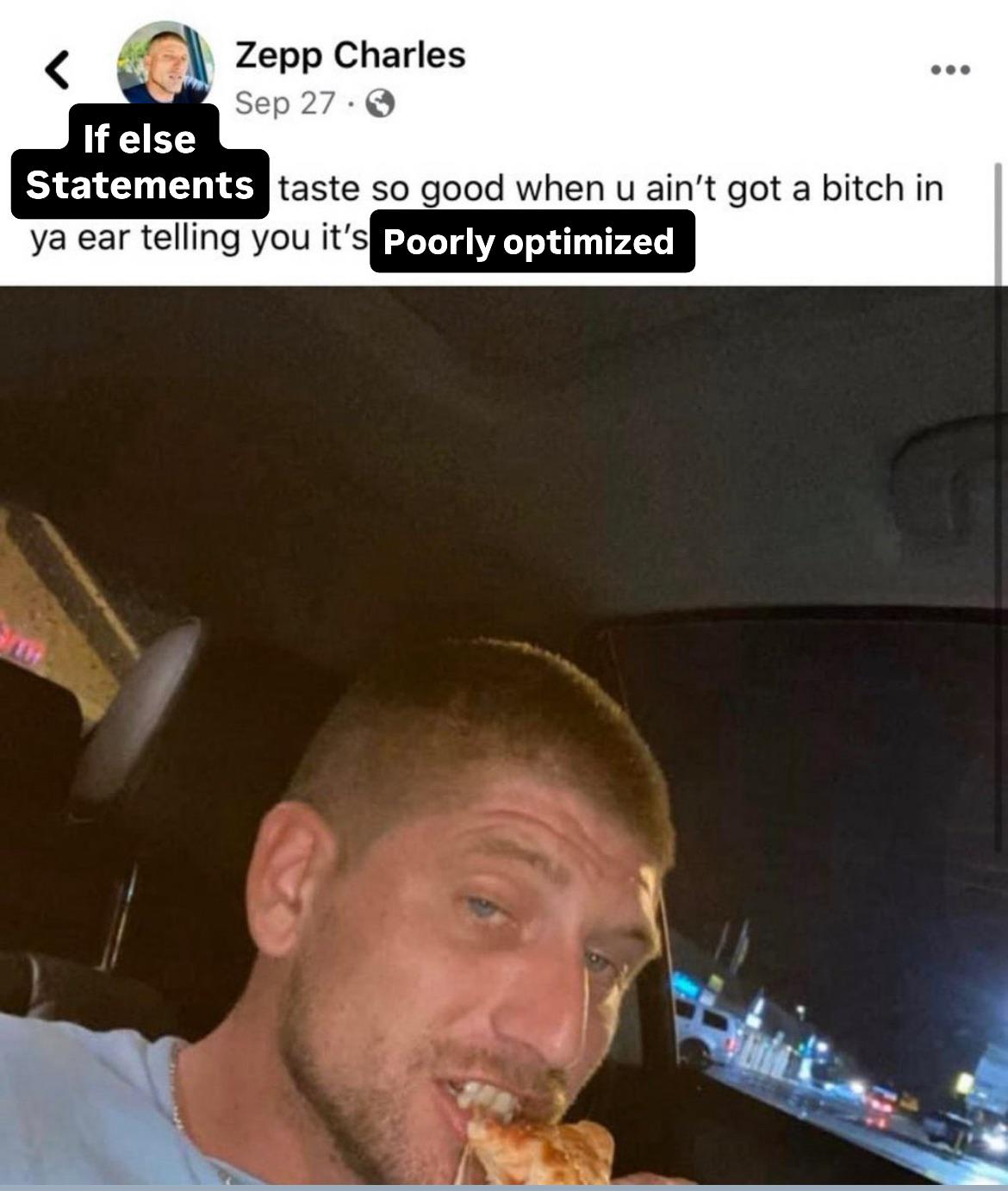
Nothing hits quite like writing a cascade of if-else statements when you're alone in the codebase. Sure, a proper switch case or pattern matching would be more elegant, but there's something deliciously rebellious about hammering out nested conditionals at 2AM without a senior dev looking over your shoulder muttering "that's O(n) when it could be O(log n)" or "have you considered a strategy pattern here?" Freedom tastes like pizza and technical debt.

Surprise British: When Your Code Gets Fancy

Surprise British: When Your Code Gets Fancy
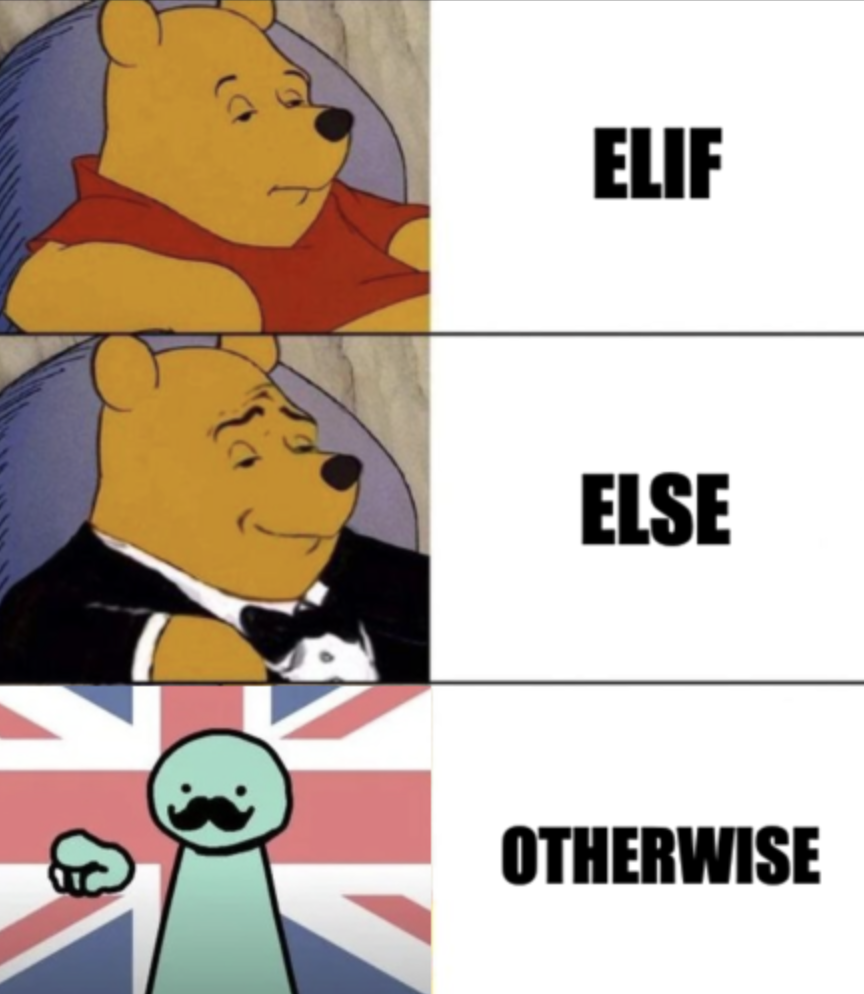
Regular bear: elif - Just another mundane condition in your code. Fancy bear: else - Suddenly looking proper with that tuxedo and bow tie. British chap: otherwise - When your code gets all posh and starts drinking tea while handling exceptions. "I say, good sir, your condition appears to have failed rather spectacularly. Perhaps we should execute this block instead?" The real pain is maintaining legacy code where some developer decided all three styles were perfectly acceptable in the same codebase.

Why Does My Brain Work Like That

Why Does My Brain Work Like That
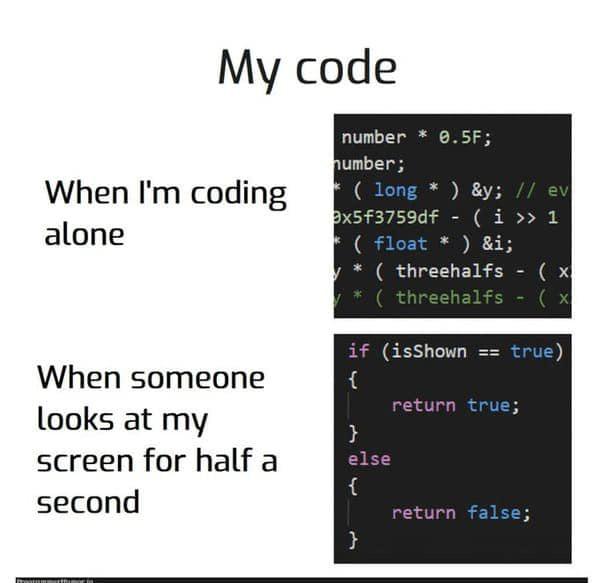
The programmer's paradox: When nobody's watching, you're writing cryptic bitwise operations and pointer arithmetic that would make Dennis Ritchie weep. But the MOMENT someone glances at your screen? Suddenly you're writing the most embarrassingly obvious conditional statement in history. It's like your brain has two modes: "incomprehensible genius" and "did you just learn to code yesterday?" with absolutely no middle ground. The worst part? Both versions actually work.

Apple 2024 Mac mini Desktop Computer with M4 chip with 10‑core CPU and 10‑core GPU: Built for Apple Intelligence, 16GB Unified Memory, 512GB SSD Storage, Gigabit Ethernet. Works with iPhone/iPad

Apple 2024 Mac mini Desktop Computer with M4 chip with 10‑core CPU and 10‑core GPU: Built for Apple Intelligence, 16GB Unified Memory, 512GB SSD Storage, Gigabit Ethernet. Works with iPhone/iPad
SIZE DOWN. POWER UP — The far mightier, way tinier Mac mini desktop computer is five by five inches of pure power. Built for Apple Intelligence.* Redesigned around Apple silicon to unleash the full s…

Logical Loops: Look Before You Leap

Logical Loops: Look Before You Leap
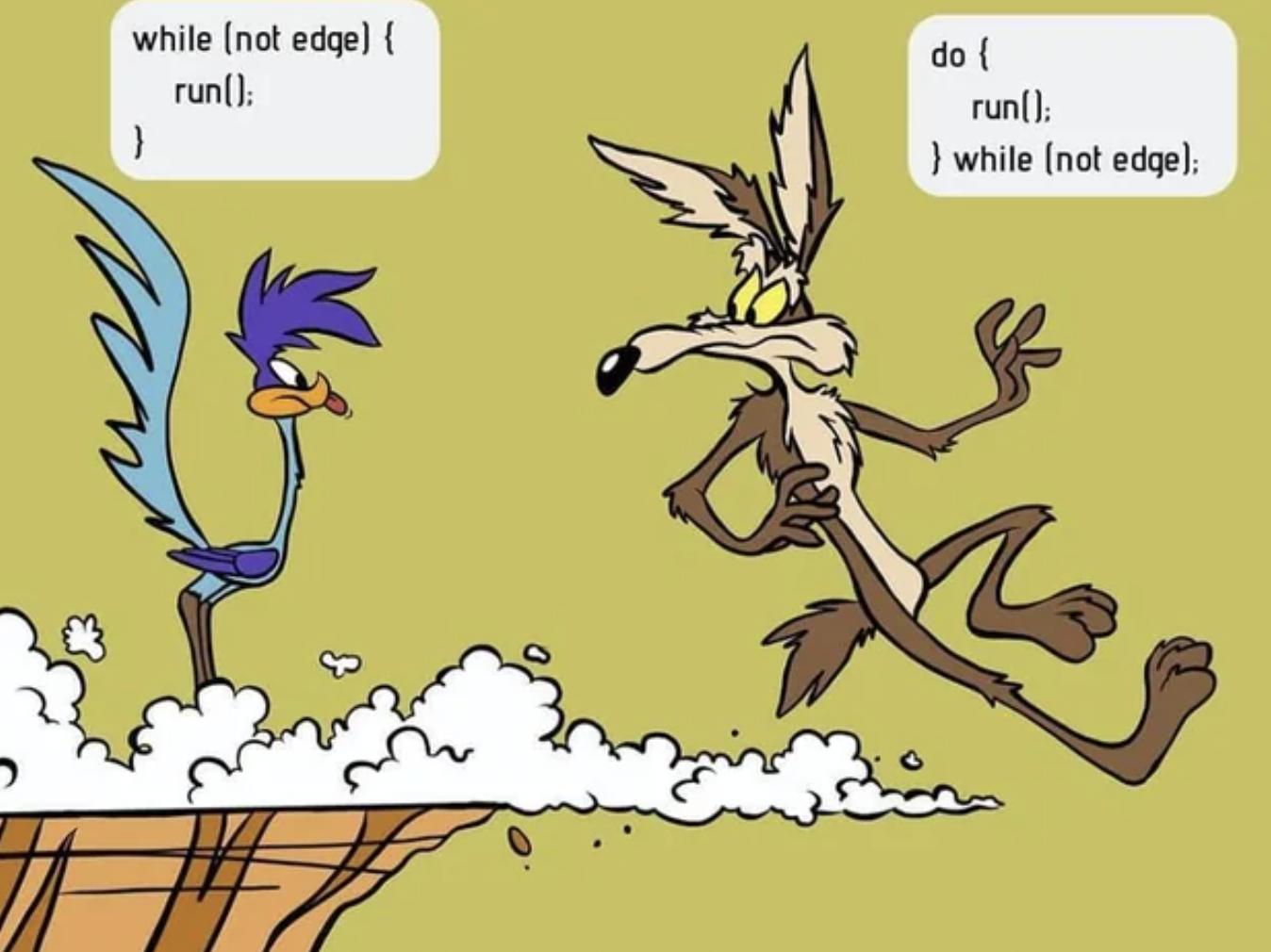
The classic Road Runner vs. Wile E. Coyote saga gets a programming twist! The Road Runner (left) uses a while loop that checks the condition before running, so he stops safely at the cliff edge. Meanwhile, our poor Coyote friend uses a do-while loop that checks the condition after execution—meaning he'll always run at least once... right off that cliff. This is basically the difference between looking before you leap and leaping before you look. After 15 years of coding, I still occasionally make this mistake and then stare at my monitor with the same expression as that coyote.