Class design Memes

Posts tagged with Class design

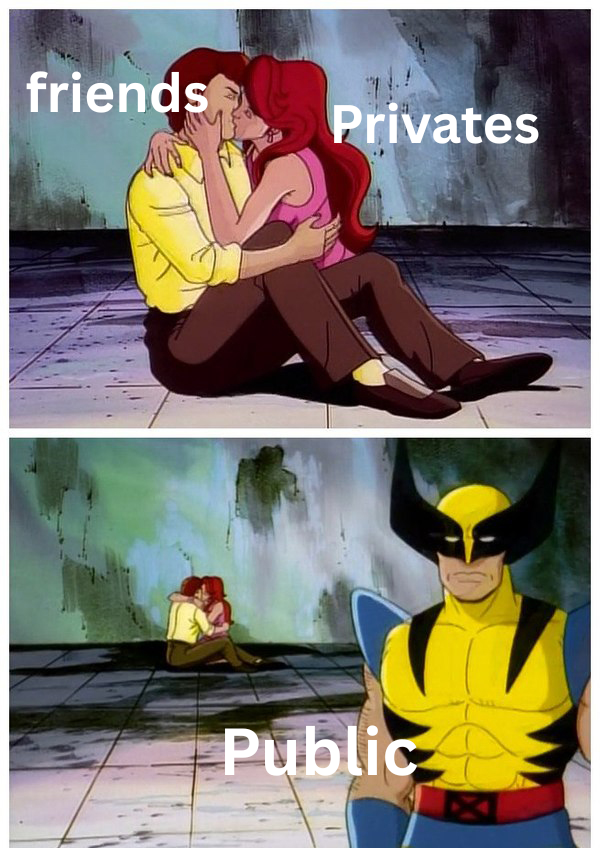
When You Are A Public Function But Only Friends Are Allowed To Touch Privates

When You Are A Public Function But Only Friends Are Allowed To Touch Privates
Object-oriented programming's access modifiers explained through the most awkward love triangle in computer science. You're out here being a public function, visible to the entire codebase, while watching your friend classes get all cozy with those private members you can only dream about accessing. It's like being the third wheel at a party where everyone's talking about encapsulation. Sure, you're public and everyone can call you, but that doesn't mean you get special privileges. Meanwhile, friend functions are living their best life, breaking all the rules of data hiding because they got that special declaration. The real kicker? Friend functions in C++ can access private and protected members even though they're not part of the class. They're basically the VIP pass holders of the programming world while you're stuck outside the velvet rope with the rest of the public interface.

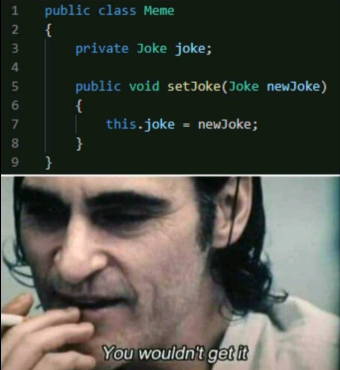
Make Your Own Joke

Make Your Own Joke
Look at this beautiful encapsulation—a private joke that can only be accessed through a setter method. And just like real programmer humor, if you need it explained, "you wouldn't get it." The irony is perfect: a class called Meme with a private Joke that needs to be set explicitly, much like how the best programming jokes require insider knowledge that can't be easily transferred. The Joker knows what's up—some jokes just don't compile in everyone's mental runtime.

The Single Responsibility Principle's Worst Nightmare

The Single Responsibility Principle's Worst Nightmare
The eternal software engineer's dilemma, perfectly illustrated by Emperor Kuzco. On one shoulder, the devil whispers "just cram that new functionality into your existing bloated class and call it a day." On the other, the angel begs you to consider proper architecture. Meanwhile, you're standing there with that blank stare, knowing you'll choose technical debt now and regret it during code review later. The single responsibility principle weeps silently in the corner.