

bios Memes

Only On X86 Legacy Boot Tho

Only On X86 Legacy Boot Tho
Floppy's got some premium data sitting in sector zero and the BIOS just casually points to memory address 0x7c00 like it's been doing since 1981. No negotiation, no discussion. That's where your boot sector goes, kid. Always has been. The x86 legacy boot process loads your Master Boot Record to 0x7c00 in RAM and jumps to it. Why 0x7c00 specifically? Because some IBM engineer in the early 80s decided that's where it goes, and now we're all stuck with it. UEFI tried to escape this madness, but legacy boot just won't die. Bootloader devs know the pain. You write your beautiful assembly code, assemble it, and if you forget to tell your assembler about 0x7c00, your jumps go to the wrong addresses and the machine just sits there mocking you.

Stress Final Boss

Stress Final Boss
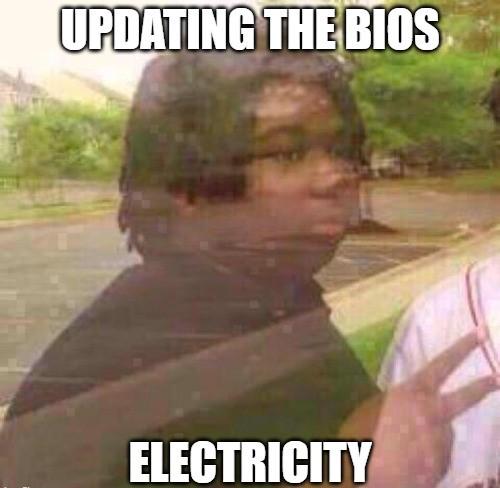
You know that moment when your palms get sweaty and your heart rate doubles? That's cute. Try updating your motherboard BIOS while a thunderstorm rolls through. One power flicker and your $2000 rig becomes a very expensive paperweight. The BIOS sits below your OS, below everything—it's the firmware that wakes your hardware up in the morning. Brick it mid-flash and you're not getting a blue screen of death... you're getting nothing. Just the cold, silent void of a dead motherboard staring back at you. Some manufacturers include dual BIOS chips as backup, but if you're not that lucky? Time to either find a USB BIOS flashback button or start shopping for a new board. It's the one update where "something went wrong" isn't just annoying—it's catastrophic.

So True

So True
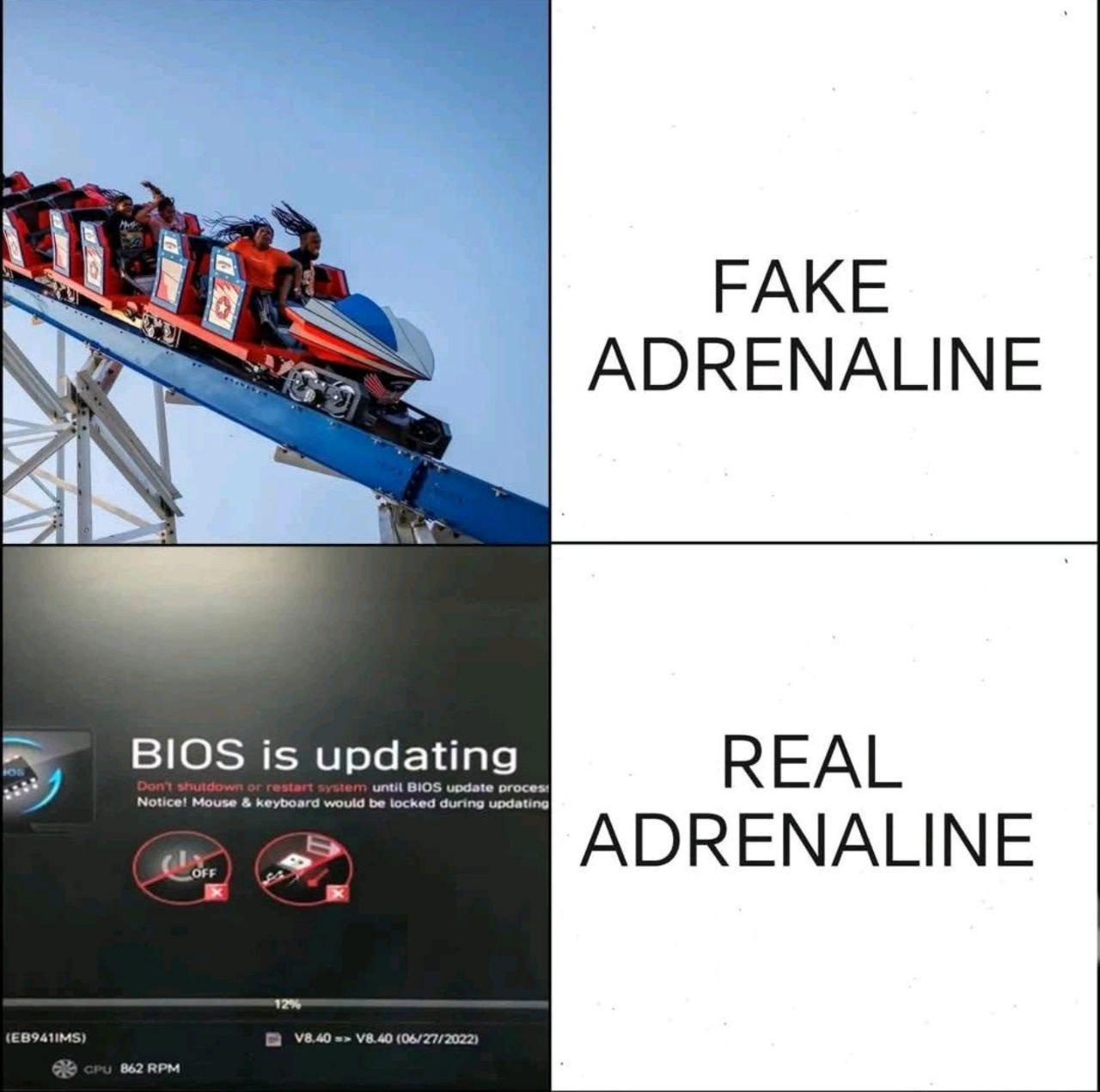
Roller coasters? Child's play. Skydiving? Amateur hour. But a BIOS update mid-session with your mouse and keyboard locked? That's the kind of raw terror that separates the casuals from the veterans. Nothing quite matches the existential dread of watching that progress bar crawl forward while knowing one power hiccup will turn your motherboard into an expensive paperweight. You can't cancel, you can't move, you can't even rage-quit. Just sit there and contemplate every life decision that led to this moment. At least on a roller coaster, you know you'll probably survive.

Settle Down

Settle Down
Someone's having a totally normal one in the BIOS update discourse. Look, we get it—you've got a 13900K and you update your BIOS more frequently than you update your resume. But maybe chill with the doomsday prophecies? The whole "PCs randomly shutting off" narrative is giving major conspiracy theorist energy when the actual risk of bricking your motherboard during a BIOS update is like... winning the lottery, except the prize is a very expensive paperweight. Real talk: Most people's computers run perfectly fine on BIOS versions from the Stone Age. Unless you're experiencing actual issues or need support for new hardware, updating your BIOS is like performing open-heart surgery because you have a mild cough. The risk-reward ratio just isn't there, my dude. Save that energy for arguing about tabs vs spaces like a normal person.

Panic Mode Activated! Lo L..

Panic Mode Activated! Lo L..
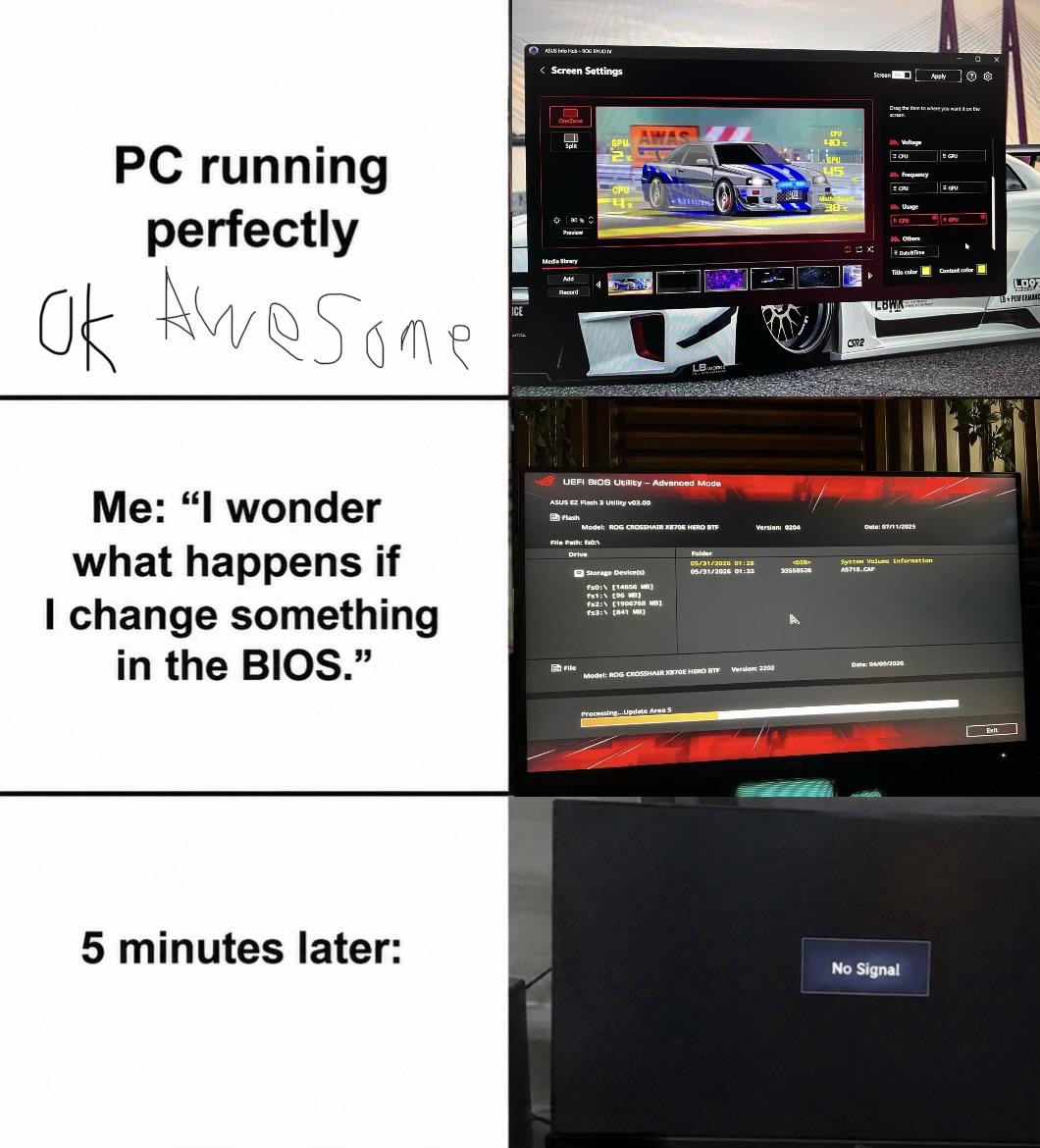
Computer's running smooth, everything's fine. Then your brain goes "but what if I tweaked that one BIOS setting?" Five minutes and one firmware update later, you're staring at a "No Signal" screen wondering if you just bricked a perfectly good machine. The universal experience of fixing things that weren't broken. At least you got to see that cool loading bar before everything went dark.

Raspberry Pi 5 Essentials Starter Kit PRO (128GB Edition) (8GB RAM) Micro SD Card Pre-Loaded 64-bit OS, Type-C Power Supply, Active Cooling Case for Edge AI, Docker & Pro Workstation

Raspberry Pi 5 Essentials Starter Kit PRO (128GB Edition) (8GB RAM) Micro SD Card Pre-Loaded 64-bit OS, Type-C Power Supply, Active Cooling Case for Edge AI, Docker & Pro Workstation
Complete Official Raspberry Pi 5 Kit: Includes the latest Raspberry Pi 5 board, official Raspberry Pi case with active cooling, official 27W USB-C power supply, and a 128GB microSD card preloaded wit…

They Got Me And I Can't Prove It

They Got Me And I Can't Prove It
You know that feeling when your PC mysteriously starts acting up right after a Windows update? Well, turns out your BIOS firmware might be getting in on the action too. The "Vibecoded" updates are the sneaky culprits you never see coming—Windows updates get all the blame while BIOS updates silently mess with your hardware in the background. The paranoia is real. Your computer's acting weird, but you can't pinpoint exactly what changed. Was it the Windows update? The BIOS update that happened at 3 AM? Both? Neither? You'll never know for sure, and that's what makes it the perfect crime. They're working together like a tag team of chaos, and you're just sitting there trying to figure out which one broke your boot sequence.

Missed It Again

Missed It Again
You know that split-second window where you need to mash F2, DEL, or F12 to enter BIOS? Yeah, modern SSDs with NVMe and fast boot enabled have turned that into a reaction time test that would make esports players sweat. Your machine goes from power button to login screen faster than you can process what's happening, and you're just sitting there like "wait, did it even POST?" The irony is delicious: we spent decades optimizing boot times, and now when you actually need to access BIOS settings to fix that boot order or enable virtualization, you're forced to either spam the key like you're playing a fighting game combo, or do the walk of shame by holding down the power button to force a shutdown and try again. Some manufacturers even added "boot to BIOS" options in Windows because they knew their hardware became too fast for human reflexes. Pro tip: Shift + Restart in Windows actually gets you there through the recovery menu. You're welcome.

Just Found Out

Just Found Out
So you're telling me that AMD Platform Secure Boot – a security feature designed to protect your system from malicious bootloaders and ensure only trusted software runs during startup – is basically a digital bouncer checking IDs before letting code into the club? The sheer HORROR of discovering that your processor manufacturer has been gatekeeping your boot process like some kind of silicon overlord! That awkward moment when you realize your CPU has trust issues and won't let random code waltz into your system without proper credentials. The existential dread is REAL. Next you'll discover that your motherboard has OPINIONS about what gets to run first. Fun fact: AMD PSB is part of AMD's security architecture that works alongside features like Secure Encrypted Virtualization. It's like discovering your hardware has been running background checks on your software without telling you. The AUDACITY!

When Opening A BIOS

When Opening A BIOS
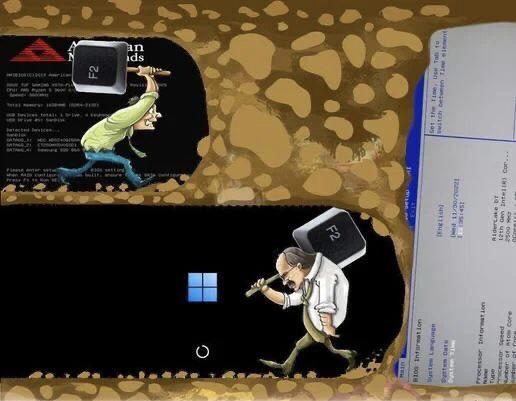
You know that split second during boot when you're frantically mashing F2/Del/F12/whatever-your-motherboard-manufacturer-decided-that-day? Yeah, that's when you accidentally fall through the fabric of reality into the BIOS dimension. One moment you're in the sleek, modern Windows loading screen with its cute little spinning circle, and the next you've been VIOLENTLY YEETED into what looks like a text-based dungeon from 1987. The whiplash is REAL. It's like going from a Tesla to a horse-drawn carriage in 0.3 seconds. The blue and white text, the cryptic menu options, the fear that one wrong move will brick your entire system... truly a portal to another era where UI designers hadn't been invented yet.

Beelink SER9 Pro Mini PC, AMD Ryzen 7 H255 Up to 4.9GHz, 8C/16T

Beelink SER9 Pro Mini PC, AMD Ryzen 7 H255 Up to 4.9GHz, 8C/16T
【Flagship-level Core & Powerful Performance】This mini PC is equipped with an AMD Ryzen 7 H 255 processor (Zen 4 architecture, 8 cores and 16 threads, with a maximum turbo frequency of 4.9GHz) based o…

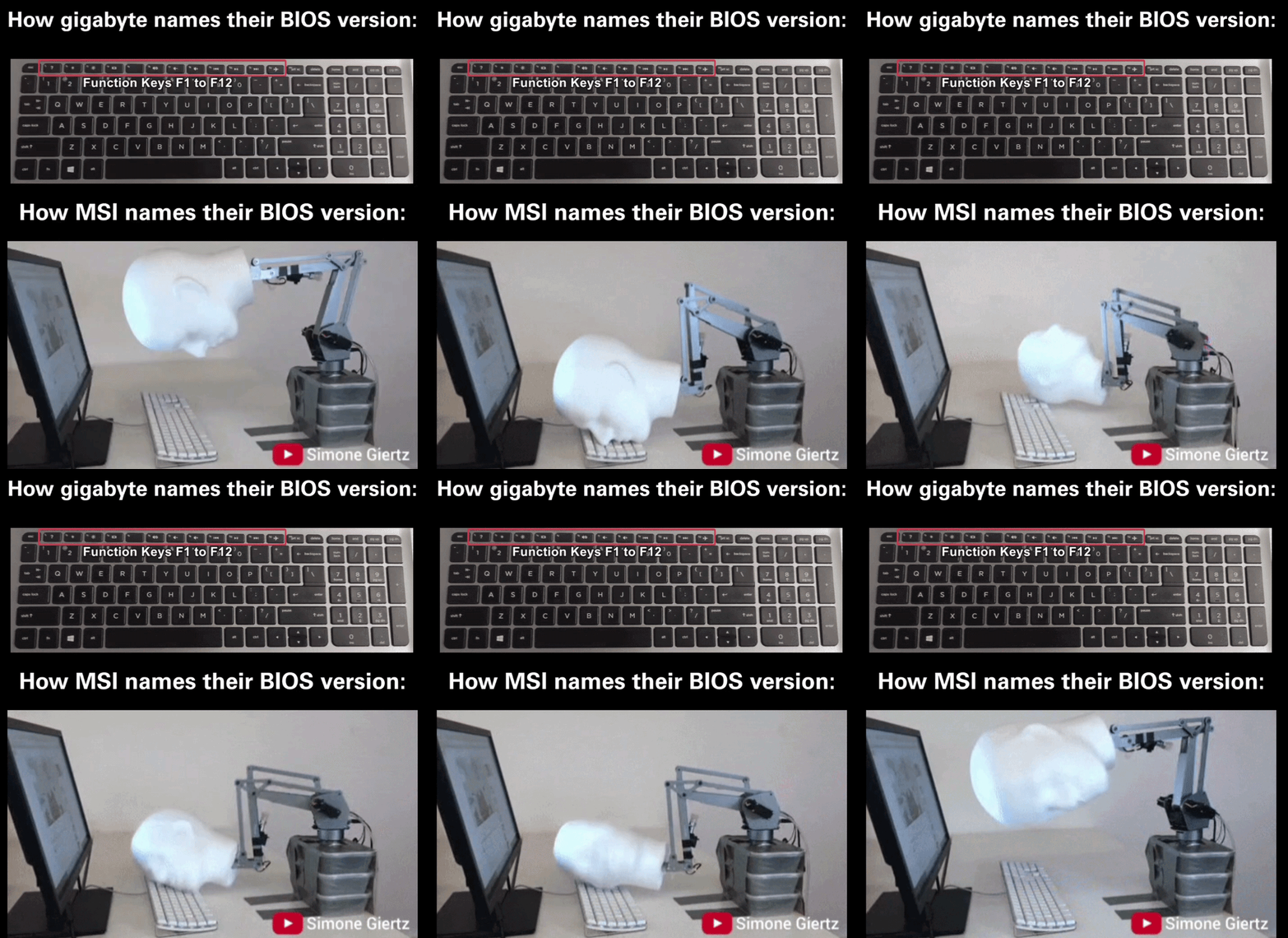
Such A Confusing Naming Scheme..

Such A Confusing Naming Scheme..
Content How gigabyte names their BIOS version: Function Keys F1 to F12 How MS names their BIOS version: Simone Giertz

If You Think That's Bad, Just Try Pressing F2 To Get To The BIOS Before Windows

If You Think That's Bad, Just Try Pressing F2 To Get To The BIOS Before Windows
Congratulations, you played yourself! You upgraded to an NVMe drive for those sweet, sweet millisecond boot times, and now your computer boots so UNGODLY fast that you can't even finish reading "Press F2 for BIOS" before Windows is already loading. You literally succeeded so hard that you failed. Your reward for investing in blazing-fast storage? The privilege of mashing F2 like a caffeinated woodpecker the moment you hit the power button, praying to the tech gods you'll catch that 0.3-second window. It's like trying to pause a YouTube video at the exact right frame, except the stakes are "do I get to change my boot order or do I have to restart and try again?" Welcome to the future, where your hardware is TOO good and you're stuck there sobbing because you just wanted to enable XMP in the BIOS.

The Art Of War Against Bricking Your Motherboard

The Art Of War Against Bricking Your Motherboard
You know that feeling of absolute CONFIDENCE right before you hit "Update BIOS"? Yeah, that evaporates REAL quick when you realize one power flicker could turn your $2000 gaming rig into a very expensive paperweight. Suddenly you're praying to every deity you've ever heard of, making promises you'll never keep, and whispering "please don't die" like you're performing emergency surgery. The transformation from "I don't need divine intervention" to "PLEASE GOD, ALLAH, BUDDHA, ZEUS, ANYONE WHO'S LISTENING" happens in approximately 0.3 seconds. That progress bar becomes your entire universe, and you're sitting there frozen, afraid to even BREATHE too hard in case it somehow causes a cosmic disturbance that corrupts the flash. Sun Tzu really understood the battlefield of hardware updates.