Pytorch Memes

Posts tagged with Pytorch

Can't Run From Debugging

Can't Run From Debugging
You wake up from a concussion thinking you're about to dive into some cutting-edge AI work, but nope—you just bonked your head and now you're back to the basics: eating ants. Or in programmer terms, debugging that same stupid null pointer exception for the third time this week. The reply is pure gold though. No matter how fancy your tech stack gets or how many buzzwords you throw around, debugging is the one constant in every developer's life. You could be working with PyTorch, React, or COBOL from 1959—doesn't matter. You're still gonna spend 80% of your time hunting down why that one function returns undefined when it absolutely shouldn't. Eating ants = debugging. Both are repetitive, unsexy, and somehow always necessary for survival.

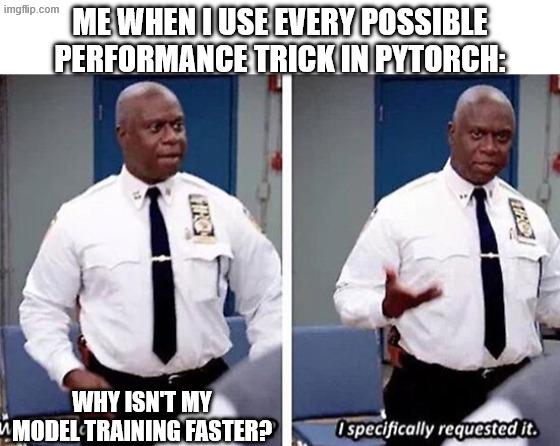
Max Autotune Prune Choices Based On Shared Mem Flag Wasn't As Groundbreaking As It Was Promised To Be

Max Autotune Prune Choices Based On Shared Mem Flag Wasn't As Groundbreaking As It Was Promised To Be
You've enabled every optimization flag known to humanity. CUDA kernels? Optimized. Batch sizes? Tuned. Mixed precision? Obviously. You've read the entire PyTorch performance guide twice, set torch.backends.cudnn.benchmark=True , and even sacrificed a USB drive to the machine learning gods. Your training loop still moves like it's running on a Pentium II from 1997. Turns out all those fancy optimization techniques that promised "up to 10x speedup" in the blog posts were tested on datasets that fit in a teacup and hardware that costs more than a small car. The real bottleneck? Your data loader was single-threaded the whole time. Classic.

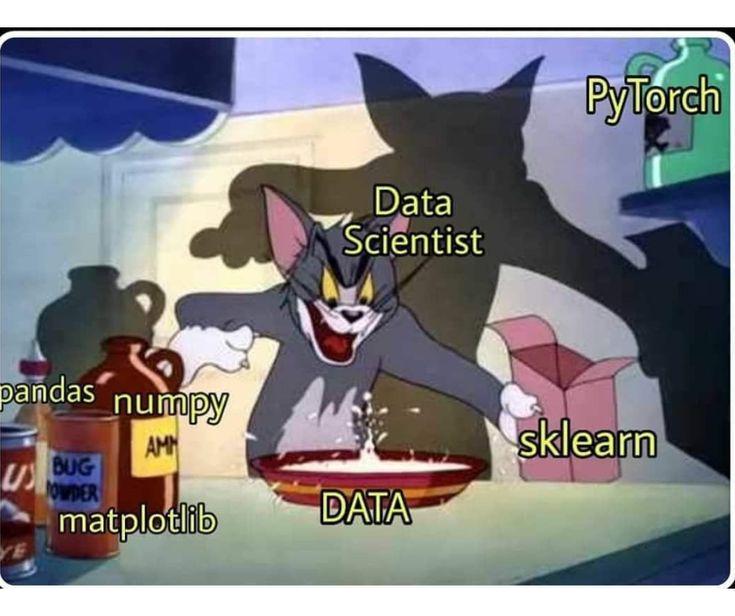
Every Data Scientist Pretending This Is Fine

Every Data Scientist Pretending This Is Fine
Data scientists out here mixing pandas, numpy, matplotlib, sklearn, and PyTorch like they're crafting some kind of cursed potion. Each library has its own quirks, data structures, and ways of doing things—pandas DataFrames, numpy arrays, PyTorch tensors—and you're constantly converting between them like some kind of data type translator. The forced smile says it all. Sure, everything's "compatible" and "works together," but deep down you know you're just duct-taping five different ecosystems together and praying nothing breaks when you run that training loop for the third time today. The shadow looming behind? That's the production environment waiting for you to deploy this Frankenstein's monster. Fun fact: The average data science notebook has approximately 47 different import statements and at least 3 dependency conflicts that somehow still work. Don't ask how. It just does.

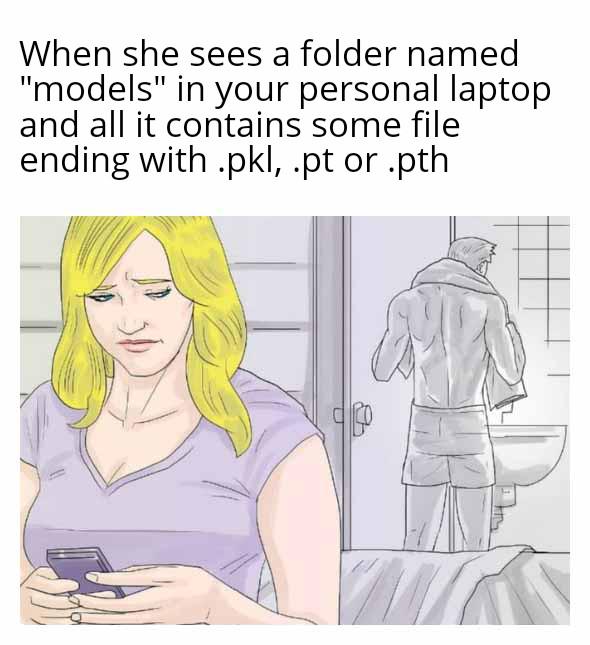
When Your ML Models Look Suspicious

When Your ML Models Look Suspicious
Machine learning engineer: "No, honey, they're just PyTorch and Keras model files." Non-technical partner: *suspicious squinting intensifies* Those file extensions (.pkl, .pt, .pth) are just serialized machine learning models. Though let's be honest, naming that folder "models" instead of "neural_networks" was a rookie mistake. Next time use something truly unsexy like "gradient_descent_checkpoints".

Apple 2026 MacBook Pro Laptop with Apple M5 Pro chip with 18-core CPU and 20-core GPU: Built for AI, 16.2-inch Liquid Retina XDR Display, 48GB Unified Memory, 1TB SSD, Wi-Fi 7; Space Black

Apple 2026 MacBook Pro Laptop with Apple M5 Pro chip with 18-core CPU and 20-core GPU: Built for AI, 16.2-inch Liquid Retina XDR Display, 48GB Unified Memory, 1TB SSD, Wi-Fi 7; Space Black
FAST RUNS IN THE FAMILY — The 16-inch MacBook Pro with the M5 Pro or M5 Max chip brings next-generation speed and powerful on-device AI to personal, professional, and creative tasks. With all-day bat…

When Your ML Models Aren't The Models She Expected

When Your ML Models Aren't The Models She Expected
Ah, the classic "models" folder misunderstanding. While she's expecting to find questionable photoshoots, you're just a data scientist with PyTorch and scikit-learn files. The disappointment on her face says it all—she was ready for scandal but found... *checks notes*... pickle files and Python tensors. The relationship might need a flowchart to explain that your "hot models" are just neural networks with good accuracy scores.

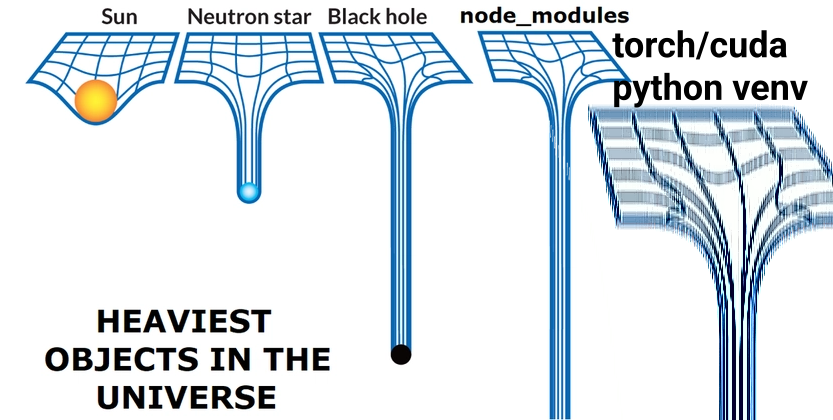
Heaviest Objects In The Universe

Heaviest Objects In The Universe
The cosmic weight scale has a new champion! While astronomers worry about black holes and neutron stars, developers know the true gravitational monsters: Python virtual environments, Node modules, and PyTorch/CUDA installations. Nothing collapses spacetime quite like waiting for npm install to finish or watching your disk space vanish as PyTorch downloads half the internet. At least black holes have the decency to be millions of light years away—your Python venv is right there, crushing your hard drive and your spirits simultaneously.

The Machine Learning Affair

The Machine Learning Affair
The eternal machine learning love triangle! Your relationship with TensorFlow was going just fine until PyTorch walked by with those sleek dynamic computation graphs and intuitive Python interface. Now you're doing that awkward neck-twist of betrayal while TensorFlow catches you eyeing PyTorch's hot new features. The static graph never felt so... static. Let's be honest, we've all mentally cheated on our ML frameworks. It's not you, TensorFlow, it's your verbose API and that whole session management thing.