

Game design Memes

Posts tagged with Game design
As An Indie Dev, Can Confirm

As An Indie Dev, Can Confirm
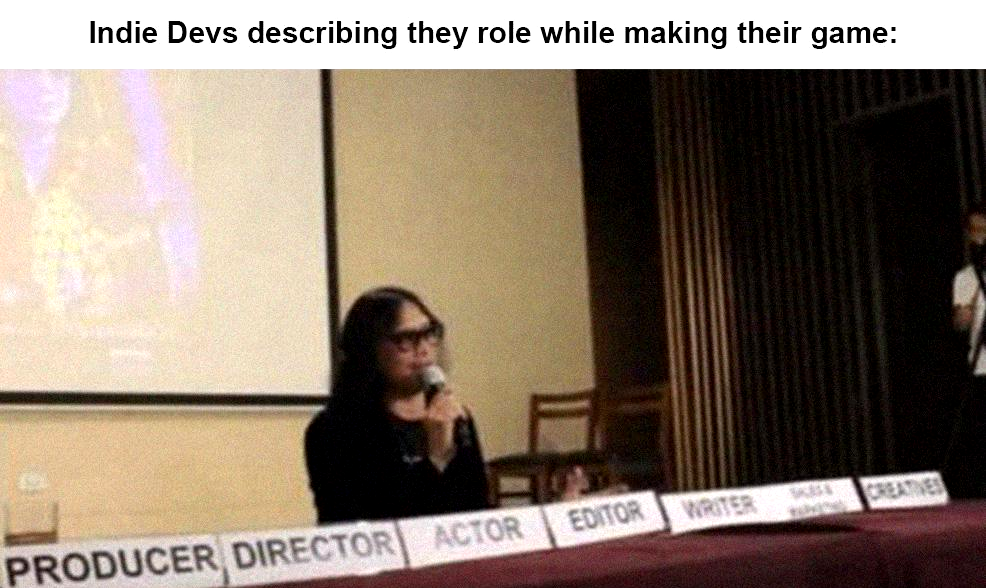
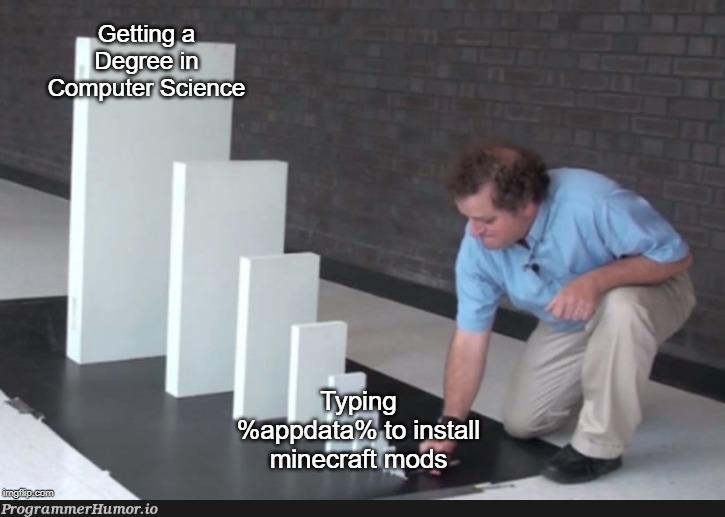
Solo indie game dev life in a nutshell: you're simultaneously the producer managing budgets, the director making creative decisions, the actor doing voice lines into your $20 mic at 2 AM, the editor cutting together your trailer, the writer crafting dialogue, the artist drawing sprites, and probably the janitor cleaning up your spaghetti code. It's like being a one-person AAA studio, except your studio is a bedroom and your budget is ramen noodles. The best part? You still somehow forget to credit yourself in half these roles because you're too busy wearing the other seventeen hats you didn't list.

Play Your Way

Play Your Way
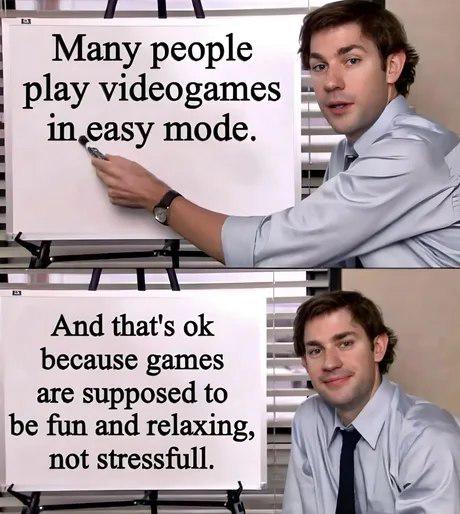
You know how game developers spend countless hours implementing difficulty settings, balancing mechanics, and playtesting on nightmare mode? Then someone picks "easy" and the dev team is just like "yeah, that's totally valid, enjoy yourself!" Meanwhile in programming land, if you use a GUI for Git instead of memorizing 47 arcane terminal commands, someone will write a 12-paragraph Medium article about how you're not a "real developer." Choose TypeScript over JavaScript? Prepare for the discourse. Use a framework instead of vanilla? The gatekeepers are typing... Gaming community: "Play however makes you happy!" 🎮 Programming community: "You used StackOverflow? Pathetic." 💀

They Hated Him Because He Spoke The Truth

They Hated Him Because He Spoke The Truth
You know what? They're right and the AAA studios hate it. You can have the most photorealistic ray-traced 8K textures with every blade of grass individually rendered, but if your game plays like a PowerPoint presentation with a $70 price tag, nobody's gonna care. Meanwhile, games that look like they were made in MS Paint are topping the charts because they're actually *fun*. Looking at you, Vampire Survivors and Stardew Valley. The gaming industry keeps throwing billions at graphics engines while shipping broken, unoptimized messes that require a NASA supercomputer to run at 30fps. But hey, at least the puddles look realistic, right? Game devs could learn a thing or two from this—optimization and core mechanics will always beat bloated asset files. It's like writing clean, efficient code versus adding 47 npm packages to display "Hello World."

Supply And Demand

Supply And Demand
The entrepreneurial spirit is alive and well in gamedev. Step 1: Design a puzzle game so complex it requires physical note-taking. Step 2: Conveniently sell branded notebooks at your booth. It's not predatory capitalism, it's just... vertical integration. Honestly though, this is galaxy brain marketing. You're not just selling a game—you're selling the *entire experience*, including the tools needed to actually beat it. Next up: selling reading glasses for games with tiny fonts, or ergonomic chairs for roguelikes that take 80 hours to complete. The real kicker? Those notebooks probably have better margins than the game itself. Welcome to indie game development, where the real money is in the merch.

Sorry, Can't Do Scarves

Sorry, Can't Do Scarves
Game devs will literally implement a complex physics engine with ragdoll mechanics, particle systems for explosive lava effects, and procedural demon summoning algorithms, but adding a cloth simulation for a scarf? That's where they draw the line. The complexity hierarchy in game development is beautifully backwards: rendering a hellscape with real-time lighting and shadows? No problem. Making fabric drape naturally over a character model? Suddenly we're asking for the moon. This perfectly captures the reality that what seems "easy" to implement versus what's actually easy are two completely different universes. Cloth physics is notoriously difficult—it requires sophisticated vertex deformation, collision detection, and performance optimization to not tank your frame rate. Meanwhile, spawning a giant demon is just instantiating a prefab with some particle effects. The demon doesn't need to realistically interact with wind or character movement; the scarf does.

When People Are Describing The Game They're Working On

When People Are Describing The Game They're Working On
You know that one indie dev friend who won't shut up about their "cozy farming sim with roguelike elements"? Yeah, they've used the word "cozy" approximately 47 times in the last 10 minutes. The gaming industry has collectively decided that "cozy" is the magic word that makes investors throw money at you and players smash that wishlist button. It's gotten to the point where even survival horror games are being pitched as "cozy existential dread simulators." The real kicker? It works. Slap "cozy" on literally anything—fishing, cooking, tax filing, debugging segmentation faults—and suddenly you've got a viable game concept. The word has been so overused it's lost all meaning, but game devs keep reaching for it like it's the only adjective in the English language. Meanwhile, the rest of us are sitting here wondering when "cozy battle royale" is gonna drop.

Hear Me Out… Forza Horizon

Hear Me Out… Forza Horizon
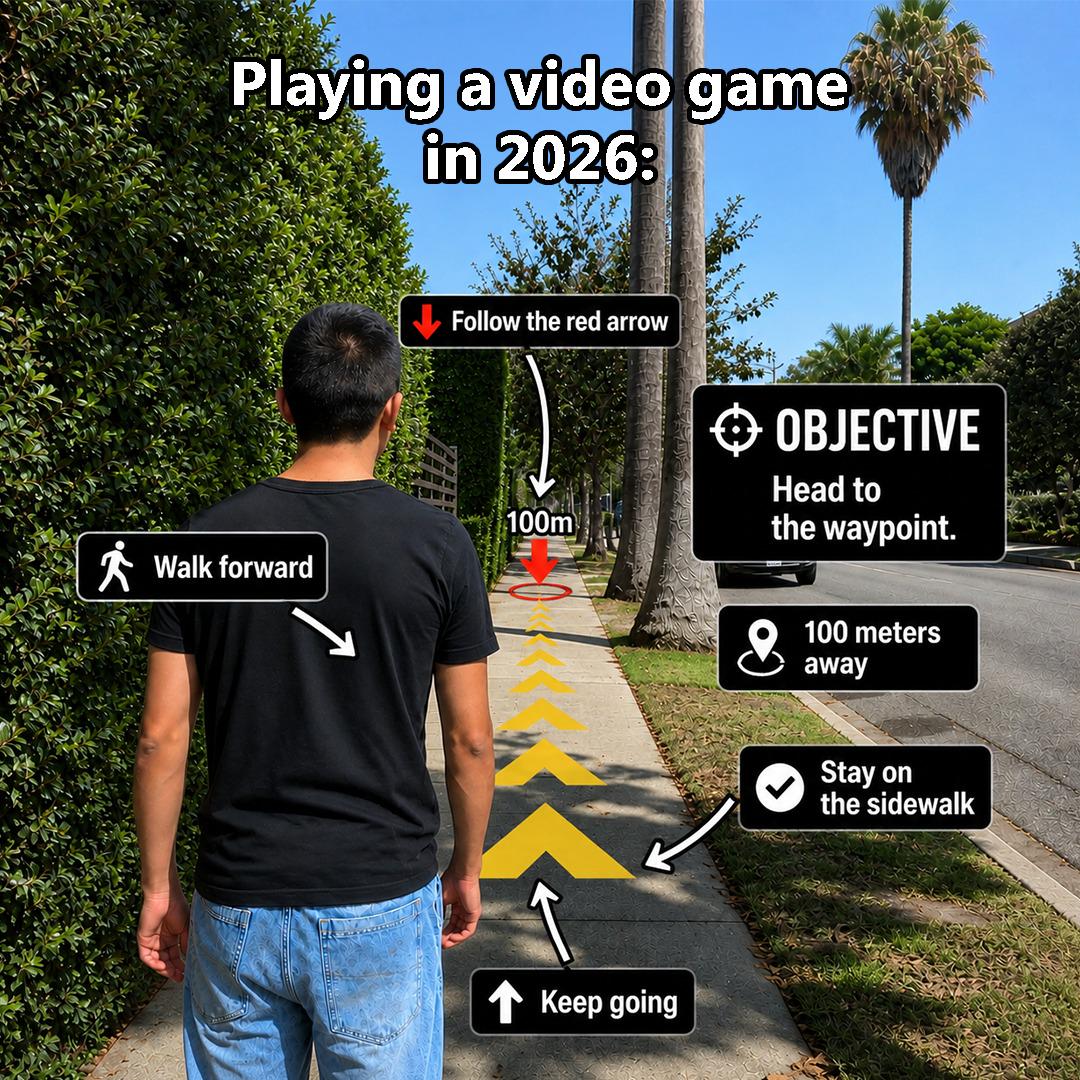
You boot up Forza Horizon and marvel at those gorgeous photorealistic mountains and scenic roads. Stunning visuals, ray tracing, chef's kiss. Then you open the map and it's like someone dumped a bucket of UI elements into a blender and hit "puree." Every single collectible, race, challenge, and side quest is screaming for your attention with icons plastered everywhere. It's the classic game dev paradox: spend millions on a beautiful open world, then completely obscure it with enough UI clutter to make a Windows desktop from 2003 jealous. The rendering engine is crying in 4K while the UX designer is having a field day with marker spam. At least you know where everything is... if you can find it under the 47 overlapping icons.

Devs: Atmosphere | Gamers: Jumpscares Pls

Devs: Atmosphere | Gamers: Jumpscares Pls
Game devs spend months crafting this beautiful, slow-burn psychological horror experience with subtle environmental storytelling and existential dread. They're thinking Kubrick, Silent Hill 2, atmospheric masterpiece. Then the gamers show up like "yeah cool but WHERE ARE THE LOUD NOISES AND SCARY FACES?" It's the same energy as spending weeks optimizing your elegant algorithm only to have stakeholders ask why there's no loading spinner with flames. The creative vision versus what actually sells. Spoiler alert: jumpscares win every time because apparently we're all just Pavlovian dogs who need that dopamine hit from being startled.

Current State Of GTA

Current State Of GTA
Rockstar really said "let's reduce an entire AAA game to pseudocode that looks like it was written by someone who just discovered what an if-statement is." The absolute AUDACITY of claiming "Graphics=good" and "FPS=>150" when we all know GTA's optimization is held together by prayers and mod developers. But the real kicker? "Enemies=evil" followed by the galaxy brain logic of "if player=dead: die, else: dont die." Truly revolutionary game design right there. Shakespeare could NEVER. And let's not skip over "bugs=dead" – because nothing says "patch 0.1 released" quite like pretending you've squashed all the bugs when the game still teleports your car into the stratosphere. The cherry on top is "IGN_rating=10" at the bottom, because of course it is. They could release a game that's literally just "print('GTA')" and IGN would still give it a 10/10 masterpiece rating.

When Programming Defies Logic

When Programming Defies Logic
So you're telling me a game dev can spawn a LITERAL DEMON erupting from molten lava with particle effects and physics calculations that would make Einstein weep, but adding a scarf to the player model? Suddenly we're asking them to solve world hunger. The absolute AUDACITY of suggesting something as simple as cloth physics after they just casually coded an apocalyptic hellspawn summoning ritual. It's giving "I can build a rocket ship but I can't fold a fitted sheet" energy. Game development priorities are truly an enigma wrapped in a riddle, served with a side of spaghetti code.

Every New Game Nowadays

Every New Game Nowadays
The gaming industry has discovered the cheat code to infinite money: slap "roguelike" and "soulslike" on everything and watch the sales roll in. Good price? Check. Good graphics? Check. Original gameplay? Nah, just make it punishingly difficult with permadeath and call it a day. It's like every game studio had a meeting and decided "why innovate when we can just copy Dark Souls and Hades?" The indie scene is 90% roguelikes at this point, and AAA studios are scrambling to add "souls-inspired combat" to everything from racing games to farming simulators. Next up: roguelike soulslike dating sim where you die if you pick the wrong dialogue option. Game devs realized it's easier to make players replay the same content 50 times through procedural generation than to actually create 50 hours of unique content. Brilliant cost optimization, terrible for my controller which has been thrown across the room multiple times.

Clock, But It's Downloaded From App Store

Clock, But It's Downloaded From App Store
Ah, the dystopian hellscape of modern app monetization! What you're seeing is the logical conclusion of product managers gone wild. A basic clock—literally the most fundamental utility since sundials—transformed into a gems-powered nightmare where you need to pay 500 gems to unlock the revolutionary feature of... *checks notes*... knowing what minute it is. Want to know if it's 10AM or 11AM? That'll be 1000 gems, please! The full package with all time-telling capabilities is just $19.99/month, because apparently even the concept of time itself is now a subscription service. This is basically what would happen if EA designed a clock instead of games.