Amd Memes

Posts tagged with Amd
Steps To Identify If A Failure Is User Error Or Design Flaw

Steps To Identify If A Failure Is User Error Or Design Flaw
The classic corporate blame-shifting flowchart strikes again. The "diagnostic process" here is brilliantly simple: if you like the company (Intel/AMD fanboy detected), it's obviously user error—you probably installed the CPU with a hammer or forgot to remove the plastic. But if you don't like the company? Clearly a catastrophic design flaw that should result in a class-action lawsuit. The Intel vs AMD imagery is chef's kiss here—showing the eternal hardware tribalism where your CPU preference becomes your entire personality. The flowchart perfectly captures how confirmation bias works in tech: the same bent pin scenario gets diagnosed completely differently depending on whether you're Team Blue or Team Red. Root cause analysis? Never heard of her. Just vibes and brand loyalty.

Convinced My Parents To Buy Me One

Convinced My Parents To Buy Me One
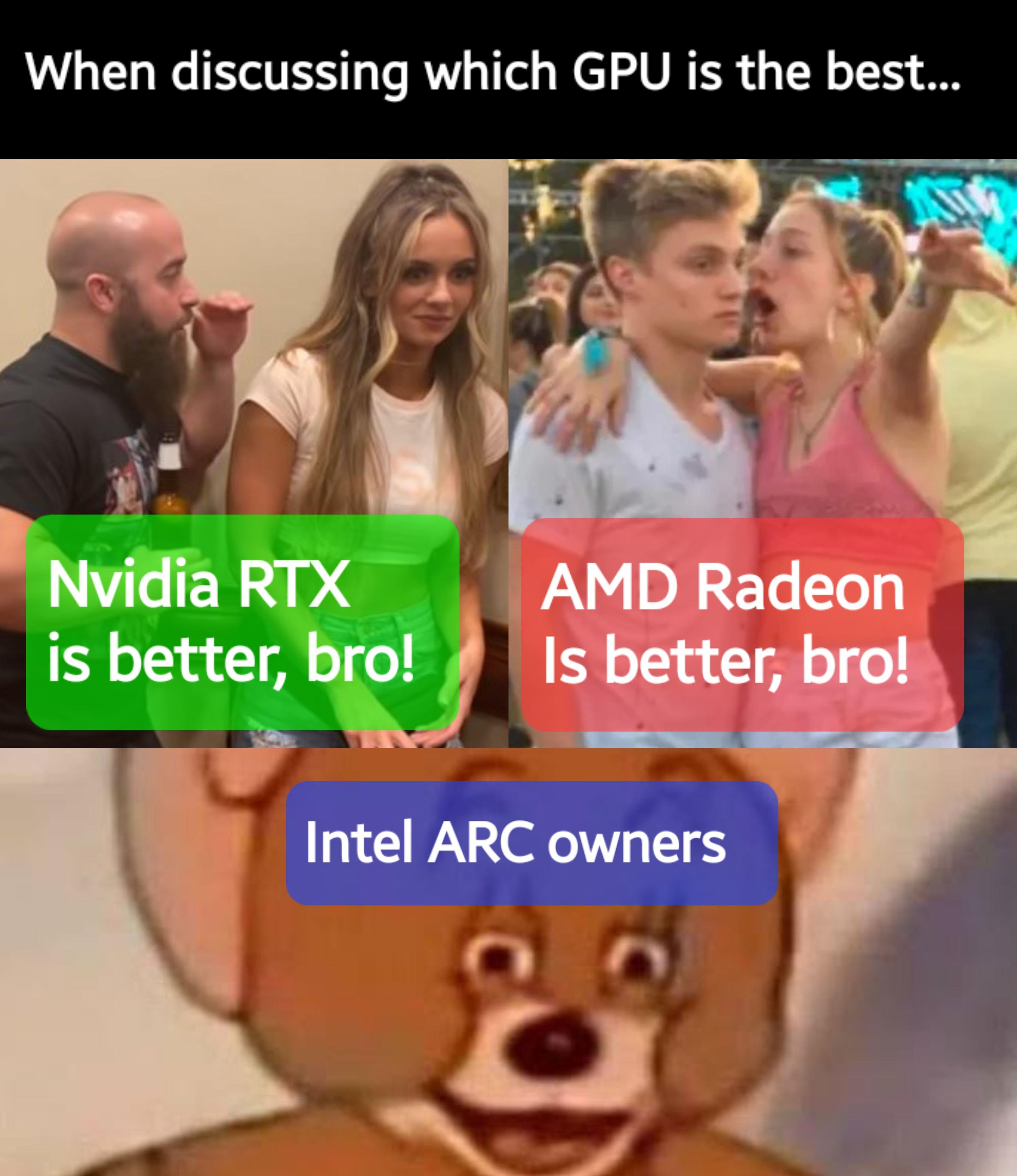
Oh honey, the eternal GPU wars just got personal. While PC gamers are out here treating NVIDIA like it's the only graphics card manufacturer on planet Earth, AMD and Intel are literally lying on the floor begging for attention like forgotten stepchildren. The brand loyalty is UNREAL—people will drop $1,600 on an RTX 4090 without blinking, but suggest an AMD Radeon and suddenly everyone's a "compatibility expert." Meanwhile, Intel Arc is just happy to be mentioned at all. The market dominance is so brutal that even when AMD releases competitive cards at better prices, gamers still swipe right on team green. Competition? What competition? NVIDIA's out here living rent-free in everyone's minds AND wallets.

AMD GPU Driver Package Installs 6 GB AI Companion By Default

AMD GPU Driver Package Installs 6 GB AI Companion By Default
So you just wanted to update your GPU drivers to get that sweet 2% performance boost in your favorite game, but AMD said "Hold up bestie, let me throw in a 6.4 GB AI chatbot you absolutely didn't ask for!" Because nothing screams "essential graphics driver" like an offline virtual assistant that probably can't even tell you why your framerate drops during boss fights. The actual chipset drivers? A reasonable 74 MB. But the AI companion? That bad boy is consuming more storage than most indie games. It's giving very much "would you like to install McAfee with your Adobe Reader?" energy. At least they're being transparent about the bloatware this time, with helpful buttons like "Do Not Install" and "Do Not Enable" practically BEGGING you to opt out. Fun fact: This is AMD's way of competing in the AI race—by forcefully making you their AI beta tester whether you like it or not. Welcome to 2025, where your GPU drivers come with more baggage than your ex.

580 Is The Most Important Number For GPUs

580 Is The Most Important Number For GPUs
You know that friend who always name-drops their "high-end gaming rig"? Yeah, they casually mention having "something 580" and you're immediately picturing them rendering 4K gameplay at 144fps with ray tracing maxed out. Plot twist: they're flexing an Intel ARC B580 (Intel's adorable attempt at discrete GPUs), but you're thinking they've got an AMD RX 580—a respectable mid-range card from 2017 that can still hold its own in 1080p gaming. Reality check? They're actually running a GTX 580 from 2010, a card so ancient it predates the first Avengers movie. That's Fermi architecture, folks. The thing probably doubles as a space heater. The beauty here is how GPU naming schemes have created the perfect storm of confusion. Three different manufacturers, three wildly different performance tiers, same number. It's like saying you drive "a 2024" and leaving everyone guessing whether it's a Ferrari or a golf cart.

No Hard Feelings

No Hard Feelings
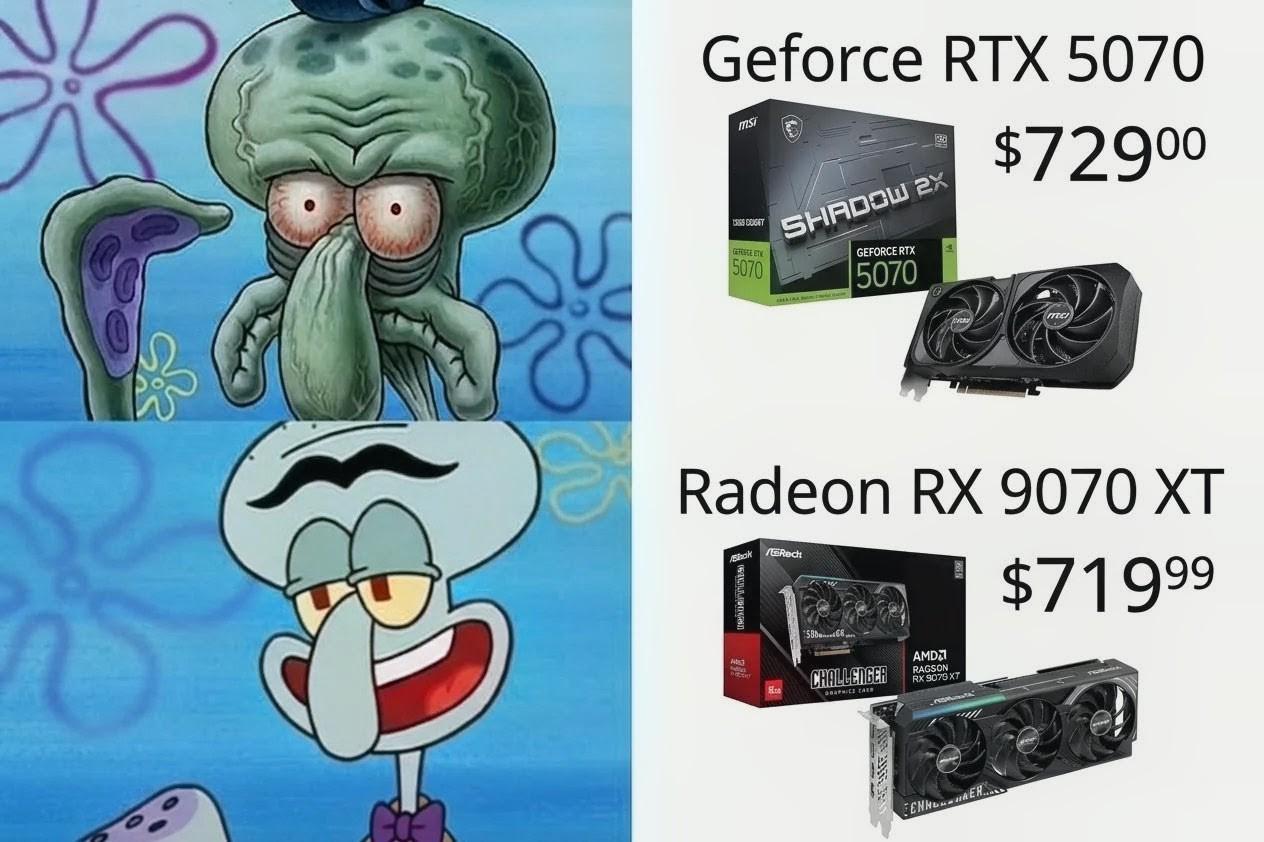
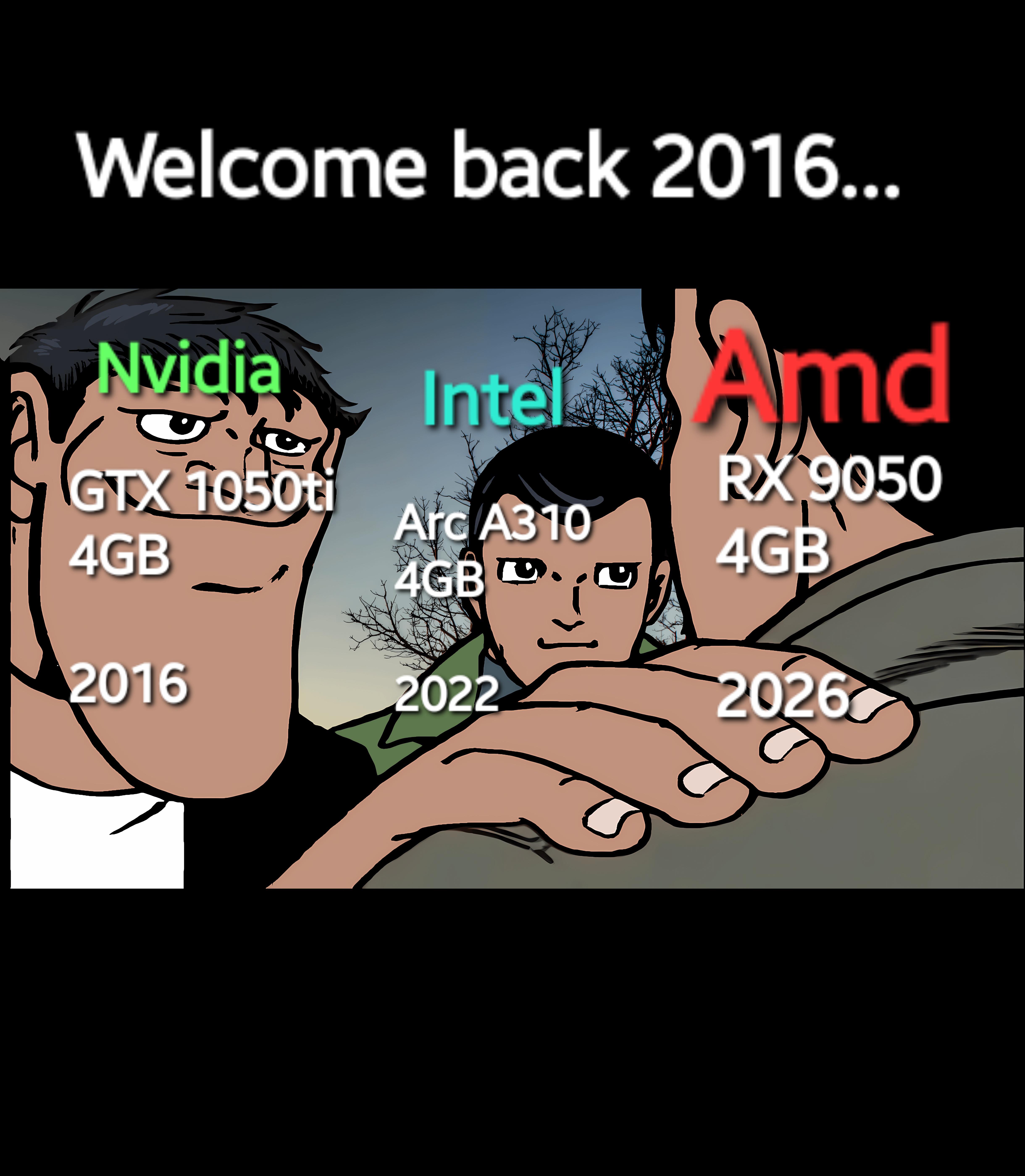
The GPU wars between AMD and Intel have gotten so heated that some folks just want to watch NVIDIA burn. Not because they're rooting for team red or team blue specifically—they just want the green overlord to take an L for once. When one company has dominated the graphics card market so thoroughly that their price tags look like mortgage payments, you stop caring about who wins and start hoping for chaos. It's not about loyalty anymore. It's about sending a message.

A Couple Of Things May Not Be Accurate But Still Funny

A Couple Of Things May Not Be Accurate But Still Funny
The corporate version of "things that don't matter" except they absolutely do matter and we're all lying to ourselves. AMD's driver situation has gotten way better over the years, but let's be real—we all know someone who still has PTSD from Catalyst Control Center. Windows bloatware is basically a feature at this point (looking at you, Candy Crush pre-installed on a $2000 machine). Intel's NM (nanometer) naming was already confusing before they switched to "Intel 7" because marketing > physics. And Sony/MacBook gaming? Sure, if you enjoy playing Solitaire at 4K. The NVIDIA VRAM one hits different though—12GB in 2024 for a $1200 GPU? Generous. And Ubisoft's game optimization is so legendary that your RTX 4090 will still stutter in their open-world games because they spent the budget on towers you can climb instead of performance. Crucial's "consumers don't matter" is just accurate business strategy—they're too busy selling to data centers to care about your gaming rig.

I Only See People Talking About AM4 Or AM5, Never About LGA Sockets. Why?

I Only See People Talking About AM4 Or AM5, Never About LGA Sockets. Why?
Intel's LGA sockets sitting at the bottom of the ocean while AMD's AM4 and AM5 get all the love and attention from the PC building community. It's like being the third wheel, except you're also slowly decomposing underwater. The truth? AMD nailed the marketing game and the longevity factor. AM4 lasted like 5 years with backward compatibility that made people feel all warm and fuzzy inside. Meanwhile, Intel's been churning out LGA sockets like they're going out of style—LGA1151, LGA1200, LGA1700—making upgraders buy new motherboards every generation like it's a subscription service. Poor LGA1700 down there just wanted some recognition, but nope. The internet has chosen its champion, and it's Team Red all the way. RIP to all the forgotten Intel sockets that never got their moment in the sun.

I Regret Buying AMD Instead Of Intel For The CPU

I Regret Buying AMD Instead Of Intel For The CPU
The eternal AMD vs Intel debate takes a spicy turn here. The joke is that this person "regrets" buying AMD... but look at that absolute unit of a GPU taking up half the case. That GIGABYTE GeForce RTX is so thicc it's basically a space heater with gaming capabilities. The irony? AMD CPUs have been crushing it lately with better price-to-performance ratios and lower power consumption, while Intel has been playing catch-up. But sure, blame the CPU when your GPU is probably pulling 350W and cooking your room to a toasty 85°F. The real regret should be not buying a bigger case or investing in better airflow. That GPU is literally living rent-free in there, hogging all the space and power budget. Your electricity bill called—it wants its money back.

I Feel Your Pain, AM4 Folks

I Feel Your Pain, AM4 Folks
When you're happily committed to your AM4 socket and DDR5 prices, but then AMD drops the AM5 platform and suddenly you're questioning all your life choices. The handcuffs on DDR5 prices really seal the deal here – you're literally locked into expensive RAM while the shiny new socket struts by. For context: AMD's AM4 socket had an legendary run supporting multiple CPU generations, making it the loyal partner every PC builder wanted. Then AM5 arrived with DDR5 support, but early adopters got slapped with astronomical RAM prices. So AM4 users are stuck watching AM5 from afar, financially imprisoned by DDR5's premium pricing. Can't upgrade if your wallet's already in custody. The real kicker? AM4 is still perfectly fine for most workloads, but that new platform FOMO hits different when you're a hardware enthusiast.

I Still Don't Understand How Booting Time Got Slower For Whatever Reason

I Still Don't Understand How Booting Time Got Slower For Whatever Reason
Oh, the BETRAYAL of modern computing! You dropped half a grand on a bleeding-edge AM5 CPU and a blazing-fast M.2 NVMe drive that can theoretically transfer data faster than light itself, only to watch your PC boot up like it's stuck in molasses. Meanwhile, your crusty old 2010 setup with a cheap SATA SSD was zooming through boot screens like The Flash on espresso. The cruel irony? Windows has become SO bloated with telemetry, security checks, and whatever mysterious rituals it performs during startup that even NASA-grade hardware can't save you. Your fancy 8000MB/s drive sits there twiddling its thumbs while Windows decides whether it wants to check for updates, scan your soul, or just take a leisurely stroll through its startup processes. Technology peaked in 2015 and nobody can convince me otherwise!

The Infinite PC Upgrade Cycle

The Infinite PC Upgrade Cycle
The endless PC upgrade cycle in four painful panels! First you splurge on that fancy AM5 CPU thinking you're set, then realize your motherboard needs an upgrade too. But the real kicker? No matter what high-end parts you buy, you're always short on RAM. It's the computational equivalent of buying a Ferrari but not having enough gas money to drive it more than 5 miles. The increasingly desperate facial expressions perfectly capture that moment when you check your bank account after each purchase and realize you've fallen into the upgrade rabbit hole again.

Fine Wine Or Stockholm Syndrome?

Fine Wine Or Stockholm Syndrome?
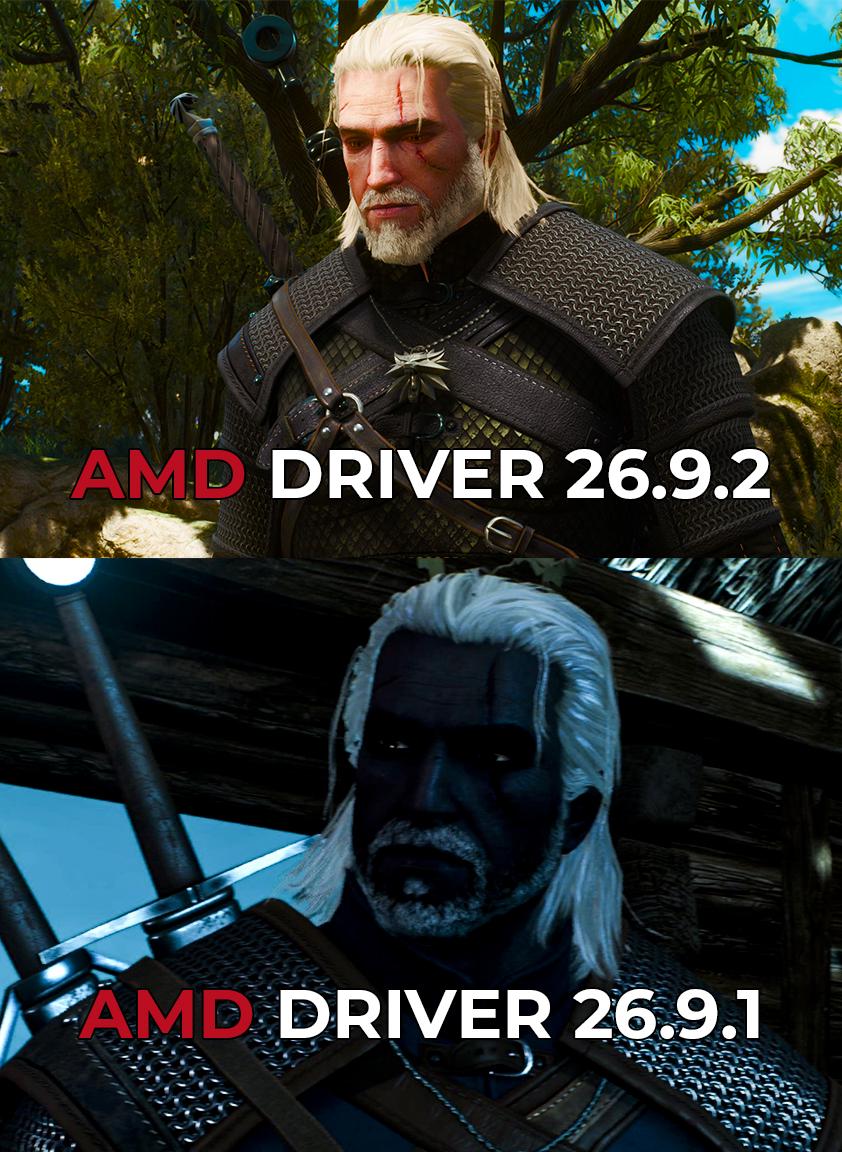
The classic AMD life cycle in one image. Your GPU starts out as a grumpy disappointment with day-one drivers that make you question your purchase decisions and basic reasoning skills. Fast forward a year of patches and driver updates, and suddenly that same card is running games it had no business running before. The "Fine Wine" technology isn't marketing—it's just AMD's way of saying "we'll fix it eventually, we promise." Nothing says computing progress like your hardware actually getting better while you get older and balder.