200-ok Memes

Posts tagged with 200-ok

Successful Failure

Successful Failure
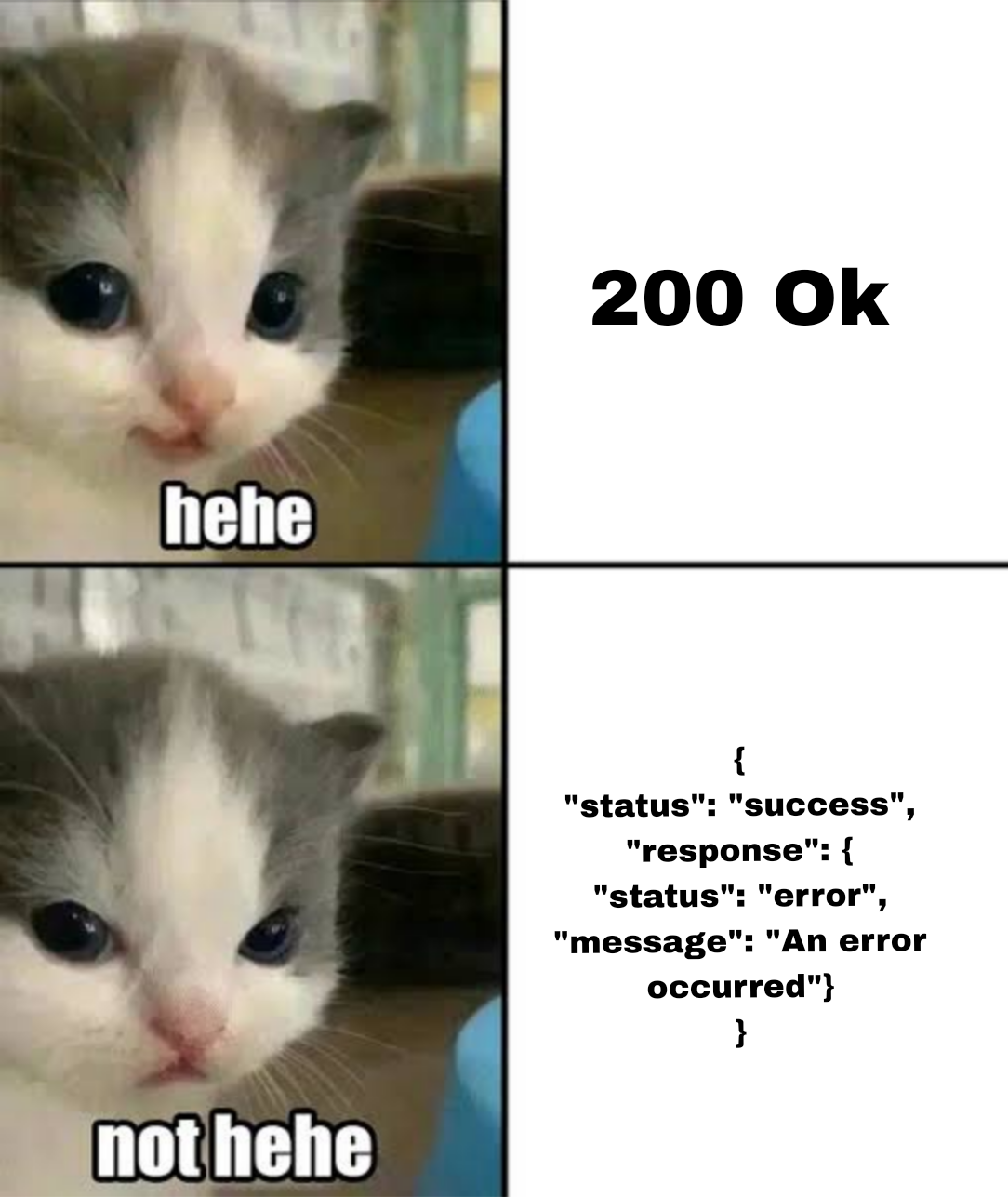
Nothing screams "enterprise-grade API design" quite like getting a 200 OK status code while your response body cheerfully informs you that everything has gone horribly wrong. Top panel: pure bliss at seeing that sweet HTTP 200. Bottom panel: the soul-crushing realization that the response contains {"status": "error"} nested inside like a Russian doll of disappointment. This is the API equivalent of your car's check engine light saying "Everything's fine!" while smoke pours from the hood. Proper REST APIs should return 4xx or 5xx status codes for errors, but some backend devs apparently decided that HTTP status codes are just suggestions. Now your error handling needs to parse the response body to figure out if you actually succeeded or not. Thanks, I hate it.

Evo Lution

Evo Lution
Backend casually hands over a perfectly clean 200 OK response to Frontend. Simple, elegant, beautiful. Then Frontend reads the actual error message buried inside that 200 OK body and realizes Backend just wrapped a failure in success clothing. Classic backend move—technically correct (the best kind of correct) but absolutely infuriating for anyone trying to handle errors properly on the client side. Nothing says "I don't understand HTTP status codes" quite like returning 200 for literally everything. Bonus points if the error details are nested 5 levels deep in the JSON response under a key called "status" or "success: false". Because why use the protocol as intended when you can reinvent the wheel inside the response body?

Evil Illusion

Evil Illusion
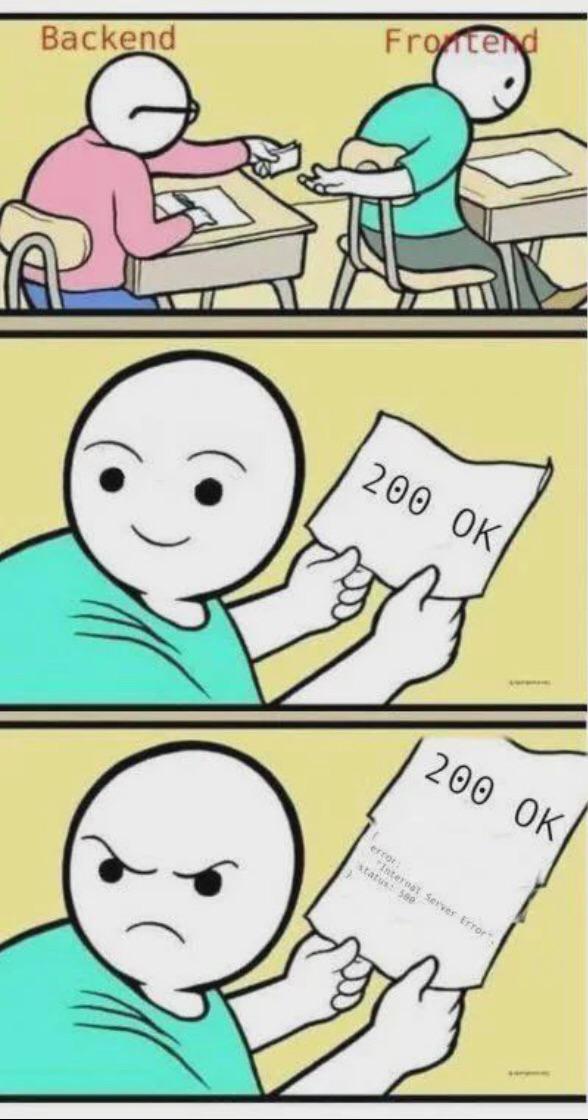
Backend dev passes a note to Frontend dev, who reads it and sees "200 OK" - everything looks fine! But then Frontend takes a closer look and realizes the response body says "Error: something went wrong." Classic backend move right there. This is the API equivalent of your friend saying "I'm fine" while clearly not being fine. The HTTP status code says success, but the actual payload is screaming failure. It's like getting a beautifully wrapped gift box that contains nothing but disappointment and poorly documented error messages. Pro tip: If you're returning errors in a 200 response, you're not building a REST API - you're building a trust issue generator. Status codes exist for a reason, people! Use 4xx for client errors, 5xx for server errors, and save 200 for actual success. Your frontend devs will thank you, and you won't have to dodge coffee mugs at standup.