

Standards committee Memes

Posts tagged with Standards committee

Clever Not Smart

Clever Not Smart
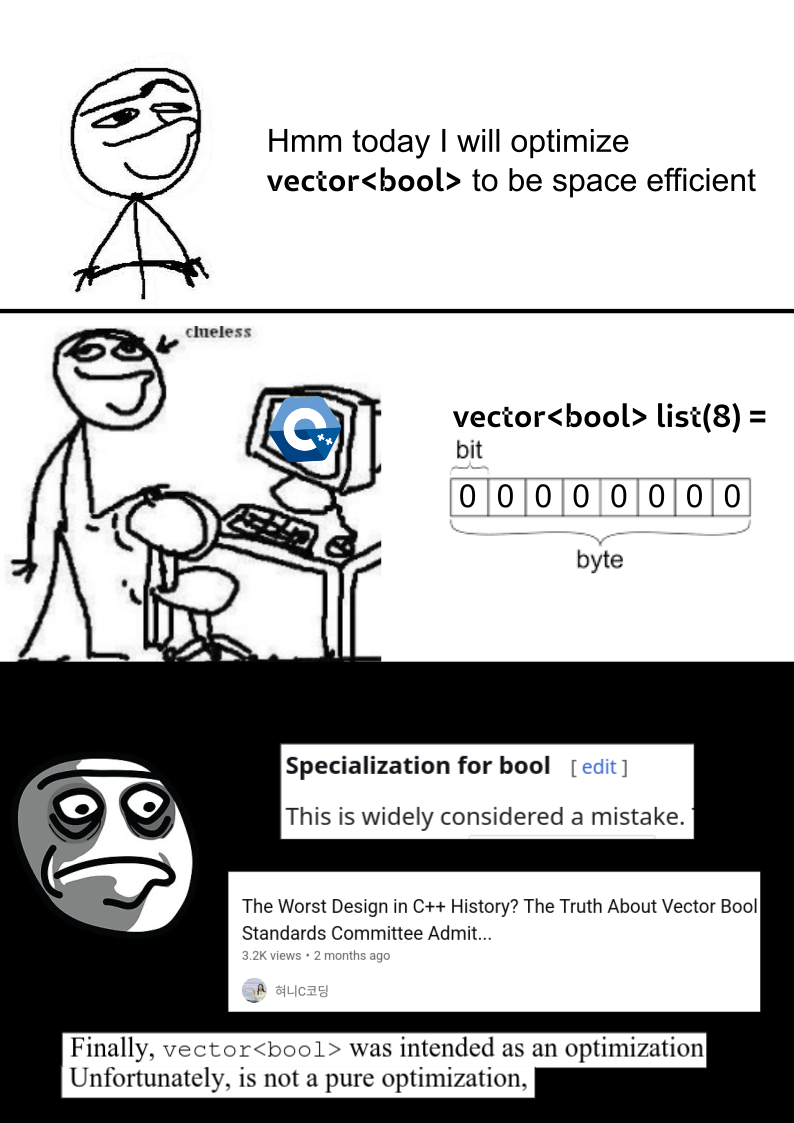
You know that feeling when you think you're being galaxy-brained by micro-optimizing something, only to discover you've actually created a legendary footgun? That's vector<bool> in C++. Someone on the standards committee thought "Hey, let's make vector<bool> store each boolean as a single bit instead of a byte to save memory!" Sounds brilliant, right? Wrong. Because now it doesn't behave like other vectors—you can't get actual references to elements, it breaks templates, and it violates the principle of least surprise harder than finding out your "senior developer" doesn't know what a pointer is. The C++ standards committee literally admitted this was a mistake. When the people who invented the thing tell you it was a bad idea, you know someone got a little too clever for their own good. Sometimes the straightforward solution of using a whole byte per bool is the right call. Premature optimization strikes again!

C Cpp Programming In 2050

C Cpp Programming In 2050
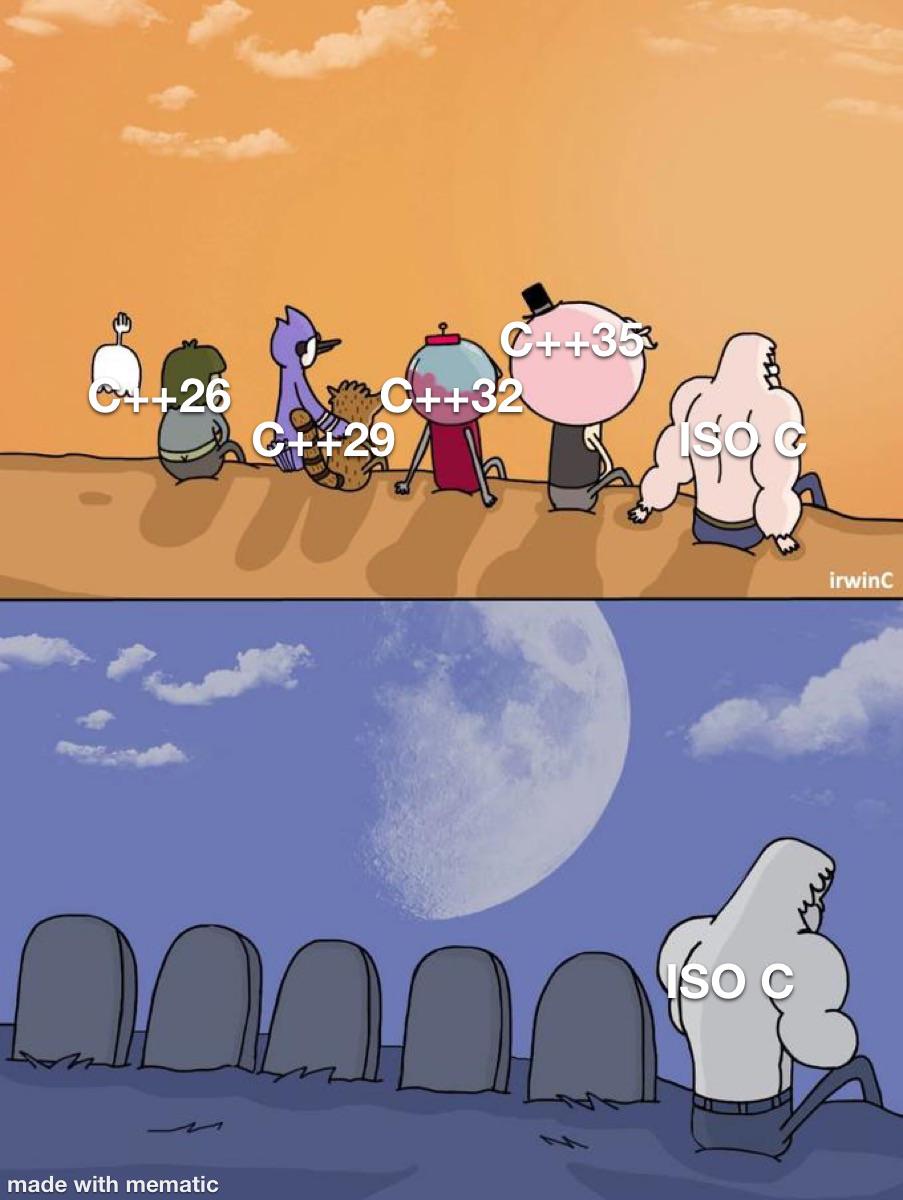
The C++ standards committee is literally speedrunning version numbers like it's a competitive sport. We've got C++26, C++29, C++32, C++33, and then there's ISO C just chilling in the graveyard like the ancient relic it is. While C++ is out here releasing a new standard every time you blink, poor old C is still stuck with C11 and C17, basically fossilizing in real-time. By 2050, C++ will probably be at version C++127 with built-in time travel features, while C developers will still be manually managing memory like it's 1972. The generational gap between these two is absolutely SENDING me—one's evolving faster than a Pokémon on steroids, the other's preserved like a prehistoric mosquito in amber.

Will Be Widely Adopted In 30 Years

Will Be Widely Adopted In 30 Years
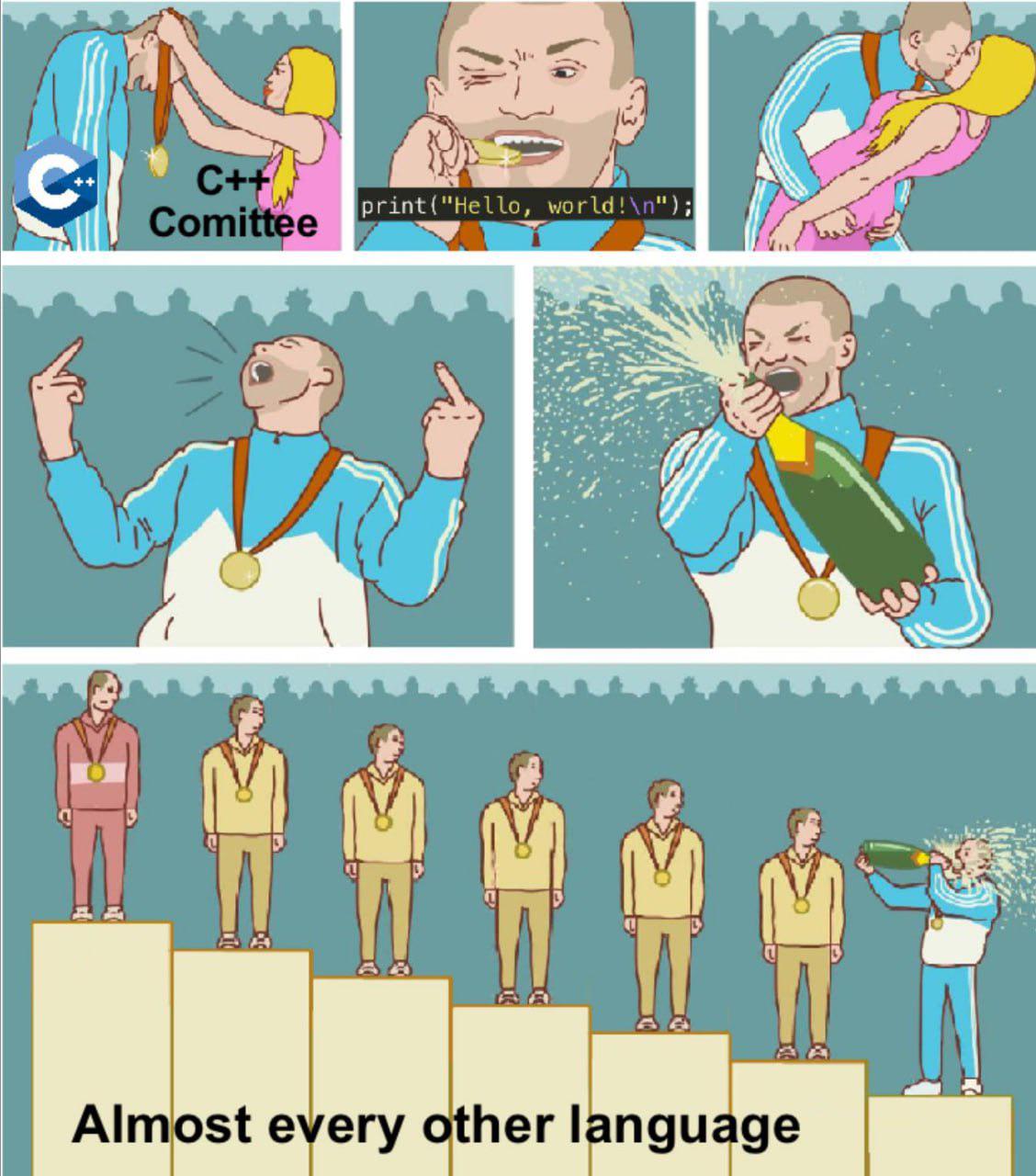
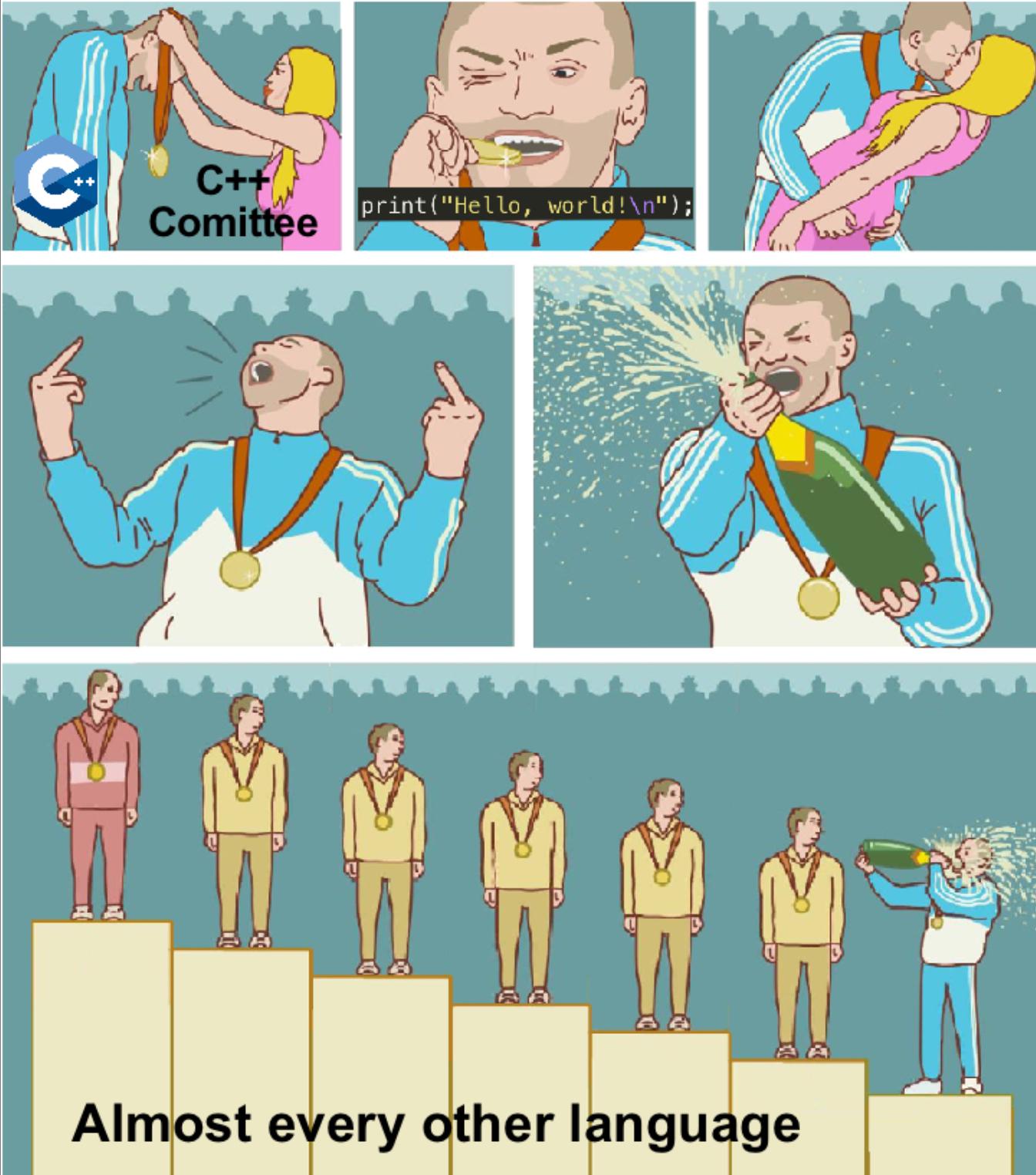
The C++ Committee gets a gold medal for creating the most complex language standard that somehow keeps getting more convoluted with each revision. Meanwhile, the guy celebrating with champagne and screaming at a simple "Hello World" print statement is the perfect representation of C++ developers who've spent 6 hours debugging template metaprogramming only to realize they forgot a semicolon. The bottom panel delivers the killing blow - while other programming languages stand proudly on their podiums, evolving gracefully and gaining adoption, C++ is over there chugging champagne and making a mess, still convinced it's the superior choice despite scaring away new developers faster than a segmentation fault at runtime. And yet... we'll still be wrestling with pointer arithmetic and undefined behavior in 2053. The language that refuses to die gracefully!

Will Be Widely Adopted In 30 Years

Will Be Widely Adopted In 30 Years
The C++ Committee hands out medals for printing "Hello, World!" while every other language stands on the podium looking dignified. Meanwhile, C++ guy is busy screaming, flipping everyone off, and spraying champagne like he just discovered fire. Nothing captures the spirit of modern programming quite like watching C++ celebrate basic functionality that other languages implemented without needing therapy afterward. The committee's slogan might as well be "We'll make string handling intuitive by 2053, we promise!" The real joke is all of us still writing C++ in 2023 while explaining to management that memory leaks are just "giving back to the operating system."

The Standards Committee Trolley Problem

The Standards Committee Trolley Problem
The classic trolley problem gets a programmer's twist! We've got two standards committees (TC39 for JavaScript and JTC1 for C++) tied to the nuclear option, while cancer and AIDS cures are on another track. Every developer knows the pain of dealing with language standards committees that seem to drag on forever with decisions that can blow up your codebase. The real moral dilemma: do you save humanity with medical breakthroughs, or do you finally put those endless committee meetings out of their misery? Let's be honest, we've all fantasized about nuking a standards meeting after implementing our 17th breaking change in a month.