Git merge Memes

Posts tagged with Git merge
Two Jr Devs Getting A Merge Conflict

Two Jr Devs Getting A Merge Conflict
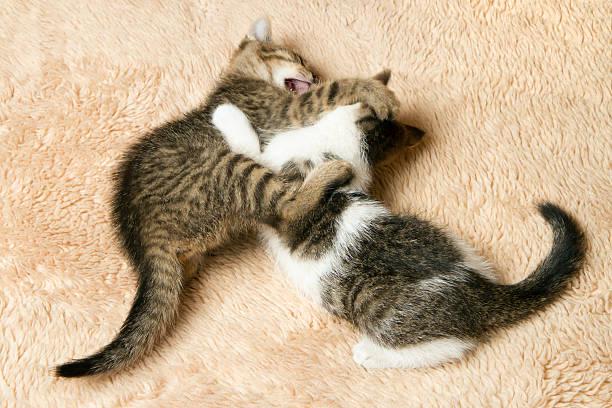
Junior developers encountering their first merge conflict is basically a declaration of war. Instead of calmly resolving the conflict like seasoned devs who've seen this rodeo a thousand times, they immediately assume the other person's code is garbage and theirs is the gospel truth. Cue the dramatic Slack messages, the passive-aggressive commit comments, and the inevitable escalation to a senior dev who solves it in 30 seconds while questioning their life choices. The best part? Both juniors probably changed the same three lines of code, and the "conflict" could've been resolved by just... talking. But no, we're going full WWE SmackDown over a semicolon placement. Git was designed to handle collaboration, but nobody told these two that collaboration doesn't mean mortal combat.

We Are Back

We Are Back
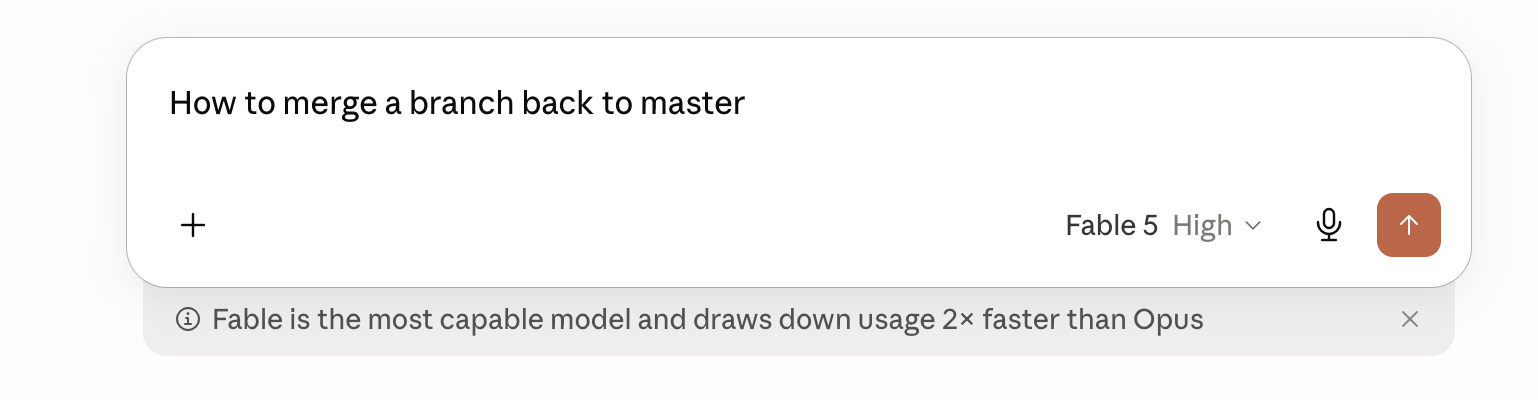
When you're so desperate to merge your feature branch that you're literally asking an AI chatbot for help. And naturally, the AI responds with a completely unhelpful notification about its own performance specs instead of actually answering your Git question. The irony here is chef's kiss—you're trying to merge code, and the AI is basically saying "yeah yeah, but did you know I'm really fast?" Classic deflection. It's like asking your coworker how to fix a production bug and they start bragging about their new mechanical keyboard. Pro tip: just use git merge master or git rebase master and prepare for merge conflicts like the rest of us mortals.

Conflict Resolution

Conflict Resolution
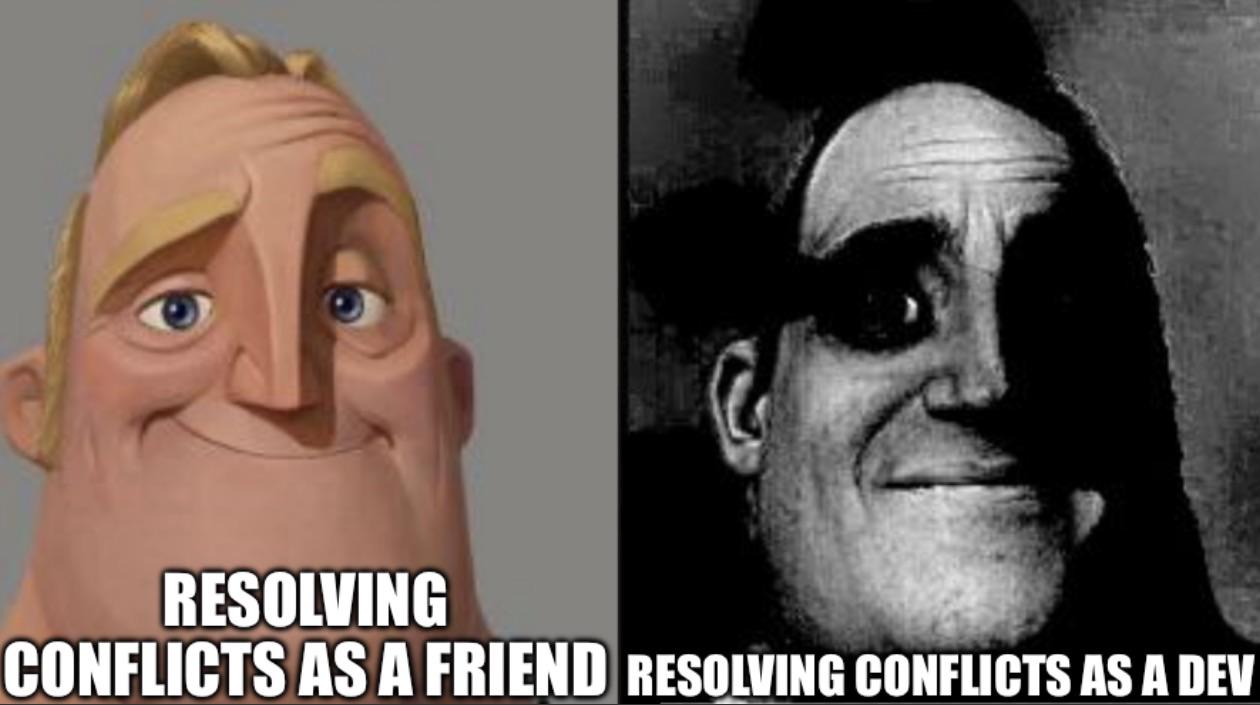
Merge conflicts turn even the friendliest developer into a stone-cold problem solver. One minute you're all smiles and "let's collaborate!", the next you're staring dead-eyed at a screen full of <<<<<<< HEAD markers, ready to accept all incoming changes and call it a day. The duality of git: where teamwork meets territorial warfare over who gets to keep their version of utils.js .

Who Needs Code Review

Who Needs Code Review
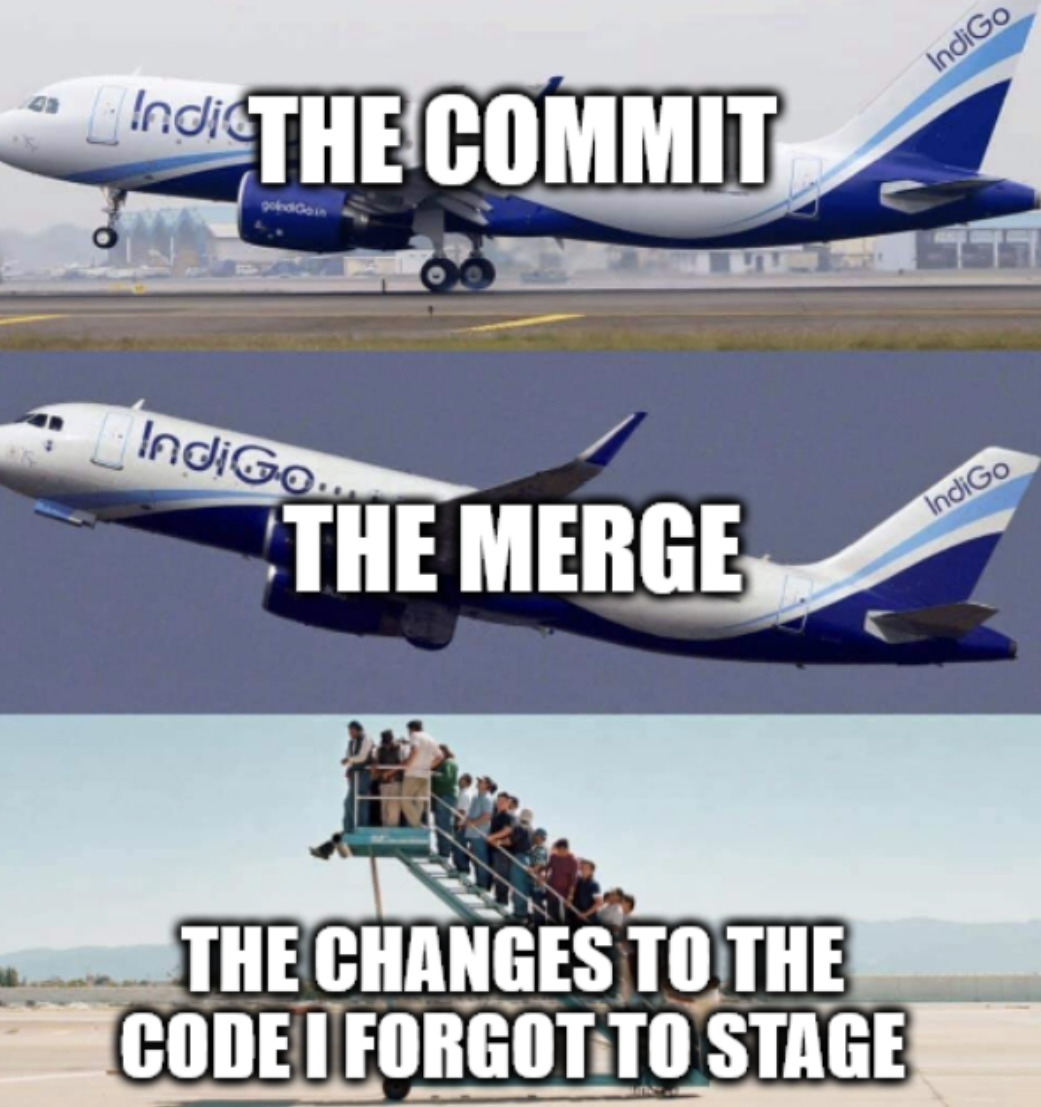
You know that feeling when your commit looks smooth, the merge goes through without conflicts, and you're feeling like a rockstar? Then you try to actually deploy it and suddenly there's 47 people standing on a rickety ladder watching your code burst into flames. The commit: clean. The merge: pristine. The staging environment: a crime scene. Because apparently your "minor refactor" just decided to break authentication, delete half the database indexes, and somehow make the frontend render in Comic Sans. This is why we have staging environments, folks. And code reviews. Preferably both. Because git will let you merge literally anything, but physics—and production—are significantly less forgiving.

Evil Git Clone

Evil Git Clone
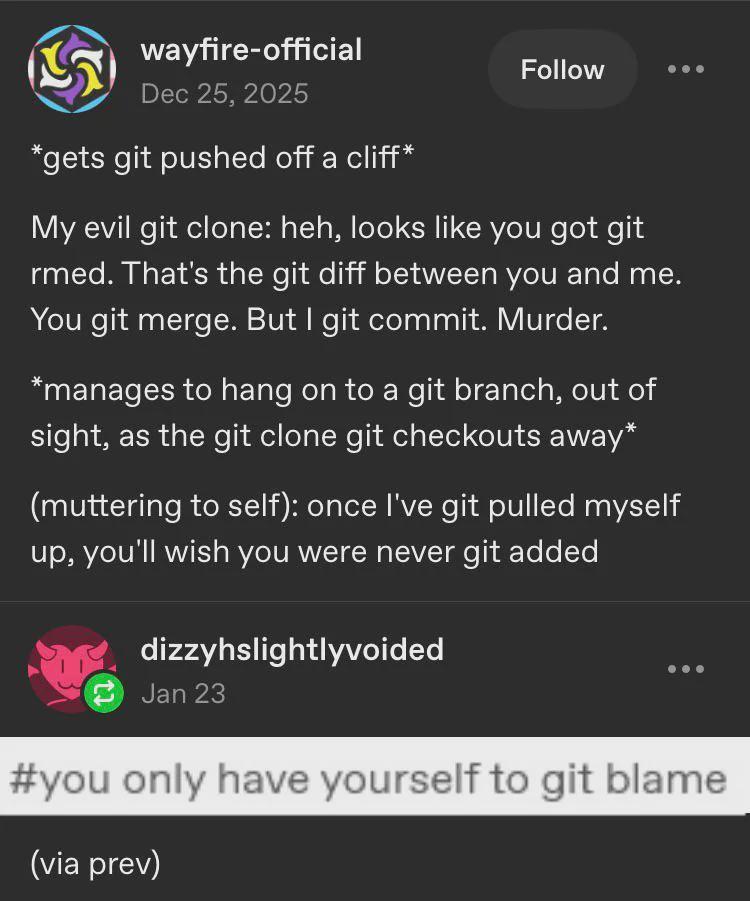
Someone got pushed off a cliff and their evil git clone shows up with the most diabolical pun-based threats ever conceived. "You git merge, but I git commit. Murder." The sheer commitment to replacing every possible word with git commands is both horrifying and impressive. The villain literally hangs onto a branch while the clone checks out, threatens to pull them up just to make them wish they were never added, and the punchline? "#you only have yourself to git blame" Every git command becomes a weapon in the hands of an evil twin who clearly spent too much time reading git documentation instead of developing social skills. The wordplay density here is off the charts—it's like someone weaponized a git cheat sheet and turned it into a villain monologue. Props to whoever wrote this for making version control sound genuinely menacing.

When You Think You Finished

When You Think You Finished
You've spent hours carefully building your feature, tested it locally, got it reviewed, pushed it up, and it's sitting there all nice and organized ready to merge. Then some maniac on your team merges their branch first and suddenly your pristine PR looks like a Lego explosion at a daycare. Now you're untangling merge conflicts that make no sense because they touched the same file you did for "unrelated" changes. The worst part? Half the time it's formatting changes or someone reorganizing imports. You went from "ship it" to "git merge --abort" real quick. Welcome to collaborative development, where your perfectly stacked blocks become chaos the moment you look away.

American Sign Language Stickers,52pcs ASL Stickers for Water Bottle, Bicycle, Motorcycle, Skateboard, Laptop, Luggage,Vinyl Waterproof,ASL Gifts

American Sign Language Stickers,52pcs ASL Stickers for Water Bottle, Bicycle, Motorcycle, Skateboard, Laptop, Luggage,Vinyl Waterproof,ASL Gifts
Package includes: 52Pcs ASL sticker, the size of each sticker is about 1.96inch-3.15inch (5cm-8cm), each includes an American sign language element · Unique design: ASL sticker set has 52 different d…

Merging Two Branches After Long Time

Merging Two Branches After Long Time
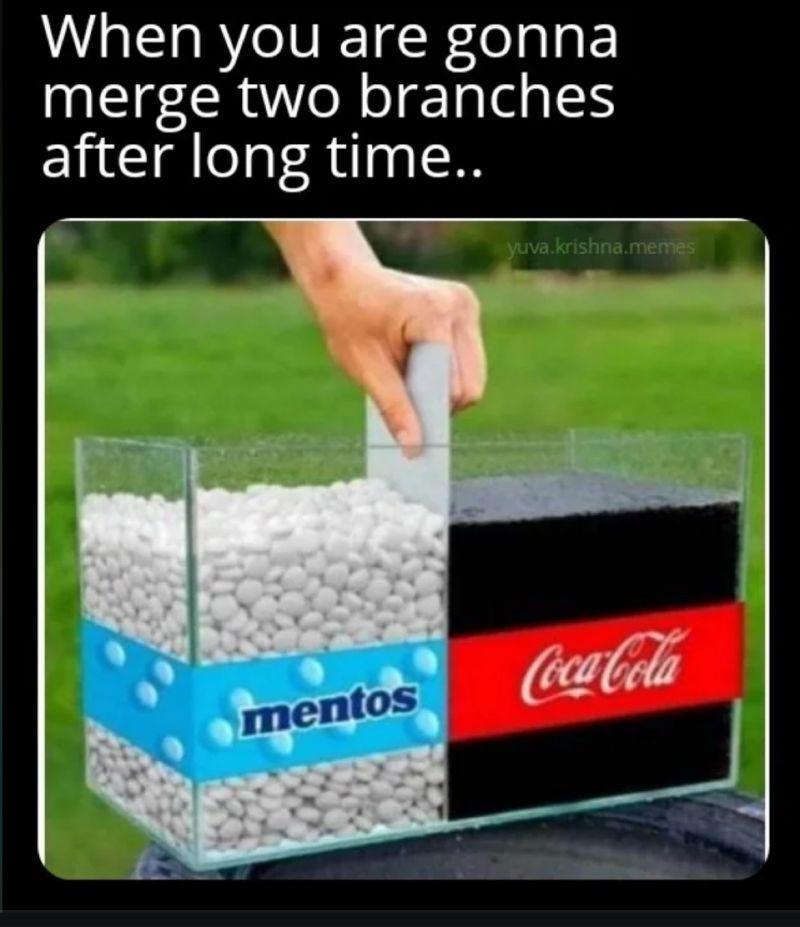
You know that feeling when you've been working on your feature branch for weeks while your colleague has been pushing commits to main like there's no tomorrow? Now it's time to merge and you're about to witness the most explosive reaction since someone discovered you could drop Mentos into Coke. The Mentos-Coke experiment is the perfect metaphor here: individually, both branches are perfectly fine. But when they meet after diverging for so long? Prepare for an eruption of merge conflicts that'll spray all over your terminal. Every file you touch has been touched by someone else. Every function you refactored has been refactored differently. Every comment you deleted has been expanded into a novel. Pro tip: Always rebase frequently to avoid turning your codebase into a science fair disaster. Or just accept your fate and grab some popcorn while git throws 847 conflict markers at you.