Open source drama Memes

Posts tagged with Open source drama

Bro Why Mad You Made It MIT Licensed

Bro Why Mad You Made It MIT Licensed
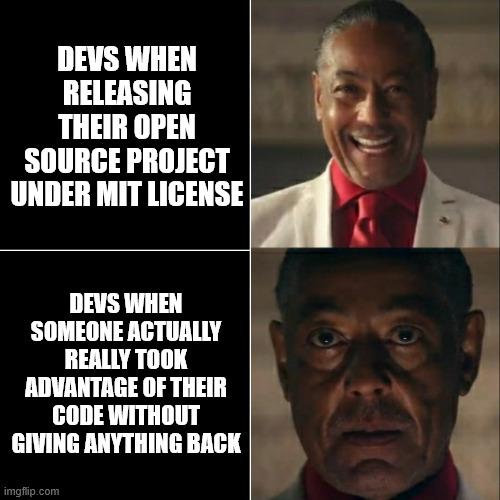
You literally gave everyone permission to take your code, use it commercially, modify it, and never contribute back. That's... that's what MIT license means, buddy. You can't be out here acting shocked when a billion-dollar company yoinks your weekend project and builds their entire SaaS platform on it without even buying you a coffee. The MIT license is basically the "take whatever you want, no strings attached" of open source. Want attribution? You'll get it buried in a dependencies.txt file nobody reads. Want contributions back? Good luck with that. Meanwhile, GPL devs are sitting in the corner nodding knowingly while sipping their tea, watching you learn the hard way why copyleft exists. Pro tip: If you want people to contribute back, maybe don't choose the license that explicitly says they don't have to. 🤷

Meet Potential Language

Meet Potential Language
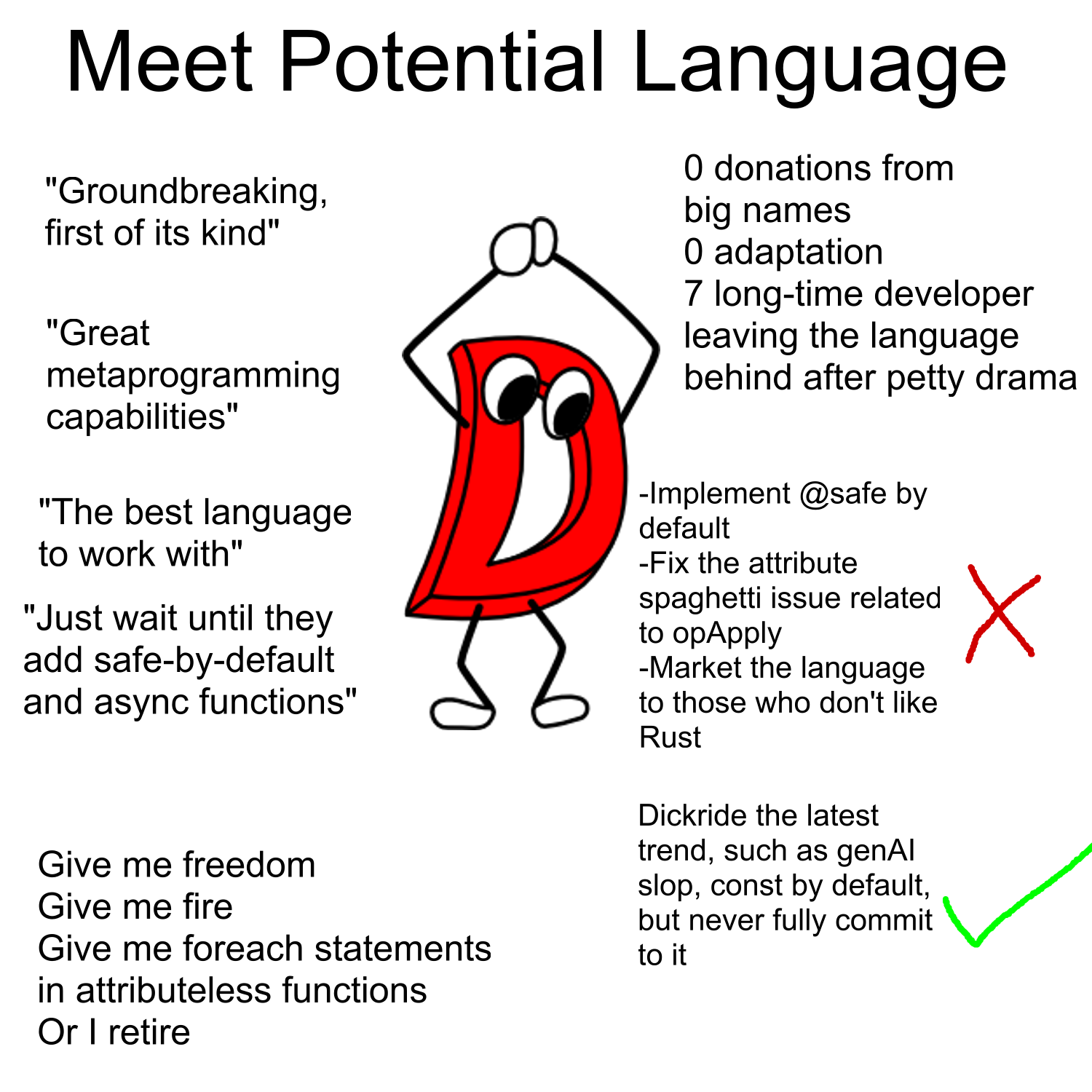
Someone just pitched the D programming language's business plan to investors and it's basically "copy Rust's homework but make it look different." Zero corporate backing, zero adoption, and seven core maintainers rage-quitting after what I can only assume was a heated debate about semicolons. The left side is pure comedy gold—"groundbreaking" metaprogramming that nobody asked for, promises of async features that'll arrive sometime after the heat death of the universe, and the classic "give me foreach or I retire" ultimatum. Patrick Henry would be proud. The right side? Chef's kiss. Their master plan is to market themselves as "Rust for people who don't like Rust" while simultaneously dickriding every trendy feature (genAI slop, const by default) without actually committing to any of them. It's like watching someone try to be edgy and mainstream at the same time. Bold strategy, Cotton. Fun fact: D has been around since 2001 and still hasn't figured out if it wants to be C++, Rust, or its own thing. That's 20+ years of potential energy with zero kinetic results.

Bro You Used MIT

Bro You Used MIT
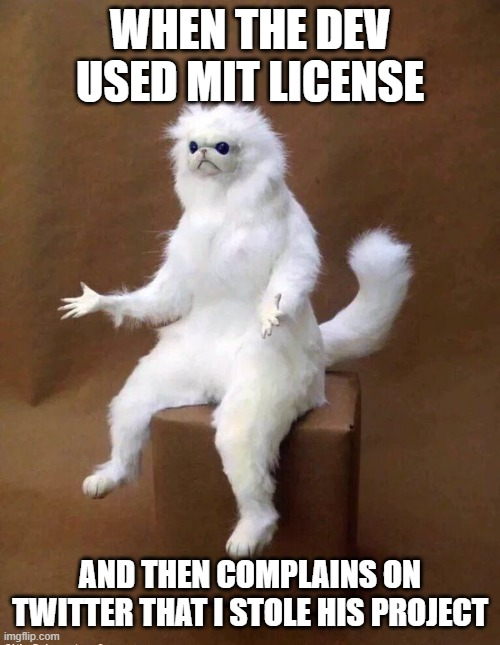
The MIT license literally says "do whatever you want with this code, I don't care." It's the most permissive open-source license out there—you can use it, modify it, sell it, tattoo it on your forehead, whatever. So when a dev slaps MIT on their repo and then has a meltdown on Twitter because someone actually *used* their code, it's like putting up a "FREE PIZZA" sign and then crying when people eat the pizza. The cat's bewildered stance perfectly captures the rest of us watching this drama unfold, wondering if they've ever actually read the license they chose. Pro tip: if you don't want people using your code, maybe don't pick the license that's basically the digital equivalent of "take it, it's yours."

The MIT License Paradox

The MIT License Paradox
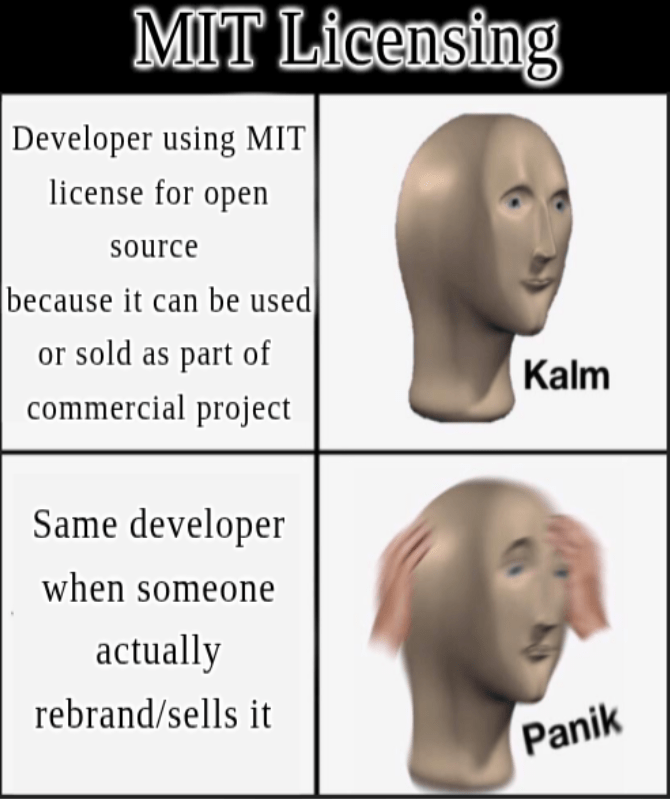
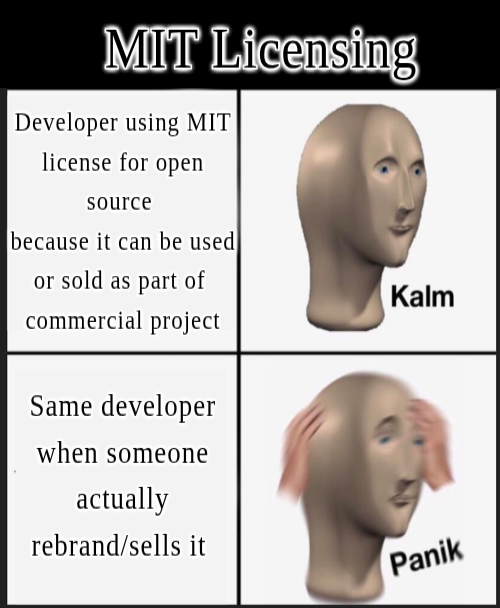
The classic developer duality: "Sure, use my MIT-licensed code for anything you want!" followed by the existential crisis when someone actually does. It's like putting a "Free, take one" sign on your code and then having a meltdown when someone actually takes it. The MIT license is basically saying "here's my code, do whatever, just don't sue me" - until the theoretical becomes practical and suddenly you're questioning all your life choices. Nothing says "open source contributor" like the cognitive dissonance of wanting your work used while simultaneously feeling violated when it happens.

The MIT License Paradox

The MIT License Paradox
The classic developer hypocrisy in its natural habitat! We're all for permissive licensing until someone actually exercises those permissions. "Sure, use my MIT-licensed code for anything... wait, you're SELLING it? With a different NAME?! How DARE you do exactly what I explicitly allowed!" The cognitive dissonance hits harder than a production bug on Friday afternoon. The MIT license is basically saying "do whatever you want" but our egos still can't handle seeing our precious code in someone else's commercial product. We want the street cred without the consequences of our licensing choices.