

Complexity theory Memes

Posts tagged with Complexity theory

Seems Trivial

Seems Trivial
You're just walking past a CS classroom when you catch a glimpse of the professor casually scribbling "P = NP ?" on the board. The entire class is frantically taking notes like it's some routine homework problem. Meanwhile, you're standing there knowing this is literally one of the seven Millennium Prize Problems with a $1 million bounty from the Clay Mathematics Institute. For context: P vs NP is one of the most important unsolved problems in computer science and mathematics. If P = NP, it would mean every problem whose solution can be quickly verified can also be quickly solved—which would revolutionize cryptography, optimization, and basically break the internet as we know it. Mathematicians have been wrestling with this for decades. So either this professor just solved the most significant problem in computational complexity theory during office hours, or those students are about to be very confused when they realize their "trivial proof" has a slight flaw.

Now We Are Talking

Now We Are Talking
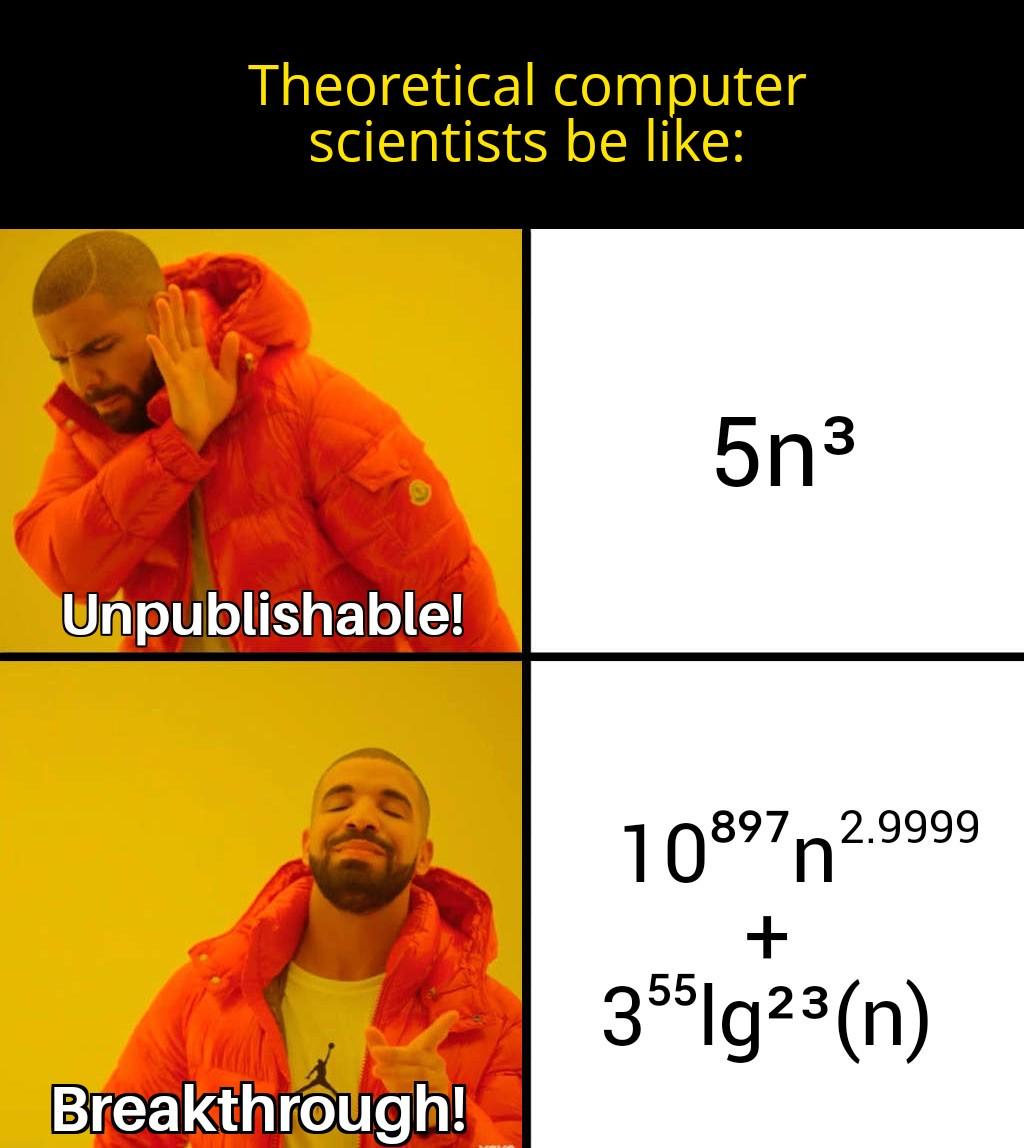
When your algorithm goes from O(n³) polynomial time to O(10⁸⁹⁷n²·⁹⁹⁹⁹ + 3⁵⁵lg²³(n)), theoretical CS folks suddenly think you've achieved something groundbreaking. Because nothing screams "publishable research" like taking a simple cubic complexity and turning it into an absolute monstrosity of exponential and logarithmic terms that would make your CPU weep. Sure, O(n³) is "unpublishable" because it's too straightforward, but slap on some ridiculous exponents and suddenly you're conference-paper material. The best part? Both are probably still slower than just using a hash map.

Theoretical Computer Science

Theoretical Computer Science
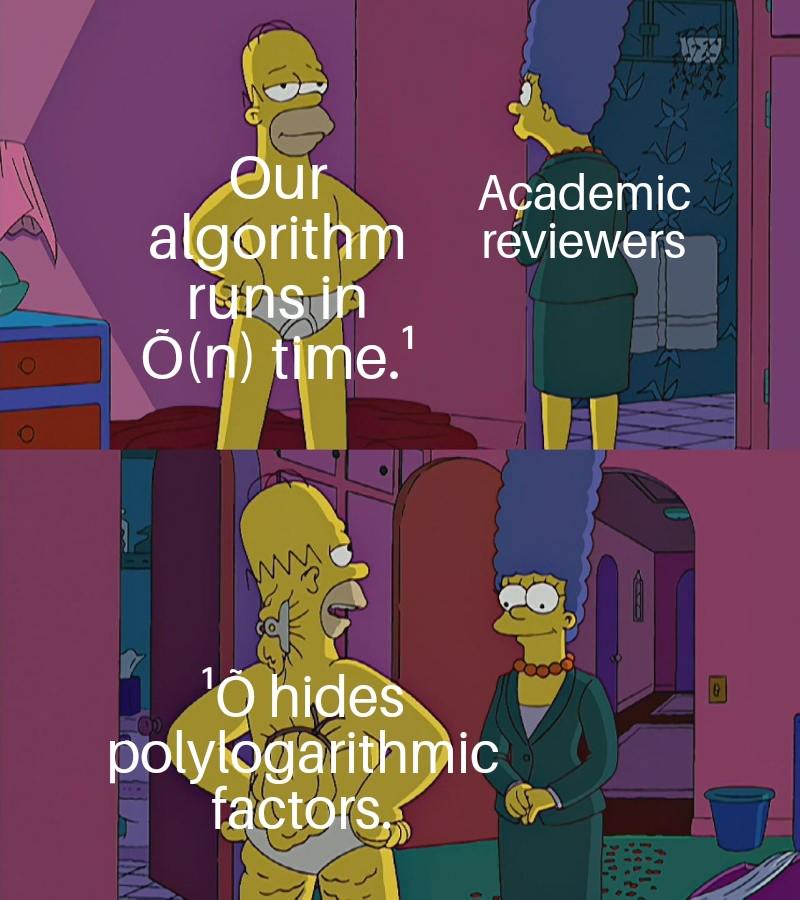
Oh, the beautiful dance of academic deception! You waltz into your paper review claiming your algorithm runs in O(n) time—linear, elegant, *chef's kiss*—and the reviewers are nodding approvingly. Meanwhile, hidden in the mathematical bushes like a sneaky little gremlin, there's a polylogarithmic factor just CHILLING there. You know, those innocent-looking log(n) terms that technically don't change the Big-O notation but absolutely DO change whether your algorithm is actually practical or just theoretically pretty. It's like saying "yeah my car goes 60mph!" while conveniently forgetting to mention it only does that while rolling downhill with a tailwind. Technically O(n log n) is still O(n) when you squint hard enough and ignore constants, but your algorithm is about as fast as Homer's brain processing Marge's disappointment.

Millennium Prize Winning Answer

Millennium Prize Winning Answer
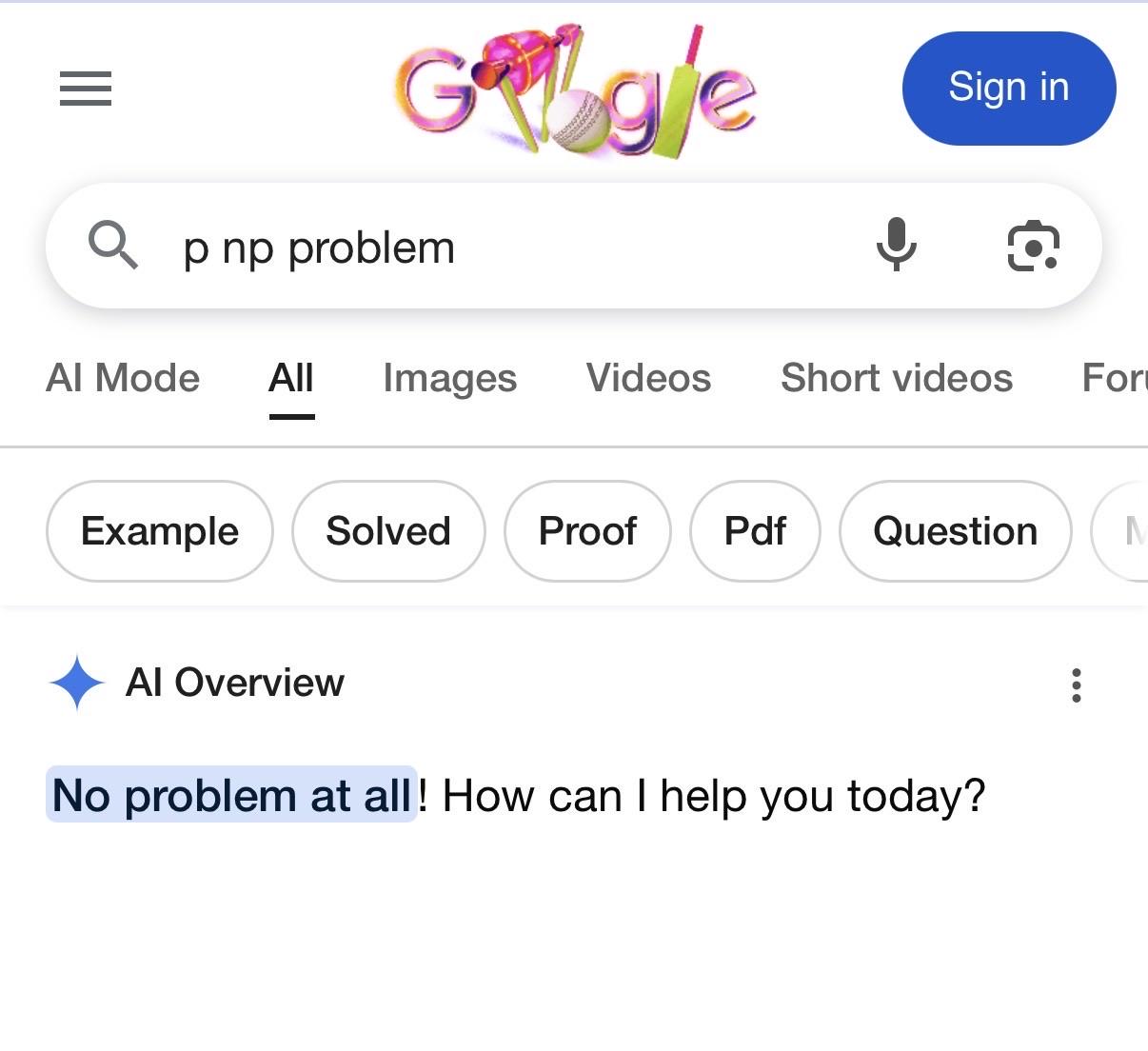
Someone just googled "p np problem" and Google's AI cheerfully responded with "No problem at all! How can I help you today?" Congrats, Google just solved one of the seven Millennium Prize Problems worth $1 million. The Clay Mathematics Institute has been real quiet since this dropped. For context: P vs NP is literally one of the most important unsolved problems in computer science and mathematics. Thousands of researchers have spent decades trying to prove whether every problem whose solution can be quickly verified can also be quickly solved. But sure, Google AI says "no problem" so I guess we're done here. Time to collect that million dollars and retire. Thanks, AI.

For Theoretical Computer Scientists

For Theoretical Computer Scientists
Theoretical computer scientists really out here creating algorithms with time complexity that looks like someone smashed their keyboard while having a seizure—O(n 72649 lg 72 (n))—and then celebrating like they just won the lottery because "hey, at least it's polynomial time!" The P vs NP problem has these folks so desperate for wins that proving something is solvable in polynomial time (even if that polynomial makes the heat death of the universe look quick) is cause for celebration. Sure, your algorithm would take longer than the age of the universe to sort a deck of cards, but technically it's in P, so break out the champagne! It's like saying "I can walk to Mars" and when everyone looks at you skeptically, you add "well, it's theoretically possible!" Meanwhile, us practical programmers are over here optimizing O(n log n) to O(n) and actually shipping products.

Bad News For AI

Bad News For AI
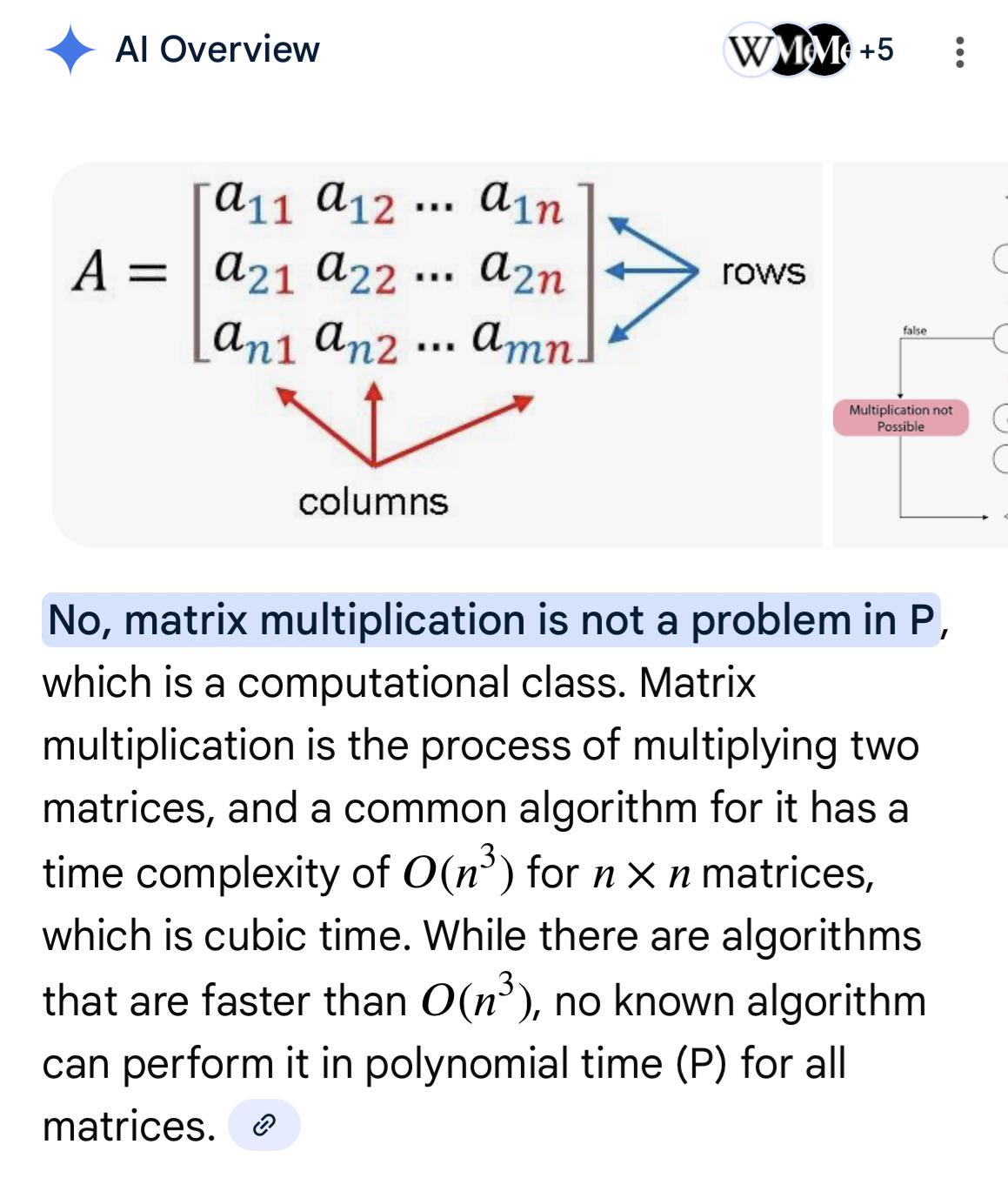
Google's AI Overview just confidently explained that matrix multiplication "is not a problem in P" (polynomial time), which is... hilariously wrong. Matrix multiplication is literally IN the P complexity class because it can be solved in polynomial time. The AI confused "not being in P" with "not being solvable in optimal polynomial time for all cases" or something equally nonsensical. This is like saying "driving to work is not a problem you can solve by driving" – technically uses the right words, but the logic is completely backwards. The AI hallucinated its way through computational complexity theory and served it up with the confidence of a junior dev who just discovered Big O notation yesterday. And this, folks, is why you don't trust AI to teach you computer science fundamentals. It'll gaslight you into thinking basic polynomial-time operations are unsolvable mysteries while sounding incredibly authoritative about it.

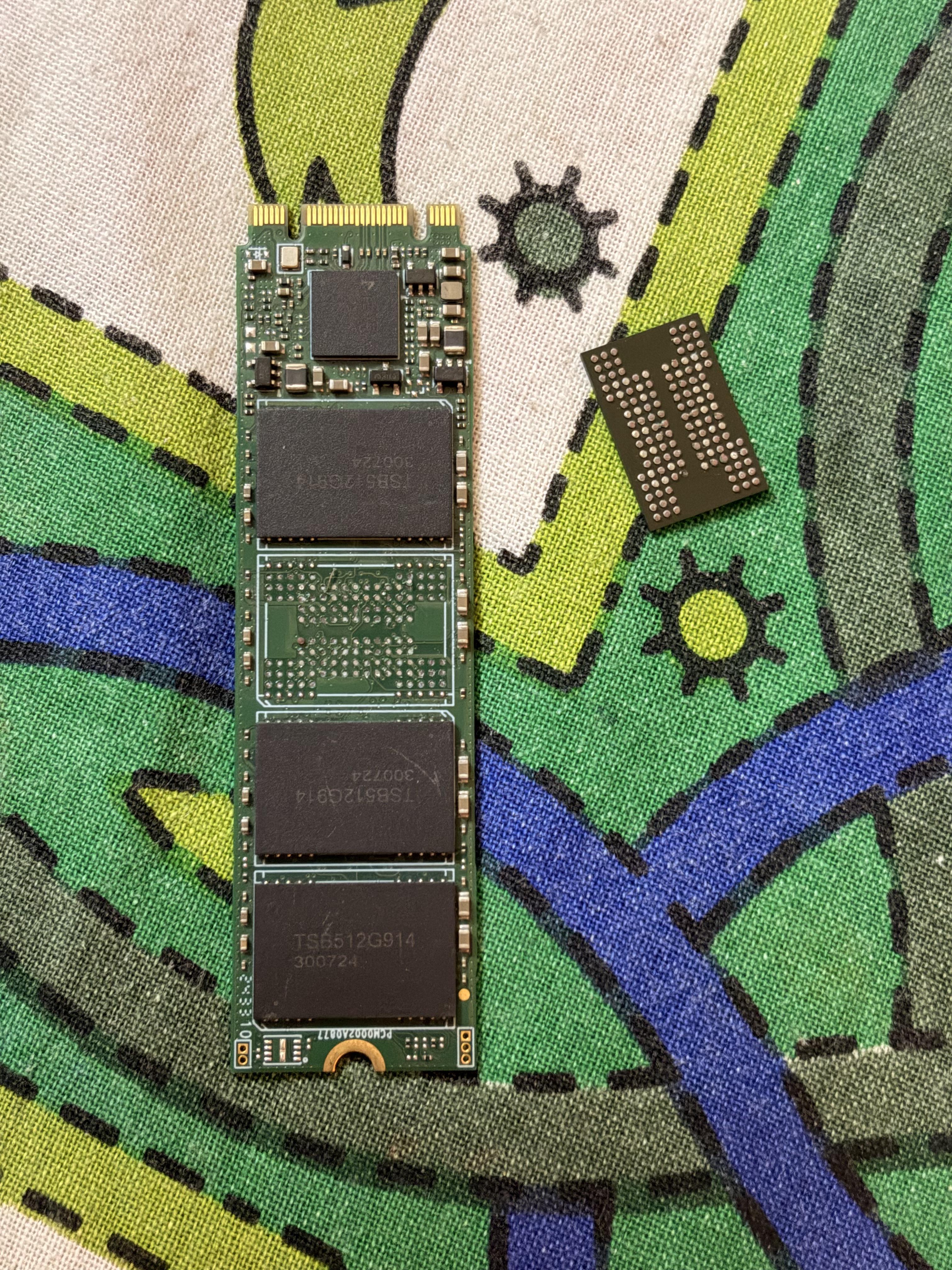
WEP 8786D-I SE Hot Air Soldering Iron Station Kit 2-IN-1 for Rework, Desoldering with Lead-Free Solder Wire, 5 Soldering Tips, 3 Hot Air Nozzles,Tweezers, Desoldering Pump

WEP 8786D-I SE Hot Air Soldering Iron Station Kit 2-IN-1 for Rework, Desoldering with Lead-Free Solder Wire, 5 Soldering Tips, 3 Hot Air Nozzles,Tweezers, Desoldering Pump
2-IN-1: With this soldering iron station you get both the soldering station with hot air rework station in one. This unit comes with individual digital temperature read-out(°F), power switches, adjus…

I Think I Like DAA

I Think I Like DAA
The galaxy brain progression of algorithm design: First, there's the caveman approach: brute force. Just try everything and eventually you'll find the answer. Sure, it might take until the heat death of the universe, but hey, it works... technically. Then we graduate to Divide and Conquer (DandC) - splitting problems into smaller chunks. The algorithm equivalent of "I can't eat this whole pizza, so I'll cut it into slices." Next level: Dynamic Programming (DP). Remember stuff so you don't solve the same subproblems repeatedly. Like writing down your ex's birthday so you don't accidentally text them congratulations again after the breakup. But the true enlightenment? Proving your problem is NP-complete and therefore impossible to solve efficiently. "I can't solve this, and neither can anyone else, so I'm actually a genius." The ultimate big brain move in computer science - not solving the problem at all.

Can You Find The Optimal Route For The Trolley?

Can You Find The Optimal Route For The Trolley?
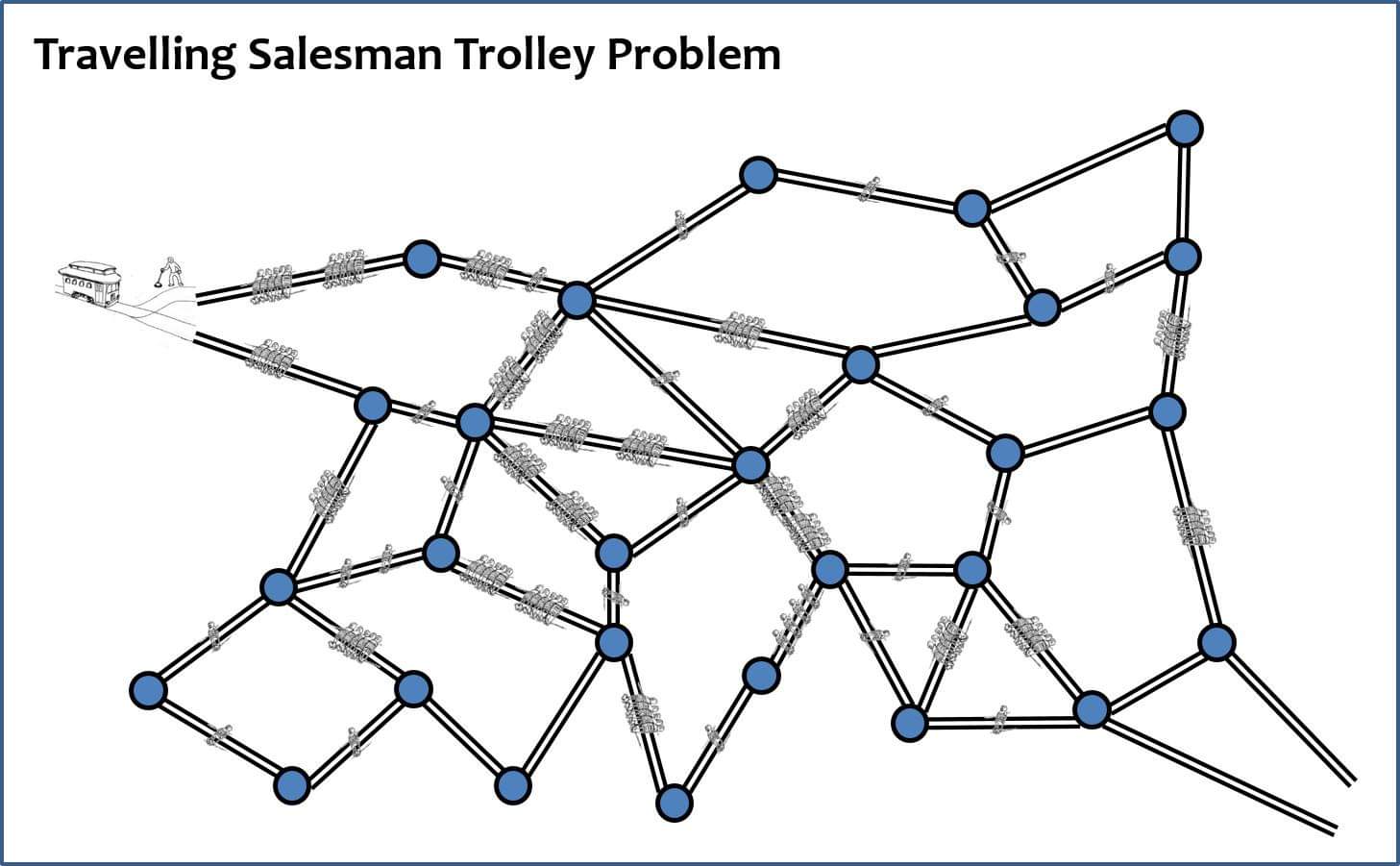
The "Travelling Salesman Trolley Problem" brilliantly combines two infamous nightmares: an ethical dilemma and an NP-hard algorithm. While philosophers debate whether to sacrifice one person to save five, computer scientists are still trying to find the optimal route through this graph without having an existential crisis. The joke here is that finding the perfect path is mathematically impossible to solve efficiently—much like trying to explain to your product manager why that "simple feature" will take three months to implement. Just remember: whether you choose the greedy algorithm or dynamic programming approach, someone's deadline is definitely getting run over.

Good Morning

Good Morning
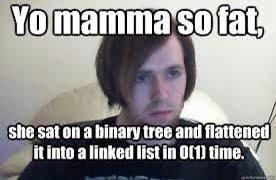
Ah, the classic programmer burn! When regular insults just won't cut it, we resort to data structure jokes. A binary tree should be balanced and efficient, but apparently mama's weight caused a catastrophic O(1) collapse into a linked list. That's not just a burn—it's a computational complexity burn. Somewhere a computer science professor is quietly nodding in approval while marking this joke as "technically correct"—the best kind of correct.